
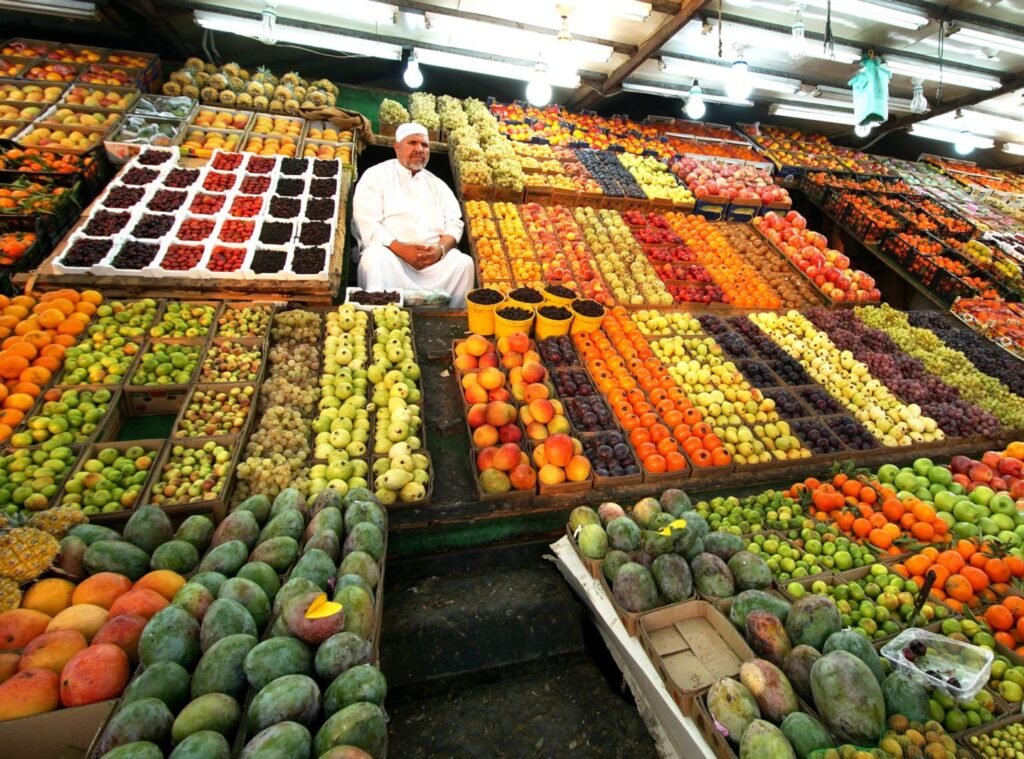
Real defence spending ensures good food for all

There is no security without food security. Geoff Tansey argues that meeting the real security needs of humanity necessitates the progressive redistribution of military budgets toward ending hunger and achieving sustainable development.

Geoff Tansey

December 13, 2020

As Covid-19 exacerbates inequalities nationally and globally, more and more people are becoming food insecure in both richer and poorer countries. According to the UN’s 2020 report on the State of Food Security and Nutrition in the World almost 690 million people went hungry in 2019. And the number of hungry people has been rising since 2014, well before the pandemic hit. COVID-19 could push over 130 million more people into chronic hunger, it says. That means one in every nine humans going hungry most of the time.

Originally posted on Rethinking Security
on November 5th, 2020 here

This matters for both human security and physical security. Last month saw the 75th anniversary of the founding of the UN Food and Agriculture Organisation and the World Food Programme awarded the Nobel Peace Prize “for its efforts to combat hunger, for its contribution to bettering conditions for peace in conflict-affected areas and for acting as a driving force in efforts to prevent the use of hunger as a weapon of war and conflict”.

The second of the Sustainable Development Goals, a range of objectives adopted by the UN in 2015, is for zero hunger by 2030 and to promote sustainable agriculture. Yet the heads of the five UN agencies behind the report warn that “five years after the world committed to end hunger, food insecurity and all forms of malnutrition, we are still off track to achieve this objective by 2030.”

The price of food security

Ceres2030, a research group headed by Cornell University, the International Food Policy Research Institute (IFPRI), and the International Institute for Sustainable Development (IISD), estimate that to reach the zero hunger goal by 2030 some $33bn/year is needed, with $14bn from donors and the rest from affected countries.

Seems a lot? Not really. Especially when the world’s governments spent almost £2 trillion on the military in 2019, according to the Stockholm International Peace Research Institute. In the UK the departmental budget for Environment, Farming and Rural Affairs for 2020 is some £4.3bn, while that for Defence is £39.2bn.

Sign up for TFF PressInfo – updates, comments and useful links.
It is free, about weekly and safe for you

It seems blatantly obvious that defending people’s fundamental needs cannot be achieved through devoting such huge amounts of resources to military spending. It cannot defeat the COVID-19 virus. It cannot deal with the other great long-term, slower-acting threats to human security – climate change, biodiversity loss and growing inequality. It is also clear that arms spending and exports help fuel conflicts that in turn increase food insecurity.

Food security and conflict

As the UN’s 2017 report on the State of Food Security and Nutrition noted: “Exacerbated by climate-related shocks, conflicts seriously affect food security and are a cause of much of the recent increase in food insecurity. Conflict is a key driver of situations of severe food crisis and recently re-emerged famines, while hunger and undernutrition are significantly worse where conflicts are prolonged and institutional capacities weak.” Violent conflict is also the main driver of population displacement.

The Nobel Peace Prize announcement also noted, “The link between hunger and armed conflict is a vicious circle: war and conflict can cause food insecurity and hunger, just as hunger and food insecurity can cause latent conflicts to flare up and trigger the use of violence. We will never achieve the goal of zero hunger unless we also put an end to war and armed conflict.”

To reach the SDGs, not just in food but across the board, we need new approaches. There are calls for fundamental change to our food systems after we get through the current pandemic – for example, see IPES paper COVID-19 and the Crisis in Food Systems. Now is the time to seize the opportunity to progressively redirect spending from that which cannot defend humanity from these threats, military spending, to that which can.

Cooperation in complex systems

Everyone, everywhere needs food – produced in fair and resilient food systems that respect people, animals and planet, as we say in the Food Ethics Council. And everyone has multiple identities, mother, father, son, daughter, belief system, a community, a nationality, etc. But the core identity that we all need is to see ourselves as Earthlings, spread across different cultures and continents but with common needs, even if expressed differently. These are clearly shown in the various farming systems and cuisines that have developed around the world. We have to get beyond a focus on competition to realise that the mark of any successful social species is the ability to cooperate. Successful social species have to cooperate to survive as they make complex systems.

To do this, we need to put our resources to work in the right direction. This then is the time to seek a worldwide commitment from every country to progressively redirect its military spending away from mechanisms and machines with which to better kill each other into life enhancing and environment sustaining activities. By doing so we will achieve the sustainable development goals, conquer hunger, poverty and make a fairer, healthy and sustainable world for this and future generations.

Food security in the UK

Defending us Earthlings, in whichever country we live, rich or poor, against the real existential threats to our food security requires unprecedented cooperation between countries and peoples. In the UK, as I write, the issue of avoiding children going hungry in school holidays is hitting the headlines, with a variety of short-term immediate solutions being discussed. But this is symptomatic of a much deeper problem of growing levels of food insecurity and poverty, as were highlighted by the Food Foundation, footballer Marcus Rashford and others and as we found in the independent Fabian Commission on Food and Poverty, which I chaired.

This challenge, compounded by the need to restructure farming systems and dietary patterns along more ecologically sound, healthy and sustainable lines, is about beginning to understand what true defence spending means for people’s security in the 21st century. For the UK there is an opportunity for government to engage in such a rethink as it embarks on an Integrated Review of Security, Defence, Development and Foreign Policy. This “will define the government’s vision for the UK’s role in the world over the next decade”. The review provides a real opportunity to lead in redefining what defence and security mean and progressively redirect domestic resources to address the existential threats to people’s well-being, which sadly have been highlighted by the pandemic.

On April 16, 1953, US President Dwight D. Eisenhower said, “Every gun that is made, every warship launched, every rocket fired signifies in the final sense, a theft from those who hunger and are not fed, those who are cold and are not clothed. This world in arms is not spending money alone. It is spending the sweat of its laborers, the genius of its scientists, the hopes of its children. This is not a way of life at all in any true sense.”

It is time to stop that theft. Time to bring together a wide range of constituencies campaigning for this, such as The Global Campaign on Military SpendingTipping Point North SouthStop Fuelling War, with businesses and NGOs across a wide range of fields to develop positive programmes, such as the Business Plan for Peace, to enable humanity to truly defend itself from hunger and food insecurity, climate change, biodiversity loss and inequality. 

Please help TFF remain truly independent and highly productive by contributing if you benefited from this article

[paypal-donation]
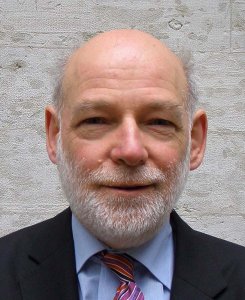
Geoff Tansey curates the Food Systems Academy, a free, on-line, open education resource to transform our food systems. He is also a member of the Food Ethics Council and chaired the independent Fabian Commission on Food and Poverty, which reported in 2015.


Share

Leave a Reply

Your email address will not be published. Required fields are marked *

Related Posts

The MIMAC – Military-Industrial-Media-Academic Complex – drives the world’s rampant militarism and wars without end. Here is a short reflection of how it works against all interests of humanity. #5 deals with why there is no real enemy or threat images/analysis. It’s all ex-post constructions. And, btw, theTFF Peace Pulse is now on Rumble.
Jan Oberg, TFF director April 9, 2026 I was recently invited to have a good, long talk about the world – and, of course, about peace too – with Boris Malagurski on his Weight of Chains Channel on YouTube. It was a real joy and seems to have been greatly appreciated by the viewers too. Mr Malagurski and I shall of course be grateful if you share this conversation in your circles – of course, only if you like what you see and hear  And remember that this one – like hundreds of others with TFF Associates – can be enjoyed at our TFF Video Collection.
PART 2 — Diplomacy, Law and Nonviolent Power By Jan ObergTFF co-founder and director January 26, 2026 This is the second of four TFF-created idea portfolios designed to curb the global reach of the United States and, in both the short and long term, help catalyse a worldwide nonviolent resistance to what many observers describe as the Trump administration’s uniquely confrontational, destructive and world-threatening policies. These portfolios outline what governments and citizens across the world can do through dynamic diplomacy, creative initiatives, and strictly nonviolent means. They are typical TFF works in that we do not only tell what the problem is and how bad it will go – as 90+% of all commentators, experts and scholars do – we tell what we think can be done, inviting you to think of what you think you can do. It seems painfully clear to me that the current political dynamics in Washington increasingly resemble the most dangerous...

Recent Articles

“En dag som berättigar till fest”, utropade den London-baserade al-Quds al-Arabi efter FN:s eldupphörresolution, “eftersom detta är första gången som Israel accepterar ett FN-beslut från en position som besegrad och inte som segrare”. Att ett arabisk-israeliskt krig för en gångs skull slutat med arabisk seger, är en helt dominerade åsikt i arabiska medier. Al-Quds al-Arabi tillåter sig att drömma om att det israeliska nederlaget skall leda till massflykt från Israel. Men i nästa andetag påminner tidningen om att Israel aldrig brukar genomföra sina internationella åtaganden och varnar för att förlorarna, liksom tidigare, kan hämnas genom att provocera fram inbördeskrig i Libanon. Med tanke på de otaliga massmediala vittnesmålen om det libanesiska folkets eniga motståndskraft förefaller risken för inre stridigheter i det sargade landet just nu liten. Men visst kan man urskilja nyansskillnader i libanesiska tidningar. Vänsterorganet al-Safir uppfattar FN-resolutionen som en komplott i syfte att rädda Israel från ännu större...
Greenland – the world’s largest island, a continent of its own with only 57.000 inhabitants. I visited it for the first time in May 2005. I flew across the inland ice to Nuuk, the tiny capital with some 14.000 inhabitants. I was overwhelmed by the pride and kindness of everyone I met as well as by the unique natural beauty. Unfortunately, due to weather conditions during my ten-day stay I could get nowhere else but Nuuk. Fortunately, however, among those I met was Gitte Arvegaard, a Danish lawyer and negotiator employed by the local government, Greenland Home Rule. She turned out to be an enthusiastic photographer with a lot of pictures taken during various trips around Greenland. So this Greeland series is the result of our cooperative effort. We both hope you enjoy it and are stimulated to visit Greenland – about which you may read more here. Finally, if you want to...
 Jan Oberg’s storyof how he met Sir Paul Liverpool – where else to meet Paul McCartney? Paul’s old class mate and TFF Associate, Jonathan Power introduced me to Paul McCartney in Liverpool at an informal reception. It was held at what used to be their school, now the Liverpool Institute for Performing Arts and we were there to celebrate that Jonathan had written Amnesty International’s 40th Anniversary book. This happy event for “righting wrongs and writing songs” gave me an opportunity to meet Paul and tell him about TFF and get straight to the matter: would he consider making a donation in support of our work for peace? While I was probably the only one with such a wish that day, I was certainly not the only one who wanted to shake hands and talk with him. In the last minutes before Paul was to leave, Jonathan brought us together and we got about three...

TFF on Substack

Discover more from TFF Transnational Foundation & Jan Oberg.

Most Popular

“En dag som berättigar till fest”, utropade den London-baserade al-Quds al-Arabi efter FN:s eldupphörresolution, “eftersom detta är första gången som Israel accepterar ett FN-beslut från en position som besegrad och inte som segrare”. Att ett arabisk-israeliskt krig för en gångs skull slutat med arabisk seger, är en helt dominerade åsikt i arabiska medier. Al-Quds al-Arabi tillåter sig att drömma om att det israeliska nederlaget skall leda till massflykt från Israel. Men i nästa andetag påminner tidningen om att Israel aldrig brukar genomföra sina internationella åtaganden och varnar för att förlorarna, liksom tidigare, kan hämnas genom att provocera fram inbördeskrig i Libanon. Med tanke på de otaliga massmediala vittnesmålen om det libanesiska folkets eniga motståndskraft förefaller risken för inre stridigheter i det sargade landet just nu liten. Men visst kan man urskilja nyansskillnader i libanesiska tidningar. Vänsterorganet al-Safir uppfattar FN-resolutionen som en komplott i syfte att rädda Israel från ännu större...
Greenland – the world’s largest island, a continent of its own with only 57.000 inhabitants. I visited it for the first time in May 2005. I flew across the inland ice to Nuuk, the tiny capital with some 14.000 inhabitants. I was overwhelmed by the pride and kindness of everyone I met as well as by the unique natural beauty. Unfortunately, due to weather conditions during my ten-day stay I could get nowhere else but Nuuk. Fortunately, however, among those I met was Gitte Arvegaard, a Danish lawyer and negotiator employed by the local government, Greenland Home Rule. She turned out to be an enthusiastic photographer with a lot of pictures taken during various trips around Greenland. So this Greeland series is the result of our cooperative effort. We both hope you enjoy it and are stimulated to visit Greenland – about which you may read more here. Finally, if you want to...
 Jan Oberg’s storyof how he met Sir Paul Liverpool – where else to meet Paul McCartney? Paul’s old class mate and TFF Associate, Jonathan Power introduced me to Paul McCartney in Liverpool at an informal reception. It was held at what used to be their school, now the Liverpool Institute for Performing Arts and we were there to celebrate that Jonathan had written Amnesty International’s 40th Anniversary book. This happy event for “righting wrongs and writing songs” gave me an opportunity to meet Paul and tell him about TFF and get straight to the matter: would he consider making a donation in support of our work for peace? While I was probably the only one with such a wish that day, I was certainly not the only one who wanted to shake hands and talk with him. In the last minutes before Paul was to leave, Jonathan brought us together and we got about three...
Read More
Imagen-thumbnail-The-Transnational-1
“En dag som berättigar till fest”, utropade den London-baserade al-Quds al-Arabi efter FN:s eldupphörresolution, “eftersom detta är första gången som Israel accepterar ett FN-beslut från en position som besegrad och inte som segrare”. Att ett arabisk-israeliskt krig för en gångs skull slutat med arabisk seger, är en helt dominerade åsikt i arabiska medier. Al-Quds al-Arabi tillåter sig att drömma om att det israeliska nederlaget skall leda till massflykt från Israel. Men i nästa andetag påminner tidningen om att Israel aldrig brukar genomföra sina internationella åtaganden och varnar för att förlorarna, liksom tidigare, kan hämnas genom att provocera fram inbördeskrig i Libanon. Med tanke på de otaliga massmediala vittnesmålen om det libanesiska folkets eniga motståndskraft förefaller risken för inre stridigheter i det sargade landet just nu liten. Men visst kan man urskilja nyansskillnader i libanesiska tidningar. Vänsterorganet al-Safir uppfattar FN-resolutionen som en komplott i syfte att rädda Israel från ännu större...
Greenland – the world’s largest island, a continent of its own with only 57.000 inhabitants. I visited it for the first time in May 2005. I flew across the inland ice to Nuuk, the tiny capital with some 14.000 inhabitants. I was overwhelmed by the pride and kindness of everyone I met as well as by the unique natural beauty. Unfortunately, due to weather conditions during my ten-day stay I could get nowhere else but Nuuk. Fortunately, however, among those I met was Gitte Arvegaard, a Danish lawyer and negotiator employed by the local government, Greenland Home Rule. She turned out to be an enthusiastic photographer with a lot of pictures taken during various trips around Greenland. So this Greeland series is the result of our cooperative effort. We both hope you enjoy it and are stimulated to visit Greenland – about which you may read more here. Finally, if you want to...
p_mccartney_poem
 Jan Oberg’s storyof how he met Sir Paul Liverpool – where else to meet Paul McCartney? Paul’s old class mate and TFF Associate, Jonathan Power introduced me to Paul McCartney in Liverpool at an informal reception. It was held at what used to be their school, now the Liverpool Institute for Performing Arts and we were there to celebrate that Jonathan had written Amnesty International’s 40th Anniversary book. This happy event for “righting wrongs and writing songs” gave me an opportunity to meet Paul and tell him about TFF and get straight to the matter: would he consider making a donation in support of our work for peace? While I was probably the only one with such a wish that day, I was certainly not the only one who wanted to shake hands and talk with him. In the last minutes before Paul was to leave, Jonathan brought us together and we got about three...
Logo-Transnational
1942James Paul McCartney is born in Liverpool on June 18th. 1956Paul writes his first song, I Lost My Little Girl. 1957Paul meets John Lennon at St. Peter’s Church Fete, Woolton, Liverpool. He joins his first group, The Quarrymen and performs in his first gig at The New Clubmoor Hall, Liverpool, on October 18th. 1960Formation of The Beatles, who play residencies in Hamburg and at The Cavern in Liverpool. 1961First Beatles recordings issued in Germany, as the backing group for Tony Sheridan. 1962The first Beatles Parlophone recording, Love Me Do, reaches number 17 in the British charts. 1963The birth of Beatlemania. Please Please Me gives the group their first British Number 1. She Loves You cements their success. Please Please Me and With The Beatles albums released. 1964First triumphant American tour. The Beatles perform at the Royal Command Performance and release their first film, A Hard Day’s Night. Their single I...
Logo-Transnational
  Back to the series “Bujumbura, Burundi”
By JONATHAN POWER August 16, 2000 LONDON – Remember the summer of ’98? In the sweltering, torpid heat of a Roman august, charged with exhaust fumes, the international community gave its overwhelming approval to the establishment of an International Criminal Court that will enable those accused of “crimes against humanity” to be tried and, if convicted, sentenced. Only seven nations opposed or abstained from the motion, including Israel, China, India and the U.S.A. where the Pentagon had successfully waged bureaucratic guerrilla war to undermine the initially sympathetic stance of President Bill Clinton. Two years on we can now see what an epochal event that was. In a the stroke of 120 pens it changed the climate on political thuggery. After numerous half-starts and false starts ever since the Nuremberg and Tokyo trials that convicted the war criminals of the Second World War, the world at last had agreed en masse a common...
