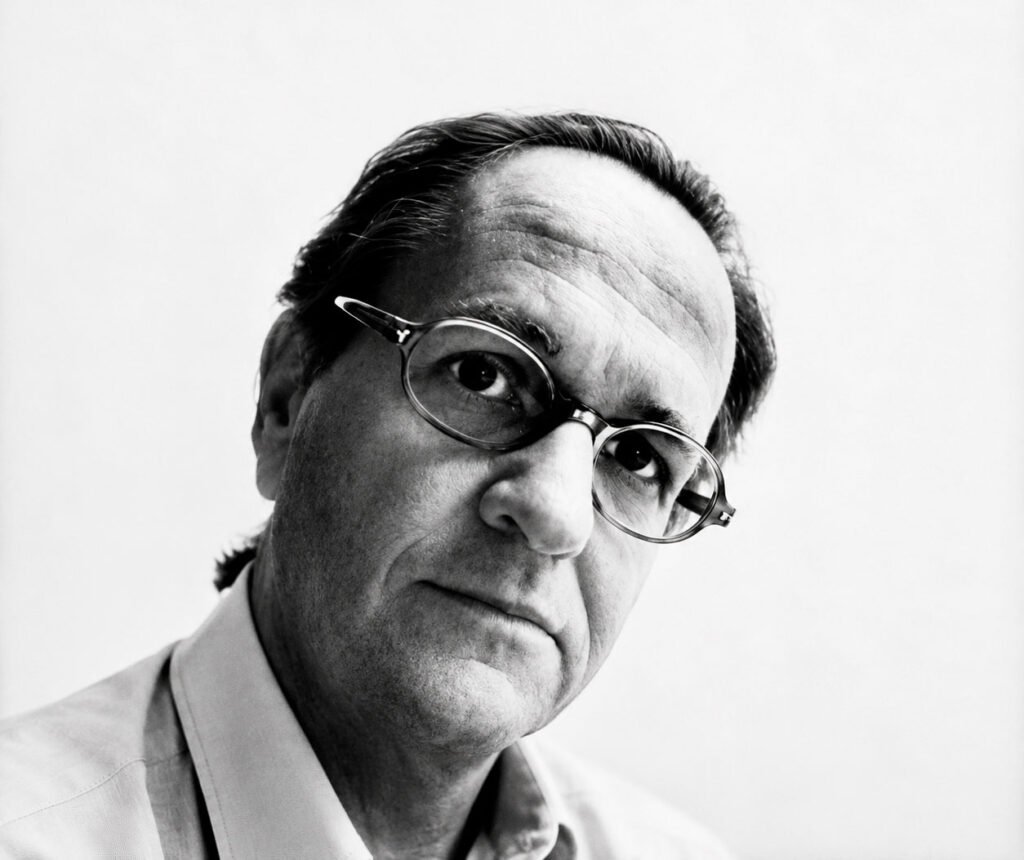
“A fifth war in the Balkans can still be prevented. But whereas the isolated leadership in Belgrade has plenty of time, Montenegro does not, and the international community is so bogged down in Bosnia and in Kosovo that it has little capacity to shape an effective violence-prevention strategy for this tiny republic of 635.000 inhabitants. What we just heard during our fact-finding mission to Podgorica,” say Soren Sommelius and Jan Oberg of the TFF conflict-mitigation team, “was frighteningly similar to what people told us in Croatia in 1991 – in spite of all the differences between the two cases.”
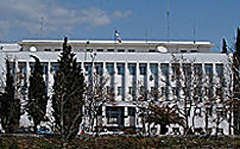
Photo © TFF
The Presidential Palace in the capital Podgorica, Montenegro
Picture series from Montenegro
“It was a bit surprising to listen to the level of verbal aggression in Podgorica not only against Milosevic, but also against the Serb people and the opposition and even the federal constitution that the Republic signed as late as 1992 when a) it was fully aware of who Slobodan Milosevic was, and b) had participated in the wars elsewhere as part of the JNA, the Federal Yugoslav Army. It could hardly be argued that people in Montenegro did not know who or what they federalized with.
Violence-preventive diplomacy by everyone is dearly needed now. Patience and longterm policy for the Balkans as a whole, and implemented with utmost caution, will be essential. Unfortunately, the international community’s policy in the region up till now is not exactly helpful to Montenegro, whichever way it chooses,” state Sommelius and Oberg.
THE BACKGROUND AND THE GAME
In contrast to other Balkan conflicts, this one can not be acted out through ethnicity or religion. A ‘real’ Serb has Montenegrin roots and there are probably more people of Montenegrin origin in Serbia than Montenegrins in Montenegro where 62 % are Montenegrins, 9 % are Serbs, 14 % are Muslims and 7% are Albanians (1991 census). It now also hosts some 50.000 refugees. In this republic there is much more inter-ethnic cooperation and mixed government than elsewhere in ex-Yugoslavia – which doesn’t mean that there is no potential for ethnic tension, especially in the wake of the Kosovo crisis. There is also more freedom of the press, a quite relaxed social and political atmosphere. It’s difficult to define what ‘nationalism’ is in Montenegro and who is a nationalist but there is a marked “Montenegroness” and national, historical pride that should not be underestimated.
Relations between Belgrade and Podgorica are now virtually frozen. Montenegrin MPs don’t attend sessions in the federal parliament, President Djukanovic is not called (or does not turn up) at National Security Council meetings. Apart from the Yugoslav Army, there are no signs of federal institutions in Montenegro. Many we met said they had stopped going to Belgrade, some dared not because they had publicly supported NATO’s bombing.
The border between Serbia and Montenegro is one of the most guarded in today’s Europe. Virtually all trade in goods has stopped since Serbia put up a blockade against Montenegro; it argues that the latter has re-sold subsidised goods and food from Serbia with a profit. Montenegro has had to import from the West, from Croatia and Slovenia in particular, resulting in much higher prices for the consumers. The Deutsch mark has been introduced as parallel currency and all state employee salaries are paid in Deutsch mark. Nobody we met could explain how this huge inflow of foreign currency had happened to a country not exactly known for its financial stability.
In an attempt to get more tourists, Montenegro no longer requires a visa for visitors, which means that travellers from Montenegro to Serbia must show either their passports or their visas. The newly established Montenegrin Airlines provide direct flights to Montengro – not via Belgrade – from 15 places in Europe.
And there have been tolerance-testing incidences. Belgrade recently stopped traffic to the airport in Tivat, allegedly because of NATO activity in the air. In December the government of Montenegro attempted to take over the Podgorica Airport which happens to belong to Yugoslav Airlines, JAT, and is also an important military airport (partly hit by NATO). Belgrade answered with a military take-over for a few hours.
Both sides accuse the other of having violated the federal constitution; but both have. And a quick comparison between the federal and the Montenegrin constitutions will provide the ground for numerous conflicting interpretations. Neither Serbia nor Montenegro can be characterised as societies founded on the rule of law. Both have serious economic difficulties, both have substantial mafia and black economy elements, and they are linked to each other. In Montenegro the guesstimate for the ‘informal’ economy is 40-60%. (“Come to Montenegro on holiday, your car is already here…”)
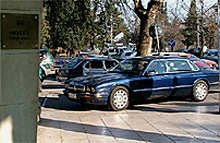
Photo © TFF
“Your car is already here” – elegant Jaguar outside Hotel Cerna Gora
Interestingly enough, President Milosevic stated around New Year that Montenegro was welcome to seek independence. This statement was turned down as deceptive by everyone in Podgorica. It could, however, have some relevance. Milosevic has been President of Serbia and it is his last term as president of FRY. It could be advantageous for him to let Montenegro go, have the constitution revised and, in that process, make other changes that would solidify his own power well into the future.
It’s all a cat-and-mouse game. Steps are taken on both sides aimed to provoke and test limits. We ask ourselves when these type of dangerous chess or poker games acquire their own dynamics and spin out of control. That’s the moment when everybody will say – like four times before and equally false: we did all we could to avoid war, but finally that was the only option!
Montenegro’s defence capacity is invested with its 20,000 police personnel, many of which are equipped with heavy arms and, according to some sources, trained by e.g. CIA and Mossad. The Yugoslav Army (VJ) in the republic counts 14,000 plus some 900 pro-Milosevic troops in the so-called 7th Military Police Battalion. That’s more than enough to create havoc here.
THE FUTURE REFERENDUM AND HOW TO AVOID CIVIL WAR
The official policy states that the question of independence shall be decided by a referendum. According to the most recent opinion poll figures (January 2000) published by CEDEM, the Center for Democracy and Human Rights, the overall opinions are the following: 36 % think it would be best for both Montenegro and Serbia to be independent, sovereign states; 28 % think the best solution for Montenegrins and Serbs is the Federation with Serbia; 23 % think the Federation should be changed according to the Montenegrin Government’s so-called Platform proposal which aims towards a confederation, and 6 % think one unitary state would be the best.
In other words, well over 50 % favour the federal idea or even a unitary state with Serbia, but half of them are in favour of a looser relations. So, there is a strong wish to keep some kind of formal ties with Serbia, but the wish to remain in the present federation with Serbia has fallen sharply since early 1998 when 52 % of the people favoured that option. Complete independence is still a minority opinion, but has grown to 36 % from 21 % in early 1998.
Given these figures it would be extremely counterproductive and violence-promoting of the West to promote Montenegrin independence or deliver security guarantees should it go for it. Referendums held in other former Yugoslav republics showed 90% or more in favour of independence – and still lead to violent struggle. Should Montenegro declare itself independent with a smaller percentage in favour, the risk is high that it will mark the beginning of civil war and intervention by the VJ – after which the West will feel obliged to come to the defence of Montenegro.
Thus, a massive pro-independence opinion throughout the Montenegrin citizenry should be the sole criteria guiding Western support for Montenegro’s secession out of the federation.
INDEPENDENCE REQUIRES A STRATEGY AND A DIALOGUE
Next, even with a solid pro-independence majority, there has to be a strategy for a negotiated solution. When people have no ideas about the political strategies or about the principles to be applied at a negotiation table, the likelihood of war automatically increases. A federation can not be dissolved and new relations of trust and cooperation be established between the units unless there is a willingness to employ principled policies, negotiations and compromise. We met no politicians or advisers who had such a strategy. The response we obtained from most were along the following lines:
‘All we want is independence, to be a sovereign state and integrate with Europe. We don’t want war, for sure. But the decision to use violence is not in our hands, it is solely in the hands of Mr. Milosevic and he is a dictator. You simply can’t talk with him. So, we have to be patient and hope that the international community will support us economically and, if need be, security-wise. But if we are attacked by Milosevic, we are a strong people and not exactly unarmed, we will fight for our freedom as we have throughout our history.’
This amounts to positioning rather than an exploration of needs and interests.We have seen it lead to destructive processes from Slovenia to Kosovo. It must be of the responsibility of the international community to convince the Montenegrin leadership that it is not likely to achieve its goals peacefully by throwing its hands up in the air and saying that all future disasters will be the work of one man.
Photo © TFF
Sunny street in Podgorica – no limits to the cars
MINIMUM REQUIREMENTS TO AVOID VIOLENCE
One way of overcoming such a policy of innocence-cum-blame coupled with disclaiming one’s own co-responsibility for the future (‘we don’t decide about war and peace’) would be for someone in the international community to take the initiative to establish an orderly fact-finding, conflict-analysis and then to promote dialogue and negotiation.
The countries that bombed Yugoslavia can’t do that, because of the indictment of President Milosevic, because of what is at stake with the faltering Kosovo mission and because there is no minimum trust in Belgrade. These countries have lost every chance of being seen as impartial mediators.
Below follow some proposals to secure a negotiated solution. We emphasize that they apply whether Montenegro stays with or becomes independent of Serbia. We have no opinion about that. TFF’s professional approach deals with processes; we believe that conflicting parties have a fundamental right to identify their goals as they are the ones to live with the solutions.
o Expand the present, excellent OSCE mission considerably and let OSCE set up a professional negotiating facility.
o Establish a small UN mission like the one in Skopje (UNPREDEP) but consisting only of UN Civil Affairs, civil monitors, professional mediators and negotiators and a few UN Civil Police.
o Increase the presence of international NGOs and promote all kinds of meetings, roundtables, and seminars with people at various levels in Serbia and neighbouring states. Without a comprehensive exploration of regional issues, there will be no peaceful change.
o Help the parties themselves to do conduct shuttle diplomacy between Podgorica and Belgrade.
o Various types of international economic support conditioned upon the Montenegrin government taking measures to radically reduce the role of the mafia in the country’s economy.
o Stop every statement by Western politicians and military leaders that could be interpreted by Montenegrin leaders to mean that it will be risk-free to declare premature independence or take other steps considered provocative in Belgrade. There are no short-cuts to a new status.
THE WEST MAY NOT BE ABLE TO HELP MONTENEGRO
None of this would be easy. Indeed, we fear that the international so-called community’s leaders, due to their actions in Yugoslavia last year, have radically reduced their ability to be helpful to Montenegro. Western policies in Kosovo – or better “Chaosovo” – are a failure for everyone to see and nobody has an exit strategy that can avoid either producing violence or being extremely costly for the West over a decade or two. Western decision-makers have not managed to weaken President Milosevic’ power a bit, but they repeat mechanically that no changes can occur in the Balkans before he is out of the picture. None of the larger economic pledges to the region have been honoured.
OSCE might be the best suited organisation to deal with Montenegro’s substantial problems. But with FRY’s membership suspended for the last 9 years (the U.S. insisting) and with the CIA-infiltrated OSCE Verifiers mission set up in Kosovo before NATO’s bombing, it is understandable if Belgrade would turn down a request for establishing such a mission on what is still federal territory.
Most of those we met clearly told us that the Western idea of using Montenegro as a leverage in democratizing Serbia was grossly misconceived. They also told us that they felt caught in a Catch 22 situation: on the one hand, the West is telling them to take it easy with independence, on the other hand they that they will not get any substantial foreign aid because they are not an independent state.
The last thing Western politicians would wish at this point is another military effort followed by a kind of protectorate. Unless, that is, there is a longterm Western strategy to dissolve Yugoslavia by force. That would mean instigating troubles in Sandjak, Voivodina – and Montenegro. Southern Serbia is already a hot spot. The West is likely to need some kind of formal settlement in Kosovo. Whatever it will be, it will influence the future of Montenegro, but surprisingly many among those we talked with seemed to see Kosovo as very far from Montenegro.
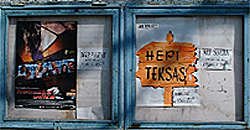
Photo © TFF
“Happy Texas” – hand-decorated poster for American film in Podgorica
MONTENEGRO AS A PAWN IN SEVERAL GAMES?
All this will prove utterly problematic for Montenegro. If it wants to become independent, it should develop a longterm strategy between the present situation and that goal. Provocative moves on the chess board are likely to be self-defeating, particularly when not based on an overwhelming majority of pro-independence sentiment in the people.
It should also avoid getting trapped in some larger game between Milosevic and the EU/the US. However different the cases, Montenegro may do wise to draw some conclusions from the Kosovo quagmire. There is no such thing as a free secession and dissolution from a federation. But the costs can be minimized if the parties, before the divorce, have been helped to define in advance what the post-federal relationship would look like. But again, who can serve as the trusted councellor with both sides? Not even the UN, given its operation in Kosovo.
Local elections will take place on June 11 in the cities of Podgorica and Herceg Novi. They will be important indicators as to where the Montenegrins are heading. Until then, let’s ask: how genuine is the wish for independence in and of itself? How much of this wish is based on deep and understandable frustration with the Milosevic regime and the bigger brother’s sorry state of economy? How much of the wish for independence has been induced into Montenegro by the West as part of a possible longterm policy of destroying former and present Yugoslavia? And how much, all said and done, can the Montenegrin government and people do together not to end up being a pawn in everybody else’s not too noble games? We are afraid the answer is: not that much” – end Jan Oberg and Soren Sommelius.
Picture series from Montenegro
© TFF 2000
Please reprint, copy, archive, quote or re-post this item, but please retain the source.