
PressInfo #228 - Kosovo: Many options but independence

The Serbian province of Kosovo, largely populated by the Albanian separatist-minded majority, has failed to meet basic human rights and political standards set as prerequisites by the international community, but it should nevertheless enter in the months to come talks on its future status.

This basic conclusion of the long-awaited report by UN special envoy Kai Eide was approved by the UN secretary general Kofi Annan and fully supported by the EU and the US, but it fails to demystify the paradox.

Only two a half years ago, the international community had charged that talks on status could not start before a set of basic human rights standards was achieved.

Since then, however, as it became clearer that the Kosovo Albanian majority was unwilling to meet the criteria and the UN unable to enforce them, there was a permanent watering down of prerequisites, until the proclaimed policy of “standards before status” was finally buried with Mr. Eide’s report.

Why has it failed? Is it because of the fear of the Kosovo Albanian threat of inciting violence if talks on status did not start soon, or was this policy a bluff from the start?

What kind of signal does it offer for the fairness of the upcoming talks? Will threats of ethnic violence in case “the only option for Kosovo Albanians – independence” – is not achieved again play a role? Or will the international community overcome its fear and offer both Pristina and Belgrade reasons to believe that the solution would negotiated and long-lasting rather than imposed, one-sided and conflict-prone?

Advocates of Kosovo’s independence such as the International Crisis Group, Wesley Clark, Richard Holbrooke and various US members of Congress argue “independence is the only solution.” The U.S. has more urgent problems elsewhere. But full independence cannot be negotiated, it can only be imposed. “Independent Kosova” implies that the Kosovo-Albanians achieve their maximalist goal with military means while Belgrade and the Kosovo Serbs and Roma would not even get their minimum — a recipe for future troubles.

It would be also counterproductive for Europe and the U.S.: to side with the Kosovo-Albanians and isolate Serbia – a highly multi-ethnic, strategically important, constitutional state with a market of 10 million people – would be foolish. Keeping punishing Serbia and Serbs collectively for Milosevic’s brutality would be immoral.

An “independent Kosova” would set a dangerous precedent for the region, not least in Bosnia and Macedonia, for international law, for European integration. And if Kosovo, why not Taiwan, Tibet, Chechenya, Tamil Eelam, Kashmir? The world has about 200 states and 5,000 ethnic groups. Who would like 4,800 new states? The future is about human globalization and integration.

Independence would also violate UN Security Council Resolution 1244 of 1999 on Kosovo. Not even liberally interpreted does it endorse independence. Independence would reward Albanian extremists who have been behind the ethnic cleansing campaign against the non-Albanian communities, encourage those who exported violence from Kosovo to the neighbouring southern Serbia and to Macedonia. The ‘disarmed’ protectorate of Kosovo was a major player in all that.

The results of Milosevic’s authoritarian policies clearly prevent Kosovo from returning to its pre-1999 status. Belgrade recognizes that today. The international community on its side refuses to see that the UN, NATO, EU and OSCE in Kosovo have failed miserably in creating the multi-ethnic, tolerant and safe Kosovo that it thought the bombings would facilitate. There has been virtually no return of the 200,000 Serbs and tens of thousands of other non-Albanians who felt threatened by Albanian nationalists and terrorists in 1999-2000.

Proportionately this is the largest ethnic cleansing in ex-Yugoslavia. Half a million Serbs in today’s Serbia, driven out of Croatia, Bosnia and Kosovo, make up Europe’s largest – but ignored – refugee problem. The economy of Kosovo remains in shambles – 70% unemployment -and mafia-integrated.

There is never only one solution to a complex problem. Between the old autonomy for Kosovo and full independence is a myriad of thinkable options – combining internal and regional features. They should all be on the negotiation table: a citizens’ Kosovo where ethnic background is irrelevant, cantonisation, consociation, confederation, condominium, double autonomy for minorities there and in Southern Serbia, partition, trusteeship, independence with special features such as soft borders, no army and guarantees for never joining Albania. Least creative of all is the “only-one-solution” that all main actors today propose – completely incompatible with every other “only-one solution.”

Finally, no formal status will work if the people continue to hate and see no development opportunities. If we ignore human needs for fear-reduction, deep reconciliation and economic recovery, independent Kosovo will become another failed state, perhaps consumed by civil war. Even an ethnically pure, only-Albanian Kosovo is no guarantee for regional stability. It could soon become a dangerous burden on the EU.

Kosovo is about the future of that province and of Serbia, but also about the region and the EU. Indeed, Kosovo is about global politics. In this 11th hour, the UN, EU and the U.S. should re-evaluate their post-1990 policies and recognize the need for much more intellectually open and politically pluralist approaches than those that have been promoted so far. Rigidity, lack of principle and wishful thinking could once again prove to be the enemies of sustainable peace in the region.

TFF has been conducting conflict-mitigation work in all parts of ex-Yugoslavia since 1991. TFF teams served in the 1990s as goodwill advisers to both Yugoslav governments and the Kosovo-Albanian leadership of present President Ibrahim Rugova.

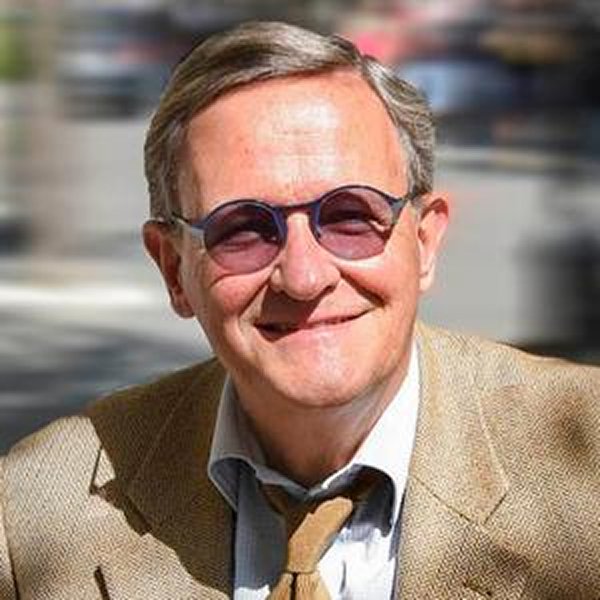
"September 2003 - present: PhD in Journalism and Communications, University of Belgrade. Working on the PhD thesis « Journalistic Responsibility in Crisis Situations : a Case-study Analysis of the Relationship between Media Management and Ethical Reporting ». 1996- 1997: Masters (M.A.) in International Affairs-Conflict Analysis, Carleton University, Ottawa Norman Paterson School of International Affairs, Carleton University, Ottawa. A-level GPA - Defended thesis ""with distinction"": ""Influence of the Media on Preventive Diplomacy: Three Cases from the Yugoslav Conflict"". 1992-1996: Bachelor of Journalism (B.J.) - Highest Honors in Journalism and Political Science, Carleton University, Ottawa"

Peace & future researcher + ‌Art Photographer

Share

Leave a Reply

Your email address will not be published. Required fields are marked *

Related Posts

“En dag som berättigar till fest”, utropade den London-baserade al-Quds al-Arabi efter FN:s eldupphörresolution, “eftersom detta är första gången som Israel accepterar ett FN-beslut från en position som besegrad och inte som segrare”. Att ett arabisk-israeliskt krig för en gångs skull slutat med arabisk seger, är en helt dominerade åsikt i arabiska medier. Al-Quds al-Arabi tillåter sig att drömma om att det israeliska nederlaget skall leda till massflykt från Israel. Men i nästa andetag påminner tidningen om att Israel aldrig brukar genomföra sina internationella åtaganden och varnar för att förlorarna, liksom tidigare, kan hämnas genom att provocera fram inbördeskrig i Libanon. Med tanke på de otaliga massmediala vittnesmålen om det libanesiska folkets eniga motståndskraft förefaller risken för inre stridigheter i det sargade landet just nu liten. Men visst kan man urskilja nyansskillnader i libanesiska tidningar. Vänsterorganet al-Safir uppfattar FN-resolutionen som en komplott i syfte att rädda Israel från ännu större...
A friendly quarrel while we agree that the US sanctions are a weapon of mass destruction and kill more people than wars do. And that we must talk much more about sanctions than we have so far. Jan Oberg, TFF director March 16, 2026 John Mearsheimer recently stated that U.S. sanctions murdered around 38 million people between 1971 and 2021 – see the video below. It is a dramatic figure, and it has spread quickly because it captures, in one sentence, the enormous human cost of modern sanctions. I share his concern about the destructive effects of economic coercion. But the specific number he cites — and the way he attributes it — deserves a friendly academic clarification. The figure comes from a 2023 Lancet Global Health article estimating the mortality effects of unilateral U.S. and EU sanctions over the past half‑century. This is the first point where Mearsheimer’s shorthand diverges from the text: the study...
Jan Oberg May 15, 2026 Go to this Fox News page and scroll the whole way down: President Donald Trump tells the world that his meeting with President Xi Jinping yielded a lot of very concrete political and economic results – of course, only where the Chinese side, according to him, agreed with him. He does not mention the Taiwan issue, but Secretary of State, Marco Rubio, says that it did not feature prominently in their talks and that the US policy on Taiwan has not changed. Then go to China Daily – or Global Times – and you will see that for the Chinese it is framework, principles, structure of cooperation etc. that matters – all embedded in the overall idea of “constructive bilateral relationship of strategic stability.” Nowhere is any concrete agreement or deal – all that Trump refers to – mentioned. At the general level, this gives you insights into the very different social...

Recent Articles

“En dag som berättigar till fest”, utropade den London-baserade al-Quds al-Arabi efter FN:s eldupphörresolution, “eftersom detta är första gången som Israel accepterar ett FN-beslut från en position som besegrad och inte som segrare”. Att ett arabisk-israeliskt krig för en gångs skull slutat med arabisk seger, är en helt dominerade åsikt i arabiska medier. Al-Quds al-Arabi tillåter sig att drömma om att det israeliska nederlaget skall leda till massflykt från Israel. Men i nästa andetag påminner tidningen om att Israel aldrig brukar genomföra sina internationella åtaganden och varnar för att förlorarna, liksom tidigare, kan hämnas genom att provocera fram inbördeskrig i Libanon. Med tanke på de otaliga massmediala vittnesmålen om det libanesiska folkets eniga motståndskraft förefaller risken för inre stridigheter i det sargade landet just nu liten. Men visst kan man urskilja nyansskillnader i libanesiska tidningar. Vänsterorganet al-Safir uppfattar FN-resolutionen som en komplott i syfte att rädda Israel från ännu större...
Greenland – the world’s largest island, a continent of its own with only 57.000 inhabitants. I visited it for the first time in May 2005. I flew across the inland ice to Nuuk, the tiny capital with some 14.000 inhabitants. I was overwhelmed by the pride and kindness of everyone I met as well as by the unique natural beauty. Unfortunately, due to weather conditions during my ten-day stay I could get nowhere else but Nuuk. Fortunately, however, among those I met was Gitte Arvegaard, a Danish lawyer and negotiator employed by the local government, Greenland Home Rule. She turned out to be an enthusiastic photographer with a lot of pictures taken during various trips around Greenland. So this Greeland series is the result of our cooperative effort. We both hope you enjoy it and are stimulated to visit Greenland – about which you may read more here. Finally, if you want to...
 Jan Oberg’s storyof how he met Sir Paul Liverpool – where else to meet Paul McCartney? Paul’s old class mate and TFF Associate, Jonathan Power introduced me to Paul McCartney in Liverpool at an informal reception. It was held at what used to be their school, now the Liverpool Institute for Performing Arts and we were there to celebrate that Jonathan had written Amnesty International’s 40th Anniversary book. This happy event for “righting wrongs and writing songs” gave me an opportunity to meet Paul and tell him about TFF and get straight to the matter: would he consider making a donation in support of our work for peace? While I was probably the only one with such a wish that day, I was certainly not the only one who wanted to shake hands and talk with him. In the last minutes before Paul was to leave, Jonathan brought us together and we got about three...

TFF on Substack

Discover more from TFF Transnational Foundation & Jan Oberg.

Most Popular

“En dag som berättigar till fest”, utropade den London-baserade al-Quds al-Arabi efter FN:s eldupphörresolution, “eftersom detta är första gången som Israel accepterar ett FN-beslut från en position som besegrad och inte som segrare”. Att ett arabisk-israeliskt krig för en gångs skull slutat med arabisk seger, är en helt dominerade åsikt i arabiska medier. Al-Quds al-Arabi tillåter sig att drömma om att det israeliska nederlaget skall leda till massflykt från Israel. Men i nästa andetag påminner tidningen om att Israel aldrig brukar genomföra sina internationella åtaganden och varnar för att förlorarna, liksom tidigare, kan hämnas genom att provocera fram inbördeskrig i Libanon. Med tanke på de otaliga massmediala vittnesmålen om det libanesiska folkets eniga motståndskraft förefaller risken för inre stridigheter i det sargade landet just nu liten. Men visst kan man urskilja nyansskillnader i libanesiska tidningar. Vänsterorganet al-Safir uppfattar FN-resolutionen som en komplott i syfte att rädda Israel från ännu större...
Greenland – the world’s largest island, a continent of its own with only 57.000 inhabitants. I visited it for the first time in May 2005. I flew across the inland ice to Nuuk, the tiny capital with some 14.000 inhabitants. I was overwhelmed by the pride and kindness of everyone I met as well as by the unique natural beauty. Unfortunately, due to weather conditions during my ten-day stay I could get nowhere else but Nuuk. Fortunately, however, among those I met was Gitte Arvegaard, a Danish lawyer and negotiator employed by the local government, Greenland Home Rule. She turned out to be an enthusiastic photographer with a lot of pictures taken during various trips around Greenland. So this Greeland series is the result of our cooperative effort. We both hope you enjoy it and are stimulated to visit Greenland – about which you may read more here. Finally, if you want to...
 Jan Oberg’s storyof how he met Sir Paul Liverpool – where else to meet Paul McCartney? Paul’s old class mate and TFF Associate, Jonathan Power introduced me to Paul McCartney in Liverpool at an informal reception. It was held at what used to be their school, now the Liverpool Institute for Performing Arts and we were there to celebrate that Jonathan had written Amnesty International’s 40th Anniversary book. This happy event for “righting wrongs and writing songs” gave me an opportunity to meet Paul and tell him about TFF and get straight to the matter: would he consider making a donation in support of our work for peace? While I was probably the only one with such a wish that day, I was certainly not the only one who wanted to shake hands and talk with him. In the last minutes before Paul was to leave, Jonathan brought us together and we got about three...
Read More
Imagen-thumbnail-The-Transnational-1
“En dag som berättigar till fest”, utropade den London-baserade al-Quds al-Arabi efter FN:s eldupphörresolution, “eftersom detta är första gången som Israel accepterar ett FN-beslut från en position som besegrad och inte som segrare”. Att ett arabisk-israeliskt krig för en gångs skull slutat med arabisk seger, är en helt dominerade åsikt i arabiska medier. Al-Quds al-Arabi tillåter sig att drömma om att det israeliska nederlaget skall leda till massflykt från Israel. Men i nästa andetag påminner tidningen om att Israel aldrig brukar genomföra sina internationella åtaganden och varnar för att förlorarna, liksom tidigare, kan hämnas genom att provocera fram inbördeskrig i Libanon. Med tanke på de otaliga massmediala vittnesmålen om det libanesiska folkets eniga motståndskraft förefaller risken för inre stridigheter i det sargade landet just nu liten. Men visst kan man urskilja nyansskillnader i libanesiska tidningar. Vänsterorganet al-Safir uppfattar FN-resolutionen som en komplott i syfte att rädda Israel från ännu större...
Greenland – the world’s largest island, a continent of its own with only 57.000 inhabitants. I visited it for the first time in May 2005. I flew across the inland ice to Nuuk, the tiny capital with some 14.000 inhabitants. I was overwhelmed by the pride and kindness of everyone I met as well as by the unique natural beauty. Unfortunately, due to weather conditions during my ten-day stay I could get nowhere else but Nuuk. Fortunately, however, among those I met was Gitte Arvegaard, a Danish lawyer and negotiator employed by the local government, Greenland Home Rule. She turned out to be an enthusiastic photographer with a lot of pictures taken during various trips around Greenland. So this Greeland series is the result of our cooperative effort. We both hope you enjoy it and are stimulated to visit Greenland – about which you may read more here. Finally, if you want to...
p_mccartney_poem
 Jan Oberg’s storyof how he met Sir Paul Liverpool – where else to meet Paul McCartney? Paul’s old class mate and TFF Associate, Jonathan Power introduced me to Paul McCartney in Liverpool at an informal reception. It was held at what used to be their school, now the Liverpool Institute for Performing Arts and we were there to celebrate that Jonathan had written Amnesty International’s 40th Anniversary book. This happy event for “righting wrongs and writing songs” gave me an opportunity to meet Paul and tell him about TFF and get straight to the matter: would he consider making a donation in support of our work for peace? While I was probably the only one with such a wish that day, I was certainly not the only one who wanted to shake hands and talk with him. In the last minutes before Paul was to leave, Jonathan brought us together and we got about three...
Logo-Transnational
1942James Paul McCartney is born in Liverpool on June 18th. 1956Paul writes his first song, I Lost My Little Girl. 1957Paul meets John Lennon at St. Peter’s Church Fete, Woolton, Liverpool. He joins his first group, The Quarrymen and performs in his first gig at The New Clubmoor Hall, Liverpool, on October 18th. 1960Formation of The Beatles, who play residencies in Hamburg and at The Cavern in Liverpool. 1961First Beatles recordings issued in Germany, as the backing group for Tony Sheridan. 1962The first Beatles Parlophone recording, Love Me Do, reaches number 17 in the British charts. 1963The birth of Beatlemania. Please Please Me gives the group their first British Number 1. She Loves You cements their success. Please Please Me and With The Beatles albums released. 1964First triumphant American tour. The Beatles perform at the Royal Command Performance and release their first film, A Hard Day’s Night. Their single I...
Logo-Transnational
  Back to the series “Bujumbura, Burundi”
By JONATHAN POWER August 16, 2000 LONDON – Remember the summer of ’98? In the sweltering, torpid heat of a Roman august, charged with exhaust fumes, the international community gave its overwhelming approval to the establishment of an International Criminal Court that will enable those accused of “crimes against humanity” to be tried and, if convicted, sentenced. Only seven nations opposed or abstained from the motion, including Israel, China, India and the U.S.A. where the Pentagon had successfully waged bureaucratic guerrilla war to undermine the initially sympathetic stance of President Bill Clinton. Two years on we can now see what an epochal event that was. In a the stroke of 120 pens it changed the climate on political thuggery. After numerous half-starts and false starts ever since the Nuremberg and Tokyo trials that convicted the war criminals of the Second World War, the world at last had agreed en masse a common...


