
PressInfo # 138 - TFF co-founder PhD with thesis about young people with roots in other cultures

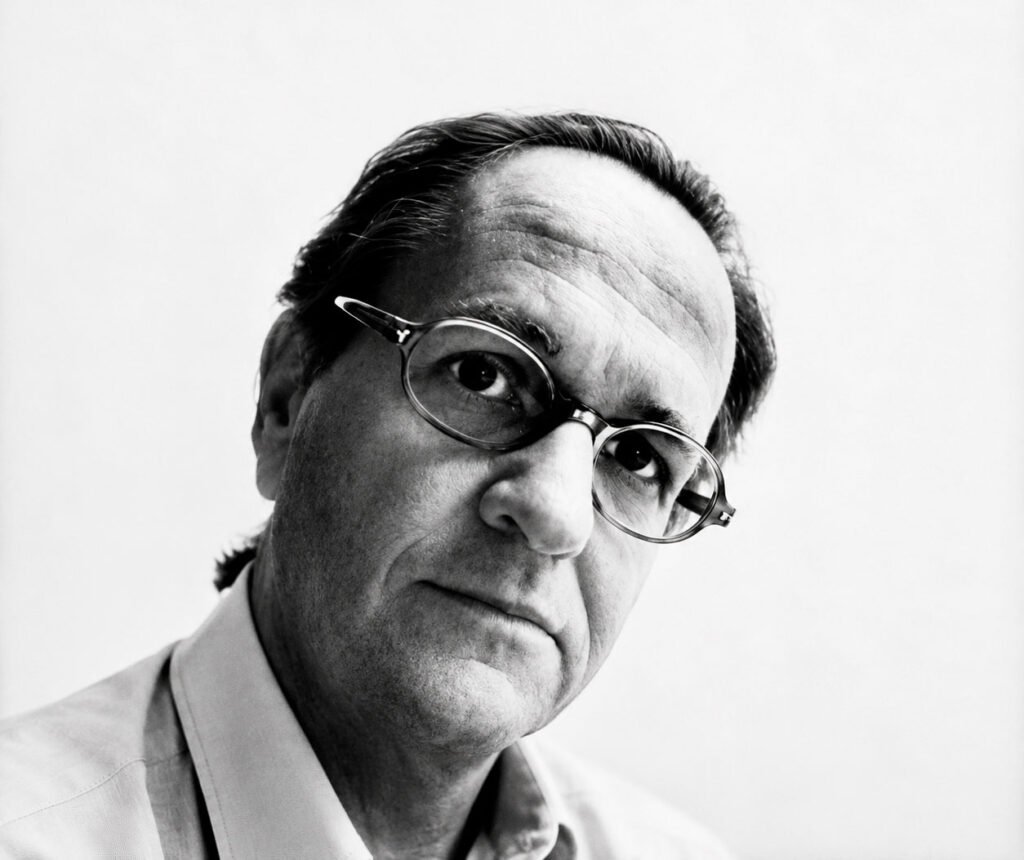
Happy news from our own world! On Friday October 26, 2001, TFF co-founder Christina Spännar successfully defended her dissertation at the Department of Sociology at the University of Lund. The title is With foreign luggage. Thoughts and experiences told by young people with roots in other cultures or The postmodern strangehood.

“Christina has conducted her research while also caring for many everyday tasks at the foundation, particularly when I travel,” says Jan Oberg. “She participates in all important decisions about TFF policies and does a lot of editorial work on our publications and site articles. No PressInfo is distributed around the world before she has commented and improved on the drafts.”

“She reads and comments on virtually all my texts and I am happy to have been able to pay back a little now by being her test reader and comment-maker through the work with her dissertation, ” says Jan Oberg. “Christina is the anchor and inspiration – and much more so than you may believe when you look at our website and browse our publications. Her doctoral dissertation is a moment for celebration.”

A little about the dissertation

The dissertation analyses how youth and young adults construct reality and get their “life- worlds” together when they arrive to, grow up in or settle in a foreign country. To put it very crudely, how we meet what is new, strange and even threatening and learn to cope with it. It’s about individuals meeting strangers in our increasingly globalised age.

The dissertation analyses a series of processes and the mechanisms through which these young people come to grips with a world they do not understand upon arrival, but have to adapt to and live in either because they are refugees, immigrants, children of mixed marriages, or something else. In short, they have to piece together cultures, norms and traditions from more than one source and mould them into a meaningful interpretation of their realities.

Relevant for peace and reconciliation studies

It’s a dissertation in sociology but goes a long way in the direction of peace and reconciliation studies, too. Says Christina: “I have not used peace research theory but the whole issue of living with foreign luggage has become so much more important compared with the time when I started thinking about these problems.

What I have learned from these young people is that they have an ability to mediate and see problems or conflicts from more than one angle, simply because they have experiences from more than one culture to build on. It is less easy for them to see only one truth. They also often become bridge-builders in their new settings between their parents and the new society since they usually learn language faster and interact more actively with that society.

This is something that can help the people of majority cultures to see what their society looks and feels like in the eyes of others. In short, if we all understand these processes better and begin to see the newcomer with foreign luggage as a resource and not predominantly as ‘a problem,’ there would be less ethnic or nationalist tension and more tolerance around. And, thus, less violence and war.”

Says Christina, “I look forward now to continue my research in this field and also devote myself more to TFF. I feel the two will form a synthesis.”

Abstract

The dissertation is in Swedish, but here follows the official abstract in English:

The present study is based on interviews with 22 youth and young adults. The perspective is phenomenological, since my aim has been to analyse and describe the everyday world as it presents itself to these young people. A process begins in the encounter with the majority culture and the emphasis is on how they think about events and experiences along the road to a more complex life-world.

The process of constructing reality that I have found in the narratives share some basic characteristics. The first is a reflexive interplay between the taken-for-granted and the strange. The second specific feature of the process is that the majority language usually is the second language. The third is that of changed relations and positions within the family. Contributing to this is the curtailed social network and the differences in knowledge about and capacity to speak the new language.

Like language, social relations are a tool of paramount importance when moving around in the space of intersubjectivity, which together with continuity and consciousness make up the fourth feature. While the first feature deals with what initiates the thinking process, this fourth feature analyses the thinking itself. Intersubjectivity can be radical or egological. The radical one is direct and non-reflective. When people are not in command of each other’s languages and/or do not immediately understand the meaning of the situation, there is more need for reflection and planning which is what characterises the egological intersubjectivity. I believe that the egological aspects weigh more heavily in the encounter between people with different cultural backgrounds. There is a universal human striving for a certain minimum order in life; to connect new information with what one already knows and thus achieve continuity and coherence. The confrontation with a different order causes us to observe, compare, evaluate and seek explanations. This produces a heightened awareness about the different orders. It also means an active relation or approach to culture, which makes up the fifth special feature.

I believe there are certain parallels between the situation experienced in the encounter with the new society and the one we all experience in the postmodern society, which is characterised by reflexivity. This implies that we constantly are confronted with new phenomena. Another defining characteristic is ambiguity, which is also connected with growing up with more than one culture. I therefore believe that the ability to deal with more than one culture can be an asset in dealing with postmodern issues in general.

These young people seem to share an awareness that things can be done and life lived in different ways without having a need to ranking one as better than the other. To them the interplay between the taken-for-granted and the strange seems to be the very stuff that coherence in life is made of.

This is a longer presentation in English of the content of the dissertation.
Peace & future researcher + ‌Art Photographer

Share

Leave a Reply

Your email address will not be published. Required fields are marked *

Related Posts

Jan Oberg May 15, 2026 Go to this Fox News page and scroll the whole way down: President Donald Trump tells the world that his meeting with President Xi Jinping yielded a lot of very concrete political and economic results – of course, only where the Chinese side, according to him, agreed with him. He does not mention the Taiwan issue, but Secretary of State, Marco Rubio, says that it did not feature prominently in their talks and that the US policy on Taiwan has not changed. Then go to China Daily – or Global Times – and you will see that for the Chinese it is framework, principles, structure of cooperation etc. that matters – all embedded in the overall idea of “constructive bilateral relationship of strategic stability.” Nowhere is any concrete agreement or deal – all that Trump refers to – mentioned. At the general level, this gives you insights into the very different social...
The MIMAC – Military-Industrial-Media-Academic Complex – drives the world’s rampant militarism and wars without end. Here is a short reflection of how it works against all interests of humanity. #5 deals with why there is no real enemy or threat images/analysis. It’s all ex-post constructions. And, btw, theTFF Peace Pulse is now on Rumble.
Jan Oberg, TFF director April 28, 2026 In this third TFF Peace Pulse, I make the important distinction between the violence and the conflict that violence is a symptom of. If you want peace, focus on the underlying conflict because that is the key to resolution, peacemaking, and a better future for the parties. The West is obsessed with violence, just look around you – and 90+ per cent of the public debate is about military issues and other violence – totally wasted for peace. These Peace Pulses will only be published here a few times. You will also not find them on YouTube and Vimeo because both platforms have blocked TFF and me; you know, peace is dangerous these days. Most TFF’s videos since 2007 are now on Rumble.

Recent Articles

Jan Oberg May 15, 2026 Go to this Fox News page and scroll the whole way down: President Donald Trump tells the world that his meeting with President Xi Jinping yielded a lot of very concrete political and economic results – of course, only where the Chinese side, according to him, agreed with him. He does not mention the Taiwan issue, but Secretary of State, Marco Rubio, says that it did not feature prominently in their talks and that the US policy on Taiwan has not changed. Then go to China Daily – or Global Times – and you will see that for the Chinese it is framework, principles, structure of cooperation etc. that matters – all embedded in the overall idea of “constructive bilateral relationship of strategic stability.” Nowhere is any concrete agreement or deal – all that Trump refers to – mentioned. At the general level, this gives you insights into the very different social...
Lena Petrova of “World Affairs In Context” with more than half a million subscribers on YouTube wanted to explore what a peace researcher like me has to say about, among other things, the First and the Second Cold War and why eethics has disappeared from politics. I am particularly happy about this conversation that also yielded an amazing number of very appreciative comments on YouTube. No doubt, people are longing for alternatives, including peace perspectives.
The MIMAC – Military-Industrial-Media-Academic Complex – drives the world’s rampant militarism and wars without end. Here is a short reflection of how it works against all interests of humanity. #5 deals with why there is no real enemy or threat images/analysis. It’s all ex-post constructions. And, btw, theTFF Peace Pulse is now on Rumble.

TFF on Substack

Discover more from TFF Transnational Foundation & Jan Oberg.

Most Popular

Jan Oberg May 15, 2026 Go to this Fox News page and scroll the whole way down: President Donald Trump tells the world that his meeting with President Xi Jinping yielded a lot of very concrete political and economic results – of course, only where the Chinese side, according to him, agreed with him. He does not mention the Taiwan issue, but Secretary of State, Marco Rubio, says that it did not feature prominently in their talks and that the US policy on Taiwan has not changed. Then go to China Daily – or Global Times – and you will see that for the Chinese it is framework, principles, structure of cooperation etc. that matters – all embedded in the overall idea of “constructive bilateral relationship of strategic stability.” Nowhere is any concrete agreement or deal – all that Trump refers to – mentioned. At the general level, this gives you insights into the very different social...
Lena Petrova of “World Affairs In Context” with more than half a million subscribers on YouTube wanted to explore what a peace researcher like me has to say about, among other things, the First and the Second Cold War and why eethics has disappeared from politics. I am particularly happy about this conversation that also yielded an amazing number of very appreciative comments on YouTube. No doubt, people are longing for alternatives, including peace perspectives.
The MIMAC – Military-Industrial-Media-Academic Complex – drives the world’s rampant militarism and wars without end. Here is a short reflection of how it works against all interests of humanity. #5 deals with why there is no real enemy or threat images/analysis. It’s all ex-post constructions. And, btw, theTFF Peace Pulse is now on Rumble.
Read More
Screenshot-2026-05-15-103534
Jan Oberg May 15, 2026 Go to this Fox News page and scroll the whole way down: President Donald Trump tells the world that his meeting with President Xi Jinping yielded a lot of very concrete political and economic results – of course, only where the Chinese side, according to him, agreed with him. He does not mention the Taiwan issue, but Secretary of State, Marco Rubio, says that it did not feature prominently in their talks and that the US policy on Taiwan has not changed. Then go to China Daily – or Global Times – and you will see that for the Chinese it is framework, principles, structure of cooperation etc. that matters – all embedded in the overall idea of “constructive bilateral relationship of strategic stability.” Nowhere is any concrete agreement or deal – all that Trump refers to – mentioned. At the general level, this gives you insights into the very different social...
Screenshot-2026-05-12-104023
Lena Petrova of “World Affairs In Context” with more than half a million subscribers on YouTube wanted to explore what a peace researcher like me has to say about, among other things, the First and the Second Cold War and why eethics has disappeared from politics. I am particularly happy about this conversation that also yielded an amazing number of very appreciative comments on YouTube. No doubt, people are longing for alternatives, including peace perspectives.
Screenshot-2026-04-13-154551 (2)
The MIMAC – Military-Industrial-Media-Academic Complex – drives the world’s rampant militarism and wars without end. Here is a short reflection of how it works against all interests of humanity. #5 deals with why there is no real enemy or threat images/analysis. It’s all ex-post constructions. And, btw, theTFF Peace Pulse is now on Rumble.
Screenshot-2026-04-13-154551 (1)
Jan Oberg, TFF director April 28, 2026 In this third TFF Peace Pulse, I make the important distinction between the violence and the conflict that violence is a symptom of. If you want peace, focus on the underlying conflict because that is the key to resolution, peacemaking, and a better future for the parties. The West is obsessed with violence, just look around you – and 90+ per cent of the public debate is about military issues and other violence – totally wasted for peace. These Peace Pulses will only be published here a few times. You will also not find them on YouTube and Vimeo because both platforms have blocked TFF and me; you know, peace is dangerous these days. Most TFF’s videos since 2007 are now on Rumble.
Screenshot-2026-04-13-154551
In contrast to most, we’ll bring alternatives, solutions, hope and strategies for a better future. Times are dangerous, yes, but that only intensifies the need for constructive thinking and action! Jan Oberg, TFF director April 13, 2026 The new TFF Peace Pulse uses video messages in a new way: Max 3-5-minute-long comments, ideas or perhaps mini-lectures, all about peace – positive peace. We launch them today on April 13, 2026 with a carefully crafted visual aesthetic fitting the content. We hope to publish them regularly from now on. We launch Peace Pulse (PP) – for a number of reasons. The world is in chaos, and there are countless reasons to feel concerned, frustrated, even angry. The atmosphere is saturated with doom and gloom, with negative energy and rear‑mirror thinking, while vision, imagination, alternatives, strategies and genuine future‑mindedness remain in short supply. And without them, we simply can’t save the world. Looking at problems from a hundred angles will...
IMG_5165 (1)
PART II — Publishing Peace in a System That Prioritises Militarism Jan Oberg, TFF director April 10, 2026 How TFF Maintains a Daily Voice in a Digital World Built for Noise This article is part of the series “TFF at 40″ and it invites you to learn about Four Decades of Publishing Peace. It takes a look at how a small, people‑financed peace foundation has communicated across four generations of technology — from wax stencils and fax machines to mass email and Substack — and why TFF continues to publish every single day in a system that rewards noise, conflict, and militarism. ◆ What it means to publish peace every single day in a digital system built for 24/7 news and other noise, confrontation, and militarism. How TFF’s independence, continuity, and global readership defy algorithms, donor cycles, and Western media censorhip — and why the Majority World keeps listening. When the...


