
Source: www.cambodia-roads.fr
Sebastian Strangio,
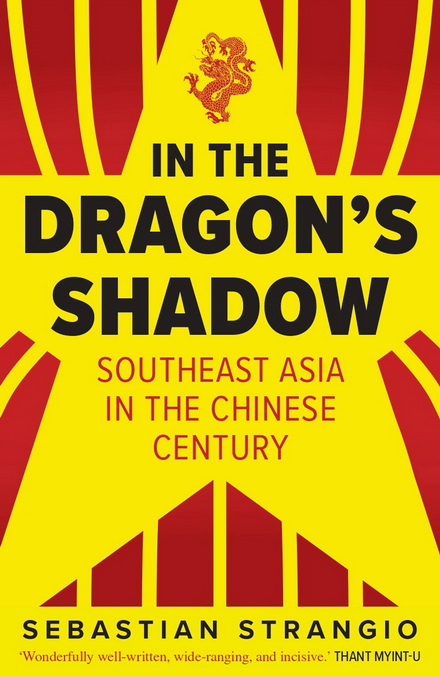
In the Dragon’s Shadow – Southeast Asia in the Chinese Century,
Yale University Press, New Haven & London, 2022.

Peter Peverelli
TFF Associate
This text is a combination of a book review and a report of a visit to Cambodia in January 2023. Both texts were published earlier in Dutch on Chinasquare.
It seems justified to compare the value of the ASEAN countries to China with that of South America to the US. Turned around, one could expect that the ASEAN countries regard China as a Big Brother that you cannot ignore, even if you want to. This book confirms that expectation, but also shows that any ASEAN member can build a win-win relationship with China in its own specific way. The author, an academic who has been stationed as a journalist in various ASEAN countries for years, builds his arguments on a solid historical foundation, combined with a rich variety of anecdotes.
History
All ASEAN member states have a long-term relationship with China. In the nineteenth century and for some regions even earlier, groups of Chinese emigrated to SE Asia in search of a better life than in their mostly poor home regions. Chinese traders also settled in the regions from which they sources their goods. This is how Chinese settlements arose all over the region. Western colonialism further encouraged this. Dutch, English or French, all welcomed the waves of Chinese entrepreneurs coming to the region. At the time Malaysia became an independent state, Chinese even made up almost half of the population.
Conflicts
Conflicts between the Chinese and the indigenous population have taken place since the earliest Chinese settlers. All over the region, Chinese people amassed wealth through their trade and generally by working hard to transcend their status as second-class citizens, which you soon gained as an immigrant. This regularly led to conflicts with the indigenous population. Even the European colonists were at time disturbed by the way affluent Chinese displayed their wealth.
Discrimination
After the decolonisation, the new states such as Indonesia, Malaysia or Burma actively created policies to give the natives more political influence at the expense of those Chinese ‘foreigners’ – e.g., the Chinese were often forced to take on local names to replace their original Chinese names. After the establishment of the PRC, ethnic Chinese were soon suspected of communist sympathies. Indeed, for a while in Malaysia, a communist guerrilla was active that consisted mainly of ethnic Chinese. Chinese schools and magazines were regularly banned. Some of the Chinese left, to China or to the former colonizer. Others preferred to assimilate.
New China
As China flourished economically after the start of economic reforms in the 1980s, ASEAN governments’ interest in ties with China increased. Certainly when China rushed past most of them, no country could afford not to enter into a trade relationship with China. The main problem was that economic influence was inextricably linked to political influence. ASEAN was not only economically interesting for China, but also a new pillar of support for international policy, known as the Belt and Road Initiative. In addition, there was also great interest among the rapidly growing group of Chinese private entrepreneurs to invest in ASEAN countries.
New Chinese
This Chinese investment in local industry and infrastructure was welcomed, but it came with a new influx of (semi-)permanent Chinese settlers. For the local population, it was difficult to see them as separate from the older cohorts of ethnic Chinese. As a result, the ethnic conflicts were further complicated. Notorious is the street with Chinese gambling palaces on the Burmese side of the border, led by new and old Chinese and mainly frequented by wealthy Chinese who are not allowed to gamble at home. The profits of such enterprises hardly benefited the local population. Moreover, in some places crime was rampant. The Chinese reaped the profits, while the locals carried the burden. Burma frequently allow Chinese police officers pursue Chinese criminals, rather than doing it themselves.
Tug-of-war
The ASEAN countries are now constantly torn between China’s call to share in its wealth and the West, especially the US, with its abstract concepts of freedom and democracy. The author shows that it is an unequal struggle. China is close by, both regionally and culturally. The West is far away, and the colonial past is far from forgotten. The latter also applies to the senseless war in Indochina that the US fought for decades.
Neutral
The author tells all this in a neutral way. China is not portrayed as a Big Brother in the classical sense. He constantly points to the consistency of China’s non-intervention policy. Nor does he describe China as the great benefactor. The best quote from one of his many interviews with local politicians is that “China is a friend, but not one you blindly trust.” The U.S. never actually attained the status of true friend and has more the role of someone you can refer to during negotiations with China; a secondary choice that is always available. The author does point out that the West would do well not to label China as an enemy in attempts to maintain a foothold in ASEAN states.
Contagious
This author writes with an enjoyable style. His enthusiasm for the region is contagious. It is clear that he has great knowledge of the region, and speaks a number of the local languages, without becoming pedantic. He gives his own opinions carefully and leaves room for the opinions of all parties. He regularly inserts anecdotes of his own adventures. One that got stuck in my mind was an illegal border crossing on the back of a motorcycle. I am not sure if you would have had the courage to follow suit. Anyone, even people with some knowledge of the region, can learn from this book. And because of the extensive notes and index, it is also a manual that you will consult regularly. This is a must for anyone with an interest in China and SE Asia.
Visit to Cambodia in January 2023
Memories
In my youth, Cambodia regularly made the news, but that was usually unpleasant news. After shaking off the French protectorate in 1953, the country has experienced several decades of war and civil war, culminating in the Khmer Rouge government. That also was a low in the opinion of most Cambodians about China, which initially supported the Khmer Rouge. However, we have had interesting conversations with Cambodians of different origins during our 21-day stay. The way they talked about China confirmed what Strangio pointed out in his book In the Dragon’s Shadow. I will share my experience in this short report.
First impressions
Already during the drive from the airport to the hotel, it becomes clear how strong China’s presence in Cambodia is. Many announcements are trilingual: Khmer (the official language of Cambodia), English and Chinese. Many restaurants, bars, shops, hairdressers, etc., have Chinese names. The menus in the better restaurants are also trilingual. Names of some office buildings or hotels are even only in Chinese. Most notably, however, the names of many government organizations are bilingual: Khmer and Chinese. Once upon a time, it was Khmer and French. Traces of this can also still be seen. The impression that Cambodia has now become a de facto Chinese protectorate quickly emerges.

China is a good ally
In the historical museums, China is mentioned as the nation with the earliest description of this region. Chinese explorers in the third century spoke of Fu Nan, the then name of a region that included present-day Cambodia, South Vietnam, and Thailand. Much later, in the 12th century, China helped the Khmer Empire in the war with Champa, a country that later became part of Vietnam. This is immortalized in a wall in the temple complex of Angkor Wat. That aid wasn’t entirely selflessness. China itself regularly waged war in that region, and the Khmer were a welcome ally. After the victory, many Chinese soldiers settled in the Khmer empire.
China as a false ally
A visit to Silk Island, a community on an island in the Mekong River that specializes in the production and processing of silk, became an interesting experience due to the explanation of a resident who, because he speaks good English, had declared himself a village guide. They had learned the knowledge of silk production from China, and in his explanation, he regularly compared the local process with the Chinese one. The explanation extended to the time of the Khmer Rouge because silk production had virtually come to a standstill in those years. China initially supported the Khmer Rouge because Norodom Sihanouk worked with them. Pol Pot, however, only used Sihanouk as a stepping stone to power and when he held that power, Sihanouk disappeared to the background. The guide told that most Cambodians are royalists and therefore blamed China for letting down their king. Only later, it turned out that Pol Pot had also put China on the wrong track.
China as big brother
However, the story of the village guide continued. After the fall of Pol Pot, the relationship with China returned to the way it used to be. It is precisely this village that desperately needs technical support from Chinese experts, and the patronage of Chinese visitors is also welcome. Chinese tourists came in large numbers before Covid and were eager buyers in the village shop where silk products are sold. In the words of the guide, Cambodia needs China. It may not always be a relationship of close friends, but it is one based on recognizing a common interest.
Confirming Strangio
With this, my impressions in Cambodia confirm the stories recorded by Sebastian Strangio in his book In the Dragon’s Shadow. China is a friend. Maybe not one you blindly trust, but still a friend. A friend may make a mistake, but then gets a chance to correct it. The friendship between China and Cambodia is a wonderful example of an Asian symbiotic relationship that is not directly understood by Western perceptions of friendship. While we were visiting Phnom Penh and Siem Reap, Cambodia was preparing for the celebration of Chinese New Year, despite the fact that their own New Year falls in April. Who cares, everybody loves a party.