Jim Lobe: Europeans see US engaged in new cold war but want no part of it

Artwork by Shubham Dhage

Jim Lobe

October 4, 2021

But there’s a prevailing view that the EU is more aligned with Washington’s military competition with China and Russia.

Even as President Joe Biden insisted at the United Nations this week that he seeks cooperation with potential foreign rivals, most Europeans believe that the United States is already engaged in a new “cold war” with China and Russia, they feel their own nations are not involved, according to a new survey of respondents in 12 EU countries released Tuesday by the European Council on Foreign Relations.

Originally published at Responsible Statecraft on September 23, 3021

However, they see their own European institutions, notably the European Union, as somewhat more invested in aligning the continent with Washington’s perceived interest in such a conflict, according to the report which warned that there appears to be a growing gap between the EU’s national publics and the EU leadership, as well as with the United States itself.

“If this new polling has captured a lasting trend, it reveals that European publics are not ready to see the growing tensions with China and Russia as a new Cold War,” said Ivan Krastev, co-author of the analysis that accompanied the new survey and Chair for Liberal Strategies of the European Council. “So far, it is only European institutions rather than European publics that are ready to see the world of tomorrow as a growing system of competition between democracy and authoritarianism,” he added.

The findings may spell more problems for NATO, the military alliance that unites the United States with European nations and appears to confirm a trend documented by previous ECFR surveys over the last several years.

Efforts by “foreign policymakers in Washington and Brussels to prepare for an ‘all of society’ generational struggle against autocracies in Beijing and Moscow…could well come up short when they discover that they do not have a societal consensus behind them,” the report warned.

“On its own, this gap in views of geopolitics is not necessarily a sign of the declining importance of the Western alliance,” it went on. “But it is a signal that, should a moment of crisis come, Brussels could be accused (by its national publics) of being an American voice in Europe rather than a European voice in the world,” it concluded.

The survey, which was conducted online and through telephone interviews in late May and early June, questioned just over 16,000 respondents in 12 EU nations — Austria, Bulgaria, Denmark, France, Germany, Hungary, Italy, Netherlands, Poland, Portugal, Spain, and Sweden — that together comprise about 80 percent of the bloc’s total population.

The new survey found that 60 percent of Europeans believe a new “cold war” is already underway between the United States and China and a somewhat lesser number — 59 percent — believe the same applies to relations between Washington and Moscow. 

But relatively few Europeans see their own country as similarly engaged. Only 15 percent of European respondents said they believe their own country is in conflict with China, while 59 percent disagreed. Respondents in Hungary, Bulgaria, Portugal, Austria, and Italy were most inclined to deny that China posed a threat to their countries.

Russia, on the other hand, appeared threatening to somewhat more respondents. One in four respondents continent-wide, led by Polish (44 percent, French 35 percent, and Sweden (32 percent) respondents said they considered that their country to be in a “cold war” with Moscow, while 46 percent continent-wide disagreed. 

However, respondents said they believed that the EU as an institution was more hawkish toward both China and Russia than their own countries. Thus, in contrast to the mere 15 percent of respondents who said they believed their own countries were in a “cold war” with China, more than twice that percentage (31 percent) said they considered the EU to be in conflict with Beijing. A slight plurality of 34 percent said they considered that the EU was not in conflict with China; the remainder expressed no opinion.

Similarly, the perception that the EU was engaged in a “cold war” with Russia than their own countries was substantially more widespread. A plurality of 44 percent expressed that view.

“National governments continue to disagree about the EU’s policy on China or Russia but, in the eyes of people in every surveyed EU member state (apart from Poland), Brussels seems to be understood as the foreign policy hawk when it comes to dealing with China and Russia,” according to the analysis. “The new West is a coalition between Washington and Brussels rather than between the U.S. and Europe.” In short, Brussels’ relative hawkishness runs against the grain of popular opinion in Europe.

“The European public thinks there is a new cold war, but they don’t want to have anything to do with it,” noted the report’s co-author, Mark Leonard. “Our polling reveals that a ‘cold war’ framing risks alienating European voters.”

“Unlike during the first cold war, they do not see an immediate existential threat to Europe’s neighborhood or a sense of ideological cohesion within the free world,” he added. “Politicians can no longer rely on tensions with Russia and China to convince the electorate of the value of a strong Atlantic alliance. Instead, they need to make the case from European interests, showing how a rebalanced alliance can empower and restore sovereignty to European citizens in a dangerous world.”

About the author

Jim Lobe served as chief of the Washington bureau of Inter Press Service (the other IPS) from 1980 to 1985 and again from 1989 to 2015. Best known for his coverage of the neoconservative movement’s influence on U.S. foreign policy, he has directed LobeLog.com, which has focused primarily on U.S. Middle East policy, since 2007. In 2015, LobeLog became the first weblog to win American Academy of Diplomacy’s Arthur Ross Media Award for Distinguished Reporting and Analysis on Foreign Affairs. Proud native of Seattle, Jim graduated with Highest Honors in History from Williams College and received a law degree from the University of California at Berkeley (Boalt Hall).

Please help TFF remain truly independent by contributing if you benefited from this article

[paypal-donation]
Share

Leave a Reply

Your email address will not be published. Required fields are marked *

Related Posts

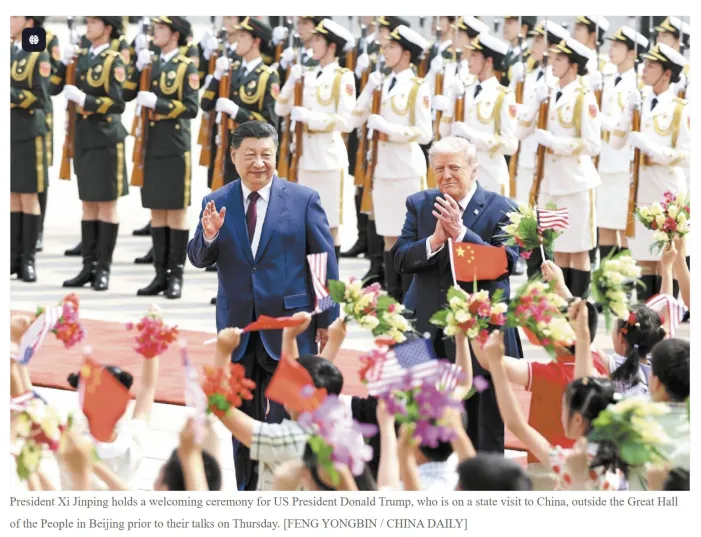
Jan Oberg May 15, 2026 Go to this Fox News page and scroll the whole way down: President Donald Trump tells the world that his meeting with President Xi Jinping yielded a lot of very concrete political and economic results – of course, only where the Chinese side, according to him, agreed with him. He does not mention the Taiwan issue, but Secretary of State, Marco Rubio, says that it did not feature prominently in their talks and that the US policy on Taiwan has not changed. Then go to China Daily – or Global Times – and you will see that for the Chinese it is framework, principles, structure of cooperation etc. that matters – all embedded in the overall idea of “constructive bilateral relationship of strategic stability.” Nowhere is any concrete agreement or deal – all that Trump refers to – mentioned. At the general level, this gives you insights into the very different social...
Jan Oberg, TFF director April 9, 2026 I was recently invited to have a good, long talk about the world – and, of course, about peace too – with Boris Malagurski on his Weight of Chains Channel on YouTube. It was a real joy and seems to have been greatly appreciated by the viewers too. Mr Malagurski and I shall of course be grateful if you share this conversation in your circles – of course, only if you like what you see and hear  And remember that this one – like hundreds of others with TFF Associates – can be enjoyed at our TFF Video Collection.
This is not another geopolitical commentary on the Arctic. It is a visionary peace proposal that can save the region from militarised rivalry and ecological ruin. A blueprint for shared security, sustainable development, and human dignity — benefitting Greenland, the Arctic, and the rest of us. Jan Oberg TFF director Lund, Sweden, February 17, 2026 I. Four Principles for a New Arctic Vision The Arctic is often framed as a cold arena of rivalry — a place where great powers test each other’s resolve. But this worldview is outdated, unimaginative, and ultimately self‑defeating. The Arctic is not a vacuum waiting to be militarised; it is a living region, a climate stabiliser, and a cultural homeland whose future will shape the future of humanity. If we begin from that understanding, a far more rational Arctic order becomes possible — one that is peaceful, cooperative, and centred on the people who actually live there. This vision rests...

Recent Articles

Jan Oberg May 15, 2026 Go to this Fox News page and scroll the whole way down: President Donald Trump tells the world that his meeting with President Xi Jinping yielded a lot of very concrete political and economic results – of course, only where the Chinese side, according to him, agreed with him. He does not mention the Taiwan issue, but Secretary of State, Marco Rubio, says that it did not feature prominently in their talks and that the US policy on Taiwan has not changed. Then go to China Daily – or Global Times – and you will see that for the Chinese it is framework, principles, structure of cooperation etc. that matters – all embedded in the overall idea of “constructive bilateral relationship of strategic stability.” Nowhere is any concrete agreement or deal – all that Trump refers to – mentioned. At the general level, this gives you insights into the very different social...
Lena Petrova of “World Affairs In Context” with more than half a million subscribers on YouTube wanted to explore what a peace researcher like me has to say about, among other things, the First and the Second Cold War and why eethics has disappeared from politics. I am particularly happy about this conversation that also yielded an amazing number of very appreciative comments on YouTube. No doubt, people are longing for alternatives, including peace perspectives.
The MIMAC – Military-Industrial-Media-Academic Complex – drives the world’s rampant militarism and wars without end. Here is a short reflection of how it works against all interests of humanity. #5 deals with why there is no real enemy or threat images/analysis. It’s all ex-post constructions. And, btw, theTFF Peace Pulse is now on Rumble.

TFF on Substack

Discover more from TFF Transnational Foundation & Jan Oberg.

Most Popular

Jan Oberg May 15, 2026 Go to this Fox News page and scroll the whole way down: President Donald Trump tells the world that his meeting with President Xi Jinping yielded a lot of very concrete political and economic results – of course, only where the Chinese side, according to him, agreed with him. He does not mention the Taiwan issue, but Secretary of State, Marco Rubio, says that it did not feature prominently in their talks and that the US policy on Taiwan has not changed. Then go to China Daily – or Global Times – and you will see that for the Chinese it is framework, principles, structure of cooperation etc. that matters – all embedded in the overall idea of “constructive bilateral relationship of strategic stability.” Nowhere is any concrete agreement or deal – all that Trump refers to – mentioned. At the general level, this gives you insights into the very different social...
Lena Petrova of “World Affairs In Context” with more than half a million subscribers on YouTube wanted to explore what a peace researcher like me has to say about, among other things, the First and the Second Cold War and why eethics has disappeared from politics. I am particularly happy about this conversation that also yielded an amazing number of very appreciative comments on YouTube. No doubt, people are longing for alternatives, including peace perspectives.
The MIMAC – Military-Industrial-Media-Academic Complex – drives the world’s rampant militarism and wars without end. Here is a short reflection of how it works against all interests of humanity. #5 deals with why there is no real enemy or threat images/analysis. It’s all ex-post constructions. And, btw, theTFF Peace Pulse is now on Rumble.
Read More
Screenshot-2026-05-15-103534
Jan Oberg May 15, 2026 Go to this Fox News page and scroll the whole way down: President Donald Trump tells the world that his meeting with President Xi Jinping yielded a lot of very concrete political and economic results – of course, only where the Chinese side, according to him, agreed with him. He does not mention the Taiwan issue, but Secretary of State, Marco Rubio, says that it did not feature prominently in their talks and that the US policy on Taiwan has not changed. Then go to China Daily – or Global Times – and you will see that for the Chinese it is framework, principles, structure of cooperation etc. that matters – all embedded in the overall idea of “constructive bilateral relationship of strategic stability.” Nowhere is any concrete agreement or deal – all that Trump refers to – mentioned. At the general level, this gives you insights into the very different social...
Screenshot-2026-05-12-104023
Lena Petrova of “World Affairs In Context” with more than half a million subscribers on YouTube wanted to explore what a peace researcher like me has to say about, among other things, the First and the Second Cold War and why eethics has disappeared from politics. I am particularly happy about this conversation that also yielded an amazing number of very appreciative comments on YouTube. No doubt, people are longing for alternatives, including peace perspectives.
Screenshot-2026-04-13-154551 (2)
The MIMAC – Military-Industrial-Media-Academic Complex – drives the world’s rampant militarism and wars without end. Here is a short reflection of how it works against all interests of humanity. #5 deals with why there is no real enemy or threat images/analysis. It’s all ex-post constructions. And, btw, theTFF Peace Pulse is now on Rumble.
Screenshot-2026-04-13-154551 (1)
Jan Oberg, TFF director April 28, 2026 In this third TFF Peace Pulse, I make the important distinction between the violence and the conflict that violence is a symptom of. If you want peace, focus on the underlying conflict because that is the key to resolution, peacemaking, and a better future for the parties. The West is obsessed with violence, just look around you – and 90+ per cent of the public debate is about military issues and other violence – totally wasted for peace. These Peace Pulses will only be published here a few times. You will also not find them on YouTube and Vimeo because both platforms have blocked TFF and me; you know, peace is dangerous these days. Most TFF’s videos since 2007 are now on Rumble.
Screenshot-2026-04-13-154551
In contrast to most, we’ll bring alternatives, solutions, hope and strategies for a better future. Times are dangerous, yes, but that only intensifies the need for constructive thinking and action! Jan Oberg, TFF director April 13, 2026 The new TFF Peace Pulse uses video messages in a new way: Max 3-5-minute-long comments, ideas or perhaps mini-lectures, all about peace – positive peace. We launch them today on April 13, 2026 with a carefully crafted visual aesthetic fitting the content. We hope to publish them regularly from now on. We launch Peace Pulse (PP) – for a number of reasons. The world is in chaos, and there are countless reasons to feel concerned, frustrated, even angry. The atmosphere is saturated with doom and gloom, with negative energy and rear‑mirror thinking, while vision, imagination, alternatives, strategies and genuine future‑mindedness remain in short supply. And without them, we simply can’t save the world. Looking at problems from a hundred angles will...
IMG_5165 (1)
PART II — Publishing Peace in a System That Prioritises Militarism Jan Oberg, TFF director April 10, 2026 How TFF Maintains a Daily Voice in a Digital World Built for Noise This article is part of the series “TFF at 40″ and it invites you to learn about Four Decades of Publishing Peace. It takes a look at how a small, people‑financed peace foundation has communicated across four generations of technology — from wax stencils and fax machines to mass email and Substack — and why TFF continues to publish every single day in a system that rewards noise, conflict, and militarism. ◆ What it means to publish peace every single day in a digital system built for 24/7 news and other noise, confrontation, and militarism. How TFF’s independence, continuity, and global readership defy algorithms, donor cycles, and Western media censorhip — and why the Majority World keeps listening. When the...