
Jean-Pierre Lehmann: Why the world has to study Chinese history, and how China views history

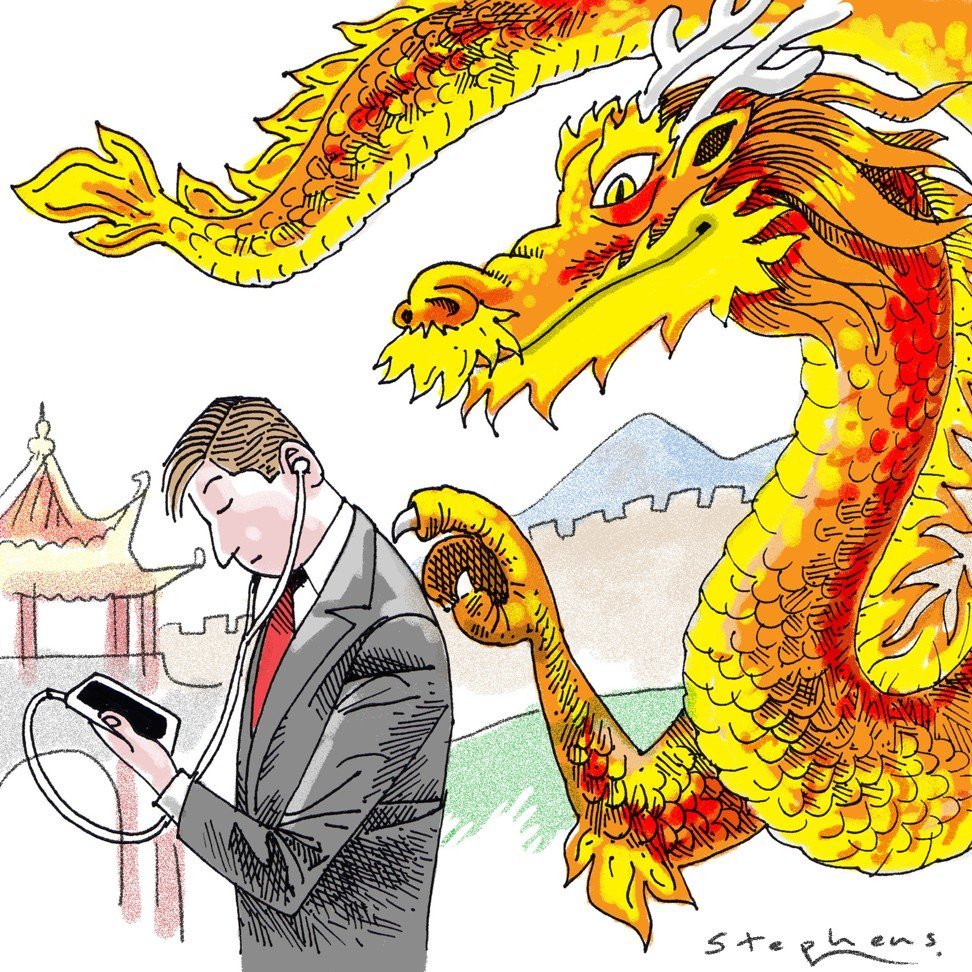
It is dispiriting and indeed alarming to see how ignorant the West is about China. Illustration: Craig Stephens

In 2017, shortly before his death, Jean-Pierre Lehmann said that the country’s centrality in our 21st-century world makes it imperative that outsiders understand what is shaping its views and decisions, and Hong Kong could do more to facilitate such learning

Jean-Pierre Lehmann

October 29, 2021

Far from ushering in a “new world order”, so far the 21st century has been marked by turbulent uncertainties. There are very few things on which a consensus could arise – even on the most critical issues. For example, will there be war, or not, and, if so, between who? There is, however, one thing that seems incontestable: in stark contrast to the 19th and 20th centuries, when China was a peripheral passive actor in global affairs, in the 21st century its role is and will be absolutely primordial. That point requires no further elaboration. What that role, or those roles, will be is an entirely different matter.

In that context, it is dispiriting and indeed alarming to see how ignorant the West is about China and, from what I can see, intends to remain so. Here are a few random anecdotes to illustrate.

I fly half-a-dozen or more times a year between Europe and China. I invariably fly business class and invariably the majority of the passengers are white male middle-aged executives. Also invariably, the majority of these white middle-aged globetrotting executives, when not sleeping, are watching asinine videos or escapist films rather than reading books on Chinese philosophy, Confucianism, Chinese history, Chinese literature or indeed even the Chinese economy and business.

The harmful effects of this video addiction and apparent allergy to knowledge are visible. In my executive education courses, I often start with a “literacy” test, posing pretty basic questions about China. The results are invariably poor. And, as I say, it’s pretty basic stuff.

This thought-provoking article was published by
the South China Morning Post on August 8, 2017

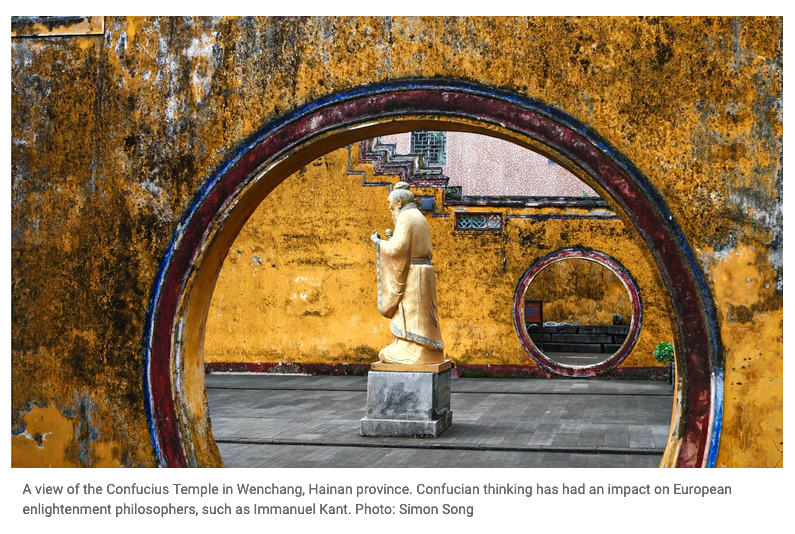
On a recent occasion, two British executives who go to China admitted they had never heard, or only dimly heard, of the Opium wars. At a preparatory session in January for about 100 executives who were going to China, many for the first time, on an “education” trip, I focused on the question: in order to know where China is going to, where has it come from? So we looked at Confucianism, including the impact it had on European enlightenment philosophers, such as Immanuel Kant; China’s traditional view of its place in the world; the voyages of Zheng He and their significance; and so on down to contemporary issues – for example, the position of Taiwan. As this was a four-hour session, it was impossible to go into depth on any of these issues, but in the course of the presentation, I gave references to a lot of books for further reading, including Chinese novels.

It went down like a lead balloon. They complained that I did not focus enough on “contemporary relevant stuff”. One wrote, “Why did he give us all these books when he knows 90 per cent of us will never read them?”

When I gave the presentation, I had not yet read Howard French’s outstanding book, Everything Under the Heavens: How the Past Helps Shape China’s Push for Global Power. French makes the important point that, in the current era, not only must we be knowledgeable about Chinese history, but also how Chinese view history. For the past two centuries, the Western view of history has dominated. A view is, by definition, biased and selective. As we are into an era in which China looms large, it is important to heed French’s point.

In my MBA classes that combine Chinese and Western students, I often find that the Chinese are more likely to have heard of the Monroe Doctrine than my Western students are. Why is that? Ostensibly, the Monroe Doctrine had nothing to do with China. A book I also recommend (to the 10 per cent who are interested) is Geoff Dyer’s The Contest of the Century: The New Era of Competition with China, which addresses the question.

This is not, I hasten to add, to determine who has the “right” or “wrong” view of history, but it is critical for proper discourse to know what these views are.
In the mid-1960s, footloose and fancy-free, I was kicking around East Asia. This corresponded – the Tokyo Olympics took place in 1964 – to what became known as the post-war Japanese economic miracle. I became intrigued by the question of why Japan was the only non-Western country to have successfully modernised and industrialised in the 19th century. So I went to Oxford and wrote my doctoral thesis on the transformations of Meiji Japan (1868-1912), from which I also published a book titled The Roots of Modern Japan.

Japan had been a closed country for two centuries. When the Western menace began appearing off Japan’s shores in the mid-19th century, the policies of the xenophobes were to “expel the barbarians”, while the progressives argued that, on the contrary, if only for the sake of survival, Japan should open up and learn from the West as an indispensable means for strengthening the country. From 1871-73, one of history’s most impressive international learning expeditions occurred, in what was known as the Iwakura mission, after the name of the leader of the expedition, Iwakura Tomomi.

Japan’s Meiji narrative is truly remarkable and remains highly relevant to this date. It is a vivid illustration of the quote attributed to Charles Darwin that “it is not the strongest species that survive, nor the most intelligent, but the ones most responsive to change”.

In the process of learning from the West, in order to become strong militarily and economically, culturally Japan was also greatly enriched with, for example, the emergence of painters such as Kuroda Seiki and novelists such as Natsume Sôseki. (Japan’s contemporary woes can be partly attributed to society having abandoned the “spirit of Meiji” and become inward-looking.)

So, having a deeper understanding of China will have material benefits. A study by the Brookings Institution estimates that 88 per cent of the next billion middle-class people are likely to be in the Asia-Pacific region. Learning about Chinese philosophy, history, music, painting, calligraphy and literature will bring culturally enriching rewards.

Hong Kong, it seems to me, could do far more in acting as a global hub of Chinese culture.

Of course, I am by no means suggesting that one should learn about China at the exclusion of other societies. Learning about India and how Indians see the world, ditto about Indonesians, Vietnamese, the Arabs, the Nigerians, the Peruvians, and so on, are all enriching and fascinating.

But China stands out as an absolute global strategic and educational priority.

The author

Jean-Pierre Lehmann 1945-2017
– was emeritus professor at IMD, Lausanne, Switzerland, where he was appointed to the chair of international political economy in 1997.

He worked intensively and extensively across Asia for 50 years.
He is founder of the Evian Group, an international coalition of corporate, government and opinion leaders united by a common vision of enhancing global prosperity for the benefit of all.

At the time of writing the above article, he was a visiting professor in the Faculty of Business and Economics at the University of Hong Kong and at NIIT University in Neemrana, Rajasthan, India.

Here is the Wikipedia page about him.

Please help TFF remain truly independent by contributing if you benefited from this article

[paypal-donation]

Note

The editor wants to point out that the above quotation attributed to Charles Darwin is most likely incorrect.


Share

Leave a Reply

Your email address will not be published. Required fields are marked *

Related Posts

Launched on November 17, 2024Updated with new materials regularly TFF Board members Thore Vest. Everywhere, the delegation was met with a sincere wish to develop knowledge, dialogue, cooperative projects, and initiatives based on citizens’ diplomacy – in general, but with the West in particular. For more, see “Report from the Nordic delegation to China’s Xinjiang Province, September 7-15, 2024.” While the delegation was in Xinjiang, various ideas were already being discussed from the local to the top level, i.e., with the governor and party leaders of Xinjiang. The two TFF Associates suggested that TFF set up a special section – in addition to its “China and Silk” – where various quality materials about Xinjiang would regularly be published to promote public education about Xinjiang, particularly its contemporary development – worldwide but in the West in particular. This is now a reality – as can be seen below – but it...
Photo Jan Oberg China has recently garnered significant attention due to its advancements in various technological fields, such as quantum physics and artificial intelligence. In media discussions and my lectures on China, it is common to encounter objections asserting that the West, particularly the United States, is certainly ahead of China. These assertions appear to be more emotional than factual. However, a more fundamental consideration is whether this question holds any significance. Cultural Perspective One aspect that Westerners often overlook is the cultural variation in understanding the relationship between abstract academic insights and practical applications of those insights. To comprehend the origin and significance of discussions on technological superiority, it is essential to acknowledge cultural and social differences between China and the West. I have explored this topic before in some of my previous articles published on the TFF website. Particularism On the cultural dimension universalist – particularist, China exhibits...
Foreword The Board of The Transnational Foundation in Sweden has decided to publish an easy-to-read, scholarly anthology that addresses one of the most important – and potentially dangerous – issues of our time: Why are the political, economic, and medialised Western images of China so consistently negative – and what can you do to understand China better? These images may be expressions of a political will to present only various shades of grey and black with the aim of building a consciousness about China as an enemy and not a partner. They may also be seen as a sort of world-dominating ethos of ignorance based upon the assumption that “we’ve-got-nothing-to-learn-from-others,’ we are the teacher. Another possibility is that the West, deep down, feels that it is getting relatively weaker from a macro-historical perspective and comforts itself with denial and accusations against “the other” of being the reason for its manifest...

Recent Articles

Jan Oberg May 15, 2026 Go to this Fox News page and scroll the whole way down: President Donald Trump tells the world that his meeting with President Xi Jinping yielded a lot of very concrete political and economic results – of course, only where the Chinese side, according to him, agreed with him. He does not mention the Taiwan issue, but Secretary of State, Marco Rubio, says that it did not feature prominently in their talks and that the US policy on Taiwan has not changed. Then go to China Daily – or Global Times – and you will see that for the Chinese it is framework, principles, structure of cooperation etc. that matters – all embedded in the overall idea of “constructive bilateral relationship of strategic stability.” Nowhere is any concrete agreement or deal – all that Trump refers to – mentioned. At the general level, this gives you insights into the very different social...
Lena Petrova of “World Affairs In Context” with more than half a million subscribers on YouTube wanted to explore what a peace researcher like me has to say about, among other things, the First and the Second Cold War and why eethics has disappeared from politics. I am particularly happy about this conversation that also yielded an amazing number of very appreciative comments on YouTube. No doubt, people are longing for alternatives, including peace perspectives.
The MIMAC – Military-Industrial-Media-Academic Complex – drives the world’s rampant militarism and wars without end. Here is a short reflection of how it works against all interests of humanity. #5 deals with why there is no real enemy or threat images/analysis. It’s all ex-post constructions. And, btw, theTFF Peace Pulse is now on Rumble.

TFF on Substack

Discover more from TFF Transnational Foundation & Jan Oberg.

Most Popular

Jan Oberg May 15, 2026 Go to this Fox News page and scroll the whole way down: President Donald Trump tells the world that his meeting with President Xi Jinping yielded a lot of very concrete political and economic results – of course, only where the Chinese side, according to him, agreed with him. He does not mention the Taiwan issue, but Secretary of State, Marco Rubio, says that it did not feature prominently in their talks and that the US policy on Taiwan has not changed. Then go to China Daily – or Global Times – and you will see that for the Chinese it is framework, principles, structure of cooperation etc. that matters – all embedded in the overall idea of “constructive bilateral relationship of strategic stability.” Nowhere is any concrete agreement or deal – all that Trump refers to – mentioned. At the general level, this gives you insights into the very different social...
Lena Petrova of “World Affairs In Context” with more than half a million subscribers on YouTube wanted to explore what a peace researcher like me has to say about, among other things, the First and the Second Cold War and why eethics has disappeared from politics. I am particularly happy about this conversation that also yielded an amazing number of very appreciative comments on YouTube. No doubt, people are longing for alternatives, including peace perspectives.
The MIMAC – Military-Industrial-Media-Academic Complex – drives the world’s rampant militarism and wars without end. Here is a short reflection of how it works against all interests of humanity. #5 deals with why there is no real enemy or threat images/analysis. It’s all ex-post constructions. And, btw, theTFF Peace Pulse is now on Rumble.
Read More
Screenshot-2026-05-15-103534
Jan Oberg May 15, 2026 Go to this Fox News page and scroll the whole way down: President Donald Trump tells the world that his meeting with President Xi Jinping yielded a lot of very concrete political and economic results – of course, only where the Chinese side, according to him, agreed with him. He does not mention the Taiwan issue, but Secretary of State, Marco Rubio, says that it did not feature prominently in their talks and that the US policy on Taiwan has not changed. Then go to China Daily – or Global Times – and you will see that for the Chinese it is framework, principles, structure of cooperation etc. that matters – all embedded in the overall idea of “constructive bilateral relationship of strategic stability.” Nowhere is any concrete agreement or deal – all that Trump refers to – mentioned. At the general level, this gives you insights into the very different social...
Screenshot-2026-05-12-104023
Lena Petrova of “World Affairs In Context” with more than half a million subscribers on YouTube wanted to explore what a peace researcher like me has to say about, among other things, the First and the Second Cold War and why eethics has disappeared from politics. I am particularly happy about this conversation that also yielded an amazing number of very appreciative comments on YouTube. No doubt, people are longing for alternatives, including peace perspectives.
Screenshot-2026-04-13-154551 (2)
The MIMAC – Military-Industrial-Media-Academic Complex – drives the world’s rampant militarism and wars without end. Here is a short reflection of how it works against all interests of humanity. #5 deals with why there is no real enemy or threat images/analysis. It’s all ex-post constructions. And, btw, theTFF Peace Pulse is now on Rumble.
Screenshot-2026-04-13-154551 (1)
Jan Oberg, TFF director April 28, 2026 In this third TFF Peace Pulse, I make the important distinction between the violence and the conflict that violence is a symptom of. If you want peace, focus on the underlying conflict because that is the key to resolution, peacemaking, and a better future for the parties. The West is obsessed with violence, just look around you – and 90+ per cent of the public debate is about military issues and other violence – totally wasted for peace. These Peace Pulses will only be published here a few times. You will also not find them on YouTube and Vimeo because both platforms have blocked TFF and me; you know, peace is dangerous these days. Most TFF’s videos since 2007 are now on Rumble.
Screenshot-2026-04-13-154551
In contrast to most, we’ll bring alternatives, solutions, hope and strategies for a better future. Times are dangerous, yes, but that only intensifies the need for constructive thinking and action! Jan Oberg, TFF director April 13, 2026 The new TFF Peace Pulse uses video messages in a new way: Max 3-5-minute-long comments, ideas or perhaps mini-lectures, all about peace – positive peace. We launch them today on April 13, 2026 with a carefully crafted visual aesthetic fitting the content. We hope to publish them regularly from now on. We launch Peace Pulse (PP) – for a number of reasons. The world is in chaos, and there are countless reasons to feel concerned, frustrated, even angry. The atmosphere is saturated with doom and gloom, with negative energy and rear‑mirror thinking, while vision, imagination, alternatives, strategies and genuine future‑mindedness remain in short supply. And without them, we simply can’t save the world. Looking at problems from a hundred angles will...
IMG_5165 (1)
PART II — Publishing Peace in a System That Prioritises Militarism Jan Oberg, TFF director April 10, 2026 How TFF Maintains a Daily Voice in a Digital World Built for Noise This article is part of the series “TFF at 40″ and it invites you to learn about Four Decades of Publishing Peace. It takes a look at how a small, people‑financed peace foundation has communicated across four generations of technology — from wax stencils and fax machines to mass email and Substack — and why TFF continues to publish every single day in a system that rewards noise, conflict, and militarism. ◆ What it means to publish peace every single day in a digital system built for 24/7 news and other noise, confrontation, and militarism. How TFF’s independence, continuity, and global readership defy algorithms, donor cycles, and Western media censorhip — and why the Majority World keeps listening. When the...
