
Iran’s nuclear program: Diplomacy, war, and (in)security in the Nuclear Age

Perhaps, Netanyahu deserves some words of appreciation, at least from the Israeli hard right, for the temporary erasure of the Palestinian ordeal from national, regional, and global policy agendas. Many are distracted by the Republican recriminations directed at Obama’s diplomatic initiative to close a deal that exchanges a loosening of sanctions imposed on Iran for an agreement by Tehran to accept intrusive inspections of their nuclear program and strict limits on the amount of enriched uranium of weapons grade that can be produced or retained.

We can only wonder about the stability and future prospects of the United States if 47 Republican senators can irresponsibly further jeopardize the peace of the Middle East and the world by writing an outrageous Open Letter to the leadership of Iran.

In this reckless political maneuver the government of Iran is provocatively reminded that whatever agreement may be reached by the two governments will in all likelihood be disowned if a Republican is elected president in 2016, or short of that, by nullifying actions taken by a Republican-controlled Congress.

Mr. Netanyahu must be smiling whenever he looks at a mirror, astonished by his own ability to get the better of reason and self-interest in America, by his pyrotechnic display of ill-informed belligerence in his March 2nd address to Congress. Surely, political theater of sorts, but unlike a performance artist, Netanyahu is a political player whose past antics have brought death and destruction and now mindlessly and bombastically risk far worse in the future.

What interests and disturbs me even more than the fallout from Netanyahu’s partisan speech, are several unexamined presuppositions that falsely and misleadingly frame the wider debate on Iran policy. Even the most respected news sites in the West, including such influential outlets as the NY Times or The Economist, frame the discourse by taking three propositions for granted in ways that severely bias our understanding:

• that punitive sanctions on Iran remain an appropriate way to prevent further proliferation of nuclear weapons in the Middle East, and enjoyed the backing of the United Nations;

• that Iran must not only renounce the intention to acquire nuclear weapons, but their renunciation must be frequently monitored and verified, while nothing at all is done about Israel’s arsenal of nuclear weapons;

• that there is nothing intrinsically wrong about Irael’s threats to attack Iran if it believes that this would strengthen its security either in relation to a possible nuclear attack or in relation to Iran’s support for Hezbollah and Hamas.

Sanctions

Sanctions are a form of coercion expressly imposed in this case to exert pressure on Iran to negotiate an agreement that would provide reassurance that it was not seeking to acquire nuclear weaponry. Supposedly, Iran’s behavior made such a reinforcement of the nonproliferation treaty regime a reasonable precaution. Such measures had never been adopted or even proposed in relation to either Germany and Japan, the two main defeated countries in World War II, who have long possessed the technical and material means to acquire nuclear weapons in a matter of months.

Iran has repeatedly given assurances that its nuclear program is peacefully aimed at producing energy and for medical applications, not weapons, and has accepted a willingness to have its nuclear program more regulated than is the case for any other country in the world.

It should be appreciated that Iran has not been guilty of waging an aggressive war for over 275 year. Not only has it refrained in recent years from launching attacks across its borders, although it has itself been severely victimized by major interventions and aggressions. Most spectacularly, the CIA-facilitated coup in 1953 that restored the Shah to power and overthrew a democratically elected government imposed a dictatorial regime on the country for over 25 years.

And in 1980 Iraq invaded Iran with strong encouragement of the United States. Additionally, Iran has been subject over the years to a variety of Western covert operations designed to destabilize its government and disrupt its nuclear program.

Despite their UN backing, the case for sanctions seems to be an unfortunate instance of double standards, accentuated by the averted gaze of the international community over the years with respect to Israel’s process of acquisition, possession, and development of nuclear weaponry.

This is especially irresponsible, given Israel’s behavior that has repeatedly exhibited a defiant attitude toward international law and world public opinion.

I would conclude that the imposition of harsh sanctions on Iran is discriminatory, more likely to intensify that resolve conflict. The proper use of international sanctions is to avert war or implement international law, and not as here to serve as a geopolitical instrument of hard power that seeks to sustain a hierarchical nuclear status quo in the region and beyond.

Nuclear weapons option

Iran is expected not only to forego the option to acquire nuclear weapons, but to agree to a framework of intrusive inspection if it wants to be treated as a ‘normal’ state after it proves itself worthy. As indicated, this approach seems discriminatory and hypocritical in the extreme.

It would be more to the point to acknowledge the relative reasonableness of Iran’s quest for a deterrent capability given the extent to which its security and sovereignty have threatened and encroached upon by the United States and Israel.

It is relevant to note that the Obama presidency, although opting for a diplomatic resolution of the dispute about its nuclear program, nevertheless repeatedly refuses to remove the military option from the negotiating table.

Israel does little to hide its efforts to build support for a coercive approach that threatens a preemptive military strike. Such an unlawful imprudent approach is justified by Israel’s belief that Iran poses an emerging existential threat to its survival if it should acquire weapons of mass destruction. Israel bases this assessment on past statements by Iranian leaders that Israel should not or will not exist, but such inflammatory rhetoric has never been tied to any statement of intention to wage war against Israel.

To assert an existential threat as a pretext for war is irresponsible and dangerous.

From Iran’s perspective acquiring a nuclear weapons capability would seem a reasonable response to its security situation. If deterrence is deemed a security necessity for the United States and Israel, given their military dominance in conventional weaponry, it should be even more so for Iran that is truly faced with a genuine, credible, and dangerous existential threat.

Few countries would become safer and more secure if in possession of nuclear weapons but Iran is one state that likely would be. Again what is at stake most fundamentally is the challenge to the nuclear oligopoly that has been maintained since the early stages of the Cold War when the Soviet Union broke the American nuclear monopoly.

More immediately threatened if Iran were to acquire nuclear weapons at some future point is Israel’s regional nuclear weapons monopoly that serves both as a deterrent to others and helps clear political space for Israel’s expansionist moves in the region. I would not argue that Iran should acquire nuclear weapons, but rather that it has the strongest case among sovereign states to do so, and it is a surreal twist of realities to act as if Iran is the outlier or rogue state rather than the nuclear weapons states that refuse to honor their obligation set forth in Article VI of the NPT to seek nuclear disarmament in good faith at a time.

The most urgent threat to the future in this period arises from the increasing risk that nuclear weapons will be used at some point to resolve an international conflict, and thus it should be a global policy imperative to demand efforts to achieve nuclear disarmament rather than use geopolitical leverage to sustain the existing hierarchy of states with respect to nuclear weaponry.

Military threats

Israel’s military threats directed at Iran clearly violate the international law prohibition contained in Article 2(4) of the UN Charter that prohibit “threats or uses” of force except for self-defense against a prior armed attack or with an authorization by the Security Council. Despite this threat to international peace in an already turbulent Middle East, there is a widespread international acceptance of Israel’s behavior, and in fact, the most persuasive argument in favor of the sanctions regime is that it allays the concerns of the Israeli government and thus reduces the prospect of a unilateral military strike on Iran.

Conclusion

Overall, this opportunistic treatment of Iran’s nuclear program is less indicative of a commitment to nonproliferation than it is a shortsighted expression of geopolitical priorities.

If peace and stability were the true motivations of the international community, then we would at least expect to hear strident calls for a nuclear free Middle East tied to a regional security framework.

Until such a call is made, there is a cynical game being played with the complicity of the mainstream media. To expose this game we need to realize how greatly the three presuppositions discussed above misshape perceptions and discourse.
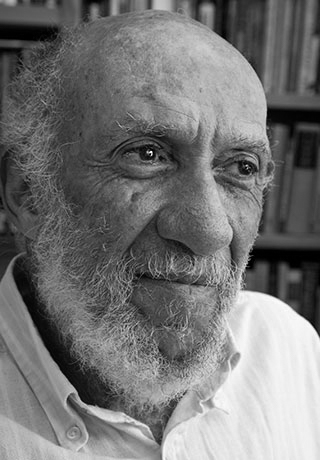

Professor Falk became an adviser to TFF when it was established in 1985.

Share

Leave a Reply

Your email address will not be published. Required fields are marked *

Related Posts

“En dag som berättigar till fest”, utropade den London-baserade al-Quds al-Arabi efter FN:s eldupphörresolution, “eftersom detta är första gången som Israel accepterar ett FN-beslut från en position som besegrad och inte som segrare”. Att ett arabisk-israeliskt krig för en gångs skull slutat med arabisk seger, är en helt dominerade åsikt i arabiska medier. Al-Quds al-Arabi tillåter sig att drömma om att det israeliska nederlaget skall leda till massflykt från Israel. Men i nästa andetag påminner tidningen om att Israel aldrig brukar genomföra sina internationella åtaganden och varnar för att förlorarna, liksom tidigare, kan hämnas genom att provocera fram inbördeskrig i Libanon. Med tanke på de otaliga massmediala vittnesmålen om det libanesiska folkets eniga motståndskraft förefaller risken för inre stridigheter i det sargade landet just nu liten. Men visst kan man urskilja nyansskillnader i libanesiska tidningar. Vänsterorganet al-Safir uppfattar FN-resolutionen som en komplott i syfte att rädda Israel från ännu större...
Greenland – the world’s largest island, a continent of its own with only 57.000 inhabitants. I visited it for the first time in May 2005. I flew across the inland ice to Nuuk, the tiny capital with some 14.000 inhabitants. I was overwhelmed by the pride and kindness of everyone I met as well as by the unique natural beauty. Unfortunately, due to weather conditions during my ten-day stay I could get nowhere else but Nuuk. Fortunately, however, among those I met was Gitte Arvegaard, a Danish lawyer and negotiator employed by the local government, Greenland Home Rule. She turned out to be an enthusiastic photographer with a lot of pictures taken during various trips around Greenland. So this Greeland series is the result of our cooperative effort. We both hope you enjoy it and are stimulated to visit Greenland – about which you may read more here. Finally, if you want to...
  Back to the series “Bujumbura, Burundi”

Recent Articles

“En dag som berättigar till fest”, utropade den London-baserade al-Quds al-Arabi efter FN:s eldupphörresolution, “eftersom detta är första gången som Israel accepterar ett FN-beslut från en position som besegrad och inte som segrare”. Att ett arabisk-israeliskt krig för en gångs skull slutat med arabisk seger, är en helt dominerade åsikt i arabiska medier. Al-Quds al-Arabi tillåter sig att drömma om att det israeliska nederlaget skall leda till massflykt från Israel. Men i nästa andetag påminner tidningen om att Israel aldrig brukar genomföra sina internationella åtaganden och varnar för att förlorarna, liksom tidigare, kan hämnas genom att provocera fram inbördeskrig i Libanon. Med tanke på de otaliga massmediala vittnesmålen om det libanesiska folkets eniga motståndskraft förefaller risken för inre stridigheter i det sargade landet just nu liten. Men visst kan man urskilja nyansskillnader i libanesiska tidningar. Vänsterorganet al-Safir uppfattar FN-resolutionen som en komplott i syfte att rädda Israel från ännu större...
Greenland – the world’s largest island, a continent of its own with only 57.000 inhabitants. I visited it for the first time in May 2005. I flew across the inland ice to Nuuk, the tiny capital with some 14.000 inhabitants. I was overwhelmed by the pride and kindness of everyone I met as well as by the unique natural beauty. Unfortunately, due to weather conditions during my ten-day stay I could get nowhere else but Nuuk. Fortunately, however, among those I met was Gitte Arvegaard, a Danish lawyer and negotiator employed by the local government, Greenland Home Rule. She turned out to be an enthusiastic photographer with a lot of pictures taken during various trips around Greenland. So this Greeland series is the result of our cooperative effort. We both hope you enjoy it and are stimulated to visit Greenland – about which you may read more here. Finally, if you want to...
 Jan Oberg’s storyof how he met Sir Paul Liverpool – where else to meet Paul McCartney? Paul’s old class mate and TFF Associate, Jonathan Power introduced me to Paul McCartney in Liverpool at an informal reception. It was held at what used to be their school, now the Liverpool Institute for Performing Arts and we were there to celebrate that Jonathan had written Amnesty International’s 40th Anniversary book. This happy event for “righting wrongs and writing songs” gave me an opportunity to meet Paul and tell him about TFF and get straight to the matter: would he consider making a donation in support of our work for peace? While I was probably the only one with such a wish that day, I was certainly not the only one who wanted to shake hands and talk with him. In the last minutes before Paul was to leave, Jonathan brought us together and we got about three...

TFF on Substack

Discover more from TFF Transnational Foundation & Jan Oberg.

Most Popular

“En dag som berättigar till fest”, utropade den London-baserade al-Quds al-Arabi efter FN:s eldupphörresolution, “eftersom detta är första gången som Israel accepterar ett FN-beslut från en position som besegrad och inte som segrare”. Att ett arabisk-israeliskt krig för en gångs skull slutat med arabisk seger, är en helt dominerade åsikt i arabiska medier. Al-Quds al-Arabi tillåter sig att drömma om att det israeliska nederlaget skall leda till massflykt från Israel. Men i nästa andetag påminner tidningen om att Israel aldrig brukar genomföra sina internationella åtaganden och varnar för att förlorarna, liksom tidigare, kan hämnas genom att provocera fram inbördeskrig i Libanon. Med tanke på de otaliga massmediala vittnesmålen om det libanesiska folkets eniga motståndskraft förefaller risken för inre stridigheter i det sargade landet just nu liten. Men visst kan man urskilja nyansskillnader i libanesiska tidningar. Vänsterorganet al-Safir uppfattar FN-resolutionen som en komplott i syfte att rädda Israel från ännu större...
Greenland – the world’s largest island, a continent of its own with only 57.000 inhabitants. I visited it for the first time in May 2005. I flew across the inland ice to Nuuk, the tiny capital with some 14.000 inhabitants. I was overwhelmed by the pride and kindness of everyone I met as well as by the unique natural beauty. Unfortunately, due to weather conditions during my ten-day stay I could get nowhere else but Nuuk. Fortunately, however, among those I met was Gitte Arvegaard, a Danish lawyer and negotiator employed by the local government, Greenland Home Rule. She turned out to be an enthusiastic photographer with a lot of pictures taken during various trips around Greenland. So this Greeland series is the result of our cooperative effort. We both hope you enjoy it and are stimulated to visit Greenland – about which you may read more here. Finally, if you want to...
 Jan Oberg’s storyof how he met Sir Paul Liverpool – where else to meet Paul McCartney? Paul’s old class mate and TFF Associate, Jonathan Power introduced me to Paul McCartney in Liverpool at an informal reception. It was held at what used to be their school, now the Liverpool Institute for Performing Arts and we were there to celebrate that Jonathan had written Amnesty International’s 40th Anniversary book. This happy event for “righting wrongs and writing songs” gave me an opportunity to meet Paul and tell him about TFF and get straight to the matter: would he consider making a donation in support of our work for peace? While I was probably the only one with such a wish that day, I was certainly not the only one who wanted to shake hands and talk with him. In the last minutes before Paul was to leave, Jonathan brought us together and we got about three...
Read More
Imagen-thumbnail-The-Transnational-1
“En dag som berättigar till fest”, utropade den London-baserade al-Quds al-Arabi efter FN:s eldupphörresolution, “eftersom detta är första gången som Israel accepterar ett FN-beslut från en position som besegrad och inte som segrare”. Att ett arabisk-israeliskt krig för en gångs skull slutat med arabisk seger, är en helt dominerade åsikt i arabiska medier. Al-Quds al-Arabi tillåter sig att drömma om att det israeliska nederlaget skall leda till massflykt från Israel. Men i nästa andetag påminner tidningen om att Israel aldrig brukar genomföra sina internationella åtaganden och varnar för att förlorarna, liksom tidigare, kan hämnas genom att provocera fram inbördeskrig i Libanon. Med tanke på de otaliga massmediala vittnesmålen om det libanesiska folkets eniga motståndskraft förefaller risken för inre stridigheter i det sargade landet just nu liten. Men visst kan man urskilja nyansskillnader i libanesiska tidningar. Vänsterorganet al-Safir uppfattar FN-resolutionen som en komplott i syfte att rädda Israel från ännu större...
Greenland – the world’s largest island, a continent of its own with only 57.000 inhabitants. I visited it for the first time in May 2005. I flew across the inland ice to Nuuk, the tiny capital with some 14.000 inhabitants. I was overwhelmed by the pride and kindness of everyone I met as well as by the unique natural beauty. Unfortunately, due to weather conditions during my ten-day stay I could get nowhere else but Nuuk. Fortunately, however, among those I met was Gitte Arvegaard, a Danish lawyer and negotiator employed by the local government, Greenland Home Rule. She turned out to be an enthusiastic photographer with a lot of pictures taken during various trips around Greenland. So this Greeland series is the result of our cooperative effort. We both hope you enjoy it and are stimulated to visit Greenland – about which you may read more here. Finally, if you want to...
p_mccartney_poem
 Jan Oberg’s storyof how he met Sir Paul Liverpool – where else to meet Paul McCartney? Paul’s old class mate and TFF Associate, Jonathan Power introduced me to Paul McCartney in Liverpool at an informal reception. It was held at what used to be their school, now the Liverpool Institute for Performing Arts and we were there to celebrate that Jonathan had written Amnesty International’s 40th Anniversary book. This happy event for “righting wrongs and writing songs” gave me an opportunity to meet Paul and tell him about TFF and get straight to the matter: would he consider making a donation in support of our work for peace? While I was probably the only one with such a wish that day, I was certainly not the only one who wanted to shake hands and talk with him. In the last minutes before Paul was to leave, Jonathan brought us together and we got about three...
Logo-Transnational
1942James Paul McCartney is born in Liverpool on June 18th. 1956Paul writes his first song, I Lost My Little Girl. 1957Paul meets John Lennon at St. Peter’s Church Fete, Woolton, Liverpool. He joins his first group, The Quarrymen and performs in his first gig at The New Clubmoor Hall, Liverpool, on October 18th. 1960Formation of The Beatles, who play residencies in Hamburg and at The Cavern in Liverpool. 1961First Beatles recordings issued in Germany, as the backing group for Tony Sheridan. 1962The first Beatles Parlophone recording, Love Me Do, reaches number 17 in the British charts. 1963The birth of Beatlemania. Please Please Me gives the group their first British Number 1. She Loves You cements their success. Please Please Me and With The Beatles albums released. 1964First triumphant American tour. The Beatles perform at the Royal Command Performance and release their first film, A Hard Day’s Night. Their single I...
Logo-Transnational
  Back to the series “Bujumbura, Burundi”
By JONATHAN POWER August 16, 2000 LONDON – Remember the summer of ’98? In the sweltering, torpid heat of a Roman august, charged with exhaust fumes, the international community gave its overwhelming approval to the establishment of an International Criminal Court that will enable those accused of “crimes against humanity” to be tried and, if convicted, sentenced. Only seven nations opposed or abstained from the motion, including Israel, China, India and the U.S.A. where the Pentagon had successfully waged bureaucratic guerrilla war to undermine the initially sympathetic stance of President Bill Clinton. Two years on we can now see what an epochal event that was. In a the stroke of 120 pens it changed the climate on political thuggery. After numerous half-starts and false starts ever since the Nuremberg and Tokyo trials that convicted the war criminals of the Second World War, the world at last had agreed en masse a common...

