
IPRA - International Peace Research Association - at 50

johangaltung

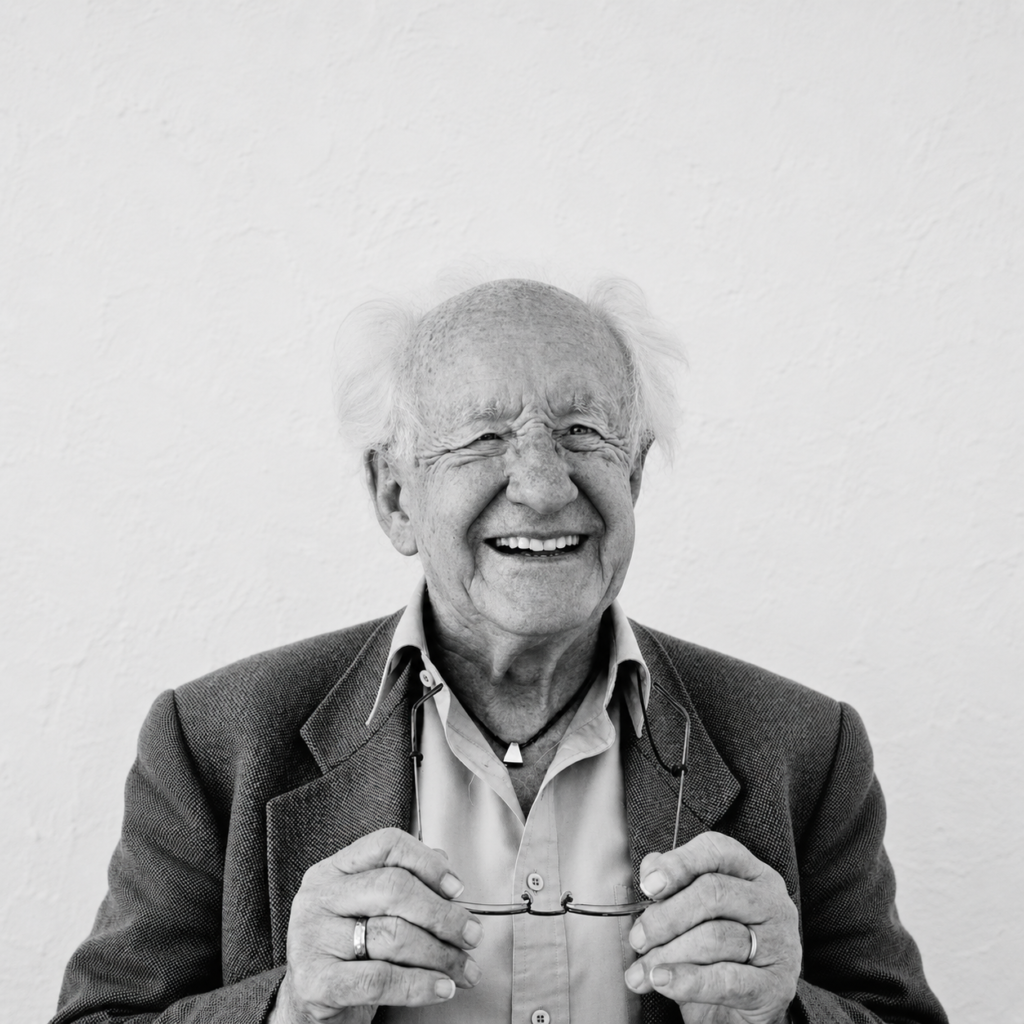
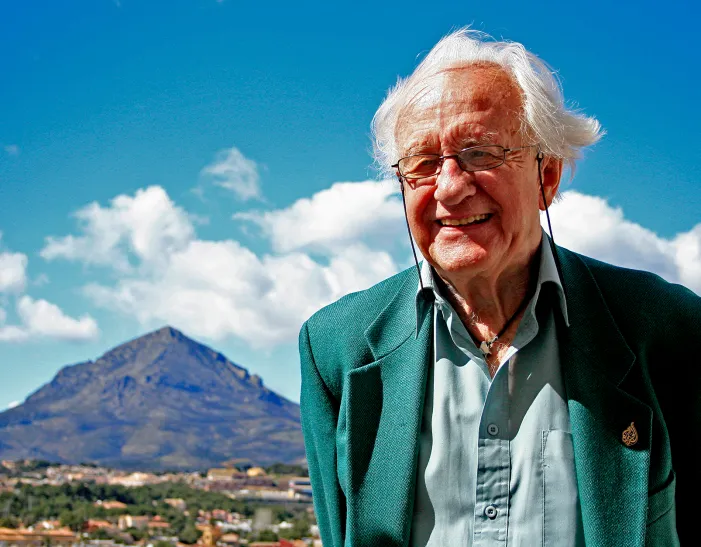
Known as IPRA, founded in 1964 in London–and this author, 34 at the time, is the only surviving founder. IPRA rotates every two years from one peace research center to the other, and is now in very competent Turkish hands. And what is more natural than having the 50th anniversary for the hub of peace studies in that hub of the world, Istanbul, 10-14 August this year!! Hurry up, register!!!

Today it is hard to believe, but to get IPRA started was as problematic as to launch peace studies in general.

The Western establishments did not like “peace”; their favorite was security, absence of violence against themselves in particular and their elites even more particularly. Security studies became academically institutionalized Western paranoia.

And the peace movement establishments did not like “studies”–what was there to study? Each one knew the one correct answer!

Like world government (what kind of government?), world law (in favor-disfavor of whom?), disarmament (hand guns, knives, scissors?–how about the ease of rearmament?), democracy all over (and when they go to war against each other, and against non-democracies; what kind of democracy, multi-party national election only?), end of capitalism, end of socialism (how about non-economic conflicts, over identity for instance); psychoanalysis, at least of leaders (what kind? and how will they treat the non-psychoanalyzed?). And so on. And so forth.

May be some research might help, like it did for health? For instance exploring all of the above, and their combinations?

Back in 1964 there were not much more than three centers of academic studies of peace: the Peace Research Institute in Oslo-Norway (PRIO) also focused on Gandhi and nonviolence; the center in Ann Arbor, Michigan-USA, more focused on game theory and mathematical models; and the polemology approach associated with George Bouthoul in Paris-France, focused on war.

All three were in London; Ann Arbor led by the indefatigable Elise Boulding who played a major role in keeping IPRA alive through some crises, PRIO by me, and polemology from the institute in Groningen, Netherlands directed by Bert Röling, the youngest judge at the Tokyo Tribunal who became IPRA’s first, very competent, Secretary General.

The French actually had a very special approach. Their foreign office was less interested in peace and more in French as official language of IPRA on par with English, fully willing to cover all expenses. We said no, given the French focus on war, not peace, and on strategic studies, not peace studies (the situation is about the same 50 years later). As opposed to the Soviet Union which at least had a concept: Litvinov’s “peaceful co-existence” from the 1930s.

There was general agreement that we had to meet more often to compare notes and to get more peace centers around the world. How?

One model that often came up was a social science Pugwash–the conferences across the superpower and bloc divide against nuclear arms. I knew them with much love and sympathy, brilliant nuclear scientists–among them Germans and Jews who had worked on a bomb against Hitler and saw it hijacked to kill Japanese–brilliant, but not in social sciences. That broadening of Pugwash came, but the focus was still advocacy and we felt the need for research, not advocacy. Above all for pluralism, having different concepts and hypotheses and approaches meet in mutually enriching dialogues.

The other model was to found IPRA and apply for membership in UNESCO’s International Social Science Council, together with psychologists, sociologists etc. Very important was a high level UNESCO civil servant, Saul Friedman, very devoted to peace studies.

John Burton, the former head of the Australian foreign office, was conspicuously absent from the founding of IPRA. His approach was diplomacy. He was against social sciences, a view he later changed.

The first meetings were in the Netherlands, Sweden, Czechoslovakia and Yugoslavia – one NATO-North Atlantic Treaty Organization, one WTO-Warsaw Treaty Organization of Friendship, Cooperation, and Mutual Assistance often called the Warsaw Pact, two neutral-nonaligned. IPRA played a role as a forum acceptable to many during the cold war exactly because there was no divisive resolution-making.

IPRA was liberated from the state system, from East-West and North-South divides, but not from the peace movement system with their single factor, often highly moralistic positions. Put differently, the factual level was low, the moral level high. Gradually this has changed, but it took time to identify researchable problems and a methodology to explore them.

IPRA at 50 is very different from the early decades: deeper academically, more pluralistic in approaches. It has much to contribute to a world with much violence, mostly from the states and governments, but also from non-states, non-governments. Victory is their goal, so they dictate solutions. Peace studies have produced insights in conflict resolution, unlike the diplomatic pursuit of national interests, hoping for an equilibrium somewhere. Statesmen and -women of the world, just come to IPRA, we are ready!

Problems of health were in the hands of another big institution: the church. The problem was moral, not factual: disease as punishment for sin, and sin as opposition to the Supreme Power, the Lord. Health studies brought in empirical facts and connections, but one moral aspect remained: we must will health, not only know how to get there.

The problems of peace are still to a large extent in the hands of the successor to the church, the state. In their view the problem is moral more than factual. An aggressive war may be just punishment for the sin of being uppity, opposing superpowers or other warlords. Peace studies have brought in empirical facts and connections, with one moral aspect: we must will peace not only know how to get there.

IPRA is international: no country dictates anything. It is for, by and of peace. And associative; your new friends are waiting for you.

This article was originally published at Transcend Media Service here.
Share

Leave a Reply

Your email address will not be published. Required fields are marked *

Related Posts

Jan Oberg, TFF director April 28, 2026 In this third TFF Peace Pulse, I make the important distinction between the violence and the conflict that violence is a symptom of. If you want peace, focus on the underlying conflict because that is the key to resolution, peacemaking, and a better future for the parties. The West is obsessed with violence, just look around you – and 90+ per cent of the public debate is about military issues and other violence – totally wasted for peace. These Peace Pulses will only be published here a few times. You will also not find them on YouTube and Vimeo because both platforms have blocked TFF and me; you know, peace is dangerous these days. Most TFF’s videos since 2007 are now on Rumble.
In contrast to most, we’ll bring alternatives, solutions, hope and strategies for a better future. Times are dangerous, yes, but that only intensifies the need for constructive thinking and action! Jan Oberg, TFF director April 13, 2026 The new TFF Peace Pulse uses video messages in a new way: Max 3-5-minute-long comments, ideas or perhaps mini-lectures, all about peace – positive peace. We launch them today on April 13, 2026 with a carefully crafted visual aesthetic fitting the content. We hope to publish them regularly from now on. We launch Peace Pulse (PP) – for a number of reasons. The world is in chaos, and there are countless reasons to feel concerned, frustrated, even angry. The atmosphere is saturated with doom and gloom, with negative energy and rear‑mirror thinking, while vision, imagination, alternatives, strategies and genuine future‑mindedness remain in short supply. And without them, we simply can’t save the world. Looking at problems from a hundred angles will...
PART II — Publishing Peace in a System That Prioritises Militarism Jan Oberg, TFF director April 10, 2026 How TFF Maintains a Daily Voice in a Digital World Built for Noise This article is part of the series “TFF at 40″ and it invites you to learn about Four Decades of Publishing Peace. It takes a look at how a small, people‑financed peace foundation has communicated across four generations of technology — from wax stencils and fax machines to mass email and Substack — and why TFF continues to publish every single day in a system that rewards noise, conflict, and militarism. ◆ What it means to publish peace every single day in a digital system built for 24/7 news and other noise, confrontation, and militarism. How TFF’s independence, continuity, and global readership defy algorithms, donor cycles, and Western media censorhip — and why the Majority World keeps listening. When the...

Recent Articles

Jan Oberg May 15, 2026 Go to this Fox News page and scroll the whole way down: President Donald Trump tells the world that his meeting with President Xi Jinping yielded a lot of very concrete political and economic results – of course, only where the Chinese side, according to him, agreed with him. He does not mention the Taiwan issue, but Secretary of State, Marco Rubio, says that it did not feature prominently in their talks and that the US policy on Taiwan has not changed. Then go to China Daily – or Global Times – and you will see that for the Chinese it is framework, principles, structure of cooperation etc. that matters – all embedded in the overall idea of “constructive bilateral relationship of strategic stability.” Nowhere is any concrete agreement or deal – all that Trump refers to – mentioned. At the general level, this gives you insights into the very different social...
Lena Petrova of “World Affairs In Context” with more than half a million subscribers on YouTube wanted to explore what a peace researcher like me has to say about, among other things, the First and the Second Cold War and why eethics has disappeared from politics. I am particularly happy about this conversation that also yielded an amazing number of very appreciative comments on YouTube. No doubt, people are longing for alternatives, including peace perspectives.
The MIMAC – Military-Industrial-Media-Academic Complex – drives the world’s rampant militarism and wars without end. Here is a short reflection of how it works against all interests of humanity. #5 deals with why there is no real enemy or threat images/analysis. It’s all ex-post constructions. And, btw, theTFF Peace Pulse is now on Rumble.

TFF on Substack

Discover more from TFF Transnational Foundation & Jan Oberg.

Most Popular

Jan Oberg May 15, 2026 Go to this Fox News page and scroll the whole way down: President Donald Trump tells the world that his meeting with President Xi Jinping yielded a lot of very concrete political and economic results – of course, only where the Chinese side, according to him, agreed with him. He does not mention the Taiwan issue, but Secretary of State, Marco Rubio, says that it did not feature prominently in their talks and that the US policy on Taiwan has not changed. Then go to China Daily – or Global Times – and you will see that for the Chinese it is framework, principles, structure of cooperation etc. that matters – all embedded in the overall idea of “constructive bilateral relationship of strategic stability.” Nowhere is any concrete agreement or deal – all that Trump refers to – mentioned. At the general level, this gives you insights into the very different social...
Lena Petrova of “World Affairs In Context” with more than half a million subscribers on YouTube wanted to explore what a peace researcher like me has to say about, among other things, the First and the Second Cold War and why eethics has disappeared from politics. I am particularly happy about this conversation that also yielded an amazing number of very appreciative comments on YouTube. No doubt, people are longing for alternatives, including peace perspectives.
The MIMAC – Military-Industrial-Media-Academic Complex – drives the world’s rampant militarism and wars without end. Here is a short reflection of how it works against all interests of humanity. #5 deals with why there is no real enemy or threat images/analysis. It’s all ex-post constructions. And, btw, theTFF Peace Pulse is now on Rumble.
Read More
Screenshot-2026-05-15-103534
Jan Oberg May 15, 2026 Go to this Fox News page and scroll the whole way down: President Donald Trump tells the world that his meeting with President Xi Jinping yielded a lot of very concrete political and economic results – of course, only where the Chinese side, according to him, agreed with him. He does not mention the Taiwan issue, but Secretary of State, Marco Rubio, says that it did not feature prominently in their talks and that the US policy on Taiwan has not changed. Then go to China Daily – or Global Times – and you will see that for the Chinese it is framework, principles, structure of cooperation etc. that matters – all embedded in the overall idea of “constructive bilateral relationship of strategic stability.” Nowhere is any concrete agreement or deal – all that Trump refers to – mentioned. At the general level, this gives you insights into the very different social...
Screenshot-2026-05-12-104023
Lena Petrova of “World Affairs In Context” with more than half a million subscribers on YouTube wanted to explore what a peace researcher like me has to say about, among other things, the First and the Second Cold War and why eethics has disappeared from politics. I am particularly happy about this conversation that also yielded an amazing number of very appreciative comments on YouTube. No doubt, people are longing for alternatives, including peace perspectives.
Screenshot-2026-04-13-154551 (2)
The MIMAC – Military-Industrial-Media-Academic Complex – drives the world’s rampant militarism and wars without end. Here is a short reflection of how it works against all interests of humanity. #5 deals with why there is no real enemy or threat images/analysis. It’s all ex-post constructions. And, btw, theTFF Peace Pulse is now on Rumble.
Screenshot-2026-04-13-154551 (1)
Jan Oberg, TFF director April 28, 2026 In this third TFF Peace Pulse, I make the important distinction between the violence and the conflict that violence is a symptom of. If you want peace, focus on the underlying conflict because that is the key to resolution, peacemaking, and a better future for the parties. The West is obsessed with violence, just look around you – and 90+ per cent of the public debate is about military issues and other violence – totally wasted for peace. These Peace Pulses will only be published here a few times. You will also not find them on YouTube and Vimeo because both platforms have blocked TFF and me; you know, peace is dangerous these days. Most TFF’s videos since 2007 are now on Rumble.
Screenshot-2026-04-13-154551
In contrast to most, we’ll bring alternatives, solutions, hope and strategies for a better future. Times are dangerous, yes, but that only intensifies the need for constructive thinking and action! Jan Oberg, TFF director April 13, 2026 The new TFF Peace Pulse uses video messages in a new way: Max 3-5-minute-long comments, ideas or perhaps mini-lectures, all about peace – positive peace. We launch them today on April 13, 2026 with a carefully crafted visual aesthetic fitting the content. We hope to publish them regularly from now on. We launch Peace Pulse (PP) – for a number of reasons. The world is in chaos, and there are countless reasons to feel concerned, frustrated, even angry. The atmosphere is saturated with doom and gloom, with negative energy and rear‑mirror thinking, while vision, imagination, alternatives, strategies and genuine future‑mindedness remain in short supply. And without them, we simply can’t save the world. Looking at problems from a hundred angles will...
IMG_5165 (1)
PART II — Publishing Peace in a System That Prioritises Militarism Jan Oberg, TFF director April 10, 2026 How TFF Maintains a Daily Voice in a Digital World Built for Noise This article is part of the series “TFF at 40″ and it invites you to learn about Four Decades of Publishing Peace. It takes a look at how a small, people‑financed peace foundation has communicated across four generations of technology — from wax stencils and fax machines to mass email and Substack — and why TFF continues to publish every single day in a system that rewards noise, conflict, and militarism. ◆ What it means to publish peace every single day in a digital system built for 24/7 news and other noise, confrontation, and militarism. How TFF’s independence, continuity, and global readership defy algorithms, donor cycles, and Western media censorhip — and why the Majority World keeps listening. When the...


