
“Humanity Knows No Borders”

By Hans Graf Sponeck
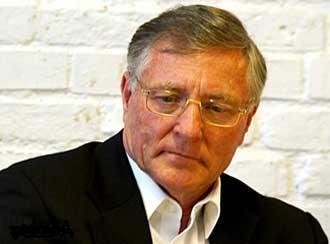
Freiburg, 1 October 2016

1. The global sky is full of dark clouds. There is reason, there must be reason, for concern. Humanity has to take time out to reflect. To-day is a good occasion to do so, especially since we have among us Haifa al Mansour and Solmaz Panahi who, together with her mother, has joined us on behalf of Jafar Panahi, her father.

The Kant Foundation is honouring two artists from the Middle East, one from Saudi Arabia, the other from Iran. They have taken Immanuel Kant’s demand of yesteryear seriously and have shown the courage to use their minds with all the consequences that this has entailed. They have been swimming against the currents, they have built bridges and they have climbed mountains that try to separate people.

2. The community of nations has created an impressive body of law which is as densely woven as the most magnificent carpets one can find in the Middle East. Life in all its facets is well protected by such law – or so it seems! The UN Charter remains the supreme road map for human life with peace. It echoes what many thinkers and humanists throughout centuries have proclaimed. Can there be any disagreement that the usefulness of a map lies in its use?

3. Emotions? Feelings? – important as they are, must be in harmony with reason! The irrational rejection of Europe by Britain would not have happened if feelings and reason had been in balance! How much more evidence do we need to accept that humanity knows no borders?

4. Let me pause here for a moment and interject… and I know that Berthold Lange, the Founder of the Kant Foundation, does not like to hear such words: we would not be here on this occasion were it not for Berthold’s unfathomable stubbornness, his seemingly tireless reminding us of the ethical and non-material dimensions of life and his continuous and selfless generosity!

I would like to repeat this also in German and say:
Ich weiß, Berthold Lange, der Gründer der Kantstiftung hört solche Worte nicht gerne, aber ich will sie trotzdem sagen: Wir wären heute nicht beisammen, ohne Berthold Lange’s unergründliche Hartnäckigkeit, immer wieder an die ethischen und nicht-materiellen Dimensionen des Lebens zu erinnern und dies verbunden mit einer selbstlosen Großzügigkeit.

5. If indeed ‘humanity knows no borders’ and communication across borders in 2016 is easier than ever before, why then do we have at the same time so much ‘in-humanity’ across borders?

6. Why is there this immense gap between the finest rhetoric language is able to give us when our leaders speak in the halls of the United Nations and and at the same time there is the brutal reality in Syria, in Iraq, in Palestine, in Afghanistan, in Libya, in Central and Eastern Europe, in North America and elsewhere?

7. Why is the 21st century quickly becoming the ‘century of gaps’?

8. Why is there a gap between political promises and their fulfilment?

9. Why is there a gap between morality and action, between human rights and human obligations?

10. Why is there a gap between culture and civilization?

11. Why is there a widening gap between politics and people’s expectations?

12. Why do 62 individuals have more wealth than 50% of the global population? (Oxfam!)

13. Why is there a deepening gap of understanding between the young and the old?

14. Why is there a gap between our ‘inner’ and our ‘outer’ voices?

15. And why is there impunity when there should be accountability?

16. The list of gaps is much longer. I will spare you more!

17. An editorial of a respected German newspaper (SZ) recently observed:
“…. just when they need to be stronger, our societies seem fragile,
tense, stifled by powerful winds of revolt against their elites
and against an economic order that has increased inequalities?”

18. So what? You will say. What is new?
You are right if you react in this way. What needs to happen? What are the ‘whats’ to close these gaps?

19. Before turning to the ‘whats’, I must remain a moment longer with the ‘whys’!

20. The World Population Clock shows that today 7, 5 billion people inhabit our earth. Five decades spent outside of Germany give me the confidence to argue that most human beings whether they live, as my family and I have, in central Europe or in Accra, Ankara, Rangoon, New Delhi, Baghdad, New York, Islamabad or elsewhere want to live in peace.
There is no place on earth where the majority does not long for freedom from poverty and freedom from fear.

21. Why then is the eternal Machiavelli in us still gaining the upper hand? Why are politics increasingly dominated by economics and not the other way around? Why is moral integrity again and again surrendering to greed, power and other addictions in trade, in sport, even in education and culture?

22. Easy answers do not exist! However, there is one element, a major element, that cannot be left out in any answer: the imperative of ending impunity!

23. Failure to be held accountable for horrific crimes against humanity, for example in the Middle East, in South Asia or in the former Yugoslavia are major reasons why conflicts in these areas continue. Conditions in Syria, Iraq, Libya, Palestine are well documented, for all to see. These are facts and facts are stubborn!

24. Crimes against innocent people are also taking place this very moment in Yemen, in Bahrain, in Egypt, in Saudi Arabia, the country which has heavily supported ISIS in Iraq and Syria. Navid Kermani, the winner of the 2015 Peace Prize of the German book fair, makes the grave observation:

“There is a 95% identity between the ISIS ideology and the text books of Saudi Arabia!”

25. “If the camel could see its hump, it would fall and break its neck” is a Saudi-Arabian saying. Those who argue for peace should no longer save the camel’s neck!

26. Crimes against humanity? Mass murder? War crimes? Genocide? Let us not engage in a legalistic debate and by doing so deflect from the existence of horrendous crimes that have been committed allegedly in the name of human rights and justice. They have in fact deepened the wounds of injustice!

27. I know, it is time to turn to the ‘what’! What does it take to close those gaps, “ to save us from the scourge of war” and to make dignity, the worth of the human person and the sanctity of life the platform that unites us all, as demanded by the UN Charter?

28. Hear me out before you give your verdict. Let me present 5 theses to make the case for peace:

(1)
As individuals, we have inalienable human rights but, lest we forget, we also have inalienable human obligations.
It is this combination incorporated within ourselves which defines the dignity of humanity. To put it differently:” we must delve into our buried self and seek the tracts of life” to quote Allama Iqbal, the Pakistani poet and statesman who said this, when his country was born in 1948.

(2)
There is the importance of talking ‘with’ not talking ‘at’ each-other. Allow me to expand. I can not forget the excitement with which villagers in the mountains of northern Pakistan or in the Kalahari Desert of Botswana or along the Atlantic coast of Ghana would listen to each-other and absorb what the other had to say.
What a difference to the monologues and the resulting battle of words in the UN Security Council I heard when the future of Iraq was the subject in the late 1990s. Monologue invariably ends in confrontation while dialogue may lead to peaceful solutions as we have seen in the 5+1 nuclear disarmament talks with Iran.

(3)
The valuable international law of which we have created so much since 1945 must be here to stay and be respected by nations and individuals alike. No more double standards in international courts, no ICC as a ‘court for Africans’. No more exceptionalism to justify renditions and torture or prisons outside of legal jurisdiction and due process!

(4)
The G7 mentality with its tentacles of protectionism is not democratic! It promotes the turmoil and the chaos that surrounds us. Those who belong to western civilizations and western political systems – a mere 12% of the global population – have to accept that globalization must mean ‘convergence’ and ‘sharing’ of the achievements of the human mind in education, in health, in technology. This is a pre-condition for stabilizing the world order in which we live.

(5)
International communication and the tools for interaction have never been more available than to-day. Welding people from anywhere, of any age and of any background is no longer a utopia but an available opportunity. There is this chance to speak out with a global voice and in the name of ‘we, the peoples” – the first three words of the UN Charter. What an incredible but also daunting, even dangerous opportunity!
Stéphane Hessel, the great humanist, the global citizen from France whose ‘engagez-vous’ has travelled around the world in cyber speed time, would agree, were he alive. He undoubtedly would also have warned that technology must not be allowed any longer to outpace humanity!
Lena Ben Mhenni, the young female blogger from Tunesia is convinced that the social revolution in her country would not have taken place without social media.
An ancient Iranian saying comes to mind: “water will find the pot hole!”
Today, it is much easier for people with the same dreams of peace and justice to find this pot hole of like-mindedness!

29. In conclusion: human rights and human responsibilities go together. Life in peace has to do with community and dialogue, not monologue and society. Humanity must remain ahead of technology. Global order without accountability and justice is not possible. Equitable globalization means convergence of progress for all and not just for the West.

These are not small challenges, but they are doable! Sapere Aude!

H. C. Graf Sponeck,
Stiftungsrat der Kant Stiftung
&
UN Assistant Secretary-General (ret.)
&
TFF Associate

Share

Leave a Reply

Your email address will not be published. Required fields are marked *

Related Posts

“En dag som berättigar till fest”, utropade den London-baserade al-Quds al-Arabi efter FN:s eldupphörresolution, “eftersom detta är första gången som Israel accepterar ett FN-beslut från en position som besegrad och inte som segrare”. Att ett arabisk-israeliskt krig för en gångs skull slutat med arabisk seger, är en helt dominerade åsikt i arabiska medier. Al-Quds al-Arabi tillåter sig att drömma om att det israeliska nederlaget skall leda till massflykt från Israel. Men i nästa andetag påminner tidningen om att Israel aldrig brukar genomföra sina internationella åtaganden och varnar för att förlorarna, liksom tidigare, kan hämnas genom att provocera fram inbördeskrig i Libanon. Med tanke på de otaliga massmediala vittnesmålen om det libanesiska folkets eniga motståndskraft förefaller risken för inre stridigheter i det sargade landet just nu liten. Men visst kan man urskilja nyansskillnader i libanesiska tidningar. Vänsterorganet al-Safir uppfattar FN-resolutionen som en komplott i syfte att rädda Israel från ännu större...
Lena Petrova of “World Affairs In Context” with more than half a million subscribers on YouTube wanted to explore what a peace researcher like me has to say about, among other things, the First and the Second Cold War and why eethics has disappeared from politics. I am particularly happy about this conversation that also yielded an amazing number of very appreciative comments on YouTube. No doubt, people are longing for alternatives, including peace perspectives.
Jan Oberg, TFF director April 28, 2026 In this third TFF Peace Pulse, I make the important distinction between the violence and the conflict that violence is a symptom of. If you want peace, focus on the underlying conflict because that is the key to resolution, peacemaking, and a better future for the parties. The West is obsessed with violence, just look around you – and 90+ per cent of the public debate is about military issues and other violence – totally wasted for peace. These Peace Pulses will only be published here a few times. You will also not find them on YouTube and Vimeo because both platforms have blocked TFF and me; you know, peace is dangerous these days. Most TFF’s videos since 2007 are now on Rumble.

Recent Articles

“En dag som berättigar till fest”, utropade den London-baserade al-Quds al-Arabi efter FN:s eldupphörresolution, “eftersom detta är första gången som Israel accepterar ett FN-beslut från en position som besegrad och inte som segrare”. Att ett arabisk-israeliskt krig för en gångs skull slutat med arabisk seger, är en helt dominerade åsikt i arabiska medier. Al-Quds al-Arabi tillåter sig att drömma om att det israeliska nederlaget skall leda till massflykt från Israel. Men i nästa andetag påminner tidningen om att Israel aldrig brukar genomföra sina internationella åtaganden och varnar för att förlorarna, liksom tidigare, kan hämnas genom att provocera fram inbördeskrig i Libanon. Med tanke på de otaliga massmediala vittnesmålen om det libanesiska folkets eniga motståndskraft förefaller risken för inre stridigheter i det sargade landet just nu liten. Men visst kan man urskilja nyansskillnader i libanesiska tidningar. Vänsterorganet al-Safir uppfattar FN-resolutionen som en komplott i syfte att rädda Israel från ännu större...
Greenland – the world’s largest island, a continent of its own with only 57.000 inhabitants. I visited it for the first time in May 2005. I flew across the inland ice to Nuuk, the tiny capital with some 14.000 inhabitants. I was overwhelmed by the pride and kindness of everyone I met as well as by the unique natural beauty. Unfortunately, due to weather conditions during my ten-day stay I could get nowhere else but Nuuk. Fortunately, however, among those I met was Gitte Arvegaard, a Danish lawyer and negotiator employed by the local government, Greenland Home Rule. She turned out to be an enthusiastic photographer with a lot of pictures taken during various trips around Greenland. So this Greeland series is the result of our cooperative effort. We both hope you enjoy it and are stimulated to visit Greenland – about which you may read more here. Finally, if you want to...
 Jan Oberg’s storyof how he met Sir Paul Liverpool – where else to meet Paul McCartney? Paul’s old class mate and TFF Associate, Jonathan Power introduced me to Paul McCartney in Liverpool at an informal reception. It was held at what used to be their school, now the Liverpool Institute for Performing Arts and we were there to celebrate that Jonathan had written Amnesty International’s 40th Anniversary book. This happy event for “righting wrongs and writing songs” gave me an opportunity to meet Paul and tell him about TFF and get straight to the matter: would he consider making a donation in support of our work for peace? While I was probably the only one with such a wish that day, I was certainly not the only one who wanted to shake hands and talk with him. In the last minutes before Paul was to leave, Jonathan brought us together and we got about three...

TFF on Substack

Discover more from TFF Transnational Foundation & Jan Oberg.

Most Popular

“En dag som berättigar till fest”, utropade den London-baserade al-Quds al-Arabi efter FN:s eldupphörresolution, “eftersom detta är första gången som Israel accepterar ett FN-beslut från en position som besegrad och inte som segrare”. Att ett arabisk-israeliskt krig för en gångs skull slutat med arabisk seger, är en helt dominerade åsikt i arabiska medier. Al-Quds al-Arabi tillåter sig att drömma om att det israeliska nederlaget skall leda till massflykt från Israel. Men i nästa andetag påminner tidningen om att Israel aldrig brukar genomföra sina internationella åtaganden och varnar för att förlorarna, liksom tidigare, kan hämnas genom att provocera fram inbördeskrig i Libanon. Med tanke på de otaliga massmediala vittnesmålen om det libanesiska folkets eniga motståndskraft förefaller risken för inre stridigheter i det sargade landet just nu liten. Men visst kan man urskilja nyansskillnader i libanesiska tidningar. Vänsterorganet al-Safir uppfattar FN-resolutionen som en komplott i syfte att rädda Israel från ännu större...
Greenland – the world’s largest island, a continent of its own with only 57.000 inhabitants. I visited it for the first time in May 2005. I flew across the inland ice to Nuuk, the tiny capital with some 14.000 inhabitants. I was overwhelmed by the pride and kindness of everyone I met as well as by the unique natural beauty. Unfortunately, due to weather conditions during my ten-day stay I could get nowhere else but Nuuk. Fortunately, however, among those I met was Gitte Arvegaard, a Danish lawyer and negotiator employed by the local government, Greenland Home Rule. She turned out to be an enthusiastic photographer with a lot of pictures taken during various trips around Greenland. So this Greeland series is the result of our cooperative effort. We both hope you enjoy it and are stimulated to visit Greenland – about which you may read more here. Finally, if you want to...
 Jan Oberg’s storyof how he met Sir Paul Liverpool – where else to meet Paul McCartney? Paul’s old class mate and TFF Associate, Jonathan Power introduced me to Paul McCartney in Liverpool at an informal reception. It was held at what used to be their school, now the Liverpool Institute for Performing Arts and we were there to celebrate that Jonathan had written Amnesty International’s 40th Anniversary book. This happy event for “righting wrongs and writing songs” gave me an opportunity to meet Paul and tell him about TFF and get straight to the matter: would he consider making a donation in support of our work for peace? While I was probably the only one with such a wish that day, I was certainly not the only one who wanted to shake hands and talk with him. In the last minutes before Paul was to leave, Jonathan brought us together and we got about three...
Read More
Imagen-thumbnail-The-Transnational-1
“En dag som berättigar till fest”, utropade den London-baserade al-Quds al-Arabi efter FN:s eldupphörresolution, “eftersom detta är första gången som Israel accepterar ett FN-beslut från en position som besegrad och inte som segrare”. Att ett arabisk-israeliskt krig för en gångs skull slutat med arabisk seger, är en helt dominerade åsikt i arabiska medier. Al-Quds al-Arabi tillåter sig att drömma om att det israeliska nederlaget skall leda till massflykt från Israel. Men i nästa andetag påminner tidningen om att Israel aldrig brukar genomföra sina internationella åtaganden och varnar för att förlorarna, liksom tidigare, kan hämnas genom att provocera fram inbördeskrig i Libanon. Med tanke på de otaliga massmediala vittnesmålen om det libanesiska folkets eniga motståndskraft förefaller risken för inre stridigheter i det sargade landet just nu liten. Men visst kan man urskilja nyansskillnader i libanesiska tidningar. Vänsterorganet al-Safir uppfattar FN-resolutionen som en komplott i syfte att rädda Israel från ännu större...
Greenland – the world’s largest island, a continent of its own with only 57.000 inhabitants. I visited it for the first time in May 2005. I flew across the inland ice to Nuuk, the tiny capital with some 14.000 inhabitants. I was overwhelmed by the pride and kindness of everyone I met as well as by the unique natural beauty. Unfortunately, due to weather conditions during my ten-day stay I could get nowhere else but Nuuk. Fortunately, however, among those I met was Gitte Arvegaard, a Danish lawyer and negotiator employed by the local government, Greenland Home Rule. She turned out to be an enthusiastic photographer with a lot of pictures taken during various trips around Greenland. So this Greeland series is the result of our cooperative effort. We both hope you enjoy it and are stimulated to visit Greenland – about which you may read more here. Finally, if you want to...
p_mccartney_poem
 Jan Oberg’s storyof how he met Sir Paul Liverpool – where else to meet Paul McCartney? Paul’s old class mate and TFF Associate, Jonathan Power introduced me to Paul McCartney in Liverpool at an informal reception. It was held at what used to be their school, now the Liverpool Institute for Performing Arts and we were there to celebrate that Jonathan had written Amnesty International’s 40th Anniversary book. This happy event for “righting wrongs and writing songs” gave me an opportunity to meet Paul and tell him about TFF and get straight to the matter: would he consider making a donation in support of our work for peace? While I was probably the only one with such a wish that day, I was certainly not the only one who wanted to shake hands and talk with him. In the last minutes before Paul was to leave, Jonathan brought us together and we got about three...
Logo-Transnational
1942James Paul McCartney is born in Liverpool on June 18th. 1956Paul writes his first song, I Lost My Little Girl. 1957Paul meets John Lennon at St. Peter’s Church Fete, Woolton, Liverpool. He joins his first group, The Quarrymen and performs in his first gig at The New Clubmoor Hall, Liverpool, on October 18th. 1960Formation of The Beatles, who play residencies in Hamburg and at The Cavern in Liverpool. 1961First Beatles recordings issued in Germany, as the backing group for Tony Sheridan. 1962The first Beatles Parlophone recording, Love Me Do, reaches number 17 in the British charts. 1963The birth of Beatlemania. Please Please Me gives the group their first British Number 1. She Loves You cements their success. Please Please Me and With The Beatles albums released. 1964First triumphant American tour. The Beatles perform at the Royal Command Performance and release their first film, A Hard Day’s Night. Their single I...
Logo-Transnational
  Back to the series “Bujumbura, Burundi”
By JONATHAN POWER August 16, 2000 LONDON – Remember the summer of ’98? In the sweltering, torpid heat of a Roman august, charged with exhaust fumes, the international community gave its overwhelming approval to the establishment of an International Criminal Court that will enable those accused of “crimes against humanity” to be tried and, if convicted, sentenced. Only seven nations opposed or abstained from the motion, including Israel, China, India and the U.S.A. where the Pentagon had successfully waged bureaucratic guerrilla war to undermine the initially sympathetic stance of President Bill Clinton. Two years on we can now see what an epochal event that was. In a the stroke of 120 pens it changed the climate on political thuggery. After numerous half-starts and false starts ever since the Nuremberg and Tokyo trials that convicted the war criminals of the Second World War, the world at last had agreed en masse a common...

