
How to be an Ecosattva

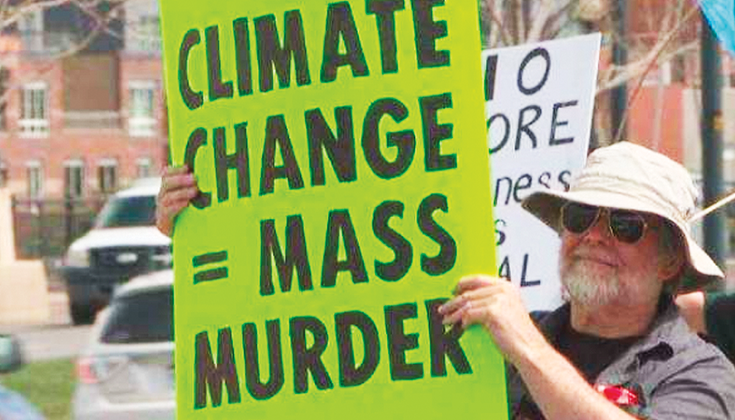
Photo: David Loy at an Extinction Rebellion protest in Denver. Photo by denver.cbslocal.com

How do bodhisattvas respond to the greatest crisis of our time?
Appropriately, says Buddhist teacher, activist and TFF Associate, David Loy.

By David Loy

One of my favorite Zen stories is short and simple. A student asks the master, “What is the constant activity of all the buddhas and bodhisattvas?” In other words, what’s special about the day-to-day lives of awakened people?

The master replies: “Responding appropriately.”

That’s all. No special powers, except being fully attentive to what’s actually happening and acting accordingly.


“We don’t know what is possible, we don’t know what will work, but we do our best.”

That’s an easy thing to do in a monastery. When the bell rings, you put on your robe and go to the Buddha Hall for meditation. But what about when one leaves the monastery gates and steps out into a world with many problems, most ominously an ecological crisis that is severely degrading the biosphere.

How do we respond appropriately to a climate emergency that threatens even the survival of our own species?

Some might say that this is not a Buddhist problem, that Buddhism is only about individual awakening and personal transformation. But is the goal to transcend—escape—this world, or to realize our nonduality with it?

If the latter, then the Buddhist path involves not only focusing on our own meditative practice, but integrating what we realize into how we actually live in the world.

Wisdom founders without compassion, and today that involves responding to the greatest challenge that humanity has ever faced.

Originally published at lionsroar.com

It seems to me that public consciousness has shifted over the last year. More people are aware that our ecological situation has become very precarious, and continues to deteriorate rapidly.

“Business as usual,” along with “politics as usual,” is leading to disaster. In light of this, what should we do? How should we respond appropriately? Today that is our collective koan.

Buddhism originated and developed in a very different social and environmental context than today, so unsurprisingly it has little to tell us about what to do.

But its teachings say a great deal to say about how to do it. That’s called the bodhisattva path. In fact, I wonder if the bodhisattva (or ecosattva) path is the most important contribution that Buddhism can offer today.

Acknowledging the importance of social engagement is a big step for many Buddhists since we have usually been taught to focus on what is happening in our own minds.

On the other side, those committed to social action tend to suffer from frustration, anger, and burnout. The engaged bodhisattva path provides what each needs because it involves a double practice, inner and outer, each reinforcing the other.

Combining meditation and activism enables deep engagement without burnout. Activism also helps meditators avoid self-stultifying preoccupation with their own mental condition and spiritual progress.

Insofar as a sense of separate self is the basic problem, compassionate commitment to the well-being of others is an important part of the solution. Engagement with the ecological crisis is therefore not a distraction from our personal contemplative practice but essential to it.

Although there are many aspects to the bodhisattva path, the equanimity and insight it cultivates supports what is most distinctive and powerful about spiritual activism: acting without attachment to the results of action.

The Buddha said that enlightened people are nirasa: “wishless, desireless, without expectation.” This doesn’t mean inaction or disengagement but what the Bhagavad-Gita calls “karma yoga”: “Your right is to the work, never to the fruits. Be neither motivated by the fruits of action nor inclined to give up action.” Do what is needed, but without attachment to the outcome.

Nonattachment to results is easily misunderstood, however.

It doesn’t mean our approach to our task or nonchalance. In response to the ongoing devastation of the earth, we are called upon to do the very best we can, not knowing what the consequences will be, not knowing if our efforts will make any difference whatsoever.

This is an important aspect of the “don’t-know mind” that Zen practice explicitly cultivates. One of my teachers, Robert Aitken Roshi, liked to say that our task is not to clear up the mystery. It’s to make the mystery clear.

The spiritual path isn’t about coming to understand everything but opening up to a sacred and mysterious world that we access not by grasping it but in being taken by it.

Bodhisattvas always manifest something greater than their own egos. “You are not Atlas carrying the world on your shoulder,” Vandana Shiva said. “It is good to remember that the planet is carrying you.”

We don’t know what is possible, we don’t know what will work, but we do our best. We don’t know if what we do is important, but we know that it’s important for us to do it.

Have we already passed ecological tipping points and civilization as we know it is doomed? We don’t know—and that’s okay.

Of course, we would like our efforts to bear fruit, yet ultimately they are our gift to the earth, gratis, and gifts should be made without any expectation of return.

On April 20, I was part of a group of six Extinction Rebellion protestors, inspired by the ongoing XR actions in London, who briefly blocked a busy street in downtown Denver. Police detained us and issued a summons; our court cases are pending.

Was that the best thing for us to do, inconveniencing many drivers that Saturday afternoon?

I don’t know, but it has become clear that, without some radical changes, we face much more than an inconvenience in the next few years.

I don’t know if what Extinction Rebellion is doing is the most appropriate response, but right now I don’t have a better one, and our backs are against the wall.

We need to hold politicians’ feet to the fire, for the time for humanity to get its act together is short, and getting shorter every day.

A few days after our action, some of the Denver protestors asked if I would offer a workshop meditation retreat for XR activists up at our new Rocky Mountain Ecodharma Retreat Center near Boulder.

We’re holding it in mid-September, just before another week of XR activities worldwide. Doing the inner and outer practice of ecosattvas, we’ll train to respond appropriately.

Originally published at lionsroar.com

If you think this was an interesting approach…

[paypal-donation]

About the author
David Loy

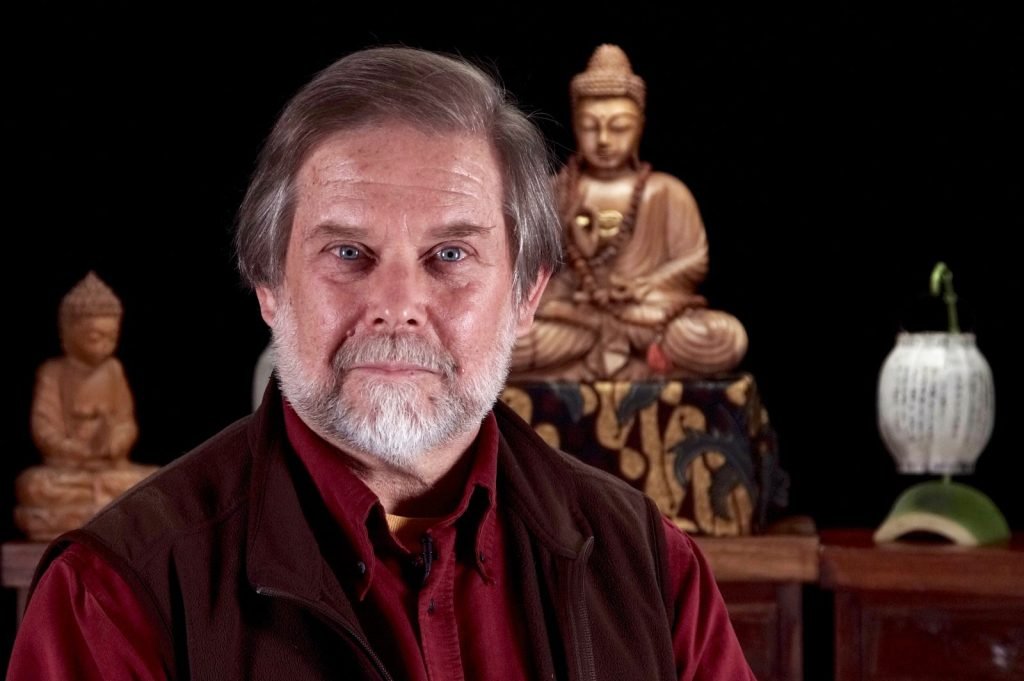
David Loy is a scholar and a Zen teacher in the Sanbo Zen tradition. His latest book is A New Buddhist Path: Enlightenment, Evolution, and Ethics in the Modern World; he is also co-editor of A Buddhist Response to the Climate Emergency.

Share

Leave a Reply

Your email address will not be published. Required fields are marked *

Related Posts

Lena Petrova of “World Affairs In Context” with more than half a million subscribers on YouTube wanted to explore what a peace researcher like me has to say about, among other things, the First and the Second Cold War and why eethics has disappeared from politics. I am particularly happy about this conversation that also yielded an amazing number of very appreciative comments on YouTube. No doubt, people are longing for alternatives, including peace perspectives.
The MIMAC – Military-Industrial-Media-Academic Complex – drives the world’s rampant militarism and wars without end. Here is a short reflection of how it works against all interests of humanity. #5 deals with why there is no real enemy or threat images/analysis. It’s all ex-post constructions. And, btw, theTFF Peace Pulse is now on Rumble.
Jan Oberg, TFF director April 28, 2026 In this third TFF Peace Pulse, I make the important distinction between the violence and the conflict that violence is a symptom of. If you want peace, focus on the underlying conflict because that is the key to resolution, peacemaking, and a better future for the parties. The West is obsessed with violence, just look around you – and 90+ per cent of the public debate is about military issues and other violence – totally wasted for peace. These Peace Pulses will only be published here a few times. You will also not find them on YouTube and Vimeo because both platforms have blocked TFF and me; you know, peace is dangerous these days. Most TFF’s videos since 2007 are now on Rumble.

Recent Articles

“En dag som berättigar till fest”, utropade den London-baserade al-Quds al-Arabi efter FN:s eldupphörresolution, “eftersom detta är första gången som Israel accepterar ett FN-beslut från en position som besegrad och inte som segrare”. Att ett arabisk-israeliskt krig för en gångs skull slutat med arabisk seger, är en helt dominerade åsikt i arabiska medier. Al-Quds al-Arabi tillåter sig att drömma om att det israeliska nederlaget skall leda till massflykt från Israel. Men i nästa andetag påminner tidningen om att Israel aldrig brukar genomföra sina internationella åtaganden och varnar för att förlorarna, liksom tidigare, kan hämnas genom att provocera fram inbördeskrig i Libanon. Med tanke på de otaliga massmediala vittnesmålen om det libanesiska folkets eniga motståndskraft förefaller risken för inre stridigheter i det sargade landet just nu liten. Men visst kan man urskilja nyansskillnader i libanesiska tidningar. Vänsterorganet al-Safir uppfattar FN-resolutionen som en komplott i syfte att rädda Israel från ännu större...
Greenland – the world’s largest island, a continent of its own with only 57.000 inhabitants. I visited it for the first time in May 2005. I flew across the inland ice to Nuuk, the tiny capital with some 14.000 inhabitants. I was overwhelmed by the pride and kindness of everyone I met as well as by the unique natural beauty. Unfortunately, due to weather conditions during my ten-day stay I could get nowhere else but Nuuk. Fortunately, however, among those I met was Gitte Arvegaard, a Danish lawyer and negotiator employed by the local government, Greenland Home Rule. She turned out to be an enthusiastic photographer with a lot of pictures taken during various trips around Greenland. So this Greeland series is the result of our cooperative effort. We both hope you enjoy it and are stimulated to visit Greenland – about which you may read more here. Finally, if you want to...
 Jan Oberg’s storyof how he met Sir Paul Liverpool – where else to meet Paul McCartney? Paul’s old class mate and TFF Associate, Jonathan Power introduced me to Paul McCartney in Liverpool at an informal reception. It was held at what used to be their school, now the Liverpool Institute for Performing Arts and we were there to celebrate that Jonathan had written Amnesty International’s 40th Anniversary book. This happy event for “righting wrongs and writing songs” gave me an opportunity to meet Paul and tell him about TFF and get straight to the matter: would he consider making a donation in support of our work for peace? While I was probably the only one with such a wish that day, I was certainly not the only one who wanted to shake hands and talk with him. In the last minutes before Paul was to leave, Jonathan brought us together and we got about three...

TFF on Substack

Discover more from TFF Transnational Foundation & Jan Oberg.

Most Popular

“En dag som berättigar till fest”, utropade den London-baserade al-Quds al-Arabi efter FN:s eldupphörresolution, “eftersom detta är första gången som Israel accepterar ett FN-beslut från en position som besegrad och inte som segrare”. Att ett arabisk-israeliskt krig för en gångs skull slutat med arabisk seger, är en helt dominerade åsikt i arabiska medier. Al-Quds al-Arabi tillåter sig att drömma om att det israeliska nederlaget skall leda till massflykt från Israel. Men i nästa andetag påminner tidningen om att Israel aldrig brukar genomföra sina internationella åtaganden och varnar för att förlorarna, liksom tidigare, kan hämnas genom att provocera fram inbördeskrig i Libanon. Med tanke på de otaliga massmediala vittnesmålen om det libanesiska folkets eniga motståndskraft förefaller risken för inre stridigheter i det sargade landet just nu liten. Men visst kan man urskilja nyansskillnader i libanesiska tidningar. Vänsterorganet al-Safir uppfattar FN-resolutionen som en komplott i syfte att rädda Israel från ännu större...
Greenland – the world’s largest island, a continent of its own with only 57.000 inhabitants. I visited it for the first time in May 2005. I flew across the inland ice to Nuuk, the tiny capital with some 14.000 inhabitants. I was overwhelmed by the pride and kindness of everyone I met as well as by the unique natural beauty. Unfortunately, due to weather conditions during my ten-day stay I could get nowhere else but Nuuk. Fortunately, however, among those I met was Gitte Arvegaard, a Danish lawyer and negotiator employed by the local government, Greenland Home Rule. She turned out to be an enthusiastic photographer with a lot of pictures taken during various trips around Greenland. So this Greeland series is the result of our cooperative effort. We both hope you enjoy it and are stimulated to visit Greenland – about which you may read more here. Finally, if you want to...
 Jan Oberg’s storyof how he met Sir Paul Liverpool – where else to meet Paul McCartney? Paul’s old class mate and TFF Associate, Jonathan Power introduced me to Paul McCartney in Liverpool at an informal reception. It was held at what used to be their school, now the Liverpool Institute for Performing Arts and we were there to celebrate that Jonathan had written Amnesty International’s 40th Anniversary book. This happy event for “righting wrongs and writing songs” gave me an opportunity to meet Paul and tell him about TFF and get straight to the matter: would he consider making a donation in support of our work for peace? While I was probably the only one with such a wish that day, I was certainly not the only one who wanted to shake hands and talk with him. In the last minutes before Paul was to leave, Jonathan brought us together and we got about three...
Read More
Imagen-thumbnail-The-Transnational-1
“En dag som berättigar till fest”, utropade den London-baserade al-Quds al-Arabi efter FN:s eldupphörresolution, “eftersom detta är första gången som Israel accepterar ett FN-beslut från en position som besegrad och inte som segrare”. Att ett arabisk-israeliskt krig för en gångs skull slutat med arabisk seger, är en helt dominerade åsikt i arabiska medier. Al-Quds al-Arabi tillåter sig att drömma om att det israeliska nederlaget skall leda till massflykt från Israel. Men i nästa andetag påminner tidningen om att Israel aldrig brukar genomföra sina internationella åtaganden och varnar för att förlorarna, liksom tidigare, kan hämnas genom att provocera fram inbördeskrig i Libanon. Med tanke på de otaliga massmediala vittnesmålen om det libanesiska folkets eniga motståndskraft förefaller risken för inre stridigheter i det sargade landet just nu liten. Men visst kan man urskilja nyansskillnader i libanesiska tidningar. Vänsterorganet al-Safir uppfattar FN-resolutionen som en komplott i syfte att rädda Israel från ännu större...
Greenland – the world’s largest island, a continent of its own with only 57.000 inhabitants. I visited it for the first time in May 2005. I flew across the inland ice to Nuuk, the tiny capital with some 14.000 inhabitants. I was overwhelmed by the pride and kindness of everyone I met as well as by the unique natural beauty. Unfortunately, due to weather conditions during my ten-day stay I could get nowhere else but Nuuk. Fortunately, however, among those I met was Gitte Arvegaard, a Danish lawyer and negotiator employed by the local government, Greenland Home Rule. She turned out to be an enthusiastic photographer with a lot of pictures taken during various trips around Greenland. So this Greeland series is the result of our cooperative effort. We both hope you enjoy it and are stimulated to visit Greenland – about which you may read more here. Finally, if you want to...
p_mccartney_poem
 Jan Oberg’s storyof how he met Sir Paul Liverpool – where else to meet Paul McCartney? Paul’s old class mate and TFF Associate, Jonathan Power introduced me to Paul McCartney in Liverpool at an informal reception. It was held at what used to be their school, now the Liverpool Institute for Performing Arts and we were there to celebrate that Jonathan had written Amnesty International’s 40th Anniversary book. This happy event for “righting wrongs and writing songs” gave me an opportunity to meet Paul and tell him about TFF and get straight to the matter: would he consider making a donation in support of our work for peace? While I was probably the only one with such a wish that day, I was certainly not the only one who wanted to shake hands and talk with him. In the last minutes before Paul was to leave, Jonathan brought us together and we got about three...
Logo-Transnational
1942James Paul McCartney is born in Liverpool on June 18th. 1956Paul writes his first song, I Lost My Little Girl. 1957Paul meets John Lennon at St. Peter’s Church Fete, Woolton, Liverpool. He joins his first group, The Quarrymen and performs in his first gig at The New Clubmoor Hall, Liverpool, on October 18th. 1960Formation of The Beatles, who play residencies in Hamburg and at The Cavern in Liverpool. 1961First Beatles recordings issued in Germany, as the backing group for Tony Sheridan. 1962The first Beatles Parlophone recording, Love Me Do, reaches number 17 in the British charts. 1963The birth of Beatlemania. Please Please Me gives the group their first British Number 1. She Loves You cements their success. Please Please Me and With The Beatles albums released. 1964First triumphant American tour. The Beatles perform at the Royal Command Performance and release their first film, A Hard Day’s Night. Their single I...
Logo-Transnational
  Back to the series “Bujumbura, Burundi”
By JONATHAN POWER August 16, 2000 LONDON – Remember the summer of ’98? In the sweltering, torpid heat of a Roman august, charged with exhaust fumes, the international community gave its overwhelming approval to the establishment of an International Criminal Court that will enable those accused of “crimes against humanity” to be tried and, if convicted, sentenced. Only seven nations opposed or abstained from the motion, including Israel, China, India and the U.S.A. where the Pentagon had successfully waged bureaucratic guerrilla war to undermine the initially sympathetic stance of President Bill Clinton. Two years on we can now see what an epochal event that was. In a the stroke of 120 pens it changed the climate on political thuggery. After numerous half-starts and false starts ever since the Nuremberg and Tokyo trials that convicted the war criminals of the Second World War, the world at last had agreed en masse a common...

