Originally published in The New Statesman, London, 15 March 2017
28 March 2017
Three former UN insiders on the future of the world’s most ambitious organisation.
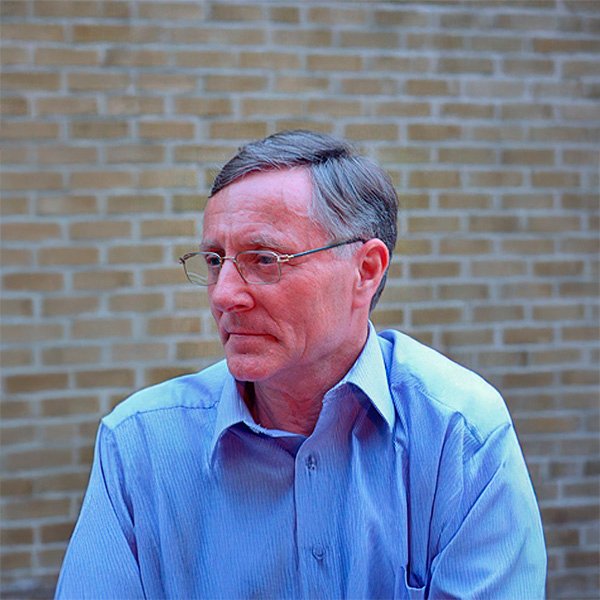
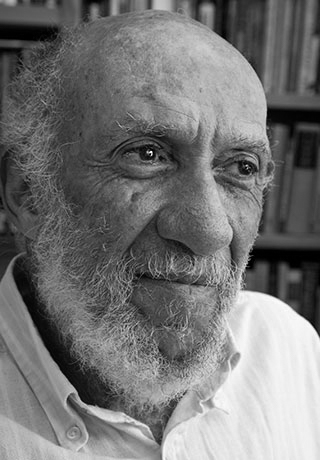
By Hans von Sponeck, Richard Falk – both TFF Associates – and Denis Halliday.
US President Donald Trump is ardently embracing a toxic form of messianic nationalism, while demeaning those who oppose him as corrupt, and dishonest enemies. His “America First” chant is creating severe international tension, promoting extremism – within and outside the US – and undermining the homeland security that he has so insistently pledged to enhance.
Trump seems determined to implement policies and practices that could signal the weakening of democracy, and possibly even herald the onset of fascism. His programme to deport undocumented immigrants and to exclude all visitors from six designated Muslim majority countries is illustrative of a regressive and Islamophobic outlook.
The groundswell of popular dissent is vibrant and worldwide, from Romania to South Korea, Gambia to Brazil, from the UK to the Ukraine.
Trump is dangerously exploiting the frustration of citizens with the political establishment, which is unprecedented in its depth and breadth. The umbilical cord that connects those governing with those governed is becoming dangerously stressed. The digital revolution is endowing governments with horrifying capabilities for oppression and control but it is also enhancing the ability of the citizenry to mount resistance and mobilize opposition forces.
UN charter law and power politics
As UN veterans, we recall and affirm the preamble to the UN Charter that reads “we the peoples” – not we the governments! The trust of people in their governments to work for social and economic progress and to prevent war has dramatically weakened, if not disappeared.
The prediction made by the Mexican delegate at the founding of the UN in 1945 that “we have created an institution which controls the mice but the tigers will roam around freely” seems truer today than at the moment of its utterance. The UN Security Council’s permanent members – China, France, Russia, the UK and the US – indeed “roam around freely” lacking respect for international law or the authority of the UN, once more pursuing their respective nationalist agendas without any pretence of accountability. These countries are also the major consumers and exporters of military hardware, facilitating both militarism and “merchants of death”.
The international war supposedly being waged against political extremism and terrorism has predictably deteriorated into a series of horrific wildfires and slaughter. Wars that should never have happened, neither the overt ones in Afghanistan, Iraq, Libya and Syria nor the partially covert ones in Yemen, Somalia, and a range of other countries in Africa and Asia have brought peace or stability, but a series of unspeakable ordeals of human suffering. Old struggles have been magnified while new ones have been created.
The US tiger, aged as it is, displays the most serious signs of political amnesia. Unilateralism and exceptionalism have just been reaffirmed as cornerstones of the current US worldview. The announced $54bn increase of the US defence budget is justified by Trump with the argument that “we must win wars again”.
In contrast, the great majority of the other 192 UN member states have given notice that they clearly prefer a multilateral model premised on the equality of states and international co-operation. President Xi of China at the last Davos meeting of the global neoliberal elite gave voice to this more benign vision of world order.
The so-called “West” – the US, Canada, the EU including the UK – is made up of 800m people, or a mere 12 per cent of the global population. These Westerners need to come to terms with growing de-Westernisation, a natural outgrowth of globalisation in all sectors of life.
Wise global leaders would respond by seeking an immediate realignment of international relations with a commitment to the promotion of principles of convergence, cooperation, and compromise. The objective would be a new world order based on mutual benefit, sustainability, prudence as well as a demilitarizing ethos.
The UN Security Council is the most important venue for making such an undertaking happen. It is here that bilateral and multilateral diplomacy takes place in a global setting. The primary goal remains to prevent the emergence of a world in which drones replace diplomats and inequality continues to undermine wellbeing.
The UN and civil society
The peoples of the world are confronted by a series of challenging global developments. Tectonic political changes are taking place in the US, Europe, and Asia, along with unresolved crises in the Middle East, Africa, and South Asia, and the formidable speed and effects of Easternisation. Prospects for a politically effective UN, and most especially a robust UN Security Council, seem bleak – but hardly impossible. Globalisation potentially supports innovative expressions of multilateralism that are more oriented than in the past towards the global and human interest. The 2015 Paris Agreement on Climate Change is illustrative of such a hopeful turn.
The UN and Trumpism
It is our hope that Trumpism will not succeed in relegating the United Nations to a fringe role. The Mexicans refuse to pay for the wall that the US President insists on building, the UN will bear the costs of the invisible wall Trump and a subservient Republican Congress seems determined to construct between the US and the UN.
If Washington goes ahead with its threats to reduce drastically UN funding and end cooperation with and participation in various UN organs, it should certainly be viewed as a significant setback for both the UN and its current US adversary. While we are confident that the UN as an institution would survive these financial and political setbacks, we are not so sure that Trumpism will long endure.
“Alternative facts” are set forth to demonstrate that the US is making sacrificial and disproportionate contributions to keep the UN alive. Real facts show a different picture: In 2016 the US Federal budget amounted to $3.2trn. The US assessed share of the UN budget of $2.7bn was $594m or 0.019 per cent of the US federal budget!
At no time have US/UN relations been smooth.
During the more than 70 years that they have travelled the same road, there have been many potholes along the way. The US often has been heavy-handed in a manner by which it exerted its influence on the UN’s agenda. It has often used its political leverage to weaken the organisation’s independence. Over the years it has manipulated the selection processes used to fill UN leadership positions.
Washington has frequently flexed its muscles by delaying the annual payment of mandatory contributions to the UN budget. The US government has set some terrible examples by repeatedly violating the most fundamental provisions of the UN Charter governing the use of force. It has continuously defied international law in all parts of the world, including wars in Vietnam (1963), former Yugoslavia (1999), Afghanistan (2001), Iraq (2003), and Libya (2011). It has used its veto power in the UN Security Council to shield its allies from justifiable UN censure, while doing its best to punish its enemies with the threat of force.
West-centrism, alliances and UN multilateralism
Polarisation, alliance formation and West-centrism were central to the transformation of NATO from a Cold War arrangement intended to defend Europe from a Soviet attack to an American led global domination project with Europe as the junior partner.
In this wider geographic setting the expanding eastern Shanghai Cooperation Organisation (SCO) can be understood as a geopolitical countermove led by China, which also has its own disturbing implications. In the face of these geopolitical initiatives, it becomes clear that the United Nations is being pushed to the outer margins of world politics in precisely those areas of peacekeeping and global security that were regarded as its primary mission when established in 1945.
The new US administration seems likely to fulfill another of President Trump’s ill-considered campaign promises to make a series of moves to weaken multilateral problem-solving even beyond damaging the UN.
These dangerous and irresponsible manoeuvres may fail, as many governments around the world fully understand that multilateral diplomacy has become indispensable, and indeed needs to be strengthened to meet the global challenges facing humanity.
It is our fervent hope that these governments will mobilise sufficient energy to rescue the UN in this hour of need. Dutch and Belgian authorities give us some slender hope that this might happen.
The Netherlands goverment has already agreed to replenish funds if withdrawn by the US from certain international population programmes. Yet this is only a small and suggestive gesture of what must become a groundswell of support for the UN that will be needed to overcome the damage expected to be inflicted by this anti-UN activism of the US.
The politics of populism
What now appears to be a wave of resurgent nationalism around the world contains the potential to become a new internationalism. We have served in many parts of the world under UN auspices and therefore are keenly aware of the widespread anger and sharp demands for justice present among the peoples spread around the entire planet.
These discontented multitudes share many of the same goals: peace, equity, an end to corruption, freedom from fear and want, the rule of law, accountability, and above all, a life of individual and collective dignity.
In February 2017, during a meeting of the EU heads of government held in Malta, profound anxieties associated with political changes taking place in Washington were addressed. European leaders strongly reaffirmed their joint commitment to common principles and values as the continuing basis for interacting with the United States and the world, and in this way respond to the challenges being mounted by this ultra-nationalist thinking.
We believe that recent developments in Europe, the Middle East, and especially in the United States are reaching a boiling point. Many citizens are outraged and ready to challenge intolerable aspects of the global status quo. More than ever, Immanuel Kant’s wisdom is relevant and needed, especially his admonition to have the courage to use our brain for the construction of a benevolent public reality. In a similar spirit, we are encouraged by Hannah Arendt’s unforgettable reminder that “thinking gives people that rare ability to act when the chips are down!” And act we must.
The urgency of UN reforms and the incoming UN Secretary-General
For the political organs of the United Nations (the Security Council and the General Assembly) to play an influential role in conflict resolution in the 21st century, governments will have to act with resolve to overcome some formidable challenges. Such a resolve must include the renewed political determination by member governments to look afresh at some major UN reform proposals that are now collecting dust on the shelves of the UN Dag Hammarskjold Library in New York.
Let us also not forget that the UN is the most inclusive global institutional body that has ever existed.
It is the only place on earth where there are, and can be, no foreigners. The UN therefore is the obvious venue at which to reflect upon how the increasing number of people throughout the world who have become forgotten could be given new and alternative perspectives.
The recently elected UN Secretary-General, António Guterres, if he acts to fulfil his role as the guardian of charter norms and values, including respect for international law, will face a daunting challenge. He will have to be prepared to remind the US administration and other political leaders of major UN members that peace can only be achieved when unilateralism gives way to genuine multilateralism, when monologues are replaced by dialogues, when convergence, cooperation, and compromise prevail, when civil society is respected and allowed to participate within the organisation, when root causes, not just symptoms, are recognised and understood and most importantly, when governmental decision makers, whether from large or small Member states, show respect for international law and are held accountable for their acts.
The peoples of the world need the United Nations more than at any time since 1945, the year the organisation was established “to save succeeding generations from the scourge of war”. Only a strengthened, respected, and sufficiently funded UN can provide mechanisms for upholding global and human interest. It must not allow itself to serve any longer mainly as a vehicle for the aggregation of national interests, or worse, as an instrument of power to be deployed by the geopolitical giants, and especially by the United States.
The multiple challenges associated with climate change, nuclear weapons, sustaining biodiversity, and lessening global inequality put the future of civilization at great risk, and even endanger the survival of the human species.
At such a time, we can only hope that enough political leaders are alert to this menacing situation, are emboldened by their citizens, and act with resolve and courage to create an alternative future for humanity that is responsive to the claims of peace, justice, sustainability, and community.
More than ever before in human history the peoples of the world are being severely challenged by problems of global danger that can only be solved globally. The best hope of humanity to meet these challenges is to abandon unilateralism and isolationism and instead empower the United Nations to become at last an effective mechanism for the protection of “fundamental freedoms for all without distinction as to race, sex, language, or religion”.
Hans-C. von Sponeck served in the UN from 1968 to 2000, from 1998 to 2000 as the UN Humanitarian Coordinator for Iraq and UN Assistant Secretary-General.
Richard Falk is Milbank Professor of International Law Emeritus, Princeton University and served as UN Special Rapporteur between 2008 and 2014.
Denis Halliday served in the UN from 1964 to 1998, from 1994 to 1998 he held the position of UN Assistant Secretary-General and UN Humanitarian Coordinator for Iraq.