
How the Coronavirus changed our lives

Read the author’s first article here

On January 18, after attending a meeting in Hangzhou, I planned to return to my home in Beijing. At that time, the Spring Festival in China was approaching. Although I had started buying tickets one week in advance, I still did not get a high-speed train ticket from Hangzhou to Beijing so I had to go from Hangzhou to Shanghai and wait for several hours before changing to a later train to return to Beijing.

There are high-speed trains between Beijing and Hangzhou and Shanghai every five to ten minutes. Even so, it can’t meet people’s travel needs during the Spring Festival. High-speed railway stations and airports in all major cities were overcrowded and at security checkpoints, people lined up in long queues.
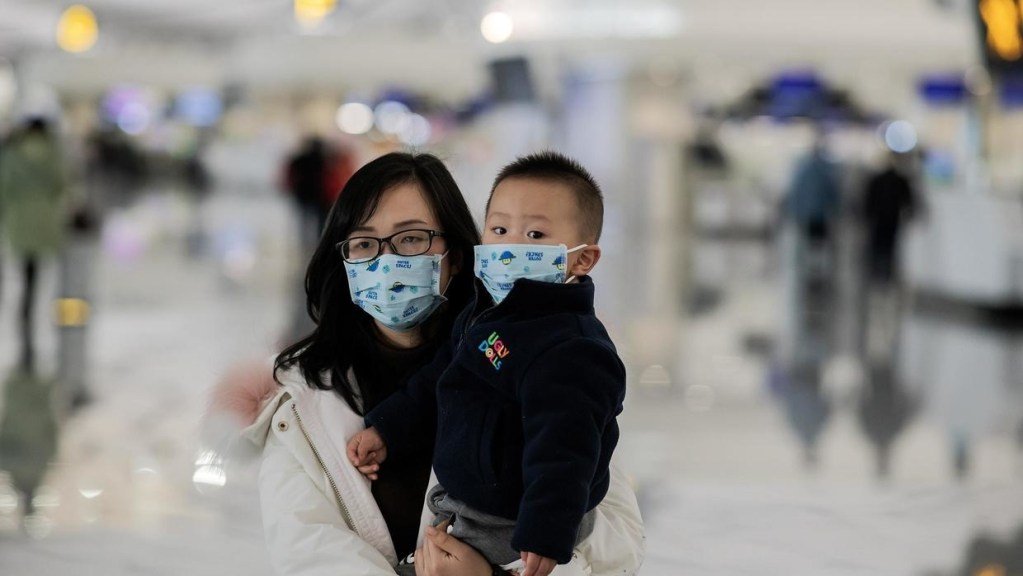
China’s transportation sector is doing its best to ensure the world’s largest population’s mobility and transport needs. Everyone was looking forward to the long holiday in the New Year and the reunion with their families.

There and then, nobody knew that after four days all this would change completely. Like no one expected that the whole world would change fundamentally in a couple of months.

The whole country was beaming with joy and peace.

The TV news stations were constantly showing people’s happy programs in preparation for the New Year holiday. A flash of news that reported a few cases of new pneumonia in Wuhan wouldn’t have attracted much attention.

So, people continue their preparations for the New Year.

Suddenly, however, a group of experts who have visited Wuhan appears on the TV program my family and I usually see and they suggest that people should not go to Wuhan if they could avoid it and that people in Wuhan should not go out at all.

Things are now getting quite serious and reports follow with rapidly increasing numbers of patients.

On January 23, the government suddenly announced the closure of Wuhan, a megacity with a population of 11 million. The next day, it was announced that all public transportation in the city would be stopped, private cars would be banned, and everyone would stay at home.

On January 24, on Chinese New Year’s Eve, medical staff in some provinces outside Hubei were suddenly notified that they must stop their routine work, pack their luggage within an hour and assemble for their travel to Wuhan. It’s now a huge medical rescue operation.

At this point, everyone is shrouded in anxiety.

At 8 pm, the most important TV program of the year, the New Year’s Gala, is performed as usual and broadcast live across the country. My family still sit around the TV and watch the New Year performances and celebrations. But we feel increasingly uneasy.

We keep updating news apps on our mobile phones to understand better the situation. A few hours later, the first medical teams from other provinces arrive in Wuhan.

Next, we learn that other parts of the country are also beginning to experience new cases of the virus; restrictions on travel are getting stricter.

My family originally planned to go to Hunan province which is 1300 kilometres away from Beijing to visit my parents during the new year.

But we finally recognise that the situation is such that we must cancel that trip. The next thing that happens is that the government calls on all the country’s citizens to live in isolation for two weeks. And if and when they have to go out to buy daily necessities, they must wear masks.

Over the next few days, the reports tell of ever-increasing numbers of new cases. The death rate was also soaring. The feeling of fear and anxiety is now manifest, going up and down with the reports we hear and see.

It all goes very fast…

At the same time, the country is moving quickly. One medical team after the other gathers in Wuhan from all over the country. Within ten days, two hospitals have sprung up and dozens of temporary hospitals are being built.
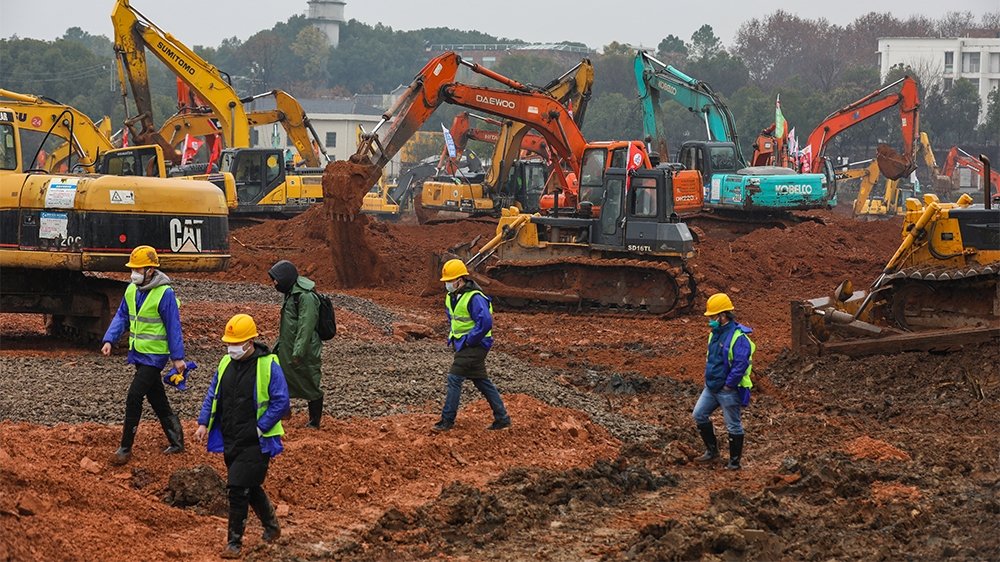
Seeing all this, our anxiety begins to ease and our confidence increases. I pull out a book on ancient Chinese philosophy from the shelf, intending to force myself to calm down, read it and turn my thoughts on something else but this catastrophe. I had tried to get into this book several times before but every time I had given up because it was too difficult for me. Was this the right good opportunity?

The week-long New Year holiday passed quickly, and the government decided to extend the holiday nationwide and postpone the opening date of all the schools.

My children cheered when they heard the news, but I had to think about how to deal with this unexpected situation.

Everyone is now looking for creative new solutions. How do you operate when you and your family is suddenly isolated physically in your home without any prior planning?

The demand for online office work and online education suddenly explodes and – predictably – some websites as well as many companies collapse.

The situation gradually improves after a week or two. We are learning to live with this as the new normal. My elder daughter faces her college entrance examination in her final year of high school. Her school had quickly begun to organize online teaching. Teachers and children tried their best to adapt to the new way of teaching and learning.

On social media, the learning of new skills has become popular, and people’s ability to adapt to new situations is beyond imagination – so impressive.

Eventually, the good news was that there were fewer and fewer new cases in Wuhan; more and more people were cured and discharged from hospitals. Temporary hospitals were gradually emptied and closed one by one.

Epidemic prevention and control measures are still being strictly implemented, masks are worn in public places, and special personnel deployed at all open buildings are equipped to check the body temperature of people entering.
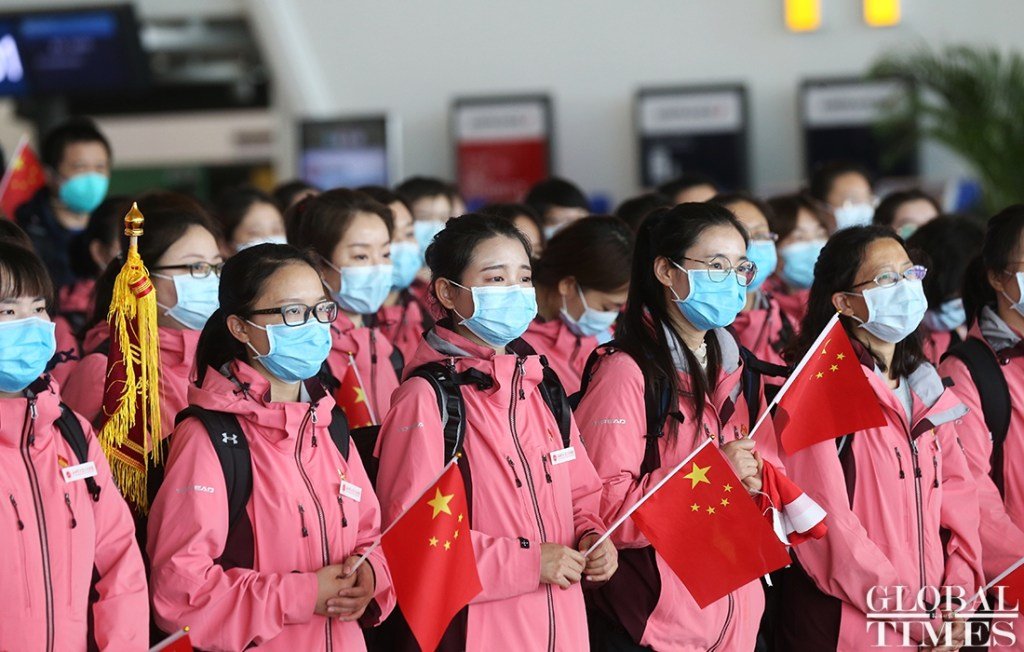
142 medical workers dispatched from Xinjiang returned home while 158 other medics from Xinjiang are currently in Wuhan and awaiting departure. They have treated 528 COVID-19 patients since Jan 28, of whom 321 have recovered.

It is predicted and expected that this will be our new ‘normal’ life for quite some time to come.

The epidemic situation in China is now basically over but – sadly, indeed – the virus has begun to spread to many other parts of the world. The number of infected and diseased are growing.

A heavy haze is now covering our global village. I believe it is just the beginning of a great change, and no one knows exactly what the world will look like during and after COVID-19.

The word “crisis” in Chinese includes the words “crisis” and “opportunity”, which means that out of a crisis new opportunities can also emerge.

We must hope that we shall all learn something constructive from the Corona pandemic and that a new and better world will emerge after it.

If you found this enlightening, please…

[paypal-donation]

Share

Leave a Reply

Your email address will not be published. Required fields are marked *

Related Posts

Lena Petrova of “World Affairs In Context” with more than half a million subscribers on YouTube wanted to explore what a peace researcher like me has to say about, among other things, the First and the Second Cold War and why eethics has disappeared from politics. I am particularly happy about this conversation that also yielded an amazing number of very appreciative comments on YouTube. No doubt, people are longing for alternatives, including peace perspectives.
The MIMAC – Military-Industrial-Media-Academic Complex – drives the world’s rampant militarism and wars without end. Here is a short reflection of how it works against all interests of humanity. #5 deals with why there is no real enemy or threat images/analysis. It’s all ex-post constructions. And, btw, theTFF Peace Pulse is now on Rumble.
Jan Oberg, TFF director April 28, 2026 In this third TFF Peace Pulse, I make the important distinction between the violence and the conflict that violence is a symptom of. If you want peace, focus on the underlying conflict because that is the key to resolution, peacemaking, and a better future for the parties. The West is obsessed with violence, just look around you – and 90+ per cent of the public debate is about military issues and other violence – totally wasted for peace. These Peace Pulses will only be published here a few times. You will also not find them on YouTube and Vimeo because both platforms have blocked TFF and me; you know, peace is dangerous these days. Most TFF’s videos since 2007 are now on Rumble.

Recent Articles

Jan Oberg May 15, 2026 Go to this Fox News page and scroll the whole way down: President Donald Trump tells the world that his meeting with President Xi Jinping yielded a lot of very concrete political and economic results – of course, only where the Chinese side, according to him, agreed with him. He does not mention the Taiwan issue, but Secretary of State, Marco Rubio, says that it did not feature prominently in their talks and that the US policy on Taiwan has not changed. Then go to China Daily – or Global Times – and you will see that for the Chinese it is framework, principles, structure of cooperation etc. that matters – all embedded in the overall idea of “constructive bilateral relationship of strategic stability.” Nowhere is any concrete agreement or deal – all that Trump refers to – mentioned. At the general level, this gives you insights into the very different social...
Lena Petrova of “World Affairs In Context” with more than half a million subscribers on YouTube wanted to explore what a peace researcher like me has to say about, among other things, the First and the Second Cold War and why eethics has disappeared from politics. I am particularly happy about this conversation that also yielded an amazing number of very appreciative comments on YouTube. No doubt, people are longing for alternatives, including peace perspectives.
The MIMAC – Military-Industrial-Media-Academic Complex – drives the world’s rampant militarism and wars without end. Here is a short reflection of how it works against all interests of humanity. #5 deals with why there is no real enemy or threat images/analysis. It’s all ex-post constructions. And, btw, theTFF Peace Pulse is now on Rumble.

TFF on Substack

Discover more from TFF Transnational Foundation & Jan Oberg.

Most Popular

Jan Oberg May 15, 2026 Go to this Fox News page and scroll the whole way down: President Donald Trump tells the world that his meeting with President Xi Jinping yielded a lot of very concrete political and economic results – of course, only where the Chinese side, according to him, agreed with him. He does not mention the Taiwan issue, but Secretary of State, Marco Rubio, says that it did not feature prominently in their talks and that the US policy on Taiwan has not changed. Then go to China Daily – or Global Times – and you will see that for the Chinese it is framework, principles, structure of cooperation etc. that matters – all embedded in the overall idea of “constructive bilateral relationship of strategic stability.” Nowhere is any concrete agreement or deal – all that Trump refers to – mentioned. At the general level, this gives you insights into the very different social...
Lena Petrova of “World Affairs In Context” with more than half a million subscribers on YouTube wanted to explore what a peace researcher like me has to say about, among other things, the First and the Second Cold War and why eethics has disappeared from politics. I am particularly happy about this conversation that also yielded an amazing number of very appreciative comments on YouTube. No doubt, people are longing for alternatives, including peace perspectives.
The MIMAC – Military-Industrial-Media-Academic Complex – drives the world’s rampant militarism and wars without end. Here is a short reflection of how it works against all interests of humanity. #5 deals with why there is no real enemy or threat images/analysis. It’s all ex-post constructions. And, btw, theTFF Peace Pulse is now on Rumble.
Read More
Screenshot-2026-05-15-103534
Jan Oberg May 15, 2026 Go to this Fox News page and scroll the whole way down: President Donald Trump tells the world that his meeting with President Xi Jinping yielded a lot of very concrete political and economic results – of course, only where the Chinese side, according to him, agreed with him. He does not mention the Taiwan issue, but Secretary of State, Marco Rubio, says that it did not feature prominently in their talks and that the US policy on Taiwan has not changed. Then go to China Daily – or Global Times – and you will see that for the Chinese it is framework, principles, structure of cooperation etc. that matters – all embedded in the overall idea of “constructive bilateral relationship of strategic stability.” Nowhere is any concrete agreement or deal – all that Trump refers to – mentioned. At the general level, this gives you insights into the very different social...
Screenshot-2026-05-12-104023
Lena Petrova of “World Affairs In Context” with more than half a million subscribers on YouTube wanted to explore what a peace researcher like me has to say about, among other things, the First and the Second Cold War and why eethics has disappeared from politics. I am particularly happy about this conversation that also yielded an amazing number of very appreciative comments on YouTube. No doubt, people are longing for alternatives, including peace perspectives.
Screenshot-2026-04-13-154551 (2)
The MIMAC – Military-Industrial-Media-Academic Complex – drives the world’s rampant militarism and wars without end. Here is a short reflection of how it works against all interests of humanity. #5 deals with why there is no real enemy or threat images/analysis. It’s all ex-post constructions. And, btw, theTFF Peace Pulse is now on Rumble.
Screenshot-2026-04-13-154551 (1)
Jan Oberg, TFF director April 28, 2026 In this third TFF Peace Pulse, I make the important distinction between the violence and the conflict that violence is a symptom of. If you want peace, focus on the underlying conflict because that is the key to resolution, peacemaking, and a better future for the parties. The West is obsessed with violence, just look around you – and 90+ per cent of the public debate is about military issues and other violence – totally wasted for peace. These Peace Pulses will only be published here a few times. You will also not find them on YouTube and Vimeo because both platforms have blocked TFF and me; you know, peace is dangerous these days. Most TFF’s videos since 2007 are now on Rumble.
Screenshot-2026-04-13-154551
In contrast to most, we’ll bring alternatives, solutions, hope and strategies for a better future. Times are dangerous, yes, but that only intensifies the need for constructive thinking and action! Jan Oberg, TFF director April 13, 2026 The new TFF Peace Pulse uses video messages in a new way: Max 3-5-minute-long comments, ideas or perhaps mini-lectures, all about peace – positive peace. We launch them today on April 13, 2026 with a carefully crafted visual aesthetic fitting the content. We hope to publish them regularly from now on. We launch Peace Pulse (PP) – for a number of reasons. The world is in chaos, and there are countless reasons to feel concerned, frustrated, even angry. The atmosphere is saturated with doom and gloom, with negative energy and rear‑mirror thinking, while vision, imagination, alternatives, strategies and genuine future‑mindedness remain in short supply. And without them, we simply can’t save the world. Looking at problems from a hundred angles will...
IMG_5165 (1)
PART II — Publishing Peace in a System That Prioritises Militarism Jan Oberg, TFF director April 10, 2026 How TFF Maintains a Daily Voice in a Digital World Built for Noise This article is part of the series “TFF at 40″ and it invites you to learn about Four Decades of Publishing Peace. It takes a look at how a small, people‑financed peace foundation has communicated across four generations of technology — from wax stencils and fax machines to mass email and Substack — and why TFF continues to publish every single day in a system that rewards noise, conflict, and militarism. ◆ What it means to publish peace every single day in a digital system built for 24/7 news and other noise, confrontation, and militarism. How TFF’s independence, continuity, and global readership defy algorithms, donor cycles, and Western media censorhip — and why the Majority World keeps listening. When the...


