How Can We Combat Militarism?

Richard E. Rubenstein

October 23, 2023

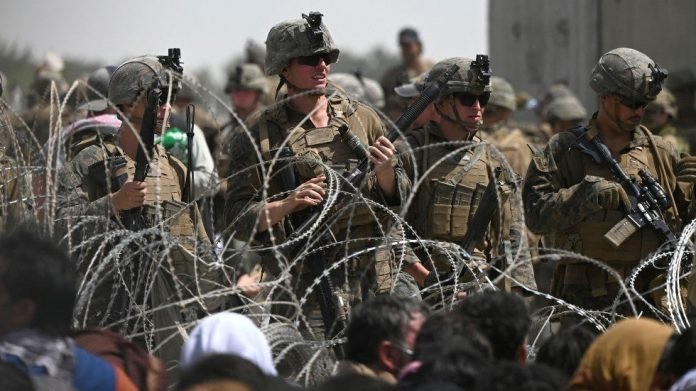
Everyone knows that the United States is the world’s leading military power, with an annual “defense” budget approaching one trillion dollars, considerably more than the arms budgets of the next 144 nations combined. The U.S. employs more than 3.5 million active military and civilian personnel and maintains more than 750 military bases located in some 80 nations around the world. The nation’s most profitable and fastest-growing manufacturing sector is the military-industrial complex, which employs more than 4 million workers and supplies approximately 40 percent of the total weaponry used by the world’s armed forces. In the production and deployment of nuclear weapons, of course, the U.S. is absolutely dominant.

Originally published at Transcend on October 2, 2023

All this is common knowledge. Yet, in the heartland of arms production and preparation for war, there is virtually no debate about militarism. Only a handful of individuals and organizations worry and agitate about the size of the military budget, the near worship of military values, and the bellicosity of both liberal and conservative regimes. Absent a crisis such as the Vietnam debacle or the invasion of Iraq, their views tend to be marginalized and ignored by hostile or indifferent media outlets and political forces.

Part of the reason for the relative immunity of militarism to criticism is the extraordinary cultural power in American society of pro-military institutions and ways of thought.  What some analysts call “banal militarism” is omnipresent, so much so that it becomes virtually invisible, part of the air that one breathes.

The term points to the ways in which the use of armed force is legitimized or encouraged by a thick network of everyday assumptions, customs, rituals, and emotions that are accepted semi-consciously as constituting part of our personalities and our collective identity. (Michael Billig originally described banal nationalism in a study published by Sage in 1995; the concept was adapted by Tanja Thomas and Fabian Virchow in Banal Militarism, an edited book published in 2006 by Verlag.)

One example of banal militarism is the ritualized reverence for military personnel and symbols that manifests at many public events in America, ranging from sports contests to holiday observances designed to glorify war veterans and deceased soldiers.

At sporting events, it has become customary for uniformed military units formally to “present the colors” (parade with the American flag) prior to the singing of the National Anthem. Returned veterans are routinely introduced to the crowd at baseball games and formally thanked for their service, while at halftime during professional football’s Superbowl, military fighter planes zoom overhead.

Banal militarism also denotes ideas, linked via narratives and images to emotions, that are accepted as unquestionable truths of human nature, society, and history.  A typical example is the idea that evil aggressors can only be deterred by threats of violence, and that, if deterrence fails, they must be resisted and defeated by armed force.

Such notions are not advanced as topics for discussion or qualification but are assumed to be obvious; that is, they are presented as dogmas of the American civil religion. Reinforcing stories from movies and television shows abound. One that I remember vividly from my own childhood is “High Noon” (1952), a film shaped by the Cold War that satanizes the pathologically aggressive outlaw, sanctifies the bravely violent hero, and denounces the hero’s fiancée – a sentimental pacifist – as well as the cowardly townspeople.

The film’s core messages, unmistakable to adolescent boys like me, were that enemies are incorrigible, duty conquers love, cowardice is the sin of sins, and the duty of those who do not wish to die as cowards is to face the enemy with gun in hand.

One might conclude from this brief discussion that, given the power of culture to mold people’s minds and emotions, combating banal militarism is impossible. But ideas and emotions, even if connected or cathected, do not stand alone; they are intimately associated with organized systems that have a material as well as an ideal basis and that cultural products are used to justify.

Ideas and attitudes aside, “militarism” includes millions of men and women under arms; taxpayers paying their salaries and the costs of their current maintenance and lifetime care; corporations producing weapons and other military-related products; citizens helping to fund that production and doing without social welfare programs in order to satisfy military needs; politicians seeking military bases and industries and advocating “preparedness” for war; arms manufacturers and dealers financing those same politicians’ election campaigns; and more.

As these examples make clear, the military and its industrial complex have impacts on society that do not disappear or become semi-conscious because of militaristic beliefs or attitudes.  On the contrary, the tension between militarism as an ideology and its practical effects tends to increase as the total demand for human services increases. 

Or to put this somewhat differently, this tension tends to increase as needs for human security, not just military security, proliferate. Currently, the U.S. system (as well as other advanced industrial systems) is under dramatically increasing pressure from three sources: geopolitical, environmental, and socioeconomic. Each of the following challenges makes it more difficult for Americans to maintain a militaristic stance in either an openly ideological or “banal” manner:

Geopolitics: It has been recognized for some time now that U.S. militarism is not simply national but imperial.  World War II ended with the United States the world’s only superpower – a status confirmed by the collapse of the Soviet Union and the end of the Cold War in the early 1990s. However, after forty years of global domination marked by costly, inconclusive, or losing wars, the American empire is now challenged by a host of factors making for a multi-polar world.

As tension between the United States and declared “adversaries” like China and Russia increases, militaristic voices grow louder and more insistent. But opposition to further military adventures also intensifies both on the libertarian Right and the progressive Left. This has the effect of making militarism less “banal” and opening the door to discussion of matters formerly considered taboo.

Environment: The major threats to human security in the U.S., as in most other nations, are not military but environmental. These include the fires, floods, storms, droughts, and other “natural disasters” associated with human-caused climate change, pandemics like the COVID-19 plague, and the results of industrial pollution of our atmosphere, forests, oceans, and waterways.

Dealing with such problems will require massive funding that will almost certainly reduce current levels of military spending. It will also require the development of new modes of collective civil action. But the main impact of these new realities on broad sectors of the population will be to make it clear that the “enemy” that threatens their lives, liberties, and happiness is not some megalomaniac Great Power or Dictator, but a combination of abused nature and dysfunctional government. Under these circumstances, militaristic organizations and values simply become irrelevant.

Socioeconomics:  A crisis of social inequality featuring vast differences in income, wealth, and social power between privileged and less privileged classes is already destabilizing politics in many advanced industrial nations, including the U.S.A.  The net effect of military-industrial activity dominated by a small number of super-profitable corporations using high tech production methods is to intensify this crisis, not to mitigate it.

Converting military-industrial production to peacetime uses will be necessary to rebuild a decayed infrastructure, create civilian jobs, and promote collective economic planning.  Again, when confronted by genuine social problems demanding solutions, militarism appears not so much as a sinister or discreditable ideology as an irrelevant distraction.

For these reasons, we can expect over time to see the growth of people’s movements in the U.S. and elsewhere challenging the hegemony of militaristic values and practices. Right now, however, peace advocates can play a creative role in this process. They can shatter the taboos that make militarism “banal” by participating with organizations like Code Pink, World Beyond War, TRANSCEND, and the Campaign for Peace, Disarmament, and Common Security in public demonstrations and discussions that challenge received dogmas like the need for violent deterrence and policies such as arming the Ukrainian regime to achieve “victory” over Russia. 

They can organize teach-ins at universities and dialogues in community organizations, trade unions, and churches that expose the real challenges to common security and the exorbitant costs of military preparations and activities. And they can talk with workmates, friends, and relatives about the need to separate the virtues long associated with military activity – courage, comradeship, and willingness to sacrifice – from the brutal, self-destructive practices of a militarized empire.

Ridding the U.S. and the world of militarism will take time, no doubt. But it will happen. And, as the sage Hillel asked, “If not now, when?”

Originally published at Transcend on October 2, 2023

Richard Rubenstein, ICAR

More about professor emeritus, Richard Rubenstein here

Share

Leave a Reply

Your email address will not be published. Required fields are marked *

Related Posts

Jan Oberg May 15, 2026 Go to this Fox News page and scroll the whole way down: President Donald Trump tells the world that his meeting with President Xi Jinping yielded a lot of very concrete political and economic results – of course, only where the Chinese side, according to him, agreed with him. He does not mention the Taiwan issue, but Secretary of State, Marco Rubio, says that it did not feature prominently in their talks and that the US policy on Taiwan has not changed. Then go to China Daily – or Global Times – and you will see that for the Chinese it is framework, principles, structure of cooperation etc. that matters – all embedded in the overall idea of “constructive bilateral relationship of strategic stability.” Nowhere is any concrete agreement or deal – all that Trump refers to – mentioned. At the general level, this gives you insights into the very different social...
Jan Oberg, TFF director April 9, 2026 I was recently invited to have a good, long talk about the world – and, of course, about peace too – with Boris Malagurski on his Weight of Chains Channel on YouTube. It was a real joy and seems to have been greatly appreciated by the viewers too. Mr Malagurski and I shall of course be grateful if you share this conversation in your circles – of course, only if you like what you see and hear  And remember that this one – like hundreds of others with TFF Associates – can be enjoyed at our TFF Video Collection.
By Jan ObergTFF co-founder and director February 11, 2026 PART 3 — ECONOMICS, TRADE & FINANCIAL SOVEREIGNTY A. Trade Measures & Market Signaling Economic pressure can be applied instantly and scaled without violence. Immediate Measures (within a week) Government boycott US goods and services  A very powerful signal which over time will be felt. Targeted tariffs on selected U.S. goods Symbolic but high-visibility sectors send a clear message. Suspend trade facilitation talks A peaceful pause that signals deep concern. Freeze U.S. participation in public procurement – military procurement in particular A nonviolent way to reduce influence. Competition law review of U.S. corporations A legal tool to scrutinise market dominance. Longer-Term Measures EU–Asia–Africa trade corridors Reducing reliance on U.S. markets. European supply chains for critical minerals Strategic autonomy in resource access. European Strategic Trade Authority Monitoring coercive practices globally. Euro-denominated commodity markets Weakening the dollar’s pricing monopoly. The EU must resume contacts and negotiations with Russia, focusing on energy cooperation To...

Recent Articles

Jan Oberg May 15, 2026 Go to this Fox News page and scroll the whole way down: President Donald Trump tells the world that his meeting with President Xi Jinping yielded a lot of very concrete political and economic results – of course, only where the Chinese side, according to him, agreed with him. He does not mention the Taiwan issue, but Secretary of State, Marco Rubio, says that it did not feature prominently in their talks and that the US policy on Taiwan has not changed. Then go to China Daily – or Global Times – and you will see that for the Chinese it is framework, principles, structure of cooperation etc. that matters – all embedded in the overall idea of “constructive bilateral relationship of strategic stability.” Nowhere is any concrete agreement or deal – all that Trump refers to – mentioned. At the general level, this gives you insights into the very different social...
Lena Petrova of “World Affairs In Context” with more than half a million subscribers on YouTube wanted to explore what a peace researcher like me has to say about, among other things, the First and the Second Cold War and why eethics has disappeared from politics. I am particularly happy about this conversation that also yielded an amazing number of very appreciative comments on YouTube. No doubt, people are longing for alternatives, including peace perspectives.
The MIMAC – Military-Industrial-Media-Academic Complex – drives the world’s rampant militarism and wars without end. Here is a short reflection of how it works against all interests of humanity. #5 deals with why there is no real enemy or threat images/analysis. It’s all ex-post constructions. And, btw, theTFF Peace Pulse is now on Rumble.

TFF on Substack

Discover more from TFF Transnational Foundation & Jan Oberg.

Most Popular

Jan Oberg May 15, 2026 Go to this Fox News page and scroll the whole way down: President Donald Trump tells the world that his meeting with President Xi Jinping yielded a lot of very concrete political and economic results – of course, only where the Chinese side, according to him, agreed with him. He does not mention the Taiwan issue, but Secretary of State, Marco Rubio, says that it did not feature prominently in their talks and that the US policy on Taiwan has not changed. Then go to China Daily – or Global Times – and you will see that for the Chinese it is framework, principles, structure of cooperation etc. that matters – all embedded in the overall idea of “constructive bilateral relationship of strategic stability.” Nowhere is any concrete agreement or deal – all that Trump refers to – mentioned. At the general level, this gives you insights into the very different social...
Lena Petrova of “World Affairs In Context” with more than half a million subscribers on YouTube wanted to explore what a peace researcher like me has to say about, among other things, the First and the Second Cold War and why eethics has disappeared from politics. I am particularly happy about this conversation that also yielded an amazing number of very appreciative comments on YouTube. No doubt, people are longing for alternatives, including peace perspectives.
The MIMAC – Military-Industrial-Media-Academic Complex – drives the world’s rampant militarism and wars without end. Here is a short reflection of how it works against all interests of humanity. #5 deals with why there is no real enemy or threat images/analysis. It’s all ex-post constructions. And, btw, theTFF Peace Pulse is now on Rumble.
Read More
Screenshot-2026-05-15-103534
Jan Oberg May 15, 2026 Go to this Fox News page and scroll the whole way down: President Donald Trump tells the world that his meeting with President Xi Jinping yielded a lot of very concrete political and economic results – of course, only where the Chinese side, according to him, agreed with him. He does not mention the Taiwan issue, but Secretary of State, Marco Rubio, says that it did not feature prominently in their talks and that the US policy on Taiwan has not changed. Then go to China Daily – or Global Times – and you will see that for the Chinese it is framework, principles, structure of cooperation etc. that matters – all embedded in the overall idea of “constructive bilateral relationship of strategic stability.” Nowhere is any concrete agreement or deal – all that Trump refers to – mentioned. At the general level, this gives you insights into the very different social...
Screenshot-2026-05-12-104023
Lena Petrova of “World Affairs In Context” with more than half a million subscribers on YouTube wanted to explore what a peace researcher like me has to say about, among other things, the First and the Second Cold War and why eethics has disappeared from politics. I am particularly happy about this conversation that also yielded an amazing number of very appreciative comments on YouTube. No doubt, people are longing for alternatives, including peace perspectives.
Screenshot-2026-04-13-154551 (2)
The MIMAC – Military-Industrial-Media-Academic Complex – drives the world’s rampant militarism and wars without end. Here is a short reflection of how it works against all interests of humanity. #5 deals with why there is no real enemy or threat images/analysis. It’s all ex-post constructions. And, btw, theTFF Peace Pulse is now on Rumble.
Screenshot-2026-04-13-154551 (1)
Jan Oberg, TFF director April 28, 2026 In this third TFF Peace Pulse, I make the important distinction between the violence and the conflict that violence is a symptom of. If you want peace, focus on the underlying conflict because that is the key to resolution, peacemaking, and a better future for the parties. The West is obsessed with violence, just look around you – and 90+ per cent of the public debate is about military issues and other violence – totally wasted for peace. These Peace Pulses will only be published here a few times. You will also not find them on YouTube and Vimeo because both platforms have blocked TFF and me; you know, peace is dangerous these days. Most TFF’s videos since 2007 are now on Rumble.
Screenshot-2026-04-13-154551
In contrast to most, we’ll bring alternatives, solutions, hope and strategies for a better future. Times are dangerous, yes, but that only intensifies the need for constructive thinking and action! Jan Oberg, TFF director April 13, 2026 The new TFF Peace Pulse uses video messages in a new way: Max 3-5-minute-long comments, ideas or perhaps mini-lectures, all about peace – positive peace. We launch them today on April 13, 2026 with a carefully crafted visual aesthetic fitting the content. We hope to publish them regularly from now on. We launch Peace Pulse (PP) – for a number of reasons. The world is in chaos, and there are countless reasons to feel concerned, frustrated, even angry. The atmosphere is saturated with doom and gloom, with negative energy and rear‑mirror thinking, while vision, imagination, alternatives, strategies and genuine future‑mindedness remain in short supply. And without them, we simply can’t save the world. Looking at problems from a hundred angles will...
IMG_5165 (1)
PART II — Publishing Peace in a System That Prioritises Militarism Jan Oberg, TFF director April 10, 2026 How TFF Maintains a Daily Voice in a Digital World Built for Noise This article is part of the series “TFF at 40″ and it invites you to learn about Four Decades of Publishing Peace. It takes a look at how a small, people‑financed peace foundation has communicated across four generations of technology — from wax stencils and fax machines to mass email and Substack — and why TFF continues to publish every single day in a system that rewards noise, conflict, and militarism. ◆ What it means to publish peace every single day in a digital system built for 24/7 news and other noise, confrontation, and militarism. How TFF’s independence, continuity, and global readership defy algorithms, donor cycles, and Western media censorhip — and why the Majority World keeps listening. When the...