
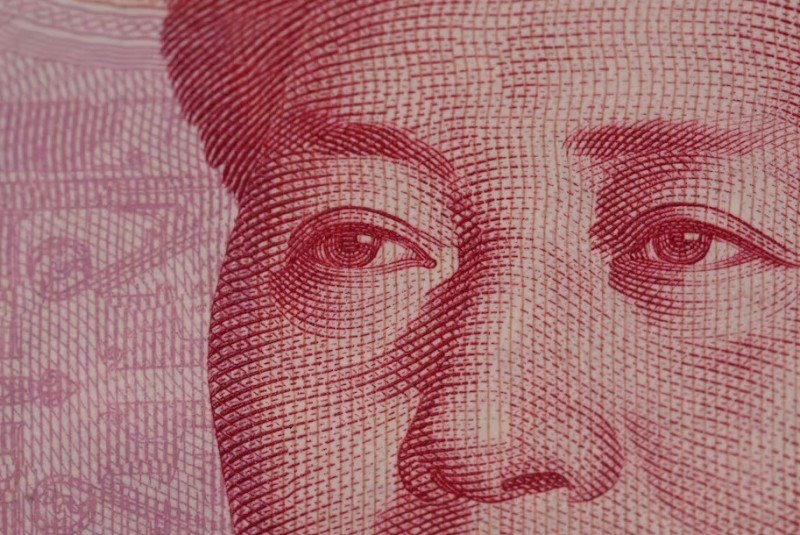
Henry Heller: The rise of China and the decline of the West

Photo by David Dennis/Flickr

Henry Heller

April 19, 2023

The focal point of the world’s economy is shifting to Asia and Eurasia

China’s place on the world stage advances year by year. It is arguably already the world’s largest economy. Its Belt and Road Initiative and its other international links like the BRICS have helped to magnify its economic but also its political and cultural influence worldwide.

More and more countries in the Global South are benefiting from these connections and are looking to China for leadership on the basis of mutual benefit. There is every reason to believe these trends will continue. Moreover, we can see that the focal point of the world’s economy is shifting to Asia and Eurasia.

Originally published at Canadian Dimension on March 27, 2023

At the same time, geopolitically, we are headed for a multipolar world with no country able to impose itself as a hegemon. Notably, the Ukraine-Russia war is accelerating these changes.

All of this is becoming possible because of the growing importance of China. In my eyes, the success of these policies is rooted in its economic system. The re-emergence of China on the world stage has been made possible by the maturation of its distinctive brand of socialism.

As we know, capitalism plays a big role in the Chinese economy and links it with the rest of the world. But in my view, this has to be understood in terms of the overall dominance of the Chinese state over the economy and the direction of its development by the Chinese Communist Party.

I am sure that there are ongoing political and other problems with this mode of development. It is a work in progress. But up to now and looking ahead, I think we are looking at a model which is brilliantly successful and notably is outpacing the West. Moreover, there is reason to believe that its success will become more apparent in future years as China becomes still more important on the global stage.

For China, this achievement is an enormous vindication. One can only imagine the meaning of these developments for the Chinese people, especially in light of the 1949 revolution, which liberated China from more than a century of humiliation at the hands of imperialism and brought about the modernization of the country.

The immense Belt and Road Initiative, which is expected to cost more than $1 trillion, represents nothing less than a historic reversal of a Western current which began with the entry of the Portuguese Vasco de Gama into the Indian Ocean over 500 years ago.

Rather than emphasizing this astonishing turn of events, I want to focus on the hostile reaction of the West to the re-emergence of China and Eurasia on the world stage. This refusal is itself a fact of utmost political and historical significance, fraught with danger as it is.

Led by the United States, the reaction of the West is one of denial and rejection. The West so far has been unable or unwilling to accept these momentous transformations presently underway. Since the Obama administration, we have seen this hostility reflected in terms of a rising crescendo of sanctions, military threats and media attacks against China’s supposed human rights record and interference in the political life of other states designed somehow to bring China back to heel under the West.

The centre of this campaign has been the reassertion of the idea of Taiwanese separatism – a pure relic of the Cold War. Taiwan is once more seen as the keystone of the American military containment of China.

Indeed, the posture of the United States conforms to the whole history of modern imperialism.

We know how bitterly the imperialist countries fought with one another for hegemonic control of the world. But in turn, these powers, England, France but also Germany and Japan, had to bow to American primacy by 1945. But American hegemony should be seen as the heir to the legacy of overall Western domination of the world, which began as early as the eighteenth century.

Intrinsic to this domination is a mindset which presumes the dominance of the West or even the white race over the rest of the world as intrinsic to the ‘rules-based’ and natural order of the world. Faced with the threat of China, the West denounces the lack of democracy in China while refusing to acknowledge that its own representative democracy has transformed itself into an oligarchy and a kind of liberal totalitarianism.

The ruling class in the United States and the other Western states are infected with these ideas. The reason for this is that it accords with the material interests of these classes. Faced with the emergence of China and the growing current towards multipolarity, their reaction has been a crude attempt to somehow intimidate China into accepting continued Western dominance.

The primary weapons they have for doing so are military, financial and media.

As a result, we are seeing a global conflict initiated by the West against the rise of Eurasia, the focal points being the South China Sea but also Ukraine. Russia has seen itself as the source of endless riches and as the backdoor to China.

In a certain sense, this conflict reflects a continuation of the imperialist struggles of the past. But the West’s hostility is not simply based on the threat of China as a new world power. It is China’s socialism which, above all, is seen as a menace.

The power of the ruling class in the West rests on the private accumulation of wealth through the exploitation of people and resources. The idea of a state which ultimately bases itself on the predominance of workers and the primacy of use values over exchange values is anathema.

That China is that kind of state and that it is performing at a higher level than world capitalism is terrifying to them.

Given these circumstances, China and the peoples of the world are faced with a complex and difficult situation.

The politics of the West is characterized by a sense of desperation and bravado strikingly reminiscent of the fascists during the Second World War. The logic of the so-called political realism it is pursuing is exposed as a deeply irrational form of Neitzschean will to power.

The potential for war even more destructive than that last great world conflict is indeed real.

On the other hand, it should be emphasized that the peoples of the Global South are resisting attempts to continue to subordinate themselves to Western imperialism.

They realize that the conflict between the exploitive West and the rest of the world is a struggle over their own future.

Moreover, while they have been quiescent up to now, the working class in the West has yet to be heard from.

For how long will it put up with the deterioration in its economic circumstances, ecological irresponsibility and reckless pro-war policies pursued by the ruling classes? Furthermore, there is every sign that the capitalist system that this class controls is weakening or has entered a state of permanent crisis. The growing recklessness of their imperialism is a sign of this.

China with its strong state and party has the possibility of rationally responding and adjusting to this situation which is not true of the West. Time is on the side of China and the Global South.

It is impossible to say how far the crackpot realists in the West are prepared to go in defending their system. Hopefully they will bow to the force of circumstances which are not in their favour. But short of all-out war, we are looking at the emergence of new world system in which China has provided a key model of independent development for other states.

Originally published at Canadian Dimension on March 27, 2023

About the author

Henry Heller is a Professor of History at the University of Manitoba. He is the author of The Birth of Capitalism: A 21st Century Perspective (Pluto Press, 2011), The Cold War and the New Imperialism: A Global History, 1945-2005 (Monthly Review Press, 2006) and The Bourgeois Revolution in France (Berghahn Books, 2006).

Please help TFF remain truly independent by contributing if you benefited from this article

[paypal-donation]

Share

Leave a Reply

Your email address will not be published. Required fields are marked *

Related Posts

Jan Oberg May 15, 2026 Go to this Fox News page and scroll the whole way down: President Donald Trump tells the world that his meeting with President Xi Jinping yielded a lot of very concrete political and economic results – of course, only where the Chinese side, according to him, agreed with him. He does not mention the Taiwan issue, but Secretary of State, Marco Rubio, says that it did not feature prominently in their talks and that the US policy on Taiwan has not changed. Then go to China Daily – or Global Times – and you will see that for the Chinese it is framework, principles, structure of cooperation etc. that matters – all embedded in the overall idea of “constructive bilateral relationship of strategic stability.” Nowhere is any concrete agreement or deal – all that Trump refers to – mentioned. At the general level, this gives you insights into the very different social...
Jan Oberg, TFF director April 9, 2026 I was recently invited to have a good, long talk about the world – and, of course, about peace too – with Boris Malagurski on his Weight of Chains Channel on YouTube. It was a real joy and seems to have been greatly appreciated by the viewers too. Mr Malagurski and I shall of course be grateful if you share this conversation in your circles – of course, only if you like what you see and hear  And remember that this one – like hundreds of others with TFF Associates – can be enjoyed at our TFF Video Collection.
Jan Oberg February 19, 2026 What a thrill to be interviewed by former British diplomat Ian Proud! Don’t waste a minute: acquaint yourself with him here on his homepage, which he elegantly calls “Proud Diplomat.” Notice also his book, A Misfit In Moscow. Ian is, of course, also on Substack, where he calls himself The Peace Monger, and recently he set up his own PeaceMonger Channel on YouTube. For once, I was not interviewed as if I were a military geopolitical expert, where I normally have to twist the whole thing in the direction of peace. No, we both had a focus on peace – why it has been disappeared by research, politics and the media, but also what can be done to shape a more peaceful future for us all. One idea we came up with was that of connecting people through citizens diplomacy – in an era where more or less authoritarian leaders meet frequently and confirm each other as members...

Recent Articles

Jan Oberg May 15, 2026 Go to this Fox News page and scroll the whole way down: President Donald Trump tells the world that his meeting with President Xi Jinping yielded a lot of very concrete political and economic results – of course, only where the Chinese side, according to him, agreed with him. He does not mention the Taiwan issue, but Secretary of State, Marco Rubio, says that it did not feature prominently in their talks and that the US policy on Taiwan has not changed. Then go to China Daily – or Global Times – and you will see that for the Chinese it is framework, principles, structure of cooperation etc. that matters – all embedded in the overall idea of “constructive bilateral relationship of strategic stability.” Nowhere is any concrete agreement or deal – all that Trump refers to – mentioned. At the general level, this gives you insights into the very different social...
Lena Petrova of “World Affairs In Context” with more than half a million subscribers on YouTube wanted to explore what a peace researcher like me has to say about, among other things, the First and the Second Cold War and why eethics has disappeared from politics. I am particularly happy about this conversation that also yielded an amazing number of very appreciative comments on YouTube. No doubt, people are longing for alternatives, including peace perspectives.
The MIMAC – Military-Industrial-Media-Academic Complex – drives the world’s rampant militarism and wars without end. Here is a short reflection of how it works against all interests of humanity. #5 deals with why there is no real enemy or threat images/analysis. It’s all ex-post constructions. And, btw, theTFF Peace Pulse is now on Rumble.

TFF on Substack

Discover more from TFF Transnational Foundation & Jan Oberg.

Most Popular

Jan Oberg May 15, 2026 Go to this Fox News page and scroll the whole way down: President Donald Trump tells the world that his meeting with President Xi Jinping yielded a lot of very concrete political and economic results – of course, only where the Chinese side, according to him, agreed with him. He does not mention the Taiwan issue, but Secretary of State, Marco Rubio, says that it did not feature prominently in their talks and that the US policy on Taiwan has not changed. Then go to China Daily – or Global Times – and you will see that for the Chinese it is framework, principles, structure of cooperation etc. that matters – all embedded in the overall idea of “constructive bilateral relationship of strategic stability.” Nowhere is any concrete agreement or deal – all that Trump refers to – mentioned. At the general level, this gives you insights into the very different social...
Lena Petrova of “World Affairs In Context” with more than half a million subscribers on YouTube wanted to explore what a peace researcher like me has to say about, among other things, the First and the Second Cold War and why eethics has disappeared from politics. I am particularly happy about this conversation that also yielded an amazing number of very appreciative comments on YouTube. No doubt, people are longing for alternatives, including peace perspectives.
The MIMAC – Military-Industrial-Media-Academic Complex – drives the world’s rampant militarism and wars without end. Here is a short reflection of how it works against all interests of humanity. #5 deals with why there is no real enemy or threat images/analysis. It’s all ex-post constructions. And, btw, theTFF Peace Pulse is now on Rumble.
Read More
Screenshot-2026-05-15-103534
Jan Oberg May 15, 2026 Go to this Fox News page and scroll the whole way down: President Donald Trump tells the world that his meeting with President Xi Jinping yielded a lot of very concrete political and economic results – of course, only where the Chinese side, according to him, agreed with him. He does not mention the Taiwan issue, but Secretary of State, Marco Rubio, says that it did not feature prominently in their talks and that the US policy on Taiwan has not changed. Then go to China Daily – or Global Times – and you will see that for the Chinese it is framework, principles, structure of cooperation etc. that matters – all embedded in the overall idea of “constructive bilateral relationship of strategic stability.” Nowhere is any concrete agreement or deal – all that Trump refers to – mentioned. At the general level, this gives you insights into the very different social...
Screenshot-2026-05-12-104023
Lena Petrova of “World Affairs In Context” with more than half a million subscribers on YouTube wanted to explore what a peace researcher like me has to say about, among other things, the First and the Second Cold War and why eethics has disappeared from politics. I am particularly happy about this conversation that also yielded an amazing number of very appreciative comments on YouTube. No doubt, people are longing for alternatives, including peace perspectives.
Screenshot-2026-04-13-154551 (2)
The MIMAC – Military-Industrial-Media-Academic Complex – drives the world’s rampant militarism and wars without end. Here is a short reflection of how it works against all interests of humanity. #5 deals with why there is no real enemy or threat images/analysis. It’s all ex-post constructions. And, btw, theTFF Peace Pulse is now on Rumble.
Screenshot-2026-04-13-154551 (1)
Jan Oberg, TFF director April 28, 2026 In this third TFF Peace Pulse, I make the important distinction between the violence and the conflict that violence is a symptom of. If you want peace, focus on the underlying conflict because that is the key to resolution, peacemaking, and a better future for the parties. The West is obsessed with violence, just look around you – and 90+ per cent of the public debate is about military issues and other violence – totally wasted for peace. These Peace Pulses will only be published here a few times. You will also not find them on YouTube and Vimeo because both platforms have blocked TFF and me; you know, peace is dangerous these days. Most TFF’s videos since 2007 are now on Rumble.
Screenshot-2026-04-13-154551
In contrast to most, we’ll bring alternatives, solutions, hope and strategies for a better future. Times are dangerous, yes, but that only intensifies the need for constructive thinking and action! Jan Oberg, TFF director April 13, 2026 The new TFF Peace Pulse uses video messages in a new way: Max 3-5-minute-long comments, ideas or perhaps mini-lectures, all about peace – positive peace. We launch them today on April 13, 2026 with a carefully crafted visual aesthetic fitting the content. We hope to publish them regularly from now on. We launch Peace Pulse (PP) – for a number of reasons. The world is in chaos, and there are countless reasons to feel concerned, frustrated, even angry. The atmosphere is saturated with doom and gloom, with negative energy and rear‑mirror thinking, while vision, imagination, alternatives, strategies and genuine future‑mindedness remain in short supply. And without them, we simply can’t save the world. Looking at problems from a hundred angles will...
IMG_5165 (1)
PART II — Publishing Peace in a System That Prioritises Militarism Jan Oberg, TFF director April 10, 2026 How TFF Maintains a Daily Voice in a Digital World Built for Noise This article is part of the series “TFF at 40″ and it invites you to learn about Four Decades of Publishing Peace. It takes a look at how a small, people‑financed peace foundation has communicated across four generations of technology — from wax stencils and fax machines to mass email and Substack — and why TFF continues to publish every single day in a system that rewards noise, conflict, and militarism. ◆ What it means to publish peace every single day in a digital system built for 24/7 news and other noise, confrontation, and militarism. How TFF’s independence, continuity, and global readership defy algorithms, donor cycles, and Western media censorhip — and why the Majority World keeps listening. When the...

