
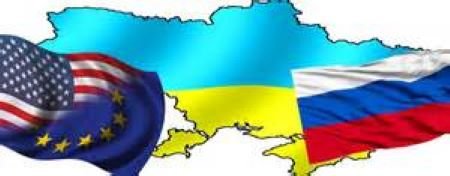
Gordon Hahn: NATO Expansion, Maidan Ukraine, and the Donbass War

By Gordon M. Hahn

December 15, 2021

It is now quite clear, as I have stated for decades, that NATO expansion is the main cause of U.S.-Russian and WesternRussian tensions, and the Russian Angst over said expansion is the cause of the Ukrainian crisis sparked in winter 2013-2014.

It appears that Putin is escalating the stakes in the Ukrainian crisis in an effort to solve it and the overall problem of NATO expansion and European security. The positioning of Russian troops closer to the Ukrainian border – not on the border as is being reported – is an attempt to concentrate the minds of the West and bring the main driver of the Ukrainian crisis on the Western side – the U.S. – into the Minsk 2 process directly or otherwise.

His highlighting the issue has the important side benefit of putting the issue in a central place before Western publics and unmasking what is often the stealthy nature of NATO expansion processes.

Originally published at Gordon Hahns’ homepage

It was the American policy of NATO expansion – America drives NATO policy – that brought us the crisis in Ukraine. The crisis is the inevitable outcome of the first round of expansion to the Czech Republic and Ukraine’s neighbours Hungary and Poland pushed by the Clinton administration and ensuing rounds of NATO expansion pushed by the George Bush Jr administration.

It is not just the authoritarian Putin who resists NATO expansion. Almost all Russia does, and this is because of several centuries of Russian history that has seen Western powers repeatedly meddle, interfere, and intervene in and invade, shaping a security culture that values highly vigilance against external threats, internal divisions, and any connection – collusion – between the two.

Pro-democratic and pro-Western Russian president Boris Yeltsin, therefore, was also adamantly opposed to NATO expansion. He literally blew up at Clinton during the 1994 Budapest summit, well before the decision to expand had even been made.

Still two years before the decision, Clinton went to Moscow in May 1995 for the 50th-anniversary celebrations of the victory over Hitler, and Yeltsin regaled Clinton in no uncertain terms about NATO expansion, seeing “nothing but humiliation” for Russia, he declared: “For me to agree to the borders of NATO expanding towards those of Russia – that would constitute a betrayal on my part of the Russian people.”

Putin alluded to this last week when he issued his call for a treaty codifying a ban on NATO expansion any further east – a violation of explicit promises to the last Soviet leader would not expand “one inch” beyond East Germany: “Why was it necessary to expand NATO to our borders? Who can answer this question? There is no good answer, it does not exist. We had an almost idyllic picture of relations, especially in the mid-1990s. We were almost allies.”

As is well known, Putin and Yeltsin before him suggested the possibility of Russia’s entry into NATO but they were rebuffed and ignored, respectively.

The fact that Putin has raised the NATO issue directly to the West now is a function of several factors.

The Minsk 2 process has collapsed and Ukraine continues to fail in fulfilling key elements of the agreement, for example, by directly negotiating with the Donbass rebel regimes on a special autonomous status within Ukraine for them.

As the peace process stalled, in part because Zelenskiy cannot withstand ultranationalist/neofascist pressures to cease negotiating with hated Russia, Zelenskiy’s popularity has nosedived. The rating’s fall has little to no connection to the ongoing war in Donbass but is a result of economic factors, the Russian language issue, corruption and other purely domestic issues.

With Zelenskiy’s ratings collapsed and a broad opposition coalition arrayed against him, the Ukrainian president has abandoned his attempt to disarm and contain illegally armed fascist groups and instead has courted them.

The founder of the neo-fascist Right Sector and Volunteer Ukrainian Corps, Dmitro Yarosh, was appointed advisor to the chief of staff of the Ukrainian Armed Forces, and Zelenskiy recently awarded the ‘Hero of Ukraine’ award to one of their members, who has repeatedly violated the ceasefire agreement on the front.

It is on this background that Putin has Russian troops leaning forward.

In short, neither the Donbass nor Putin has a partner with which to talk. Putin has turned to Washington now because the crisis is deepening and is only set to get worse. Completely without domestic allies and the precipitous fall of Zelenskiy’s own and his party’s now disastrously popularity ratings, there is likely to be a major political crisis in Ukraine next year.

Moreover, at next year’s NATO summit, Ukraine is poised to gain a NATO Membership Action Plan (MAP) that will begin the process of Kyiv’s accession to the alliance and the transformation of one of the two main traditional invasion routes into Russia into NATO territory. This will happen on a background where already the West is sending weapons to Ukraine, training the Ukrainian army, including its neo-fascist units.

The possibility of NATO in Crimea and Russia’s loss of a base for its Black Sea Fleet was key in Putin’s decision to seize the peninsula after Maidan. Without the senseless Maidan revolt – leaving aside here the brutal terrorist culmination of sniper fire targeting both police and demonstrators carried out by the Maidan’s neo-fascist wing – or without a Russian naval base and tens of thousands of Russian troops based in Sevastopol, there would have been no annexation of Crimea. Full stop.

Now the possibility emerges that NATO could incorporate Ukraine despite its territorial stateness problem in the Donbass, bringing NATO into the civil war’s calculus by boosting the Ukrainian army’s prospects for defeating the Donbass rebels. Thus, Putin will have little choice but to intervene militarily in Donbass, seizing and annexing it and daring the Ukraine-enhanced West to challenge the Russian army.

The alternative to this near-doomsday scenario, with asymmetrical and other forms, including nuclear escalation waiting in the wings, is obvious and imperative to choose. As I have repeatedly argued, the West should agree to militarily non-aligned, neutral status – no NATO, CSTO, or SCO membership – for Ukraine.

EU membership would remain an open option for Kyiv, and the Donbass would be fully reintegrated into Ukraine, with a degree of autonomy to be negotiated directly between Kyiv and the Donbass with Western, including more active American, mediation in accordance with Minsk 2 or a Minsk 3, revised to take into account American participation.

If this is not done, Putin might use a real or fake neo-fascist or official Kievan provocation or mistake in order to seize the Donbass in order to preempt any further Kievan move there. He then might try to use the Donbass’s return to full Ukrainian control as a bargaining chip for a deal on Ukraine’s neutral status.

This would be dangerous enough, and, unfortunately, NATO and Ukraine view the struggle on the eastern front as a zero-sum game.

If Ukraine receives a NATO Membership Action Plan (MAP), it is a victory for the ‘free world.’ If not, Putin wins. The prospect of Putin ‘winning’ is becoming more objectionable in the West and Kyiv than the prospect of war, a formula for precisely that: War.  

And Ukraine is just one of three problems on the eastern front. Belarus and Moldova are each almost as intractable. This week’s inconclusive virtual Biden-Putin summit keeps the clock ticking and the tension ratcheting up. All this risk to the national security of all of Europe: For what precisely?

For the sake of NATO expansion. For a NATO that could not prevail in Afghanistan, despite all the expenditure in blood and treasure, and will not stand to defend Ukraine even if Russia was to invade.

And if NATO did move to fight Russia over Ukraine, what would that entail?

Nothing other than the potential for a third world war and a first nuclear one.

Originally published at Gordon Hahn’s homepage
The author

About the author

Gordon M. Hahn, PhD, is a Senior Researcher at the Center for Terrorism and Intelligence Studies (CETIS), Akribis Group, San Jose, California, www.cetisresearch.org; an expert analyst at Corr Analytics, www.canalyt.com.

Hahn is also an analyst at Geostrategic Forecasting Corporation in Chicago, www.geostrategicforecasting.com

He is the author of the forthcoming book from McFarland Publishers Ukraine Over the Edge: Russia, the West, and the Making of the Ukrainian Crisis and ‘New Cold War

Please help TFF remain truly independent by contributing if you benefited from this article

[paypal-donation]

Share

Leave a Reply

Your email address will not be published. Required fields are marked *

Related Posts

Drones over Nordic airports. No damage. No trace. No answers. Most assume Russia—but what if that’s not so? Why is there so much we are not told? This article explores the strategic ambiguity behind recent drone incursions and asks: Who else might benefit from sending drones into NATO airspace? From Ukraine’s surprising drone supremacy to Russia’s possible signalling, the silence itself may be the loudest message. These are the kinds of questions decent, intelligent investigative journalists and commentators could easily research. Why don’t they? Did you, dear reader, know or think of this? That the most powerful weapon in today’s conflicts might be the one that leaves no trace – and no answers. Just enough fear to justify the next move? Recently, drones have repeatedly appeared over Nordic airports and near some military facilities. They cause no damage – for which reason the designation “hybrid attack” is misleading but serves a purpose. These...
America’s Strategic Assault on Art, Academia, and the Imagination That Sustains Peace The United States once stood as a beacon of cultural audacity—a place where dissent could be beautiful, and beauty and innovation could challenge the present order of things. Its museums, universities, and artists helped inspire a worldwide imagination rooted in creative freedom and innovation. But today, under the Trump regime’s second term, those dynamic qualities are being systematically dismantled. Just read this. As Trump goes after the arts, many museums remain silent | CNN As CNN reports, the administration has launched an aggressive campaign to “eradicate improper ideology” from federally funded museums. Exhibitions involving race, gender, and identity are being censored or cancelled. Amy Sherald’s reimagining of the Statue of Liberty as a Black, trans woman was pulled from the Smithsonian after curators objected to its symbolism. Sherald warned that “history shows us what happens when governments demand loyalty...
Contrary to what we stated when publishing this Call, the UN General Assembly (GA) opened on September 9, 2025, in New York, not in Geneva, as we initially wrote. However, due to the host role-violating US ban on visas to Palestinians, the Special GA Segment on Palestine will be held in the UN Geneva from September 22. And it builds up to something historic. Anyhow, here is what we believe you must advocate or do to help stop the Israeli genocide. It’s called people’s power or citizens’ diplomacy. SHARE! The first of three appeals from TFF. The second is here, and the third here. Across the world, people are witnessing the systematic destruction of Palestinian lives, homes, and communities. The scale and intensity of Israel’s military operations — especially in Gaza — have led leading legal bodies, including the International Court of Justice, to warn of a plausible genocide. The...

Recent Articles

PressInfo # 141, December 21, 2001It’s time to prepare reconciliation between Albanians and Serbs PressInfo # 140, December 14, 2001Ibrahim Rugova’s decade-long leadership in Kosovo/a PressInfo # 139, 11. december, 2001En god nyhet: Jugoslaviens Sannings- och försoningskommission PressInfo # 139, 11. december, 2001Gode nyheder: Jugoslaviens Sandheds- og Forsoningskommission PressInfo # 139, December 11, 2001Good news: Yugoslavia’s Truth and Reconciliation Commission PressInfo # 138, November 8, 2001TFF co-founder PhD with thesis about young people with roots in other cultures PressInfo # 138, November 8, 2001TFF:s medstiftare doktor på avhandling om unga med ursprung i andra kulturer PressInfo # 137, October 17, 2001A new Marshall Plan: Advancing human security and controlling terrorism PressInfo # 136, October 15, 2001The UN and Annan really deserve it PressInfo # 135, October 10, 2001Preventing a terrorist mushroom cloud PressInfo # 134, 17 oktober, 2001Sverige og 11. september PressInfo # 134, October 9, 2001Sweden and September 11...
Peace is promoted by constructive proposals and dialogue Four preceding PressInfos have expressed concern over — and criticised — the ongoing, militarisation of the EU. Some will say: but there are no alternatives. We believe that there are always alternatives, that democracies are characterised by alternatives and choice, and that openly discussed alternatives will improve the quality and legitimacy of society’s decision–making. In addition, it is an intellectual and moral challenge to not only criticise but also be constructive. If we only tell people that we think they are wrong, they are not likely to listen. However, if we say: what are your views on this set of ideas and steps? — we may sometimes engage them in dialogue and sow a seed. Most people in power circles live their daily lives in in a time frame and a social space where certain ideas, viewpoints and concepts are just not...
Photos © TFF 2000 Read PressInfo 90 “Lift the Sanctions and Bring More Aid to Yugoslavia” See Pictures from Belgrade © TFF 2000 Please reprint, copy, archive, quote or re-post this item, but please retain the source.

TFF on Substack

Discover more from TFF Transnational Foundation & Jan Oberg.

Most Popular

PressInfo # 141, December 21, 2001It’s time to prepare reconciliation between Albanians and Serbs PressInfo # 140, December 14, 2001Ibrahim Rugova’s decade-long leadership in Kosovo/a PressInfo # 139, 11. december, 2001En god nyhet: Jugoslaviens Sannings- och försoningskommission PressInfo # 139, 11. december, 2001Gode nyheder: Jugoslaviens Sandheds- og Forsoningskommission PressInfo # 139, December 11, 2001Good news: Yugoslavia’s Truth and Reconciliation Commission PressInfo # 138, November 8, 2001TFF co-founder PhD with thesis about young people with roots in other cultures PressInfo # 138, November 8, 2001TFF:s medstiftare doktor på avhandling om unga med ursprung i andra kulturer PressInfo # 137, October 17, 2001A new Marshall Plan: Advancing human security and controlling terrorism PressInfo # 136, October 15, 2001The UN and Annan really deserve it PressInfo # 135, October 10, 2001Preventing a terrorist mushroom cloud PressInfo # 134, 17 oktober, 2001Sverige og 11. september PressInfo # 134, October 9, 2001Sweden and September 11...
Peace is promoted by constructive proposals and dialogue Four preceding PressInfos have expressed concern over — and criticised — the ongoing, militarisation of the EU. Some will say: but there are no alternatives. We believe that there are always alternatives, that democracies are characterised by alternatives and choice, and that openly discussed alternatives will improve the quality and legitimacy of society’s decision–making. In addition, it is an intellectual and moral challenge to not only criticise but also be constructive. If we only tell people that we think they are wrong, they are not likely to listen. However, if we say: what are your views on this set of ideas and steps? — we may sometimes engage them in dialogue and sow a seed. Most people in power circles live their daily lives in in a time frame and a social space where certain ideas, viewpoints and concepts are just not...
Photos © TFF 2000 Read PressInfo 90 “Lift the Sanctions and Bring More Aid to Yugoslavia” See Pictures from Belgrade © TFF 2000 Please reprint, copy, archive, quote or re-post this item, but please retain the source.
Read More
Imagen-thumbnail-The-Transnational-1
PressInfo # 141, December 21, 2001It’s time to prepare reconciliation between Albanians and Serbs PressInfo # 140, December 14, 2001Ibrahim Rugova’s decade-long leadership in Kosovo/a PressInfo # 139, 11. december, 2001En god nyhet: Jugoslaviens Sannings- och försoningskommission PressInfo # 139, 11. december, 2001Gode nyheder: Jugoslaviens Sandheds- og Forsoningskommission PressInfo # 139, December 11, 2001Good news: Yugoslavia’s Truth and Reconciliation Commission PressInfo # 138, November 8, 2001TFF co-founder PhD with thesis about young people with roots in other cultures PressInfo # 138, November 8, 2001TFF:s medstiftare doktor på avhandling om unga med ursprung i andra kulturer PressInfo # 137, October 17, 2001A new Marshall Plan: Advancing human security and controlling terrorism PressInfo # 136, October 15, 2001The UN and Annan really deserve it PressInfo # 135, October 10, 2001Preventing a terrorist mushroom cloud PressInfo # 134, 17 oktober, 2001Sverige og 11. september PressInfo # 134, October 9, 2001Sweden and September 11...
Imagen-thumbnail-The-Transnational-1
Peace is promoted by constructive proposals and dialogue Four preceding PressInfos have expressed concern over — and criticised — the ongoing, militarisation of the EU. Some will say: but there are no alternatives. We believe that there are always alternatives, that democracies are characterised by alternatives and choice, and that openly discussed alternatives will improve the quality and legitimacy of society’s decision–making. In addition, it is an intellectual and moral challenge to not only criticise but also be constructive. If we only tell people that we think they are wrong, they are not likely to listen. However, if we say: what are your views on this set of ideas and steps? — we may sometimes engage them in dialogue and sow a seed. Most people in power circles live their daily lives in in a time frame and a social space where certain ideas, viewpoints and concepts are just not...
Imagen-thumbnail-The-Transnational-1
Photos © TFF 2000 Read PressInfo 90 “Lift the Sanctions and Bring More Aid to Yugoslavia” See Pictures from Belgrade © TFF 2000 Please reprint, copy, archive, quote or re-post this item, but please retain the source.
Imagen-thumbnail-The-Transnational-1
Av FRANK SØHOLM GREVIL 16 augusti 2004  Vi er nu nået til tredje akt i det absurde teaterstykke, der i analogi med de store skueprocesser i Moskva 1936-38 er blevet døbt ‘Grevil-sagen’. Første akt bestod i min anonyme fremlæggelse af egenhændigt nedklassificerede rapporter i Berlingske Tidende i februar og marts. Andet akt udgjordes af min fremtræden med navn og billede i Information i april samt den efterfølgende mediestorm, som uden min direkte medvirken kostede en forsvarsminister taburetten samt en sigtelse for brud på tavshedspligten. Tredje akt bliver en retssag, hvor jeg står tiltalt for at have overtrådt straffelovens bestemmelser om uberettiget videregivelse eller udnyttelse af fortrolige oplysninger. Statsanklageren har ovenikøbet valgt at påberåbe sig særligt skærpende omstændigheder. Da jeg aldrig har modtaget betaling for at stille rapporterne til rådighed eller lade mig interviewe, må det skærpende bestå i, at “videregivelsen eller udnyttelsen er sket under sådanne omstændigheder, at det påfører...
Imagen-thumbnail-The-Transnational-1
Af Svenska Irakkommittén mot de Ekonomiska Sanktionerna (SIES) 13 september 2002 FN:s ekonomiska sanktioner mot Irak har nu pågått i tolv år och drabbat det irakiska folket med svåra lidanden. Enligt FN:s egna siffror har mer än 1,5 miljoner människor, varav ca 600 000 barn, dött som en direkt följd av sanktionerna. Dessutom har ett lågintensivt bombkrig mot landet pågått under dessa år. Av all denna förödelse- orsakad huvudsakligen av amerikansk och brittisk politik- har Saddam Husseins brutala och diktatoriska regim snarast stärkts än försvagats. Nu förbereder USA under president Bushs ledning ett storskaligt bombkrig mot Irak som kommer att innebära ett ännu större lidande för civilbefolkningen. Ett sådant krig kommer dessutom att ytterligare undergräva freden och säkerheten i världen. Att upprätta en demokratisk regim i Irak är det irakiska folkets angelägenhet och får enligt folkrätten inte ske med krigshandlingar utifrån. Folkrätten och FN:s stadgar måste respekteras. Vi vädjar till...

