
Global Justice in the 21st Century

I make no claim to approach this book with an open mind. Making a fuller disclosure, I acknowledge with some pride that I have endorsed Justice for Some even before it was published, and my blurb appears on its back cover.

Beyond this, two months ago I took part in a book launch at George Mason University where Noura Erakat is on the faculty. My effort in this review is not to make a calm appraisal of the book’s strengths and weaknesses, but rather to celebrate it as a major scholarly contribution to the critical literature devoted to resolving the Israel/Palestine struggle in line with the dictates of justice rather than by a continuing reliance on muscular weight of subjugation as augmented by geopolitics.

And, accordingly, to seize this opportunity to urge a careful reading of Justice for Some by all those interested in the Palestinian struggle as well as those curious about the way law works for and against human well-being as revealed by its use in a sequence of historical and societal circumstances.

Originally published at richardfalk.wordpress.com

Erakat focuses on the deformations of militarism and geopolitics that have been inflicted on the Palestinian people as a whole, making readers aware of how ‘law’ and injustice have all too often collaborated through the decades. Erakat brilliantly offers readers this illuminating critical jurisprudential exposition, but she does not stop there.

Justice for Somealso partakes of a constructivist methodology in the following sense. While Israel has cleverly deployed law to oppress the Palestinian people, Erakat’s text also explains to readers how law can and is being used on behalf of justice, serving the cause of Palestinian empowerment as integral to the ongoing emancipatory struggle of the Palestinian people.

In a sense my own partisanship on behalf of the Palestinian struggle parallels that of Erakat who makes evident from the Preface that her intention is to depict Palestinian territorial and national victimization as transparently as possible through the optic of law and human rights and to deplore the Israeli use of legal regimes, procedures, and tactics to carry forward the Zionist project at the cruel expense of the Palestinians.

Negating the mainstream academic canon

Justice for Some represents an important trend in scholarship, which seeks to combine academic objectivity with undisguised ethical and political engagement. Such a combination of goals might seem appropriate when dealing with a struggle as poignant as Israel/Palestine, but it has not been so treated in mainstream scholarship.

The academic canon on scholarly writing continues to favour the posture of neutrality or supposed objectivity as to policy implications, which is but a professional mask worn by naïve or cynical academicians unwilling to own up to their own subjectivities of perspective.

Worse than this, the Zionist influence over scholarly and media discourse on this subject-matter is so great that forthright writing of the sort contained in Erakat’s book is censored, self-censored, and attacked as ‘biased.’

For the mainstream, Erakat’s originality and the persuasiveness of her analysis is ignored if she is lucky, and if not, demeaned. Such authors are often attacked as representatives of the so-called ‘New Anti-Semitism,’ that is, a label used to discredit writing and writers critical of Israel’s policies and practices by maliciously merging criticism with hatred of Jews.

This deformed equation offers us a definition of hate speech that amounts to a death sentence for freedom of expression.

It is a national disgrace that American legislative bodies at the state and federal level are swallowing this kool aid!

Law is politics” – and Israel has been better at using it

It is difficult to convey Erakat’s jurisprudential originality without extensive discussion, but I will try. Much springs from her bold assertion “I argue that law is politics.” (4)

By this she means, put crudely, ‘the force of law’ depends on ‘the law of force,’ that is legal rights without the capability to implement the law to some degree is without effect or its insidious effect is to give legal cover to inhumane behavior.  

Or as Erakat puts it metaphorically, politics provides the wind that a sail needs for the boat to move forward.

At the same time Erakat when discussing Palestinian rights and tactics is insistent that the advocacy of ‘force’ does not imply a reliance on or a call for violence. Her tactical affirmation of nonviolence becomes explicit when she discusses approvingly the political relevance of the BDS campaign as well as in her endorsement of various efforts to discredit Israel at the United Nations and elsewhere.

Overall, Erakat reasons persuasively that Israel has been more adept than the Palestinians in making effective use of law, partly because the wind is at their back due to their linkages to geopolitics, especially the United States, but also because Israeli legal experts have done their ‘legal work’ better than have the Palestinians. Erakat’s book can be read as a stimulus to Palestinians to make better use of what she calls ‘principled legal opportunism.’ (page 19)

In a larger sense, Israel due to geopolitical backing and discourse control has succeeded in having its most flagrant international crimes including the excessive use of force, collective punishment, and state terror ‘legalized’ under rubrics of ‘security’ and ‘self-defense,’ open-ended legal prerogatives inherent in the very notion of a sovereign state.

In contrast, Palestinians exercising an entirely justifiable right of resistance even if exercised against military targets is internationally criminalized and Palestinian behavior is characterized as ‘acts of terror.’

Some examples of international law defiance

Israel’s most sinister ‘legal’ trick has been to defy international law repeatedly and flagrantly without suffering any adverse consequences. This dynamic of defying the law can be illustrated by Israel’s dismissal of the World Court Advisory Opinion of 2004 despite the agreement of 14 of the 15 judges (does it surprise anyone, that the lone dissenter was the American judge?) that building the separation wall on occupied Palestinian territory violated the basic norms of international humanitarian law, including the Geneva Conventions (1977).

Erakat also deserves praise by maintaining a scholarly tone while not mincing her words or becoming entrapped in the often fuzzy language of law. The question of language is crucial to her understanding of the disjunctions between law and justice that have deprived the Palestinian people, and their nation, of the basic rights for more than a century. Erakat is straightforward in a manner of very few international law scholars that the issues at stake arise can be only properly evaluated if fully contextualized historically and ideologically.  

Following Anthony Anghie, and several others, Erakat deems it essential to expose the roots of modern international law as reflective of a legal framing that served to legitimate European colonialism and its practices. She provocatively extends this generalization to Israel, identifying it as the last ‘settler colonial’ state to be established.

I would add that Israel was established despite the powerful anti-colonial current of history that has flowed in one direction since 1945.

Erakat is equally prepared to identify the Israeli prolonged occupation of Palestine following the 1967 War as having become ‘annexation.’ She also affirms the view that Israel’s manner of controlling the Palestinian people through political fragmentation and the instrumentalities of law is a form of ‘apartheid.’

In critical and constructivist approaches the avoidance of legal euphemisms is central to the central undertaking of liberating legal mechanisms from the machinations of states.

What truth-telling language does is to see through the legal masquerade so as to illuminate the moral issues at stake. This linguistic surgery is a prerequisite to elucidating the relationship of law to justice and injustice not only with respect to Palestine, but in relation to particular issues, whether involving international migrants, abused minorities, or peoples denied self-determination.

What can be learned from “Justice for Some”

Justice for Some helped me realize that this core sense of law as an inevitably politicized instrument of control and resistance can be at odds with the idea that I emphasized earlier in my own legal writing, that the true meaning of legal norms can only be discerned by their proper interpretation.

I argued against the Vietnam War on this basis, contending that the American role entailed uses of force in violation of the UN Charter and international law governing uses of force, and that this argument was legally superior to the justifications being set forth by the U.S. Government and its apologists.

This regulative (or hermeneutic) paradigm reflects the rhetoric of international law and the way lawyers habitually address controversy, including the modes of legal reasoning used by judges in tribunals, whether domestic or international, to explain and justify their decisions. It is especially applicable to the use of international law in statecraft to validate or invalidate contested behavior, indirectly reflecting both the intensity of the political winds filling the sails of the ship of state, but also the sophistication and motivations of whoever is doing the lawyering, and for whom.

Against the background of this understanding, what Erakat seeks and achieves is less about the emancipatory interpretation of legal norms and more about allowing us to grasp the manipulative nexus that underlies international legal discourse, and shapes political patterns of control and resistance.

The regulative paradigm is complementary and backgrounded as Erakat’s overriding purpose is to develop a comprehensive rationale for a political and normative paradigm that fits the reality of the Palestinian and similar struggles for basic rights, especially that of self-determination, better than do traditional approaches.

These paradigms do not necessarily contradict one another, but rest on differing functions of law and lawyers in various contexts, and from a jurisprudential perspective can be looked upon as complementary.

Erakat’s undertaking is less concerned with understanding the way the world is, than how it ought to be governed, and how law and lawyering can (or cannot) make this happen.

In this sense, the defining spirit of Noura Erakat’s book calls to mind that famous remark of Karl Marx: “Philosophers have hitherto only interpreted the world in various ways; the point is to change it.” (Theses on Feuerbach).
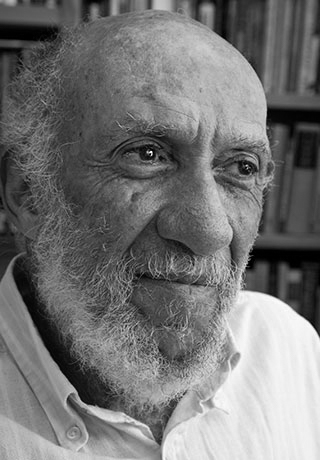
Originally published at richardfalk.wordpress.com

Professor Falk became an adviser to TFF when it was established in 1985.

Share

Leave a Reply

Your email address will not be published. Required fields are marked *

Related Posts

The MIMAC – Military-Industrial-Media-Academic Complex – drives the world’s rampant militarism and wars without end. Here is a short reflection of how it works against all interests of humanity. #5 deals with why there is no real enemy or threat images/analysis. It’s all ex-post constructions. And, btw, theTFF Peace Pulse is now on Rumble.
Jan Oberg, TFF director April 28, 2026 In this third TFF Peace Pulse, I make the important distinction between the violence and the conflict that violence is a symptom of. If you want peace, focus on the underlying conflict because that is the key to resolution, peacemaking, and a better future for the parties. The West is obsessed with violence, just look around you – and 90+ per cent of the public debate is about military issues and other violence – totally wasted for peace. These Peace Pulses will only be published here a few times. You will also not find them on YouTube and Vimeo because both platforms have blocked TFF and me; you know, peace is dangerous these days. Most TFF’s videos since 2007 are now on Rumble.
In contrast to most, we’ll bring alternatives, solutions, hope and strategies for a better future. Times are dangerous, yes, but that only intensifies the need for constructive thinking and action! Jan Oberg, TFF director April 13, 2026 The new TFF Peace Pulse uses video messages in a new way: Max 3-5-minute-long comments, ideas or perhaps mini-lectures, all about peace – positive peace. We launch them today on April 13, 2026 with a carefully crafted visual aesthetic fitting the content. We hope to publish them regularly from now on. We launch Peace Pulse (PP) – for a number of reasons. The world is in chaos, and there are countless reasons to feel concerned, frustrated, even angry. The atmosphere is saturated with doom and gloom, with negative energy and rear‑mirror thinking, while vision, imagination, alternatives, strategies and genuine future‑mindedness remain in short supply. And without them, we simply can’t save the world. Looking at problems from a hundred angles will...

Recent Articles

“En dag som berättigar till fest”, utropade den London-baserade al-Quds al-Arabi efter FN:s eldupphörresolution, “eftersom detta är första gången som Israel accepterar ett FN-beslut från en position som besegrad och inte som segrare”. Att ett arabisk-israeliskt krig för en gångs skull slutat med arabisk seger, är en helt dominerade åsikt i arabiska medier. Al-Quds al-Arabi tillåter sig att drömma om att det israeliska nederlaget skall leda till massflykt från Israel. Men i nästa andetag påminner tidningen om att Israel aldrig brukar genomföra sina internationella åtaganden och varnar för att förlorarna, liksom tidigare, kan hämnas genom att provocera fram inbördeskrig i Libanon. Med tanke på de otaliga massmediala vittnesmålen om det libanesiska folkets eniga motståndskraft förefaller risken för inre stridigheter i det sargade landet just nu liten. Men visst kan man urskilja nyansskillnader i libanesiska tidningar. Vänsterorganet al-Safir uppfattar FN-resolutionen som en komplott i syfte att rädda Israel från ännu större...
Greenland – the world’s largest island, a continent of its own with only 57.000 inhabitants. I visited it for the first time in May 2005. I flew across the inland ice to Nuuk, the tiny capital with some 14.000 inhabitants. I was overwhelmed by the pride and kindness of everyone I met as well as by the unique natural beauty. Unfortunately, due to weather conditions during my ten-day stay I could get nowhere else but Nuuk. Fortunately, however, among those I met was Gitte Arvegaard, a Danish lawyer and negotiator employed by the local government, Greenland Home Rule. She turned out to be an enthusiastic photographer with a lot of pictures taken during various trips around Greenland. So this Greeland series is the result of our cooperative effort. We both hope you enjoy it and are stimulated to visit Greenland – about which you may read more here. Finally, if you want to...
 Jan Oberg’s storyof how he met Sir Paul Liverpool – where else to meet Paul McCartney? Paul’s old class mate and TFF Associate, Jonathan Power introduced me to Paul McCartney in Liverpool at an informal reception. It was held at what used to be their school, now the Liverpool Institute for Performing Arts and we were there to celebrate that Jonathan had written Amnesty International’s 40th Anniversary book. This happy event for “righting wrongs and writing songs” gave me an opportunity to meet Paul and tell him about TFF and get straight to the matter: would he consider making a donation in support of our work for peace? While I was probably the only one with such a wish that day, I was certainly not the only one who wanted to shake hands and talk with him. In the last minutes before Paul was to leave, Jonathan brought us together and we got about three...

TFF on Substack

Discover more from TFF Transnational Foundation & Jan Oberg.

Most Popular

“En dag som berättigar till fest”, utropade den London-baserade al-Quds al-Arabi efter FN:s eldupphörresolution, “eftersom detta är första gången som Israel accepterar ett FN-beslut från en position som besegrad och inte som segrare”. Att ett arabisk-israeliskt krig för en gångs skull slutat med arabisk seger, är en helt dominerade åsikt i arabiska medier. Al-Quds al-Arabi tillåter sig att drömma om att det israeliska nederlaget skall leda till massflykt från Israel. Men i nästa andetag påminner tidningen om att Israel aldrig brukar genomföra sina internationella åtaganden och varnar för att förlorarna, liksom tidigare, kan hämnas genom att provocera fram inbördeskrig i Libanon. Med tanke på de otaliga massmediala vittnesmålen om det libanesiska folkets eniga motståndskraft förefaller risken för inre stridigheter i det sargade landet just nu liten. Men visst kan man urskilja nyansskillnader i libanesiska tidningar. Vänsterorganet al-Safir uppfattar FN-resolutionen som en komplott i syfte att rädda Israel från ännu större...
Greenland – the world’s largest island, a continent of its own with only 57.000 inhabitants. I visited it for the first time in May 2005. I flew across the inland ice to Nuuk, the tiny capital with some 14.000 inhabitants. I was overwhelmed by the pride and kindness of everyone I met as well as by the unique natural beauty. Unfortunately, due to weather conditions during my ten-day stay I could get nowhere else but Nuuk. Fortunately, however, among those I met was Gitte Arvegaard, a Danish lawyer and negotiator employed by the local government, Greenland Home Rule. She turned out to be an enthusiastic photographer with a lot of pictures taken during various trips around Greenland. So this Greeland series is the result of our cooperative effort. We both hope you enjoy it and are stimulated to visit Greenland – about which you may read more here. Finally, if you want to...
 Jan Oberg’s storyof how he met Sir Paul Liverpool – where else to meet Paul McCartney? Paul’s old class mate and TFF Associate, Jonathan Power introduced me to Paul McCartney in Liverpool at an informal reception. It was held at what used to be their school, now the Liverpool Institute for Performing Arts and we were there to celebrate that Jonathan had written Amnesty International’s 40th Anniversary book. This happy event for “righting wrongs and writing songs” gave me an opportunity to meet Paul and tell him about TFF and get straight to the matter: would he consider making a donation in support of our work for peace? While I was probably the only one with such a wish that day, I was certainly not the only one who wanted to shake hands and talk with him. In the last minutes before Paul was to leave, Jonathan brought us together and we got about three...
Read More
Imagen-thumbnail-The-Transnational-1
“En dag som berättigar till fest”, utropade den London-baserade al-Quds al-Arabi efter FN:s eldupphörresolution, “eftersom detta är första gången som Israel accepterar ett FN-beslut från en position som besegrad och inte som segrare”. Att ett arabisk-israeliskt krig för en gångs skull slutat med arabisk seger, är en helt dominerade åsikt i arabiska medier. Al-Quds al-Arabi tillåter sig att drömma om att det israeliska nederlaget skall leda till massflykt från Israel. Men i nästa andetag påminner tidningen om att Israel aldrig brukar genomföra sina internationella åtaganden och varnar för att förlorarna, liksom tidigare, kan hämnas genom att provocera fram inbördeskrig i Libanon. Med tanke på de otaliga massmediala vittnesmålen om det libanesiska folkets eniga motståndskraft förefaller risken för inre stridigheter i det sargade landet just nu liten. Men visst kan man urskilja nyansskillnader i libanesiska tidningar. Vänsterorganet al-Safir uppfattar FN-resolutionen som en komplott i syfte att rädda Israel från ännu större...
Greenland – the world’s largest island, a continent of its own with only 57.000 inhabitants. I visited it for the first time in May 2005. I flew across the inland ice to Nuuk, the tiny capital with some 14.000 inhabitants. I was overwhelmed by the pride and kindness of everyone I met as well as by the unique natural beauty. Unfortunately, due to weather conditions during my ten-day stay I could get nowhere else but Nuuk. Fortunately, however, among those I met was Gitte Arvegaard, a Danish lawyer and negotiator employed by the local government, Greenland Home Rule. She turned out to be an enthusiastic photographer with a lot of pictures taken during various trips around Greenland. So this Greeland series is the result of our cooperative effort. We both hope you enjoy it and are stimulated to visit Greenland – about which you may read more here. Finally, if you want to...
p_mccartney_poem
 Jan Oberg’s storyof how he met Sir Paul Liverpool – where else to meet Paul McCartney? Paul’s old class mate and TFF Associate, Jonathan Power introduced me to Paul McCartney in Liverpool at an informal reception. It was held at what used to be their school, now the Liverpool Institute for Performing Arts and we were there to celebrate that Jonathan had written Amnesty International’s 40th Anniversary book. This happy event for “righting wrongs and writing songs” gave me an opportunity to meet Paul and tell him about TFF and get straight to the matter: would he consider making a donation in support of our work for peace? While I was probably the only one with such a wish that day, I was certainly not the only one who wanted to shake hands and talk with him. In the last minutes before Paul was to leave, Jonathan brought us together and we got about three...
Logo-Transnational
1942James Paul McCartney is born in Liverpool on June 18th. 1956Paul writes his first song, I Lost My Little Girl. 1957Paul meets John Lennon at St. Peter’s Church Fete, Woolton, Liverpool. He joins his first group, The Quarrymen and performs in his first gig at The New Clubmoor Hall, Liverpool, on October 18th. 1960Formation of The Beatles, who play residencies in Hamburg and at The Cavern in Liverpool. 1961First Beatles recordings issued in Germany, as the backing group for Tony Sheridan. 1962The first Beatles Parlophone recording, Love Me Do, reaches number 17 in the British charts. 1963The birth of Beatlemania. Please Please Me gives the group their first British Number 1. She Loves You cements their success. Please Please Me and With The Beatles albums released. 1964First triumphant American tour. The Beatles perform at the Royal Command Performance and release their first film, A Hard Day’s Night. Their single I...
Logo-Transnational
  Back to the series “Bujumbura, Burundi”
By JONATHAN POWER August 16, 2000 LONDON – Remember the summer of ’98? In the sweltering, torpid heat of a Roman august, charged with exhaust fumes, the international community gave its overwhelming approval to the establishment of an International Criminal Court that will enable those accused of “crimes against humanity” to be tried and, if convicted, sentenced. Only seven nations opposed or abstained from the motion, including Israel, China, India and the U.S.A. where the Pentagon had successfully waged bureaucratic guerrilla war to undermine the initially sympathetic stance of President Bill Clinton. Two years on we can now see what an epochal event that was. In a the stroke of 120 pens it changed the climate on political thuggery. After numerous half-starts and false starts ever since the Nuremberg and Tokyo trials that convicted the war criminals of the Second World War, the world at last had agreed en masse a common...


