
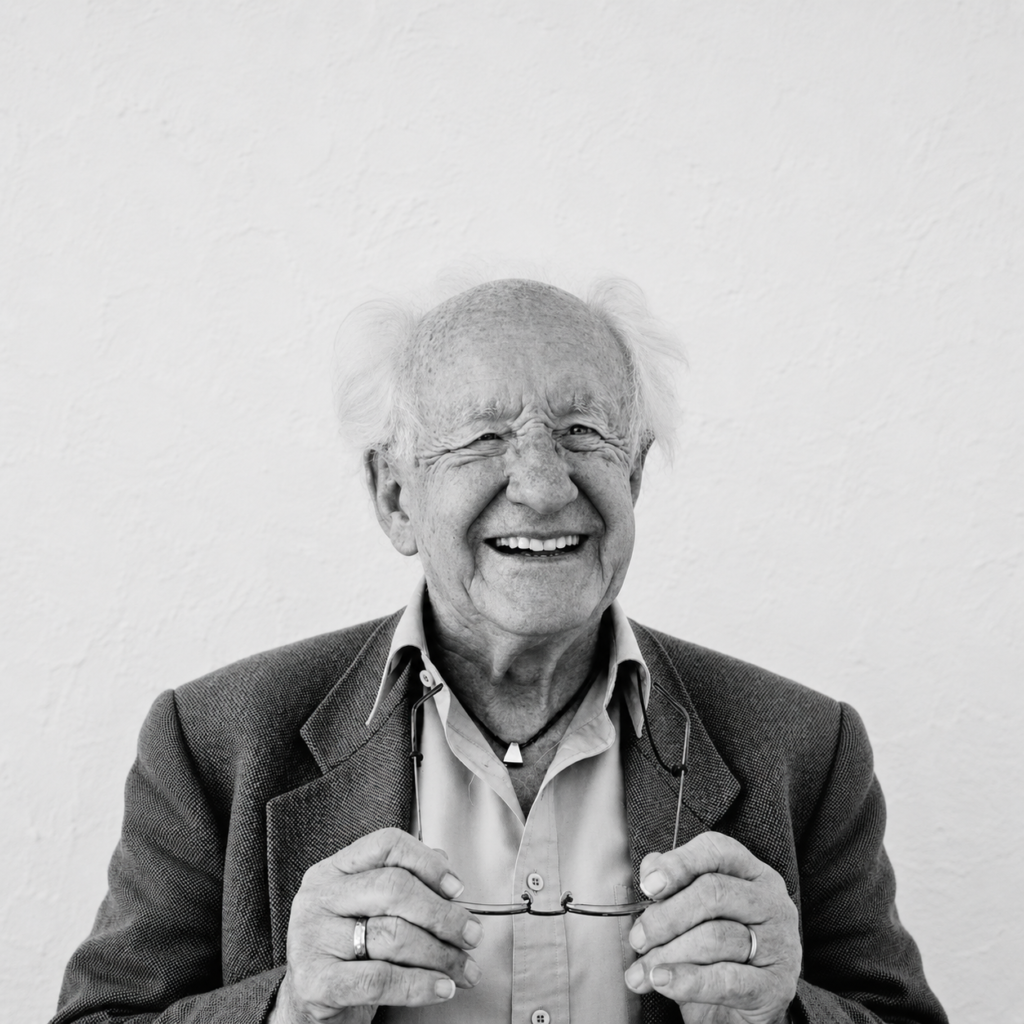
Gandhi and Mandela: Two South Africans

Mohandas Gandhi invented the nonviolent approach to basic social change, Satyagraha, in South Africa in the early 20th century; Nelson Mandela presided over the birth of a one person-one vote democracy at the end of the century. Both were lawyers, trained in English Common Law; good in the sense of a keen consciousness of what is right and wrong, bad in the sense of a court process identifying who is in the wrong rather than solving underlying conflicts, and wrong in the sense of punishing the wrong-doer; violence rather than cooperation.

Both built on the positive side of law – the indelible rights of the people for whom they were fighting by comparing empirical facts with normative rights; immigrant Indians in the case of Gandhi, original inhabitants in South Africa, the Blacks, in the case of Mandela.

Gandhi (1869-1948) did not live to see equality between Indians and whites in South Africa, but in India, his mother-father land; Mandela (1918-2013) did. They won their struggles – but the societies that emerged still suffer from other and major ones.

A deep culture united them: the culture of law. They accepted some aspects and rejected others; went beyond, questioning laws but not Law, submitting laws to the same test, right or wrong, unjust.

Gandhi broke wrong, unjust laws through a non-cooperation and civil disobedience ultimately leading to Swaraj, self-rule for India, in 1947. Mandela did the same – being the incarcerated victim of CIA – Boss for 27 years; Gandhi maybe as many times – unto freedom in 1994.

And then Mandela went further, together with the last white South African president Frederik de Klerk and Archbishop Desmond Tutu – black, white and brown together – suspending, superseding the punishment aspect of law in favor of Truth and Reconciliation.

Gandhi paved the way for his people – his racism blocking for an extension to Blacks – Mandela traveled that road till its end. So far.

But there was more uniting them in spite of civilizational gaps between Hinduism and African culture.

There was a deep cultural similarity in the sense of unity of all humans, a part of both Hindu and the humaneness, humanity to all, of Ubuntu culture. Hence the Zulu greeting Sabona–I see you, take you in, you are a part of me (and I in you)–I exist because you exist. Very different from the sharp individualism in the West that also separates and categorizes individuals as good and evil, and their actions as right and wrong.

The West celebrated their nonviolence, very fearful that the response to colonialism all over the world would be massive violence against the colonizers–themselves. The Western moral bankruptcy and hypocrisy in so doing lies not only in how they established slavery and colonialism but in how they try to maintain it in some form, supporting the violence of Anglo-America and Israel – not demanding from them what they celebrate in their own victims. That bankruptcy-hypocrisy may one day become their undoing. And the day seems to be near.

Obama was awarded a highly undeserved Nobel Peace Prize from one of those countries celebrating post-colonial violence, doing its own part by killing for the USA in Afghanistan and Libya.

He gave the most belligerent acceptance speech in the history of the peace prize; acknowledging the Parks-King-Selma!-nonviolence that brought a black Obama power but rejecting it for inter-state, inter-nation conflicts.

The end of English rule in India – and with that colonialism falling like dominoes? The end of the successor system to slavery in USA and other places, Jim Crow? The end of the Cold War mainly peacefully in 1989? Till the USA resumed it, declaring that they had won, working to recover the victor’s rewards – deciding over the future of former Soviet Union – and now reopening lynching by US police killing Blacks.

Three nonviolent gifts neglected by the deficient intellectualism we would expect from somebody trained at places like Columbia and Harvard.

Why was South Africa the nonviolent battlefield they shared?

A very special colony, colonized by two racist European nations, the Dutch from 1852 and the English, justified by the extremist Christianity of Calvinism by the former and the more pragmatic Christianity of the Anglican church by the latter.

But unlike other places with skirmishes between colonizers they clashed indeed: the Boer war 1899-1902 between Dutch settlers and the English out to fulfill the dream of the key English colonialist, Cecil Rhodes–an icon for Western intellectualism–from Cairo to the Cape.

The most famous aspect of the war was the concentration camps invented by the English for the detention of Dutch women and children, under atrocious conditions. 20,000 reportedly died. It was later imitated by Nazi Germany with 6 million reportedly killed. A similarity between Churchill’s England and Hitler’s Germany; see the first editorial of this series [16 March 2015].

In 1910 two English colonies and two Dutch-Boer republics made the Union of South Africa on top of the overwhelming Black majority, the Indian minority, and others – with the remarkable twice president Jan Smuts, a philosopher of ranks; and from 1948 the Apartheid system started by Daniel Malan ended gradually by Pieter Botha and de Klerk.

Movements for equality of all humans could play on conflicts between the two oppressors. The situation bears some similarity to Malaysia, dominated by Malays and Chinese on top of Tamils and Indigenous, even if the relative population numbers are very different.

South Africa offered a stage for the two lawyers to turn law into an instrument for freedom by breaking it – also implicit in the Law concept – working against the punishment aspect that gave both the aura of icons suffering for their cause – for Gandhi as he was thrown off the segregated train in South Africa where he worked 1893 to 1915.

That offers a happy ending to the comparisons of two at a time, for similarities and differences. May it one day reach the hard West.

Share

Leave a Reply

Your email address will not be published. Required fields are marked *

Related Posts

Jan Oberg, TFF director April 28, 2026 In this third TFF Peace Pulse, I make the important distinction between the violence and the conflict that violence is a symptom of. If you want peace, focus on the underlying conflict because that is the key to resolution, peacemaking, and a better future for the parties. The West is obsessed with violence, just look around you – and 90+ per cent of the public debate is about military issues and other violence – totally wasted for peace. These Peace Pulses will only be published here a few times. You will also not find them on YouTube and Vimeo because both platforms have blocked TFF and me; you know, peace is dangerous these days. Most TFF’s videos since 2007 are now on Rumble.
In contrast to most, we’ll bring alternatives, solutions, hope and strategies for a better future. Times are dangerous, yes, but that only intensifies the need for constructive thinking and action! Jan Oberg, TFF director April 13, 2026 The new TFF Peace Pulse uses video messages in a new way: Max 3-5-minute-long comments, ideas or perhaps mini-lectures, all about peace – positive peace. We launch them today on April 13, 2026 with a carefully crafted visual aesthetic fitting the content. We hope to publish them regularly from now on. We launch Peace Pulse (PP) – for a number of reasons. The world is in chaos, and there are countless reasons to feel concerned, frustrated, even angry. The atmosphere is saturated with doom and gloom, with negative energy and rear‑mirror thinking, while vision, imagination, alternatives, strategies and genuine future‑mindedness remain in short supply. And without them, we simply can’t save the world. Looking at problems from a hundred angles will...
PART II — Publishing Peace in a System That Prioritises Militarism Jan Oberg, TFF director April 10, 2026 How TFF Maintains a Daily Voice in a Digital World Built for Noise This article is part of the series “TFF at 40″ and it invites you to learn about Four Decades of Publishing Peace. It takes a look at how a small, people‑financed peace foundation has communicated across four generations of technology — from wax stencils and fax machines to mass email and Substack — and why TFF continues to publish every single day in a system that rewards noise, conflict, and militarism. ◆ What it means to publish peace every single day in a digital system built for 24/7 news and other noise, confrontation, and militarism. How TFF’s independence, continuity, and global readership defy algorithms, donor cycles, and Western media censorhip — and why the Majority World keeps listening. When the...

Recent Articles

Jan Oberg May 15, 2026 Go to this Fox News page and scroll the whole way down: President Donald Trump tells the world that his meeting with President Xi Jinping yielded a lot of very concrete political and economic results – of course, only where the Chinese side, according to him, agreed with him. He does not mention the Taiwan issue, but Secretary of State, Marco Rubio, says that it did not feature prominently in their talks and that the US policy on Taiwan has not changed. Then go to China Daily – or Global Times – and you will see that for the Chinese it is framework, principles, structure of cooperation etc. that matters – all embedded in the overall idea of “constructive bilateral relationship of strategic stability.” Nowhere is any concrete agreement or deal – all that Trump refers to – mentioned. At the general level, this gives you insights into the very different social...
Lena Petrova of “World Affairs In Context” with more than half a million subscribers on YouTube wanted to explore what a peace researcher like me has to say about, among other things, the First and the Second Cold War and why eethics has disappeared from politics. I am particularly happy about this conversation that also yielded an amazing number of very appreciative comments on YouTube. No doubt, people are longing for alternatives, including peace perspectives.
The MIMAC – Military-Industrial-Media-Academic Complex – drives the world’s rampant militarism and wars without end. Here is a short reflection of how it works against all interests of humanity. #5 deals with why there is no real enemy or threat images/analysis. It’s all ex-post constructions. And, btw, theTFF Peace Pulse is now on Rumble.

TFF on Substack

Discover more from TFF Transnational Foundation & Jan Oberg.

Most Popular

Jan Oberg May 15, 2026 Go to this Fox News page and scroll the whole way down: President Donald Trump tells the world that his meeting with President Xi Jinping yielded a lot of very concrete political and economic results – of course, only where the Chinese side, according to him, agreed with him. He does not mention the Taiwan issue, but Secretary of State, Marco Rubio, says that it did not feature prominently in their talks and that the US policy on Taiwan has not changed. Then go to China Daily – or Global Times – and you will see that for the Chinese it is framework, principles, structure of cooperation etc. that matters – all embedded in the overall idea of “constructive bilateral relationship of strategic stability.” Nowhere is any concrete agreement or deal – all that Trump refers to – mentioned. At the general level, this gives you insights into the very different social...
Lena Petrova of “World Affairs In Context” with more than half a million subscribers on YouTube wanted to explore what a peace researcher like me has to say about, among other things, the First and the Second Cold War and why eethics has disappeared from politics. I am particularly happy about this conversation that also yielded an amazing number of very appreciative comments on YouTube. No doubt, people are longing for alternatives, including peace perspectives.
The MIMAC – Military-Industrial-Media-Academic Complex – drives the world’s rampant militarism and wars without end. Here is a short reflection of how it works against all interests of humanity. #5 deals with why there is no real enemy or threat images/analysis. It’s all ex-post constructions. And, btw, theTFF Peace Pulse is now on Rumble.
Read More
Screenshot-2026-05-15-103534
Jan Oberg May 15, 2026 Go to this Fox News page and scroll the whole way down: President Donald Trump tells the world that his meeting with President Xi Jinping yielded a lot of very concrete political and economic results – of course, only where the Chinese side, according to him, agreed with him. He does not mention the Taiwan issue, but Secretary of State, Marco Rubio, says that it did not feature prominently in their talks and that the US policy on Taiwan has not changed. Then go to China Daily – or Global Times – and you will see that for the Chinese it is framework, principles, structure of cooperation etc. that matters – all embedded in the overall idea of “constructive bilateral relationship of strategic stability.” Nowhere is any concrete agreement or deal – all that Trump refers to – mentioned. At the general level, this gives you insights into the very different social...
Screenshot-2026-05-12-104023
Lena Petrova of “World Affairs In Context” with more than half a million subscribers on YouTube wanted to explore what a peace researcher like me has to say about, among other things, the First and the Second Cold War and why eethics has disappeared from politics. I am particularly happy about this conversation that also yielded an amazing number of very appreciative comments on YouTube. No doubt, people are longing for alternatives, including peace perspectives.
Screenshot-2026-04-13-154551 (2)
The MIMAC – Military-Industrial-Media-Academic Complex – drives the world’s rampant militarism and wars without end. Here is a short reflection of how it works against all interests of humanity. #5 deals with why there is no real enemy or threat images/analysis. It’s all ex-post constructions. And, btw, theTFF Peace Pulse is now on Rumble.
Screenshot-2026-04-13-154551 (1)
Jan Oberg, TFF director April 28, 2026 In this third TFF Peace Pulse, I make the important distinction between the violence and the conflict that violence is a symptom of. If you want peace, focus on the underlying conflict because that is the key to resolution, peacemaking, and a better future for the parties. The West is obsessed with violence, just look around you – and 90+ per cent of the public debate is about military issues and other violence – totally wasted for peace. These Peace Pulses will only be published here a few times. You will also not find them on YouTube and Vimeo because both platforms have blocked TFF and me; you know, peace is dangerous these days. Most TFF’s videos since 2007 are now on Rumble.
Screenshot-2026-04-13-154551
In contrast to most, we’ll bring alternatives, solutions, hope and strategies for a better future. Times are dangerous, yes, but that only intensifies the need for constructive thinking and action! Jan Oberg, TFF director April 13, 2026 The new TFF Peace Pulse uses video messages in a new way: Max 3-5-minute-long comments, ideas or perhaps mini-lectures, all about peace – positive peace. We launch them today on April 13, 2026 with a carefully crafted visual aesthetic fitting the content. We hope to publish them regularly from now on. We launch Peace Pulse (PP) – for a number of reasons. The world is in chaos, and there are countless reasons to feel concerned, frustrated, even angry. The atmosphere is saturated with doom and gloom, with negative energy and rear‑mirror thinking, while vision, imagination, alternatives, strategies and genuine future‑mindedness remain in short supply. And without them, we simply can’t save the world. Looking at problems from a hundred angles will...
IMG_5165 (1)
PART II — Publishing Peace in a System That Prioritises Militarism Jan Oberg, TFF director April 10, 2026 How TFF Maintains a Daily Voice in a Digital World Built for Noise This article is part of the series “TFF at 40″ and it invites you to learn about Four Decades of Publishing Peace. It takes a look at how a small, people‑financed peace foundation has communicated across four generations of technology — from wax stencils and fax machines to mass email and Substack — and why TFF continues to publish every single day in a system that rewards noise, conflict, and militarism. ◆ What it means to publish peace every single day in a digital system built for 24/7 news and other noise, confrontation, and militarism. How TFF’s independence, continuity, and global readership defy algorithms, donor cycles, and Western media censorhip — and why the Majority World keeps listening. When the...

