The 2021 Nobel Peace Prize honoured press freedom and – no surprise – was welcomed by the world press. As I listened to the announcement, on October 8, an old story from the Cold War kept coming back to me: A Soviet official had been travelling in the US for a couple of weeks. As he left, he remarked to his hosts, in puzzled bewilderment “How can it be that you have such perfect control, even with a completely free press?”
He was right. Society makes one huge exception from democracy and press freedom: national security. The Military-Industrial Complex is in control, thoroughly disciplined media see it as a sacred duty to keep their own nation strong and united behind the flag and the forces. Nations are governed by fear that any doubt or deviation from military orthodoxy would harm national security.
As a result, in 2021 the Nobel awarders could praise two persecuted journalists, Maria Ressa of the Philippines and Russian Dmitry Muratov, with full confidence that it would once again get away with its betrayal of the antimilitarist purpose at the heart of Alfred Nobel´s testament in 1895.
For 120 years the awarders have been permitted to misuse the prize for their own ideas. Thus, the Nobel Peace Prize illustrates a black hole in press freedom. The same fate befell the Carnegie Endowment for International Peace, the two had the same purpose but were immediately taken over by the military forces the donors hoped to eliminate.
To understand the meaning of these donations properly, we need to examine the thinking of the period and of the personal ideas of the two donors. The idea of replacing the war system with a cooperative world order based on international law was close to success in the aftermath of the anti-war bestseller of Austrian Bertha von Suttner, Lay Down Your Arms (1889).
She inspired a great political movement and induced an enthusiastic Alfred Nobel to establish his prize for “abolition or reduction of standing armies”. Ten years later Andrew Carnegie one-upped Nobel by selling the Steel Trust in 1911 and investing his fortune in peace.
Both donations signal a wish to turn the path of history, end war by liberating countries from weapons and warriors. Nobel´s intention is evidenced by a letter he wrote from Paris, asking a cousin in Stockholm to buy a newspaper, Aftonbladet, because “he wished to own a liberal paper that could put an end to war and other relics from medieval times.”
Similarly, Carnegie expressed in a founding document that the main task of the trustees was to end war. Only when that goal had been achieved could the trustees go on to attack the lesser evils.
But the military establishment prevailed in the battle between these two fundamentally different ideas. The attempt to realize a world peace order failed in the First Hague Peace Conference. A contemporary report says: “Those who believed in the path of trust and co-operation stood against those who warmly defended the old belief that nothing but weapons can resolve international conflicts.” In our time the “old belief” has come pretty close to the only belief. Even the trustees of Nobel and Carnegie do not stand up for the global demilitarization that they are supposed to serve.
Nobel left the appointment of five trustees for the “prize for the champions of peace” to the Parliament of Norway. He must have liked the fact that Norway, as a junior partner then in a union with Sweden, did not have a foreign policy. Moreover, Norway had been a pioneer in supporting a main peace organization of Suttner.
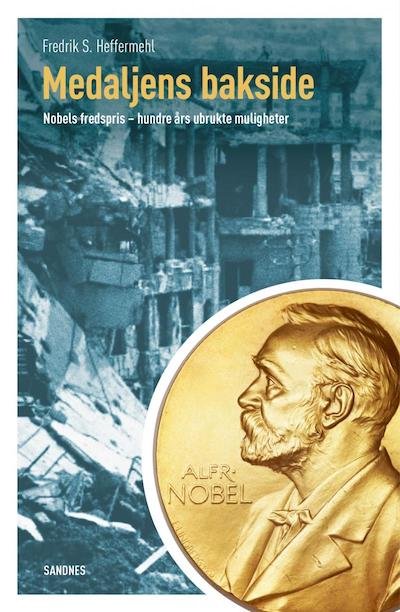
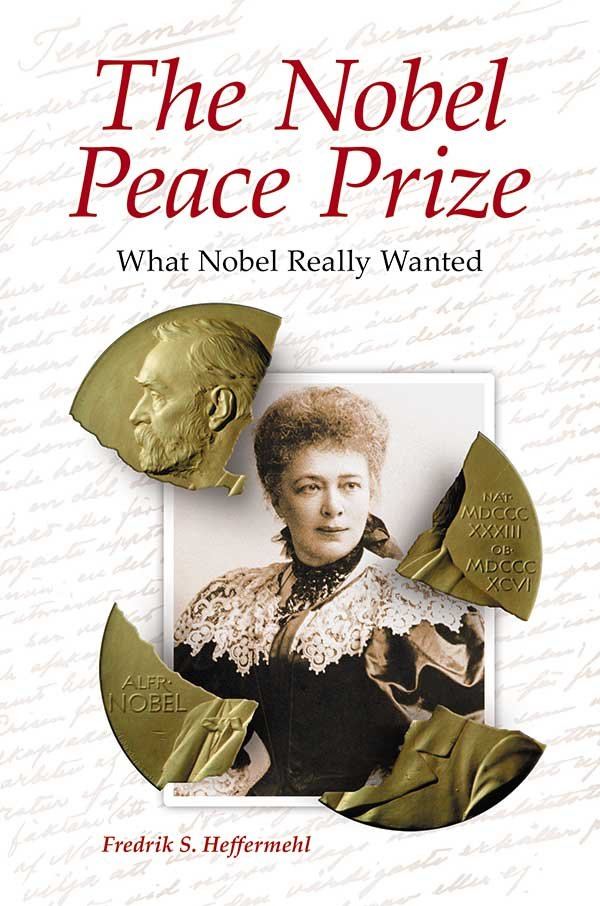
In my newest book on the prize, Fame or Shame (in Norwegian, Medaljens Bakside – the English translation is seeking a publisher), I have found out why the choice of Norway became a fatal mistake: in the exact year that Nobel made his will, 1895, Norwegian politicians shifted from supporting world peace to building military strength for a potentially violent exit from the union.
Thus, the speakers of Parliament did not hesitate to discard Nobel´s main tool for peace, global disarmament, and make it a prize for “peace” in general, ie embezzle the prize and use it for whatever they liked.
The prize Nobel intended never happened, the Norwegian awarders chose never to conduct the necessary professional interpretation of Nobel´s intention. The committee also never – except in 1905 and 1910 – spoke up for the vision of peace that Nobel wished it to support.
Total secrecy applies, no member may reveal anything from the award committee´s internal discussions, but the preparatory reports the committee based its discussions on are available and show that their deliberations never contained an iota of interest in Nobel´s own vision of peace.
Instead, there are several expressions of contempt for the peace people and ideas Nobel wished the committee to back.
In the award ceremonies, the laureates often supported the ideas of Nobel much better than the awarders were ever willing to. But the media have offered awe and praise and shown little will to stand up for the peace ideas and people who were entitled to win under the law.
To show who they were, what the prize should have been, and the world we could have had, I spent a year in the well-guarded archives of the Norwegian Nobel Committee. Here I dug out the candidates who were best qualified to win instead of those preferred by the committee, a comprehensive alternative history of how to create a peaceful, non-violent world order. This is a reform that the world, with all the other threats facing it, desperately needs, and the US more than most. No population in today´s world would seem to need it more than the poor and disadvantaged of the US itself.
The book relates 114 heartbreaking stories of people who were cheated of the prizes Nobel wished to give them. It is a hitherto unwritten history of suppressed ideas and unsung heroes in a thankless struggle to liberate us all from weapons, warriors and war, and nothing surprised me more than seeing how much the US is a leader in the field of peace.
With its 22 prizes, the US is the recipient of twice as many prizes as the three next biggest winners. Even if, following Nobel´s actual intention, I flunk 17 of the awarded prizes as cultivating the wrong, militarist USA, I conclude that the US was cheated of 39 true Nobel prizes and should have had 44 recipients – still twice as many as the next countries.
As this research progressed, I got more and more interested in what the Nobel prize history has to tell us about our democracies and issues of press freedom – with the giant elephant in the room being the lack of alternative views on the military. Taking Norway as an example, we opted for military power in 1949. Our accession to NATO resulted in a broad agreement never to question the steady development of military capacity and our allegiance to the US and the alliance.
For more than 70 years politicians and everyone else have been in keen competition to be the most devoted and loyal NATO supporters. But it seems to be dawning on Norwegians that the time may have come to turn off the autopilot, not least after the conservative cabinet concluded a treaty with the US to set up American bases on four airfields in Norway. The conservatives lost the national elections in early September.
The Norwegian Nobel Committee, with its 2021 prize, shows perhaps the most solid criterion in its award policy: if possible to please and never to offend the US. This started with the 1906 prize for President Theodore Roosevelt and continued with prizes for Woodrow Wilson, Frank Kellogg, George Marshall, Henry Kissinger, Jimmy Carter and Barack Obama and others – all very far from the grassroots peace and nonviolence protagonists Nobel had in mind.
Another trend is – excepting a handful of antinuclear prizes – to confer prizes in line with the politics of the US and the West. Or embarrassing opponents, as in the cases of Andrej Sakharov, Lech Walesa, Liu Xiaobo, or the 2021 prizes for Maria Ressa and Russia’s Dmitry Muratov.
In its 2021 announcement the committee stated that it wished “to protect against abuse of power, lies and war propaganda”. But the committee missed a formidable opportunity to be fully loyal to Alfred Nobel and at the same time serve press freedom.
One of the candidates nominated for 2021 had made a unique challenge to the forces Nobel wanted to fight. The most acute and deadly threat to press freedom in the world today is the US campaign against Julian Assange, the founder of WikiLeaks, who deserves thanks from the world for making known war crimes committed by the United States in Iraq and Afghanistan.
Russian press freedom is, after all, a local problem, but the US attack on Assange will deter media around the world from speaking out critically about US abuse of power and high crimes. So far, Assange has been deprived of health and liberty for ten years. He is being held as a political prisoner, isolated in Belmarsh High Security Prison in London, without charge and sentence, pending a US appeal against a British court’s refusal to extradite him.
His courageous revelations have been honoured with torture that has ruined his health. His life is at risk. A committee loyal to Nobel’s peace vision could have helped protect Assange from extradition and perpetual deprivation of liberty in the United States.
A great paradox is this: if the power-critical press freedom praised by the 2021 Nobel award had worked – towards the committee itself and the powerful military-industrial sector – the Nobel Committee would not have succeeded with its betrayal of the core of Alfred Nobel’s peace vision over the past 120 years.
Unlike our mainstream adversaries, warmongering propagandists and other destructive forces, TFF has no source of state, corporate or institutional finance whatsoever. Such are the conditions for truly independent peace research in these times. Everything peace has been cancelled. But we are still here – and will be.
The foundation and this homepage run entirely on voluntary support from its readers and we who produce it, are all volunteers. To support TFF, you do not have to agree with every argument or article, only to welcome alternative voices, research-based knowledge and dialogue about important matters