
Envisioning a world without nuclear weapons

Book Review

ZERO: THE CASE FOR NUCLEAR WEAPONS ABOLITION
By David Krieger (published in 2013 by the Nuclear Age Peace Foundation); $14.95

I have known David Krieger for the past twenty-five years, and he has never wavered, even for a day, from his lifelong journey dedicated to ridding the world of nuclear weapons and the threat of nuclear war. If I were given to categorization, I would label such an extraordinary engagement with a cause as an instance of ‘benign fanaticism.’

Unfortunately, from the perspective of the human future, it is a rather rare condition, posing the puzzle as to why Krieger should be so intensely inclined, given his seemingly untraumatized background. He traces his own obsession back to his mother’s principled refusal to install a bomb shelter in the backyard of their Los Angeles home when he was 12 years old. He comments in the Preface to ZERO that even at the time he “hadn’t expected” her to take such a stand, which he experienced as “a powerful lesson in compassion,” was especially moved by her unwillingness “to buy into saving herself at the expense of humanity.” (xiv).

Nine years later after Krieger graduated from college his mother was again an instrumental force, giving him as a graduation present a trip to Japan to witness first-hand “what two nuclear weapons had done to the cities of Hiroshima and Nagasaki.” (xiv) The rest is, as they say, ‘history.’ Or as Krieger puts it in characteristic understatement, “[t]hose visits changed my life.” (xiv)

On a psychological level, I remain perplexed by two opposite observations: we still lack the key that unlocks the mystery of Krieger’s unwavering dedication or explains why so few others have been similarly touched over the years. What ZERO does better than any of Krieger’s earlier books on nuclear weapons, and indeed more comprehensively and lucidly than anyone else anywhere, is to provide the reader with the reasons for thinking, feeling, and acting with a comparable passion until the goal of abolishing the totality of nuclear weaponry is finally reached.

Krieger himself extensively explores and laments the absence of widespread anti-nuclear passion and tries to explain it by calling attention to a series of factors: ignorance, complacency, deference to authority, sense of powerlessness, fear, economic advantage, conformity, marginalization, technological optimism, tyranny of experts. (90-92) The argument of the book, concisely developed in a series of short essays, and is reinforced by some canonical documents in the struggle over the decades to rid the world of nuclear weaponry, including Obama’s Prague Speech of 2009, the Einstein/Russell Manifesto of 1955, and Joseph Rotblat’s Nobel Prize Acceptance Speech of 1995.

Krieger’s approach as an author is multi-layered, and includes analytic critiques of conventional strategic wisdom that finds a security role for nuclear weapons, a worked out conception of how a negotiated international treaty could safely by stages move the world toward the zero goal of abolition, poems that seek to recapture the existential horror of nuclear war, essays of appreciation for the courage, commitment, and insight of the hibakusha (Japanese survivors of the 1945 atomic attacks), and concerted inquiry into what needs to happen to make nuclear disarmament a viable political project rather than a mere hope. For a short book of 166 pages this is a lot of ground to cover, but Krieger does so with clarity, a calm demeanor, and an impressive understanding and knowledge about all aspects of this complex question of what to do about nuclear weapons.

Krieger is not afraid to take on critics, even those who tell him that his quest is ‘silly’ because the nuclear genie, a favorite metaphor of liberal apologists, is out of the bottle, and cannot be put back. Krieger acknowledges that the knowledge is out there, and cannot be eliminated, but makes a measured case for his assessment that the nuclear disarmament process poses far fewer risks than does retaining the weaponry, and exposing humanity to what he believes to be the near certainty that nuclear weapons will be used in the future with apocalyptic results.

For Krieger the stakes are ultimate: human survival and the rights of future generations. In other words, given his strongly held opinion that the weaponry will be used at some point in the future with disastrous results, there is for him no ethically, politically, and even biologically acceptable alternative to getting rid totally of nuclear weapons. Krieger argues both from a worldview that regards nuclear weapons as intrinsically wrong because of the kind of suffering and devastation that they cause and consequentially because of their threat to civilization and even species survival.

Ever since I have known David Krieger he has been deeply influenced by Albert Einstein’s most famous assertion: “The unleashed power of the atom has changed everything save our modes of thinking, and thus we drift toward unparalleled catastrophe.” Krieger even treats his readers to an imagined dialogue between Einstein and the greatest interrogator of all time, Socrates. In their exchange, Socrates is convinced by Einstein that the necessary adjustments “won’t come from our leaders.”(85) Socrates gets the point in a manner that resonates with Krieger: “Then the people must be awakened, and they must demand an end to war, a world free of nuclear weapons.” (85)

There is a certain ambiguity in this statement when placed in the larger context of Krieger’s thought and work: is it necessary to end war as a social institution in order to get rid of nuclear weapons? In one way, most of Krieger’s efforts seem to separate nuclear weapons from the wider context of war making, but from time to time, there is a fusion of the two agendas.

Krieger realizes that changing our modes of thinking is a necessary step toward zero but it is not sufficient. He also believes that we can not achieve a world without nuclear weapons unless we act “collectively and globally” (97) to create a sustainable future. In the end, there is some ground for hope: “We have the potential to assert a constructive power for change that is greater than the destructive power of the weapons themselves.”

In effect, Krieger is telling us that what we can imagine we can achieve, but not without an unprecedented popular mobilization of peace minded people throughout the entire planet. Above all, Krieger wants to avoid a counsel of despair: “We must choose hope and find a way to fight for the dream of peace and the elimination of nuclear weapons. Achieving these goals is the great challenge of our time, on their success rests the realization of all other goals and for a more and decent world.” (105).

Certainly Krieger has founded and administered the Nuclear Age Peace Foundation over the course of more than 25 years maintaining faith with this uplifting vision. Such single mindedness is probably essential to motivate people of good will to support the endeavor, and to keep his own compass fixed over time, even in the face of many discouragements, on the destination he has identified as the only sanctuary to ensure a desirable future for humanity. Although sharing all of Krieger’s assessments, values, and visions, I am both less hopeful and not as focused, being committed to other indispensable policy imperatives (addressing the global challenge of climate change) and to more proximate ends that involve current injustices (seeking realization of the inalienable rights of the Palestinian people; seeking a UN Emergency Peace Force to intervene to protect vulnerable people facing a humanitarian or natural catastrophe), but I would not for a minute encourage Krieger to dilute his anti-nuclear posture.

This country and the world needs his message and dedication, and at some point, there may emerge a conjuncture of forces that is unexpectedly receptive to the vision of a world without nuclear weapons and even entertains the prospect of ending the war system as the foundation of national and global security.

From my vantage point such an anti-nuclear moment is not yet visible on the horizon of possibilities. After all, the Kissinger, Shultz, Nunn, and Perry call for abolition, emanating from the pinnacles of political realism, was widely noticed, but made no impact on the pro-nuclear consensus that guides the policy-making of the nine nuclear weapons states, and most of all the American establishment. And then Barack Obama’s 2009 call for a world without nuclear weapons, although qualified and conditional, was essentially abandoned even in the articulation of the president’s goals for his second term.

Presumably, his advisory entourage pushed him to concentrate his energy on attainable goals such as immigration and tax reform, protecting entitlements, and retreating from the fiscal cliffs, and not to waste his political capital on the unattainable such as nuclear disarmament and a just peace between Israel and Palestine. Short-term political calculations within the Beltway almost always trump long-term visionary goals, “and so it goes,” as Kurt Vonnegut taught us to say to the unyielding cruelty of human experience.

In the end, after this adventure of response to the life and work of a dear friend, admired collaborator, and inspirational worker for peace and justice, I can only commend David Krieger’s ZERO to everyone with the slightest interest in what kind of future we are bestowing upon our children and grandchildren. The book can be obtained via the following two links: it is preferred that ZERO is ordered through the Nuclear Age Peace Foundation at its online Peace Store.

It can also be ordered at Amazon.
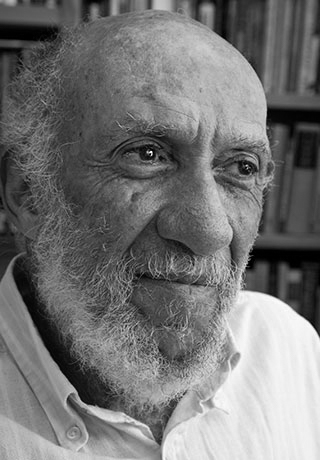
Professor Falk became an adviser to TFF when it was established in 1985.

Share

Leave a Reply

Your email address will not be published. Required fields are marked *

Related Posts

“En dag som berättigar till fest”, utropade den London-baserade al-Quds al-Arabi efter FN:s eldupphörresolution, “eftersom detta är första gången som Israel accepterar ett FN-beslut från en position som besegrad och inte som segrare”. Att ett arabisk-israeliskt krig för en gångs skull slutat med arabisk seger, är en helt dominerade åsikt i arabiska medier. Al-Quds al-Arabi tillåter sig att drömma om att det israeliska nederlaget skall leda till massflykt från Israel. Men i nästa andetag påminner tidningen om att Israel aldrig brukar genomföra sina internationella åtaganden och varnar för att förlorarna, liksom tidigare, kan hämnas genom att provocera fram inbördeskrig i Libanon. Med tanke på de otaliga massmediala vittnesmålen om det libanesiska folkets eniga motståndskraft förefaller risken för inre stridigheter i det sargade landet just nu liten. Men visst kan man urskilja nyansskillnader i libanesiska tidningar. Vänsterorganet al-Safir uppfattar FN-resolutionen som en komplott i syfte att rädda Israel från ännu större...
Lena Petrova of “World Affairs In Context” with more than half a million subscribers on YouTube wanted to explore what a peace researcher like me has to say about, among other things, the First and the Second Cold War and why eethics has disappeared from politics. I am particularly happy about this conversation that also yielded an amazing number of very appreciative comments on YouTube. No doubt, people are longing for alternatives, including peace perspectives.
Jan Oberg, TFF director April 28, 2026 In this third TFF Peace Pulse, I make the important distinction between the violence and the conflict that violence is a symptom of. If you want peace, focus on the underlying conflict because that is the key to resolution, peacemaking, and a better future for the parties. The West is obsessed with violence, just look around you – and 90+ per cent of the public debate is about military issues and other violence – totally wasted for peace. These Peace Pulses will only be published here a few times. You will also not find them on YouTube and Vimeo because both platforms have blocked TFF and me; you know, peace is dangerous these days. Most TFF’s videos since 2007 are now on Rumble.

Recent Articles

“En dag som berättigar till fest”, utropade den London-baserade al-Quds al-Arabi efter FN:s eldupphörresolution, “eftersom detta är första gången som Israel accepterar ett FN-beslut från en position som besegrad och inte som segrare”. Att ett arabisk-israeliskt krig för en gångs skull slutat med arabisk seger, är en helt dominerade åsikt i arabiska medier. Al-Quds al-Arabi tillåter sig att drömma om att det israeliska nederlaget skall leda till massflykt från Israel. Men i nästa andetag påminner tidningen om att Israel aldrig brukar genomföra sina internationella åtaganden och varnar för att förlorarna, liksom tidigare, kan hämnas genom att provocera fram inbördeskrig i Libanon. Med tanke på de otaliga massmediala vittnesmålen om det libanesiska folkets eniga motståndskraft förefaller risken för inre stridigheter i det sargade landet just nu liten. Men visst kan man urskilja nyansskillnader i libanesiska tidningar. Vänsterorganet al-Safir uppfattar FN-resolutionen som en komplott i syfte att rädda Israel från ännu större...
Greenland – the world’s largest island, a continent of its own with only 57.000 inhabitants. I visited it for the first time in May 2005. I flew across the inland ice to Nuuk, the tiny capital with some 14.000 inhabitants. I was overwhelmed by the pride and kindness of everyone I met as well as by the unique natural beauty. Unfortunately, due to weather conditions during my ten-day stay I could get nowhere else but Nuuk. Fortunately, however, among those I met was Gitte Arvegaard, a Danish lawyer and negotiator employed by the local government, Greenland Home Rule. She turned out to be an enthusiastic photographer with a lot of pictures taken during various trips around Greenland. So this Greeland series is the result of our cooperative effort. We both hope you enjoy it and are stimulated to visit Greenland – about which you may read more here. Finally, if you want to...
 Jan Oberg’s storyof how he met Sir Paul Liverpool – where else to meet Paul McCartney? Paul’s old class mate and TFF Associate, Jonathan Power introduced me to Paul McCartney in Liverpool at an informal reception. It was held at what used to be their school, now the Liverpool Institute for Performing Arts and we were there to celebrate that Jonathan had written Amnesty International’s 40th Anniversary book. This happy event for “righting wrongs and writing songs” gave me an opportunity to meet Paul and tell him about TFF and get straight to the matter: would he consider making a donation in support of our work for peace? While I was probably the only one with such a wish that day, I was certainly not the only one who wanted to shake hands and talk with him. In the last minutes before Paul was to leave, Jonathan brought us together and we got about three...

TFF on Substack

Discover more from TFF Transnational Foundation & Jan Oberg.

Most Popular

“En dag som berättigar till fest”, utropade den London-baserade al-Quds al-Arabi efter FN:s eldupphörresolution, “eftersom detta är första gången som Israel accepterar ett FN-beslut från en position som besegrad och inte som segrare”. Att ett arabisk-israeliskt krig för en gångs skull slutat med arabisk seger, är en helt dominerade åsikt i arabiska medier. Al-Quds al-Arabi tillåter sig att drömma om att det israeliska nederlaget skall leda till massflykt från Israel. Men i nästa andetag påminner tidningen om att Israel aldrig brukar genomföra sina internationella åtaganden och varnar för att förlorarna, liksom tidigare, kan hämnas genom att provocera fram inbördeskrig i Libanon. Med tanke på de otaliga massmediala vittnesmålen om det libanesiska folkets eniga motståndskraft förefaller risken för inre stridigheter i det sargade landet just nu liten. Men visst kan man urskilja nyansskillnader i libanesiska tidningar. Vänsterorganet al-Safir uppfattar FN-resolutionen som en komplott i syfte att rädda Israel från ännu större...
Greenland – the world’s largest island, a continent of its own with only 57.000 inhabitants. I visited it for the first time in May 2005. I flew across the inland ice to Nuuk, the tiny capital with some 14.000 inhabitants. I was overwhelmed by the pride and kindness of everyone I met as well as by the unique natural beauty. Unfortunately, due to weather conditions during my ten-day stay I could get nowhere else but Nuuk. Fortunately, however, among those I met was Gitte Arvegaard, a Danish lawyer and negotiator employed by the local government, Greenland Home Rule. She turned out to be an enthusiastic photographer with a lot of pictures taken during various trips around Greenland. So this Greeland series is the result of our cooperative effort. We both hope you enjoy it and are stimulated to visit Greenland – about which you may read more here. Finally, if you want to...
 Jan Oberg’s storyof how he met Sir Paul Liverpool – where else to meet Paul McCartney? Paul’s old class mate and TFF Associate, Jonathan Power introduced me to Paul McCartney in Liverpool at an informal reception. It was held at what used to be their school, now the Liverpool Institute for Performing Arts and we were there to celebrate that Jonathan had written Amnesty International’s 40th Anniversary book. This happy event for “righting wrongs and writing songs” gave me an opportunity to meet Paul and tell him about TFF and get straight to the matter: would he consider making a donation in support of our work for peace? While I was probably the only one with such a wish that day, I was certainly not the only one who wanted to shake hands and talk with him. In the last minutes before Paul was to leave, Jonathan brought us together and we got about three...
Read More
Imagen-thumbnail-The-Transnational-1
“En dag som berättigar till fest”, utropade den London-baserade al-Quds al-Arabi efter FN:s eldupphörresolution, “eftersom detta är första gången som Israel accepterar ett FN-beslut från en position som besegrad och inte som segrare”. Att ett arabisk-israeliskt krig för en gångs skull slutat med arabisk seger, är en helt dominerade åsikt i arabiska medier. Al-Quds al-Arabi tillåter sig att drömma om att det israeliska nederlaget skall leda till massflykt från Israel. Men i nästa andetag påminner tidningen om att Israel aldrig brukar genomföra sina internationella åtaganden och varnar för att förlorarna, liksom tidigare, kan hämnas genom att provocera fram inbördeskrig i Libanon. Med tanke på de otaliga massmediala vittnesmålen om det libanesiska folkets eniga motståndskraft förefaller risken för inre stridigheter i det sargade landet just nu liten. Men visst kan man urskilja nyansskillnader i libanesiska tidningar. Vänsterorganet al-Safir uppfattar FN-resolutionen som en komplott i syfte att rädda Israel från ännu större...
Greenland – the world’s largest island, a continent of its own with only 57.000 inhabitants. I visited it for the first time in May 2005. I flew across the inland ice to Nuuk, the tiny capital with some 14.000 inhabitants. I was overwhelmed by the pride and kindness of everyone I met as well as by the unique natural beauty. Unfortunately, due to weather conditions during my ten-day stay I could get nowhere else but Nuuk. Fortunately, however, among those I met was Gitte Arvegaard, a Danish lawyer and negotiator employed by the local government, Greenland Home Rule. She turned out to be an enthusiastic photographer with a lot of pictures taken during various trips around Greenland. So this Greeland series is the result of our cooperative effort. We both hope you enjoy it and are stimulated to visit Greenland – about which you may read more here. Finally, if you want to...
p_mccartney_poem
 Jan Oberg’s storyof how he met Sir Paul Liverpool – where else to meet Paul McCartney? Paul’s old class mate and TFF Associate, Jonathan Power introduced me to Paul McCartney in Liverpool at an informal reception. It was held at what used to be their school, now the Liverpool Institute for Performing Arts and we were there to celebrate that Jonathan had written Amnesty International’s 40th Anniversary book. This happy event for “righting wrongs and writing songs” gave me an opportunity to meet Paul and tell him about TFF and get straight to the matter: would he consider making a donation in support of our work for peace? While I was probably the only one with such a wish that day, I was certainly not the only one who wanted to shake hands and talk with him. In the last minutes before Paul was to leave, Jonathan brought us together and we got about three...
Logo-Transnational
1942James Paul McCartney is born in Liverpool on June 18th. 1956Paul writes his first song, I Lost My Little Girl. 1957Paul meets John Lennon at St. Peter’s Church Fete, Woolton, Liverpool. He joins his first group, The Quarrymen and performs in his first gig at The New Clubmoor Hall, Liverpool, on October 18th. 1960Formation of The Beatles, who play residencies in Hamburg and at The Cavern in Liverpool. 1961First Beatles recordings issued in Germany, as the backing group for Tony Sheridan. 1962The first Beatles Parlophone recording, Love Me Do, reaches number 17 in the British charts. 1963The birth of Beatlemania. Please Please Me gives the group their first British Number 1. She Loves You cements their success. Please Please Me and With The Beatles albums released. 1964First triumphant American tour. The Beatles perform at the Royal Command Performance and release their first film, A Hard Day’s Night. Their single I...
Logo-Transnational
  Back to the series “Bujumbura, Burundi”
By JONATHAN POWER August 16, 2000 LONDON – Remember the summer of ’98? In the sweltering, torpid heat of a Roman august, charged with exhaust fumes, the international community gave its overwhelming approval to the establishment of an International Criminal Court that will enable those accused of “crimes against humanity” to be tried and, if convicted, sentenced. Only seven nations opposed or abstained from the motion, including Israel, China, India and the U.S.A. where the Pentagon had successfully waged bureaucratic guerrilla war to undermine the initially sympathetic stance of President Bill Clinton. Two years on we can now see what an epochal event that was. In a the stroke of 120 pens it changed the climate on political thuggery. After numerous half-starts and false starts ever since the Nuremberg and Tokyo trials that convicted the war criminals of the Second World War, the world at last had agreed en masse a common...


