
Cruelties of ceasefire diplomacy

Prefatory Note

The post below is a revised text of an article published in AlJazeera America on July 26, 2014. Devastation and violence has continued in Gaza, with Palestinians deaths now numbering over 1000 (overwhelmingly civilians) and Israeli deaths latest reported at being 43 (almost all military personnel).

Such casualty figures and disparities raise questions of state terrorism in a stark manner. Also, it should be appreciated that if Israel were to do what it is required by international law to do there would be no rockets directed at its population centers – lift the blockade, negotiate peace on the basis of the 2002 Arab proposals and Security Council 242. Yet this would require Israel to give up once and for all its expansionist vision embedded in the settlement phenomenon and the version of Zionism embraced by its leaders and reigning political parties.

The best that the UN has been able to do is to call for an “immediate and unconditional ceasefire” to allow the delivery of humanitarian aid at an emergency meeting of the UN Security Council; such an unseemly balancing act is not what the UN Charter had in mind by aligning the international community in opposition to states that break the peace and act aggressively in disregard of international law; a victimized people deserves protection, not some sort of display of deforming geopolitical symmetry.

So far, the diplomatic effort to end the violence in Gaza has failed miserably,

most recently with Israel’s cabinet rejecting a ceasefire proposal from U.S. Secretary of State John Kerry. This attempt by Washington is representative of the overall failure of American policy toward the Israel-Palestine conflict, only on this occasion the consequences can be measured in the growing pile of dead bodies and the widespread devastation that includes numerous homes, public buildings and even artillery damage to several United Nations schools sheltering Palestinian civilians.

The U.S. approach fails because it exhibits extreme partisanship in a setting where trust, credibility and reciprocity are crucial if the proclaimed aim of ending the violence is the true objective of this exhibition of statecraft. Kerry is undoubtedly dedicated to achieving a cease-fire, just as he demonstrated for most of the past year a sincerity of commitment in pushing so hard for a negotiated peace agreement between Israel and the Palestinian Authority.

Yet throughout the failed peace process the United States exhibited all along this discrediting extreme partisanship, never more blatantly than when it designated Martin Indyk, a former staff member of the America Israel Public Affairs Committee (AIPAC) and former ambassador to Israel, to serve as the U.S. special envoy throughout the peace talks.

The U.S. approach up to this point to achieving a ceasefire in Gaza has been undertaken in a manner that is either woefully ignorant of the real constraints or callously cynical about their relevance.

This is especially clear from the initial attempt to bring about a cease-fire by consulting only one side, Israel — the party bearing the major responsibility for causing massive casualties and damage — and leaving Hamas out in the cold. Even if this is a unavoidable consequence of Hamas being treated as “a terrorist entity,” it still makes no sense in the midst of such carnage to handle diplomacy in such a reckless manner when lives were daily at stake.

When Israel itself has wanted to deal with Hamas in the past, it had no trouble doing so — for instance, when it arranged the prisoner exchange that led to the release of the single captured Israeli soldier Gilad Schalit back in 2011.

The basic facts seem so calculated to end in diplomatic failure that it is difficult to explain how they could have happened: The U.S. relied on Egypt as the broker of a proposal it vetted, supposedly with the approved text delivered personally by Tony Blair to President Abdel Fattah el-Sisi in Cairo, secreted endorsed by the Netanyahu government, and then publicly announced on July 15 via the media as a ceasefire proposal accepted by Israel, without Hamas having been consulted, or even previously informed.

It’s a diplomatic analogue to the theater of the absurd.

Last July, then-General Sisi was the Egyptian mastermind of a coup that brutally cracked down on the Muslim Brotherhood and criminalized the entire organization. The Sisi government has made no secret of its unrelenting hostility to Hamas, which it views as an offshoot of the Muslim Brotherhood and alleged responsibility for insurgent violence in the Sinai.

Egypt destroyed the extensive tunnel network connecting Gaza with the outside world created to circumvent the punitive Israeli blockade that has been maintained since 2007. Was there ever any reason for Hamas to accept such a humiliating ceasefire arrangement?

As some respected Israeli commentators have suggested, most prominently Amira Hass, the “normalization” of the occupation is what the Israeli military operation Protective Edge is all about. What Hass suggests is that Israel is seeking a compliant Palestinian response to an occupation that has for all intents and purposes become permanent, and seems to believe that such periodic shows of force will finally break once and for all the will to resist, symbolized by Hamas and its rockets, and now its tunnels.

In this respect, the recent move to establish a unity government reconciling the Palestinian Authority with Hamas was a setback for the normalization policy, especially suggesting that even the PA could no longer be taken for granted as an acceptably compliant ‘partner,’ not for peace, but for occupation.

Whatever ambiguity might surround the Kerry diplomacy, the fact that the cease-fire’s terms were communicated to Hamas via the media, made the proposal a “take it or leave it” clearly designed to show the world that Hamas would never be treated as a political actor with grievances of its own.

Such a way of proceeding also ignored the reasonable conditions Hamas had posited as the basis of a cease-fire it could accept. These conditions included an unwavering insistence on ending the unlawful seven-year siege of Gaza, releasing prisoners arrested in the anti-Hamas campaign in the West Bank prior to launching the military operation on July 8, and stopping interference with the unity government that brought Hamas and the Palestinian Authority together on June 3.

Kerry, by contrast, was urging both sides to restore the cease-fire text that had been accepted in November 2012 after the previous major Israeli military attack upon Gaza, but relevantly, had never been fully implemented producing continuous tensions.

Hamas’ chief leader, Khaled Meshaal, has been called “defiant” by Kerry because he would not go along with this tilted diplomacy. “Everyone wanted us to accept a ceasefire and then negotiate for our rights,” Meshaal said.

This was tried by Hamas in 2012 and didn’t work. As soon as the violence ceased, Israel refused to follow through on the cease-fire agreement that had promised negotiations seeking an end of the blockade and an immediate expansion of Gazan fishing rights.

In the aftermath of Protective Edge is it not reasonable, even mandatory, for Hamas to demand a firm commitment to end the siege of Gaza, which has been flagrantly unlawful since it was first imposed in mid-2007?

Israel as the occupying power has an obligation under the Geneva Conventions to protect the civilian population of an occupied people. Israel claims that its “disengagement” in 2005, involving the withdrawal of security forces and the dismantling of settlements, ended such obligations. Such a position is legally (and morally) unacceptable, a view almost universally shared in the international community, since the persistence of effective Israeli control of entry and exit, as well as air and sea, and violent incursions amounts to a shift in the form of occupation — not its end.

Israel is certainly justified in complaining about the rockets, but the maintenance of an oppressive regime of collective punishment on the civilians of Gaza is an ongoing crime. And it should be appreciated that more often than not, Israel provokes the rockets by recourse to aggressive policies of one sort or another or that most primitive rockets are fired by breakaway militia groups that Hamas struggles to control.

A full and unbiased account of the interaction of violence across the Gaza border would not find that Israel was innocent and only Hamas was at fault. The story is far more complicated, and not an occasion for judging which side is entitled to be seen as acting in self-defense.

In “Turkey Can Teach Israel How to End Terror,” an insightful July 23 article in The New York Times, the influential Turkish journalist Mustafa Akyol drew from the experience of his country in ending decades of violent struggle between the insurgent Kurdistan Workers’ Party (PKK) and the Turkish state.

Akyol “congratulated” Turkish Prime Minister Recep Tayyip Erdogan (while taking critical note of his “growing authoritarianism”) for ending the violence in Turkey two years ago by agreeing with the imprisoned PKK leader, Abdullah Ocalan, to initiate conflict-resolving negotiations in good faith and abandon the “terrorist” label.

Some years ago I heard former British Prime Minister John Major say that he made progress toward peace in Northern Ireland only when he stopped treating the Irish Republican Army as a terrorist organization and began dealing with it as a political actor with genuine grievances. If a secure peace were ever to become Israel’s true objective, this is a lesson to be learned and imitated.

Just as with the peace process itself, the time has surely come for a credible ceasefire to take account of the views and interests of both sides, and bring this sustained surge of barbaric violence to an end. International law and balanced diplomacy are available to do this if the political will were to emerge on the Israeli side, which seems all but impossible without the combination of continuing Palestinian resistance and mounting pressure from outside by way of the BDS campaign and the tactics of a militant, nonviolent global solidarity movement.
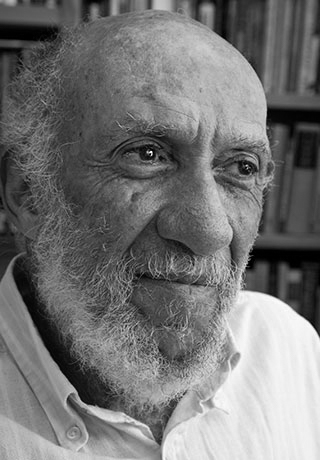

Professor Falk became an adviser to TFF when it was established in 1985.

Share

Leave a Reply

Your email address will not be published. Required fields are marked *

Related Posts

Jan Oberg, TFF director April 28, 2026 In this third TFF Peace Pulse, I make the important distinction between the violence and the conflict that violence is a symptom of. If you want peace, focus on the underlying conflict because that is the key to resolution, peacemaking, and a better future for the parties. The West is obsessed with violence, just look around you – and 90+ per cent of the public debate is about military issues and other violence – totally wasted for peace. These Peace Pulses will only be published here a few times. You will also not find them on YouTube and Vimeo because both platforms have blocked TFF and me; you know, peace is dangerous these days. Most TFF’s videos since 2007 are now on Rumble.
In contrast to most, we’ll bring alternatives, solutions, hope and strategies for a better future. Times are dangerous, yes, but that only intensifies the need for constructive thinking and action! Jan Oberg, TFF director April 13, 2026 The new TFF Peace Pulse uses video messages in a new way: Max 3-5-minute-long comments, ideas or perhaps mini-lectures, all about peace – positive peace. We launch them today on April 13, 2026 with a carefully crafted visual aesthetic fitting the content. We hope to publish them regularly from now on. We launch Peace Pulse (PP) – for a number of reasons. The world is in chaos, and there are countless reasons to feel concerned, frustrated, even angry. The atmosphere is saturated with doom and gloom, with negative energy and rear‑mirror thinking, while vision, imagination, alternatives, strategies and genuine future‑mindedness remain in short supply. And without them, we simply can’t save the world. Looking at problems from a hundred angles will...
PART II — Publishing Peace in a System That Prioritises Militarism Jan Oberg, TFF director April 10, 2026 How TFF Maintains a Daily Voice in a Digital World Built for Noise This article is part of the series “TFF at 40″ and it invites you to learn about Four Decades of Publishing Peace. It takes a look at how a small, people‑financed peace foundation has communicated across four generations of technology — from wax stencils and fax machines to mass email and Substack — and why TFF continues to publish every single day in a system that rewards noise, conflict, and militarism. ◆ What it means to publish peace every single day in a digital system built for 24/7 news and other noise, confrontation, and militarism. How TFF’s independence, continuity, and global readership defy algorithms, donor cycles, and Western media censorhip — and why the Majority World keeps listening. When the...

Recent Articles

Jan Oberg May 15, 2026 Go to this Fox News page and scroll the whole way down: President Donald Trump tells the world that his meeting with President Xi Jinping yielded a lot of very concrete political and economic results – of course, only where the Chinese side, according to him, agreed with him. He does not mention the Taiwan issue, but Secretary of State, Marco Rubio, says that it did not feature prominently in their talks and that the US policy on Taiwan has not changed. Then go to China Daily – or Global Times – and you will see that for the Chinese it is framework, principles, structure of cooperation etc. that matters – all embedded in the overall idea of “constructive bilateral relationship of strategic stability.” Nowhere is any concrete agreement or deal – all that Trump refers to – mentioned. At the general level, this gives you insights into the very different social...
Lena Petrova of “World Affairs In Context” with more than half a million subscribers on YouTube wanted to explore what a peace researcher like me has to say about, among other things, the First and the Second Cold War and why eethics has disappeared from politics. I am particularly happy about this conversation that also yielded an amazing number of very appreciative comments on YouTube. No doubt, people are longing for alternatives, including peace perspectives.
The MIMAC – Military-Industrial-Media-Academic Complex – drives the world’s rampant militarism and wars without end. Here is a short reflection of how it works against all interests of humanity. #5 deals with why there is no real enemy or threat images/analysis. It’s all ex-post constructions. And, btw, theTFF Peace Pulse is now on Rumble.

TFF on Substack

Discover more from TFF Transnational Foundation & Jan Oberg.

Most Popular

Jan Oberg May 15, 2026 Go to this Fox News page and scroll the whole way down: President Donald Trump tells the world that his meeting with President Xi Jinping yielded a lot of very concrete political and economic results – of course, only where the Chinese side, according to him, agreed with him. He does not mention the Taiwan issue, but Secretary of State, Marco Rubio, says that it did not feature prominently in their talks and that the US policy on Taiwan has not changed. Then go to China Daily – or Global Times – and you will see that for the Chinese it is framework, principles, structure of cooperation etc. that matters – all embedded in the overall idea of “constructive bilateral relationship of strategic stability.” Nowhere is any concrete agreement or deal – all that Trump refers to – mentioned. At the general level, this gives you insights into the very different social...
Lena Petrova of “World Affairs In Context” with more than half a million subscribers on YouTube wanted to explore what a peace researcher like me has to say about, among other things, the First and the Second Cold War and why eethics has disappeared from politics. I am particularly happy about this conversation that also yielded an amazing number of very appreciative comments on YouTube. No doubt, people are longing for alternatives, including peace perspectives.
The MIMAC – Military-Industrial-Media-Academic Complex – drives the world’s rampant militarism and wars without end. Here is a short reflection of how it works against all interests of humanity. #5 deals with why there is no real enemy or threat images/analysis. It’s all ex-post constructions. And, btw, theTFF Peace Pulse is now on Rumble.
Read More
Screenshot-2026-05-15-103534
Jan Oberg May 15, 2026 Go to this Fox News page and scroll the whole way down: President Donald Trump tells the world that his meeting with President Xi Jinping yielded a lot of very concrete political and economic results – of course, only where the Chinese side, according to him, agreed with him. He does not mention the Taiwan issue, but Secretary of State, Marco Rubio, says that it did not feature prominently in their talks and that the US policy on Taiwan has not changed. Then go to China Daily – or Global Times – and you will see that for the Chinese it is framework, principles, structure of cooperation etc. that matters – all embedded in the overall idea of “constructive bilateral relationship of strategic stability.” Nowhere is any concrete agreement or deal – all that Trump refers to – mentioned. At the general level, this gives you insights into the very different social...
Screenshot-2026-05-12-104023
Lena Petrova of “World Affairs In Context” with more than half a million subscribers on YouTube wanted to explore what a peace researcher like me has to say about, among other things, the First and the Second Cold War and why eethics has disappeared from politics. I am particularly happy about this conversation that also yielded an amazing number of very appreciative comments on YouTube. No doubt, people are longing for alternatives, including peace perspectives.
Screenshot-2026-04-13-154551 (2)
The MIMAC – Military-Industrial-Media-Academic Complex – drives the world’s rampant militarism and wars without end. Here is a short reflection of how it works against all interests of humanity. #5 deals with why there is no real enemy or threat images/analysis. It’s all ex-post constructions. And, btw, theTFF Peace Pulse is now on Rumble.
Screenshot-2026-04-13-154551 (1)
Jan Oberg, TFF director April 28, 2026 In this third TFF Peace Pulse, I make the important distinction between the violence and the conflict that violence is a symptom of. If you want peace, focus on the underlying conflict because that is the key to resolution, peacemaking, and a better future for the parties. The West is obsessed with violence, just look around you – and 90+ per cent of the public debate is about military issues and other violence – totally wasted for peace. These Peace Pulses will only be published here a few times. You will also not find them on YouTube and Vimeo because both platforms have blocked TFF and me; you know, peace is dangerous these days. Most TFF’s videos since 2007 are now on Rumble.
Screenshot-2026-04-13-154551
In contrast to most, we’ll bring alternatives, solutions, hope and strategies for a better future. Times are dangerous, yes, but that only intensifies the need for constructive thinking and action! Jan Oberg, TFF director April 13, 2026 The new TFF Peace Pulse uses video messages in a new way: Max 3-5-minute-long comments, ideas or perhaps mini-lectures, all about peace – positive peace. We launch them today on April 13, 2026 with a carefully crafted visual aesthetic fitting the content. We hope to publish them regularly from now on. We launch Peace Pulse (PP) – for a number of reasons. The world is in chaos, and there are countless reasons to feel concerned, frustrated, even angry. The atmosphere is saturated with doom and gloom, with negative energy and rear‑mirror thinking, while vision, imagination, alternatives, strategies and genuine future‑mindedness remain in short supply. And without them, we simply can’t save the world. Looking at problems from a hundred angles will...
IMG_5165 (1)
PART II — Publishing Peace in a System That Prioritises Militarism Jan Oberg, TFF director April 10, 2026 How TFF Maintains a Daily Voice in a Digital World Built for Noise This article is part of the series “TFF at 40″ and it invites you to learn about Four Decades of Publishing Peace. It takes a look at how a small, people‑financed peace foundation has communicated across four generations of technology — from wax stencils and fax machines to mass email and Substack — and why TFF continues to publish every single day in a system that rewards noise, conflict, and militarism. ◆ What it means to publish peace every single day in a digital system built for 24/7 news and other noise, confrontation, and militarism. How TFF’s independence, continuity, and global readership defy algorithms, donor cycles, and Western media censorhip — and why the Majority World keeps listening. When the...

