
Beyond the haunted imagination

Ever since atomic bombs were exploded over the Japanese cities of Hiroshima and Nagasaki in the closing days of World War II, end-of-the-world forebodings have been present in Western cultural consciousness. In the background of such thinking is the religious anticipation of a day of judgment when life in earth will be replaced by the consignment of everyone then living to either the hell of damnation or the heaven of salvation.

The first type of end time thinking is based on the fear that the Promethean gift of technological innovation when carried to its omega point will produce a big bang terminal moment in the human experience. The second kind of end time thinking imagines that the gift of planetary life was a testing time for the human species that would end with endless punishment for the many and eternal rewards for a few, and was divinely programmed in a fatalistic manner beyond human capacity to control or alter.

We live now amid both types of end time thinking, a realization made more troublesome because such alarmist patterns of awareness, while rather widespread, have not generated any strong reactive movement based on prudence and preservation. Instead, all of us avert our eyes most of the time, and most manage to look away all the time often with the help of drugs and denial. Only a few are able to fix their full gaze on the impending cosmic wreck without turning away.

One of those few is a poet named C.K. Williams who in an essay, “Nature and Panic,” which appeared in the October 2012 issue of Poetry magazine, acknowledged panic in response to what he observes in the world around him. In words that resonate with me Williams wrote:

Like many people I know, I often have a somewhat—no, a wholly—frightening vision of the future of humanity and of our earth. There are periods when I live in a state of acute anxiety, indeed, near panic, about what awaits our children and grandchildren. Last year, I realized one day that every poem I was writing or attempting to write, had global warming and its consequences either as its overt or implied theme. Sometime I’m depressed beyond writing or saying anything at all; I fall into a funk that threatens never to end.”

Williams goes on to refer to Cormac McCarthy’s The Road, which paints the darkest possible picture of the desperate aftermath of a totalizing apocalyptic catastrophe that reduces human existence to the barest of survival struggles waged among roving gangs of desperate people ready to feast on one another. Such an extreme playing out of dark forebodings provokes an attitude of resentment in Williams, not because it is an exaggeration of what lies in store for humanity, but because it rings true!

In Williams’ words:

“I’m not the only person I know who’s expressed regret at having injested the book: I feel sometimes indignant that I have to have it in my consciousness. If there ever was a book that embodies the extremity of the emotion we call panic, this has to be it. I find it’s like having a piercing scream in my mind, one that, when the book comes to mind, which it does more often than I’d like, goes off like a siren.”

From this low point of panic, Williams finds his solace in beauty as an authentic manner of not succumbing to the torments of reason and the all too realistic tremors of a beckoning end time. He takes note of the pervasiveness of beauty in all its forms—music, painting, architecture, poetry—“if not in every day then in every age” as something that lifts human experience to a higher realm of being that is no longer vulnerable to panic no matter how dire the warning signs.

Williams writes “[o]ften our first experience of beauty will be the first hint of what each of us at some point will dare call our soul.’ This allows our exposure to great art of any kind to carry us beyond ourselves and whatever conditions we fear in the world. Williams notes that the first creators of painting retreated to caves so as to avoid being distracted by the lesser wonders of nature that he seems also to regard with awe, yet a lesser awe, because these wonders are there to be found rather than there to be discovered in the solitary mineshafts of the creative imagination.

Williams ends his extraordinary pilgrimage beyond the realms of end time with these almost hopeful words:

“Beauty saves us. Beauty will save us. The world, though, is still ours to cherish, and ours to protect.”

This brave sentiment is less an act of will than a refocusing of the human spirit. While we are alive, let us be saved by beauty, and I would add by love, but let us not forget that the world is not yet alien, but contains flowers and birds and stars and moonlight and rainbows and many beautiful people of all shades and beliefs. It is worth protecting, and cherishing, and who really knows what the future will bestow?

Despite sharing with Williams “a pessimism of the intellect” I also know deep down that the struggle for the human future is far from over, that the world and all those who are being made to daily suffer close by and at great distances are both “ours to protect.”
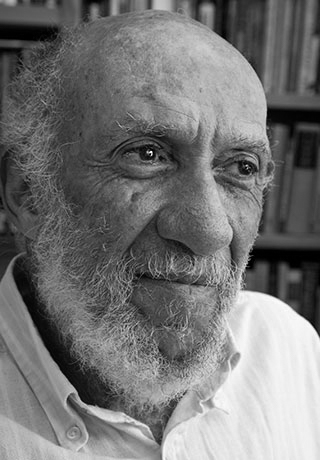

Professor Falk became an adviser to TFF when it was established in 1985.

Share

Leave a Reply

Your email address will not be published. Required fields are marked *

Related Posts

Jan Oberg, TFF director April 28, 2026 In this third TFF Peace Pulse, I make the important distinction between the violence and the conflict that violence is a symptom of. If you want peace, focus on the underlying conflict because that is the key to resolution, peacemaking, and a better future for the parties. The West is obsessed with violence, just look around you – and 90+ per cent of the public debate is about military issues and other violence – totally wasted for peace. These Peace Pulses will only be published here a few times. You will also not find them on YouTube and Vimeo because both platforms have blocked TFF and me; you know, peace is dangerous these days. Most TFF’s videos since 2007 are now on Rumble.
In contrast to most, we’ll bring alternatives, solutions, hope and strategies for a better future. Times are dangerous, yes, but that only intensifies the need for constructive thinking and action! Jan Oberg, TFF director April 13, 2026 The new TFF Peace Pulse uses video messages in a new way: Max 3-5-minute-long comments, ideas or perhaps mini-lectures, all about peace – positive peace. We launch them today on April 13, 2026 with a carefully crafted visual aesthetic fitting the content. We hope to publish them regularly from now on. We launch Peace Pulse (PP) – for a number of reasons. The world is in chaos, and there are countless reasons to feel concerned, frustrated, even angry. The atmosphere is saturated with doom and gloom, with negative energy and rear‑mirror thinking, while vision, imagination, alternatives, strategies and genuine future‑mindedness remain in short supply. And without them, we simply can’t save the world. Looking at problems from a hundred angles will...
PART II — Publishing Peace in a System That Prioritises Militarism Jan Oberg, TFF director April 10, 2026 How TFF Maintains a Daily Voice in a Digital World Built for Noise This article is part of the series “TFF at 40″ and it invites you to learn about Four Decades of Publishing Peace. It takes a look at how a small, people‑financed peace foundation has communicated across four generations of technology — from wax stencils and fax machines to mass email and Substack — and why TFF continues to publish every single day in a system that rewards noise, conflict, and militarism. ◆ What it means to publish peace every single day in a digital system built for 24/7 news and other noise, confrontation, and militarism. How TFF’s independence, continuity, and global readership defy algorithms, donor cycles, and Western media censorhip — and why the Majority World keeps listening. When the...

Recent Articles

Jan Oberg May 15, 2026 Go to this Fox News page and scroll the whole way down: President Donald Trump tells the world that his meeting with President Xi Jinping yielded a lot of very concrete political and economic results – of course, only where the Chinese side, according to him, agreed with him. He does not mention the Taiwan issue, but Secretary of State, Marco Rubio, says that it did not feature prominently in their talks and that the US policy on Taiwan has not changed. Then go to China Daily – or Global Times – and you will see that for the Chinese it is framework, principles, structure of cooperation etc. that matters – all embedded in the overall idea of “constructive bilateral relationship of strategic stability.” Nowhere is any concrete agreement or deal – all that Trump refers to – mentioned. At the general level, this gives you insights into the very different social...
Lena Petrova of “World Affairs In Context” with more than half a million subscribers on YouTube wanted to explore what a peace researcher like me has to say about, among other things, the First and the Second Cold War and why eethics has disappeared from politics. I am particularly happy about this conversation that also yielded an amazing number of very appreciative comments on YouTube. No doubt, people are longing for alternatives, including peace perspectives.
The MIMAC – Military-Industrial-Media-Academic Complex – drives the world’s rampant militarism and wars without end. Here is a short reflection of how it works against all interests of humanity. #5 deals with why there is no real enemy or threat images/analysis. It’s all ex-post constructions. And, btw, theTFF Peace Pulse is now on Rumble.

TFF on Substack

Discover more from TFF Transnational Foundation & Jan Oberg.

Most Popular

Jan Oberg May 15, 2026 Go to this Fox News page and scroll the whole way down: President Donald Trump tells the world that his meeting with President Xi Jinping yielded a lot of very concrete political and economic results – of course, only where the Chinese side, according to him, agreed with him. He does not mention the Taiwan issue, but Secretary of State, Marco Rubio, says that it did not feature prominently in their talks and that the US policy on Taiwan has not changed. Then go to China Daily – or Global Times – and you will see that for the Chinese it is framework, principles, structure of cooperation etc. that matters – all embedded in the overall idea of “constructive bilateral relationship of strategic stability.” Nowhere is any concrete agreement or deal – all that Trump refers to – mentioned. At the general level, this gives you insights into the very different social...
Lena Petrova of “World Affairs In Context” with more than half a million subscribers on YouTube wanted to explore what a peace researcher like me has to say about, among other things, the First and the Second Cold War and why eethics has disappeared from politics. I am particularly happy about this conversation that also yielded an amazing number of very appreciative comments on YouTube. No doubt, people are longing for alternatives, including peace perspectives.
The MIMAC – Military-Industrial-Media-Academic Complex – drives the world’s rampant militarism and wars without end. Here is a short reflection of how it works against all interests of humanity. #5 deals with why there is no real enemy or threat images/analysis. It’s all ex-post constructions. And, btw, theTFF Peace Pulse is now on Rumble.
Read More
Screenshot-2026-05-15-103534
Jan Oberg May 15, 2026 Go to this Fox News page and scroll the whole way down: President Donald Trump tells the world that his meeting with President Xi Jinping yielded a lot of very concrete political and economic results – of course, only where the Chinese side, according to him, agreed with him. He does not mention the Taiwan issue, but Secretary of State, Marco Rubio, says that it did not feature prominently in their talks and that the US policy on Taiwan has not changed. Then go to China Daily – or Global Times – and you will see that for the Chinese it is framework, principles, structure of cooperation etc. that matters – all embedded in the overall idea of “constructive bilateral relationship of strategic stability.” Nowhere is any concrete agreement or deal – all that Trump refers to – mentioned. At the general level, this gives you insights into the very different social...
Screenshot-2026-05-12-104023
Lena Petrova of “World Affairs In Context” with more than half a million subscribers on YouTube wanted to explore what a peace researcher like me has to say about, among other things, the First and the Second Cold War and why eethics has disappeared from politics. I am particularly happy about this conversation that also yielded an amazing number of very appreciative comments on YouTube. No doubt, people are longing for alternatives, including peace perspectives.
Screenshot-2026-04-13-154551 (2)
The MIMAC – Military-Industrial-Media-Academic Complex – drives the world’s rampant militarism and wars without end. Here is a short reflection of how it works against all interests of humanity. #5 deals with why there is no real enemy or threat images/analysis. It’s all ex-post constructions. And, btw, theTFF Peace Pulse is now on Rumble.
Screenshot-2026-04-13-154551 (1)
Jan Oberg, TFF director April 28, 2026 In this third TFF Peace Pulse, I make the important distinction between the violence and the conflict that violence is a symptom of. If you want peace, focus on the underlying conflict because that is the key to resolution, peacemaking, and a better future for the parties. The West is obsessed with violence, just look around you – and 90+ per cent of the public debate is about military issues and other violence – totally wasted for peace. These Peace Pulses will only be published here a few times. You will also not find them on YouTube and Vimeo because both platforms have blocked TFF and me; you know, peace is dangerous these days. Most TFF’s videos since 2007 are now on Rumble.
Screenshot-2026-04-13-154551
In contrast to most, we’ll bring alternatives, solutions, hope and strategies for a better future. Times are dangerous, yes, but that only intensifies the need for constructive thinking and action! Jan Oberg, TFF director April 13, 2026 The new TFF Peace Pulse uses video messages in a new way: Max 3-5-minute-long comments, ideas or perhaps mini-lectures, all about peace – positive peace. We launch them today on April 13, 2026 with a carefully crafted visual aesthetic fitting the content. We hope to publish them regularly from now on. We launch Peace Pulse (PP) – for a number of reasons. The world is in chaos, and there are countless reasons to feel concerned, frustrated, even angry. The atmosphere is saturated with doom and gloom, with negative energy and rear‑mirror thinking, while vision, imagination, alternatives, strategies and genuine future‑mindedness remain in short supply. And without them, we simply can’t save the world. Looking at problems from a hundred angles will...
IMG_5165 (1)
PART II — Publishing Peace in a System That Prioritises Militarism Jan Oberg, TFF director April 10, 2026 How TFF Maintains a Daily Voice in a Digital World Built for Noise This article is part of the series “TFF at 40″ and it invites you to learn about Four Decades of Publishing Peace. It takes a look at how a small, people‑financed peace foundation has communicated across four generations of technology — from wax stencils and fax machines to mass email and Substack — and why TFF continues to publish every single day in a system that rewards noise, conflict, and militarism. ◆ What it means to publish peace every single day in a digital system built for 24/7 news and other noise, confrontation, and militarism. How TFF’s independence, continuity, and global readership defy algorithms, donor cycles, and Western media censorhip — and why the Majority World keeps listening. When the...

