Are Europe’s Leaders Ignorant — or Are They Lying?

Jan Oberg

July 6, 2026

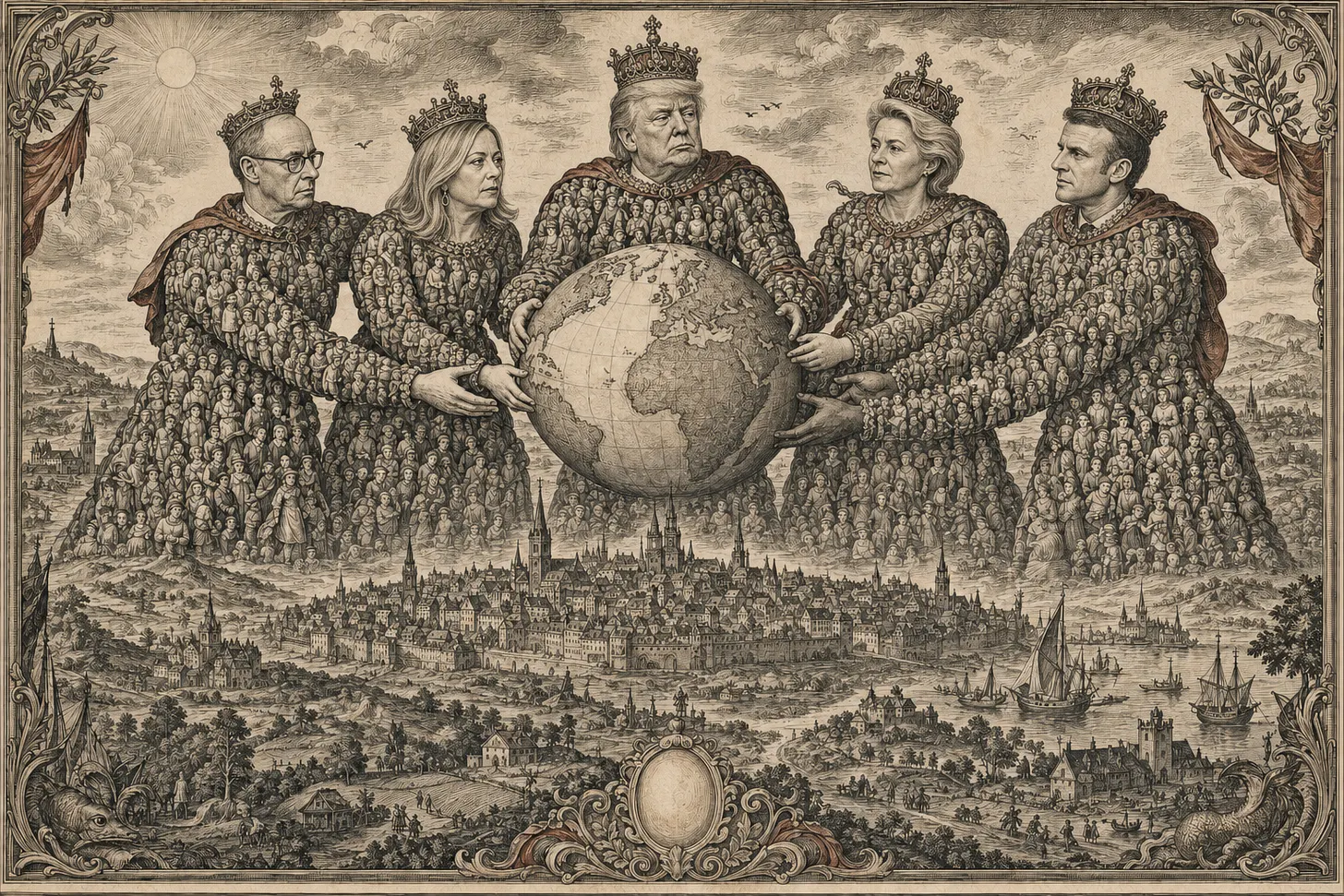
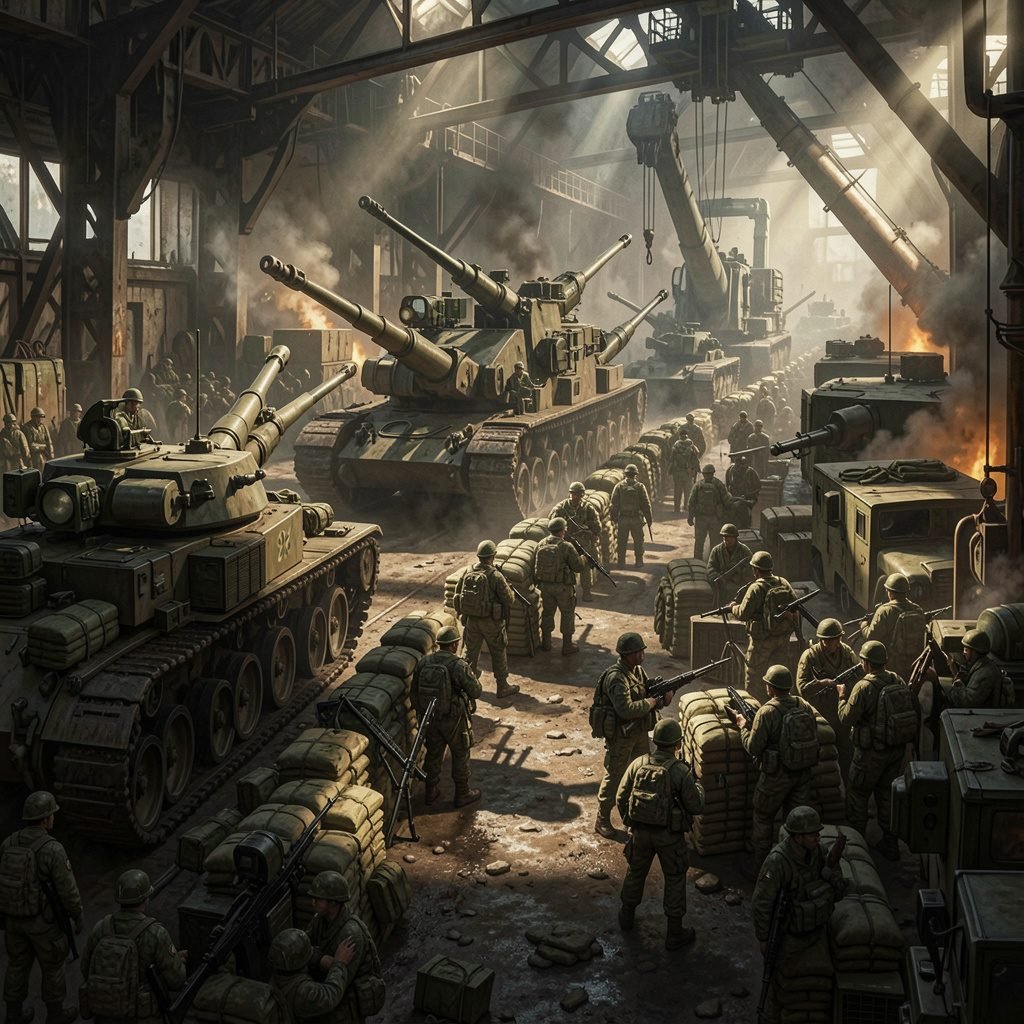
European leaders now speak openly about transforming Europe’s economy into a war economy. This is not a metaphor. It is the stated ambition of governments, EU commissioners, and NATO officials. Denmark’s DIIS writes explicitly that Europe must “prepare for a wartime economy,” and similar language appears in speeches from Paris, Berlin, Warsaw, Helsinki, and Brussels. The political narrative is clear: rearmament is not only necessary for security, it is also good for jobs, innovation, and growth.

But when we examine this through the lens of economics rather than geopolitics, this narrative collapses immediately.

For more than fifty years, peace‑economics researchers such as Seymour Melman, Emile Benoit, Mary Kaldor, and Lloyd J. Dumas demonstrated that military spending delivers lower economic returns than civilian investment. Their work showed that weapons production is structurally low‑employment, low‑consumption, and low‑multiplier. A euro spent on health care, education, infrastructure, culture, or green transition produces more jobs, more income, and more domestic demand than a euro spent on weapons. This was not controversial among economists; it was simply inconvenient for politicians.

Half a century later, the empirical picture is even clearer. The most rigorous modern analyses of defence spending come not from defence ministries or security think tanks, but from central banks and commercial banks. The European Central Bank warns that defence spending has “modest short‑term output effects” and that high import content reduces domestic impact. The IMF finds that military expenditure stimulates activity only under narrow conditions that civilian sectors meet far more easily. Nordic banks — Nordea, SEB, Danske Bank — all note the same pattern: defence spending is capital‑intensive, import‑heavy, and dominated by large corporate actors, with limited spillovers to the broader economy.

In other words: the economic verdict is unchanged. Civilian investment outperforms military spending every time.

Yet Europe is now undertaking the largest rearmament since 1945. Defence budgets are rising to 2 percent of GDP as a minimum, 3 percent by 2028, 3.5 percent by 2030, and NATO’s new long‑term target of 5 percent by 2035. This is the biggest reallocation of public resources in modern European history. And still, there is no serious economic debate about what this means — no discussion of opportunity costs, no modelling of long‑term productivity losses, no assessment of welfare impacts, no analysis of who benefits and who pays.

The silence is striking. Across Europe, not a single major research institute has produced a study comparing the economic multipliers of military and civilian spending. Not FOI in Sweden, DIIS in Denmark, NUPI or FFI in Norway. Not PRIO in Oslo, despite its long tradition of peace research. Not SIPRI in Stockholm, despite its global reputation for defence‑industry analysis. Not DIW Berlin, Ifo Munich, or the Kiel Institute. Not France Stratégie or CEPII. Not Bruegel in Brussels, CPB in the Netherlands, Chatham House in the UK, or IAI in Italy. Even the European Commission, the European Defence Agency, the European Investment Bank, and the European Court of Auditors have never examined whether military spending is economically inferior to civilian investment.

Europe produces threat assessments, capability roadmaps, and geopolitical narratives — but not the basic economic analysis required to justify the largest shift in public spending in decades. The absence is not accidental. It is structural.

Meanwhile, the market structure of weapons production makes the economic picture even worse. Arms manufacturing operates as a monopoly, with the state as the sole buyer. This eliminates normal market mechanisms such as price competition and consumer choice. Cost overruns become routine, because manufacturers know governments cannot walk away once a project has begun. The F‑35, the Eurofighter, the Patriot system, and nearly every naval vessel built in recent decades have ended up costing multiples of their original estimates. In economic terms, the arms market is designed to produce inflated prices and inefficient production — all paid for by taxpayers.

Even more troubling is the forgotten history of conversion. In the 1980s, serious studies — including a major UN project led by Sweden’s Inga Thorsson — demonstrated that military industries could be converted to civilian production with far greater economic and social returns. Conversion was technically feasible and economically rational. Today, Europe is doing the opposite: converting civilian production into military production. Yet no government, no EU body, and no economics institute has studied what this reverse conversion requires or what it will cost.

Europe is drifting toward a war economy without analysing the economic consequences. The political will to militarise is strong. The economic analysis of militarisation is absent.

So we return to the question that frames this entire debate: Are Europe’s leaders ignorant — or are they lying? Do they genuinely not understand the economics of military spending, or do they understand it perfectly and choose to mislead their citizens, taxpayers, and voters?

Either answer is deeply troubling. But one of them must be true.

A full two‑part report examining these issues in depth will be published shortly. It presents the evidence behind every claim made here — and the economic reality Europe’s leaders refuse to confront.

Read Part 1 here

Read Part 2 here

Peace & future researcher + ‌Art Photographer

Share

Leave a Reply

Your email address will not be published. Required fields are marked *

Related Posts

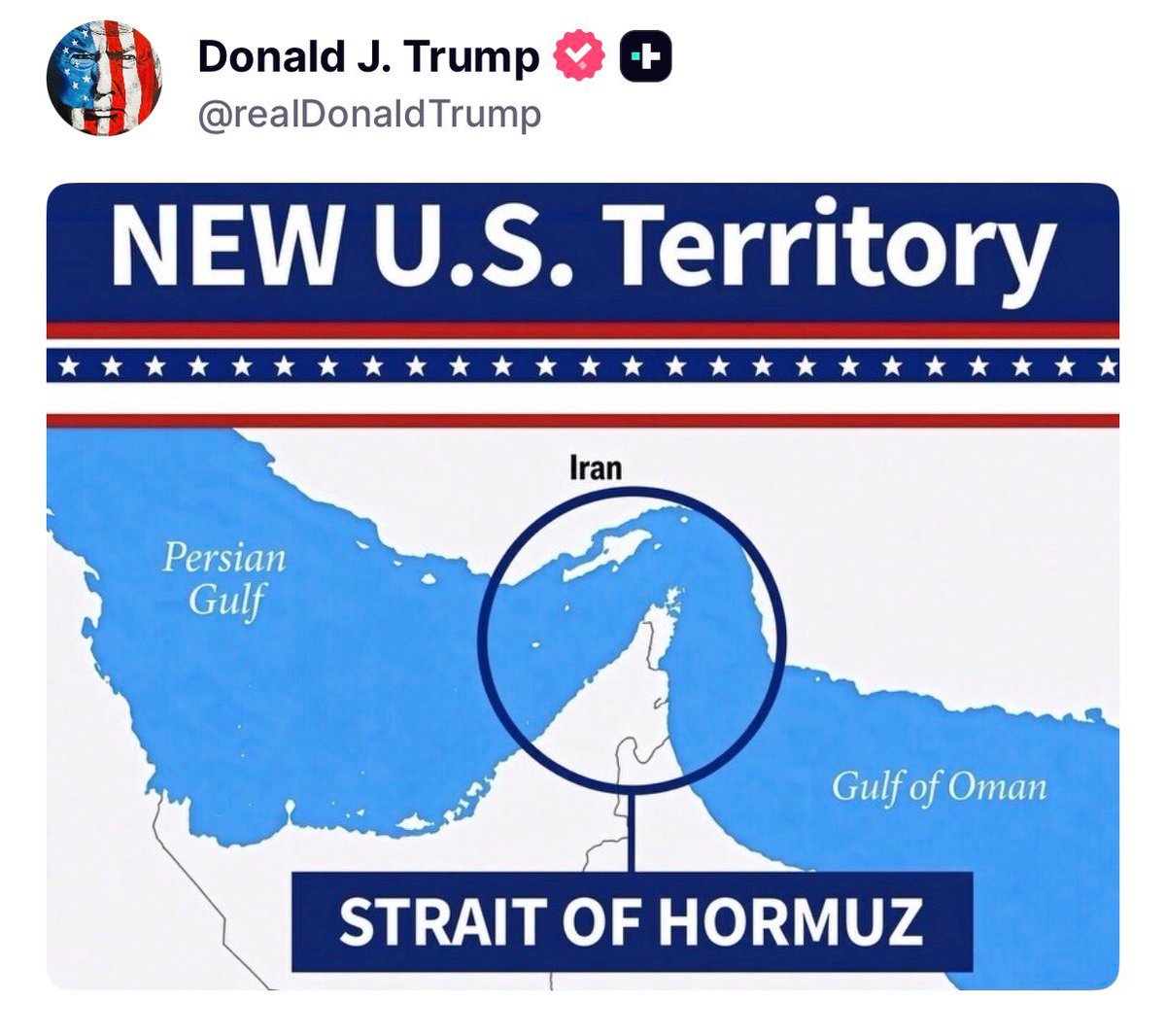
Jan ObergTFF director ☮️ When this morning – August 19, 2026 – I saw the above new US Trump map, I came to think of Frank Zappa, The Mothers of Invention, who said that politics is the entertainment division of the Military-Industrial Complex. That formulation beats many academic analyses – as you will have understood […]
A Civilizational Interpretation of the West’s Body Politic Pascal Lottaz Associate professor at Ritsumeikan University in Kyoto and TFF Board member August 25, 2026 “How do we explain the self-defeating and self-harming policies of Western states? Europe seems to be happily deindustrializing, the US proxy war in Ukraine is killing hundreds of thousands (if not millions) […]
August 24, 2026 Lena Petrova & Jan Oberg I am truly happy and honoured to have been invited by Lena to her unique channel, World Affairs In Context where she has over 600,000 subscribers. She covers a very wide range of global themes, based not least on her own deep and broad knowledge of economics. I want […]

Recent Articles

Jan ObergTFF director ☮️ When this morning – August 19, 2026 – I saw the above new US Trump map, I came to think of Frank Zappa, The Mothers of Invention, who said that politics is the entertainment division of the Military-Industrial Complex. That formulation beats many academic analyses – as you will have understood […]
A Civilizational Interpretation of the West’s Body Politic Pascal Lottaz Associate professor at Ritsumeikan University in Kyoto and TFF Board member August 25, 2026 “How do we explain the self-defeating and self-harming policies of Western states? Europe seems to be happily deindustrializing, the US proxy war in Ukraine is killing hundreds of thousands (if not millions) […]
August 24, 2026 Lena Petrova & Jan Oberg I am truly happy and honoured to have been invited by Lena to her unique channel, World Affairs In Context where she has over 600,000 subscribers. She covers a very wide range of global themes, based not least on her own deep and broad knowledge of economics. I want […]

TFF on Substack

Discover more from TFF Transnational Foundation & Jan Oberg.

Most Popular

Jan ObergTFF director ☮️ When this morning – August 19, 2026 – I saw the above new US Trump map, I came to think of Frank Zappa, The Mothers of Invention, who said that politics is the entertainment division of the Military-Industrial Complex. That formulation beats many academic analyses – as you will have understood […]
A Civilizational Interpretation of the West’s Body Politic Pascal Lottaz Associate professor at Ritsumeikan University in Kyoto and TFF Board member August 25, 2026 “How do we explain the self-defeating and self-harming policies of Western states? Europe seems to be happily deindustrializing, the US proxy war in Ukraine is killing hundreds of thousands (if not millions) […]
August 24, 2026 Lena Petrova & Jan Oberg I am truly happy and honoured to have been invited by Lena to her unique channel, World Affairs In Context where she has over 600,000 subscribers. She covers a very wide range of global themes, based not least on her own deep and broad knowledge of economics. I want […]
Read More
HQAB7NMWUAA1gSk
Jan ObergTFF director ☮️ When this morning – August 19, 2026 – I saw the above new US Trump map, I came to think of Frank Zappa, The Mothers of Invention, who said that politics is the entertainment division of the Military-Industrial Complex. That formulation beats many academic analyses – as you will have understood […]
21b7244b-c83e-46c1-ba23-556b21b9a0a8_1536x1024
A Civilizational Interpretation of the West’s Body Politic Pascal Lottaz Associate professor at Ritsumeikan University in Kyoto and TFF Board member August 25, 2026 “How do we explain the self-defeating and self-harming policies of Western states? Europe seems to be happily deindustrializing, the US proxy war in Ukraine is killing hundreds of thousands (if not millions) […]
Screenshot-2026-08-22-011310
August 24, 2026 Lena Petrova & Jan Oberg I am truly happy and honoured to have been invited by Lena to her unique channel, World Affairs In Context where she has over 600,000 subscribers. She covers a very wide range of global themes, based not least on her own deep and broad knowledge of economics. I want […]
p_mccartney_poem
 Jan Oberg’s storyof how he met Sir Paul Liverpool – where else to meet Paul McCartney? Paul’s old class mate and TFF Associate, Jonathan Power introduced me to Paul McCartney in Liverpool at an informal reception. It was held at what used to be their school, now the Liverpool Institute for Performing Arts and we were there to celebrate that Jonathan had written Amnesty International’s 40th Anniversary book. This happy event for “righting wrongs and writing songs” gave me an opportunity to meet Paul and tell him about TFF and get straight to the matter: would he consider making a donation in support of our work for peace? While I was probably the only one with such a wish that day, I was certainly not the only one who wanted to shake hands and talk with him. In the last minutes before Paul was to leave, Jonathan brought us together and we got about three...
TreeNuke
It is time for research, media, politics and citizens to stop and think: What is it we do too much and what is it we do too little Jan Oberg June 27, 2026 We live in a time saturated with negative energy. Accidents dominate headlines, bad news is good news, and social media are full […]
girl-5894831_1280
Below are TFF-related media mentions, comments, videos and social media posts published elsewhere but not on this homepage. We happen to catch and list only a fraction. Regarding video comments and debates, we recommend that you go to the TFF Video Channel on Substack where many of them are reproduced. Jan Oberg is a contributor to China Daily – 52 million daily clicks – and Global Times, CGTN and CCTV (the national television), China Investment, Xinhua News Agency and several others. Articles and videos on these media very often multiply into countless Chinese (and Western media) that re-post them from these main media. Thanks to The China Academy, his analyses, interviews and comments are frequently posted on YouTube channels such as Thinkers Forum and Wave Media. These videos are often re-posted on Bilibili (China’s YouTube), the China Content Center on TikTok, and on the Chinese edition of TikTok, Douyin.com. This means reaching hundreds of millions of viewers worldwide over a year. While there are too many to catch on all these...