
Africa can still be on the up

Africa is suffering a double whammy after many years of success. The Coronavirus, while not taking down great numbers of people like in Europe, Asia and the Americas, has had a severe impact by curbing its exports in the face of the formers’ severe economic depression.

For example, flowers grown in Kenya and Ethiopia have been particularly hit. Kenya’s flower industry employs up to 70,000 people. Ethiopia’s horticulture provides 180,000 jobs.

Kenya’s overnight exports of cut flowers to Europe have been worth almost 770,000 US dollars a year, up from 134 million in 2000. Now sales are on their way to rock-bottom.

At the same time parts of East Africa have been hit by plagues of locusts, the likes of which have not been seen for over 70 years. They eat everything that comes their way. For the first time in a decade in Africa, many people are going hungry in countries that had had no trouble feeding all.

Young, newly unemployed, people in the cities have been pushed to return home to their family villages and take up the hoe.

Many are trying to migrate into Europe, although it is not in the numbers that the over-reacting media suggest. Only 2.5% of Africans live abroad compared with the global average of migrants living abroad, 3.5%.

Even so, there are many reasons for hope. Before these calamities struck Africa was beginning to bounce. Africa had six of the world’s ten fastest-growing economies.

Over the past decade, half of sub-Saharan Africa has grown at 5-6% a year. Some, such as Ethiopia, have seen a growth of 10% a year, the highest in the world.

There is no good reason why Africa should not return to that benign state once the northern part of the world gets on top of the Coronavirus. A silver lining is that the Coronavirus has been well contained in Africa.

This is partly because Africa had time to see it coming and got itself well organized to test and trace. Second, densely populated West Africa had experienced Ebola and had learned from that. When Ebola raged, Nigeria, Africa’s most populated country, managed to keep deaths down to seven. It was well organized – in a way that shames Europe’s and North America’s response today.

Africa’s eyes are still set on its future. In August last year, African leaders announced the creation of a continent-wide free trade area. If successful over the next decade it will bring together 1.3 billion people in a 3.4 billion US dollar economic zone.

Already the “young continent”, with 60% of its population below the age of 25, has the highest rate of private entrepreneurship in the world. 22% of working age-Africans have launched new businesses. This compares with 13% in Asia and 19% in Latin America. More than 400 African companies already take in at least 1 billion dollars in annual revenue.

BBC World runs a weekly program on African business. New viewers will be struck by how much the African economy has going for it.

Mobile phone ownership has grown at a faster rate than anywhere else. 20% are smartphones enabling users to leapfrog into the modern age.

In some parts of Africa, one can visit villages buried in the countryside which are using smartphones to transfer money and to get advice from doctors and nurses living in the big city. This is a fast-growing phenomenon.

The Chinese are making great inroads into Africa – although not as much as is often reported. It makes about 20% of total outside investment. It has been estimated that the Chinese have created 10,000 businesses in Africa.

India, Turkey, the UK and the European Union invest more. Regrettably, US investment, trade and aid have fallen.  The EU has announced that it will give €40 billion in grants from 2021 to 2027, building on Germany’s “Marshall Plan for Africa”, launched in 2017.

Political interest and diplomacy are responding to this economic advance. According to a study made by the University of Denver more than 320 embassies and consulates were opened in Africa between 2010 and 2016. Turkey alone opened 26.

The Turkish president Recep Tayyip Erdogan has paid more than 30 visits to the continent. Emmanuel Macron of France has made 10 visits; Narendra Modi of India 8 times. But Barack Obama only visited three times during his presidency despite having a Kenyan father. Donald Trump has not visited once.

Turkish Airlines now flies to 50 African destinations, nearly every country. Ethiopian Airlines, Africa’s premier airline, which has a low accident rate, comparable to European airlines, has rapidly added to its worldwide destinations. (Sometimes its planes are staffed by all-female Ethiopian crews.)

Over the last decade, Africa has seen a return to democracy, (admittedly some countries have gone backwards). The democracies have higher rates of national income growth.

Wars have decreased.

Even the Congo after decades of conflict has gone almost quiet. Increasingly, countries have sounder economic policies- although it is tragic that Nigeria is not one of them after the sensible and effective years of President Olusegun Obasanjo when all looked possible. Three presidents later, the present-day economic and financial policy is a mess.

Primary education has grown fast. Girls are being educated at a steady pace. This should bring down the birth rate, forestalling those prophets of doom who predict an over-fast population growth that swamps economies.

A former president of South Africa, Thabo Mbeki, spoke of the present being “the African century”. There is no good reason why it shouldn’t be, despite the present-day double whammy.

If you think this article was useful, reward TFF with a dollar or two

[paypal-donation]
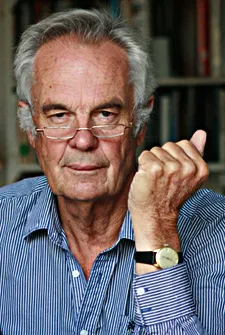
Foreign affairs columnist, film-maker and author

Share

Leave a Reply

Your email address will not be published. Required fields are marked *

Related Posts

The MIMAC – Military-Industrial-Media-Academic Complex – drives the world’s rampant militarism and wars without end. Here is a short reflection of how it works against all interests of humanity. #5 deals with why there is no real enemy or threat images/analysis. It’s all ex-post constructions. And, btw, theTFF Peace Pulse is now on Rumble.
Jan Oberg, TFF director April 28, 2026 In this third TFF Peace Pulse, I make the important distinction between the violence and the conflict that violence is a symptom of. If you want peace, focus on the underlying conflict because that is the key to resolution, peacemaking, and a better future for the parties. The West is obsessed with violence, just look around you – and 90+ per cent of the public debate is about military issues and other violence – totally wasted for peace. These Peace Pulses will only be published here a few times. You will also not find them on YouTube and Vimeo because both platforms have blocked TFF and me; you know, peace is dangerous these days. Most TFF’s videos since 2007 are now on Rumble.
In contrast to most, we’ll bring alternatives, solutions, hope and strategies for a better future. Times are dangerous, yes, but that only intensifies the need for constructive thinking and action! Jan Oberg, TFF director April 13, 2026 The new TFF Peace Pulse uses video messages in a new way: Max 3-5-minute-long comments, ideas or perhaps mini-lectures, all about peace – positive peace. We launch them today on April 13, 2026 with a carefully crafted visual aesthetic fitting the content. We hope to publish them regularly from now on. We launch Peace Pulse (PP) – for a number of reasons. The world is in chaos, and there are countless reasons to feel concerned, frustrated, even angry. The atmosphere is saturated with doom and gloom, with negative energy and rear‑mirror thinking, while vision, imagination, alternatives, strategies and genuine future‑mindedness remain in short supply. And without them, we simply can’t save the world. Looking at problems from a hundred angles will...

Recent Articles

Jan Oberg May 15, 2026 Go to this Fox News page and scroll the whole way down: President Donald Trump tells the world that his meeting with President Xi Jinping yielded a lot of very concrete political and economic results – of course, only where the Chinese side, according to him, agreed with him. He does not mention the Taiwan issue, but Secretary of State, Marco Rubio, says that it did not feature prominently in their talks and that the US policy on Taiwan has not changed. Then go to China Daily – or Global Times – and you will see that for the Chinese it is framework, principles, structure of cooperation etc. that matters – all embedded in the overall idea of “constructive bilateral relationship of strategic stability.” Nowhere is any concrete agreement or deal – all that Trump refers to – mentioned. At the general level, this gives you insights into the very different social...
Lena Petrova of “World Affairs In Context” with more than half a million subscribers on YouTube wanted to explore what a peace researcher like me has to say about, among other things, the First and the Second Cold War and why eethics has disappeared from politics. I am particularly happy about this conversation that also yielded an amazing number of very appreciative comments on YouTube. No doubt, people are longing for alternatives, including peace perspectives.
The MIMAC – Military-Industrial-Media-Academic Complex – drives the world’s rampant militarism and wars without end. Here is a short reflection of how it works against all interests of humanity. #5 deals with why there is no real enemy or threat images/analysis. It’s all ex-post constructions. And, btw, theTFF Peace Pulse is now on Rumble.

TFF on Substack

Discover more from TFF Transnational Foundation & Jan Oberg.

Most Popular

Jan Oberg May 15, 2026 Go to this Fox News page and scroll the whole way down: President Donald Trump tells the world that his meeting with President Xi Jinping yielded a lot of very concrete political and economic results – of course, only where the Chinese side, according to him, agreed with him. He does not mention the Taiwan issue, but Secretary of State, Marco Rubio, says that it did not feature prominently in their talks and that the US policy on Taiwan has not changed. Then go to China Daily – or Global Times – and you will see that for the Chinese it is framework, principles, structure of cooperation etc. that matters – all embedded in the overall idea of “constructive bilateral relationship of strategic stability.” Nowhere is any concrete agreement or deal – all that Trump refers to – mentioned. At the general level, this gives you insights into the very different social...
Lena Petrova of “World Affairs In Context” with more than half a million subscribers on YouTube wanted to explore what a peace researcher like me has to say about, among other things, the First and the Second Cold War and why eethics has disappeared from politics. I am particularly happy about this conversation that also yielded an amazing number of very appreciative comments on YouTube. No doubt, people are longing for alternatives, including peace perspectives.
The MIMAC – Military-Industrial-Media-Academic Complex – drives the world’s rampant militarism and wars without end. Here is a short reflection of how it works against all interests of humanity. #5 deals with why there is no real enemy or threat images/analysis. It’s all ex-post constructions. And, btw, theTFF Peace Pulse is now on Rumble.
Read More
Screenshot-2026-05-15-103534
Jan Oberg May 15, 2026 Go to this Fox News page and scroll the whole way down: President Donald Trump tells the world that his meeting with President Xi Jinping yielded a lot of very concrete political and economic results – of course, only where the Chinese side, according to him, agreed with him. He does not mention the Taiwan issue, but Secretary of State, Marco Rubio, says that it did not feature prominently in their talks and that the US policy on Taiwan has not changed. Then go to China Daily – or Global Times – and you will see that for the Chinese it is framework, principles, structure of cooperation etc. that matters – all embedded in the overall idea of “constructive bilateral relationship of strategic stability.” Nowhere is any concrete agreement or deal – all that Trump refers to – mentioned. At the general level, this gives you insights into the very different social...
Screenshot-2026-05-12-104023
Lena Petrova of “World Affairs In Context” with more than half a million subscribers on YouTube wanted to explore what a peace researcher like me has to say about, among other things, the First and the Second Cold War and why eethics has disappeared from politics. I am particularly happy about this conversation that also yielded an amazing number of very appreciative comments on YouTube. No doubt, people are longing for alternatives, including peace perspectives.
Screenshot-2026-04-13-154551 (2)
The MIMAC – Military-Industrial-Media-Academic Complex – drives the world’s rampant militarism and wars without end. Here is a short reflection of how it works against all interests of humanity. #5 deals with why there is no real enemy or threat images/analysis. It’s all ex-post constructions. And, btw, theTFF Peace Pulse is now on Rumble.
Screenshot-2026-04-13-154551 (1)
Jan Oberg, TFF director April 28, 2026 In this third TFF Peace Pulse, I make the important distinction between the violence and the conflict that violence is a symptom of. If you want peace, focus on the underlying conflict because that is the key to resolution, peacemaking, and a better future for the parties. The West is obsessed with violence, just look around you – and 90+ per cent of the public debate is about military issues and other violence – totally wasted for peace. These Peace Pulses will only be published here a few times. You will also not find them on YouTube and Vimeo because both platforms have blocked TFF and me; you know, peace is dangerous these days. Most TFF’s videos since 2007 are now on Rumble.
Screenshot-2026-04-13-154551
In contrast to most, we’ll bring alternatives, solutions, hope and strategies for a better future. Times are dangerous, yes, but that only intensifies the need for constructive thinking and action! Jan Oberg, TFF director April 13, 2026 The new TFF Peace Pulse uses video messages in a new way: Max 3-5-minute-long comments, ideas or perhaps mini-lectures, all about peace – positive peace. We launch them today on April 13, 2026 with a carefully crafted visual aesthetic fitting the content. We hope to publish them regularly from now on. We launch Peace Pulse (PP) – for a number of reasons. The world is in chaos, and there are countless reasons to feel concerned, frustrated, even angry. The atmosphere is saturated with doom and gloom, with negative energy and rear‑mirror thinking, while vision, imagination, alternatives, strategies and genuine future‑mindedness remain in short supply. And without them, we simply can’t save the world. Looking at problems from a hundred angles will...
IMG_5165 (1)
PART II — Publishing Peace in a System That Prioritises Militarism Jan Oberg, TFF director April 10, 2026 How TFF Maintains a Daily Voice in a Digital World Built for Noise This article is part of the series “TFF at 40″ and it invites you to learn about Four Decades of Publishing Peace. It takes a look at how a small, people‑financed peace foundation has communicated across four generations of technology — from wax stencils and fax machines to mass email and Substack — and why TFF continues to publish every single day in a system that rewards noise, conflict, and militarism. ◆ What it means to publish peace every single day in a digital system built for 24/7 news and other noise, confrontation, and militarism. How TFF’s independence, continuity, and global readership defy algorithms, donor cycles, and Western media censorhip — and why the Majority World keeps listening. When the...


