The IMF Korea Bailout

In late November 1997 following the dramatic plunge of the Korean won on the foreign exchange market, an IMF team of economists led by Mr. Hubert Neiss was rushed to Seoul. Its mandate: negotiate the terms of a “Mexican-style bail-out” with a view to “restoring economic health and stability”.

An important precedent had been set: the IMF’s standard “economic medicine” (routinely imposed on the Third World and Eastern Europe) had been launched for the first time in an advanced industrial economy… The details of the economic reform programme, however, had already been decided in advance in consultation with the US Treasury, Wall Street’s commercial and merchant banks as well as with major banking interests in Japan and the European Union.

A Letter of Intent (“Memorandum on the Economic Program”) was put together in a hurry on behalf of the government with virtually no analysis of the broader causes of the financial meltdown. (The “policy solutions” had already been decided upon: no analysis was deemed necessary).

A covering letter was drafted with the help of IMF officials dated December 3 and signed by the Governor of the Bank of Korea, Mr. Kyung shik Lee and the Minister of Finance Mr. Chan yuel Lim. The Memorandum included the usual Policy Framework Paper (PFP) imposed by the Bretton Woods institutions on indebted Third World nations. (See International Monetary Fund, Korea, Request for Stand-by Arrangement, Washington, December 3, 1997, The text of the IMF Agreement together with the “Memorandum on the Economic Program” was published by Chosun Korea, Seoul, December 1997 at WWW.chosun.com).

The Managing Director Mr. Michel Camdessus was in Seoul during the final days of negotiation; the IMF’s mission was briskly wrapped up on December 3d after a one week stint; a “proposed decision” on the stand-by arrangement had already been drafted by IMF staff for adoption by the IMF Executive Board on the following day (December 4th). In close consultation with IMF negotiators, the World Bank and the Asian Development Bank had also sent in their own teams. A World Bank package with stringent conditionalities on “financial governance” was announced on December 18th.


A Safety Net for the Creditors
On Christmas Eve December 24th, officials from six leading US commercial banks including Chase, Bank America, Citicorp and J. P. Morgan were called in for talks at the Federal Reserve Bank of New York. The “big five” New York merchant banks (Goldman Sachs, Lehman Brothers, Morgan Stanley and Salomon Smith Harney) were also involved in these discussions on South Korea’s short-term debt. (Financial Times, 27-28 December 1997, p. 3). Almost simultaneously, some 80 European creditor banks under the chairmanship of the Deutsche Bank were meeting behind closed doors in Frankfurt while Japan’s big ten banks (which account for a large portion of Korea’s short term debt) were involved in high level discussions in Tokyo with Mr. Kyong shik Lee, Governor of the Bank of Korea.


No Capital Inflows under the Bailout
The bail-out (to be financed by G7 governments, the IMF, the World Bank and the Asian Development Bank) will evidently not result in capital inflows into Korea: it largely serves the interests of the international banking community, enabling US, European and Japanese banks to cash in on Korea’s short term debt. In turn, Korea will be locked into the servicing of this debt under the Agreement until the year 2006.


The Macro-Economic Agenda
The IMF programme derogates Korea’s economic sovereignty, it plunges the country virtually overnight into a deep recession. The social impact is devastating. The standard of living has collapsed; the IMF programme depresses wages and creates massive unemployment. (Wages expressed in US dollars have already been cut in half as a result of the devaluation). The Agreement also requires the government to introduce “labour market flexibility” including procedures for compressing wages and shedding “surplus workers”.

The IMF Agreement consists in tearing down Korea’s banking system while creating conditions which enable the speedy acquisition of the most profitable industrial assets by foreign capital. The Agreement lifts the ceiling on individual foreign ownership to 50 percent by the end of 1997 and 55 percent by February 1998. The IMF Agreement requires further trade liberalisation as well as the opening up of the domestic bond market to foreign capital. It also marks the demise of central banking in Asia’s most vibrant economy.

Under legislation demanded by the IMF, the Agreement allows for 100 percent ownership by foreign merchant banks: “foreign financial institutions will be allowed to purchase equity in domestic banks without restriction” (Memorandum, para. 32, p. 44).


Derogating Korea’s Sovereignty
A de facto “parallel government” has been installed. The Bank of Korea (BOK) is to be reorganised, the powers of the Ministry of Finance are to be redefined. Under the bail-out, fiscal and monetary policy will be dictated by external creditors. Monetary policy under the IMF’s stewardship will be tightened. Government spending on social programmes and infrastructure will be curtailed.


Enforcing Enabling Legislation through Financial Blackmail
During a special session of the legislature on December 23d “lawmakers endorsed the four government motions concerning the IMF rescue plans”. (Choe Seung chul, Assembly Opens to Legislate Key Financial reforms”, Korea Herald, 23 December 1997). Legislation following IMF guidelines was approved which dismantles the extensive powers of the Ministry of Finance while also stripping the Ministry of its financial regulatory and supervisory functions.

South Korea’s Parliament has been transformed into a “rubber stamp”. Enabling legislation is enforced through “financial blackmail”: if the legislation is not speedily enacted according to the IMF’s deadlines, the disbursements under the bail-out will be suspended with the danger of renewed currency speculation.

The IMF had also demanded the speedy passage of legislation which will provide for “central bank independence”. The latter provision will thwart the financing of economic development “from within” through monetary policy –a process of State supported credit which has largely been instrumental in Korea’s dynamic industrial development over the last 30 years.

The central bank has been crushed. Its foreign exchange reserves have been pillaged by institutional speculators. In late November, the Bank of Korea’s reserves had plunged to an all time low of 7.26 billion dollars. Under the IMF Agreement which freezes the supply of domestic credit, Korean corporations will increasingly rely on foreign lending institutions (para. 28) (The latter are also routinely involved in speculating against the Korean won).


The Newly Elected President Supports the IMF
President elect Kim Dae-jung had warned in a press conference during the electoral campaign on December 5th (following the IMF Executive Board decision of December 4th) that “…now foreign investors can freely buy our entire financial sector, including 26 banks, 27 securities firms, 12 insurance companies and 21 merchant banks, all of which are listed on the Korean Stock Exchange, for just 5.5 trillion won,’ that is, $3.7 billion”. (Michael Hudson, “Draft for Our World”, Dec. 23, 1997). But upon winning the election on Dec. 18th, Kim announced his unbending support for the IMF: “I will boldly open the market. I will make it so that foreign investors will invest with confidence”.


The IMF’s Bankruptcy Programme
The devaluation of the won has generated a deadly chain of bankruptcies affecting both financial and industrial enterprises. The devaluation has also contributed to triggering sharp rises in the prices of consumer necessities.

Ironically, rather than restoring “economic stability”, the IMF programme has served to heighten the impact of the devaluation leading to a further string of bankruptcies. A so-called “exit policy” (ie. bankruptcy programme) has been set in motion: the operations of some nine “troubled” merchant banks were suspended on December 2 prior to the completion of the IMF mission. In consultation with the IMF, the government is to “prepare a comprehensive action programme to strengthen financial supervision and regulation…” (Agreement, para. 25).


Dismantling the Chaebols
The IMF Agreement has created conditions which facilitate so-called “friendly” mergers and acquisitions by foreign capital. The automotive group Kia, among Korea’s largest conglomerates declared insolvency. A similar fate has affected the Halla Group involved in shipbuilding, engineering and auto-parts.

The IMF programme contributes to fracturing the chaebols which are now invited to establish “strategic alliances with foreign firms” (meaning their eventual control by foreign capital). In turn, selected Korean banks will “be made more attractive” to potential foreign buyers by transferring their non performing loans to a public bail out fund: the Korea Asset Management Corporation (KAMC).

The freeze on central bank credit imposed by the IMF prevents the Central Bank from coming to the rescue of “troubled” enterprises or banks. The agreement stipulates that “such merchant banks that are unable to submit to appropriate restructuring plans within 30 days will have their licences revoked (Agreement, para. 20, p. 8).


Crippling Domestic Enterprises
The freeze on credit demanded by the IMF has contributed to crippling the construction industry and the services economy: “banks are increasingly reluctant to provide loans to businesses while bracing for the central bank’s tighter money supply” ( Sah Dong seok, “Credit Woes Cripple Business Sectors”, Korea Times, 28 December 1997). According to one observer, more than 90 percent of construction companies (with combined debts of $20 billion dollars to domestic financial institutions) are in danger of bankruptcy” (Song Jung tae, “Insolvency of Construction Firms rises in 1998”, Korea Herald, 24 December 1997).

The contraction of domestic purchasing power (ie. lower wages and higher unemployment) has also sent “chills through the nations perennially cash-thirsty small businesses”. The government concurs that “quite a number of smaller enterprises [which rely on the internal market] will go under in the coming months”. (Korean Herald, 5 December 1997). Some 15,000 bankruptcies are expected in 1998.


Western Business Goes on a Shopping Spree
Korea’s high tech and manufacturing economy is up for grabs. Western corporations have gone on a shopping spree with a view to buying up industrial assets at rock-bottom prices. The devaluation has already depressed the dollar value of Korean assets, the IMF sponsored reforms should contribute to a further slide.

Already, the Hanwha Group is selling its oil refineries to Royal Dutch/Shell after having sold half its chemical joint venture to BASF of Germany.”( Michael Hudson, op cit). “Samsung Electronics, the world’s largest producer of computer memory chips, has seen its market value fall to $2.4 billion, down from $6.75 billion at the beginning of October before the crash was engineered… It’s now cheaper to buy one of these companies than buy a factory — and you get all the distribution, brand-name recognition and trained labor force free in the bargain”… (Michael Hudson, op cit).

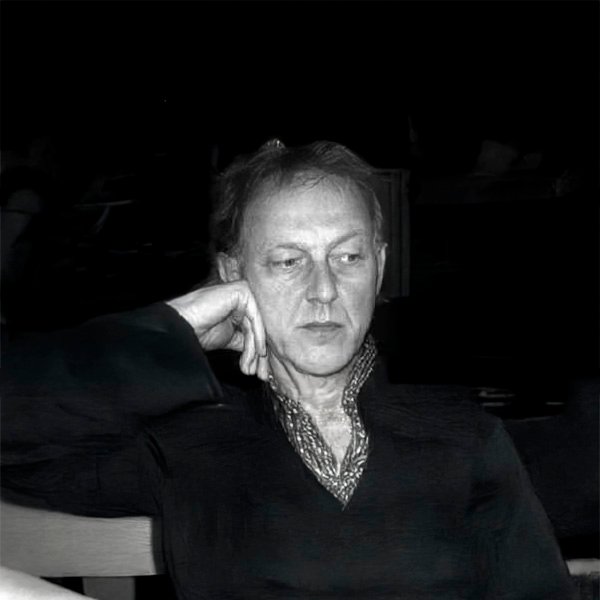
Professor Chossudovsky joined TFF as adviser in 1999.

Share

Leave a Reply

Your email address will not be published. Required fields are marked *

Related Posts

“En dag som berättigar till fest”, utropade den London-baserade al-Quds al-Arabi efter FN:s eldupphörresolution, “eftersom detta är första gången som Israel accepterar ett FN-beslut från en position som besegrad och inte som segrare”. Att ett arabisk-israeliskt krig för en gångs skull slutat med arabisk seger, är en helt dominerade åsikt i arabiska medier. Al-Quds al-Arabi tillåter sig att drömma om att det israeliska nederlaget skall leda till massflykt från Israel. Men i nästa andetag påminner tidningen om att Israel aldrig brukar genomföra sina internationella åtaganden och varnar för att förlorarna, liksom tidigare, kan hämnas genom att provocera fram inbördeskrig i Libanon. Med tanke på de otaliga massmediala vittnesmålen om det libanesiska folkets eniga motståndskraft förefaller risken för inre stridigheter i det sargade landet just nu liten. Men visst kan man urskilja nyansskillnader i libanesiska tidningar. Vänsterorganet al-Safir uppfattar FN-resolutionen som en komplott i syfte att rädda Israel från ännu större...
A donors’ conference, co-sponsered by the Burundian government, the Belgian government and UNDP will be held in Brussels January 12-13, 2004. This PressInfo offers a perspective on its urgency. See also TFF’s new Burundi Forum. Imagine for a moment that politics is about goodness and generosity. Where could a few million dollars of government aid and a few civil society organisations – guaranteed – win the hearts of extremely poor millions who want peace and already work hard to achieve it after 10 years of war and genocide? The answer is Burundi, the heart-shaped country in the heart of Africa. Burundi makes a good story from Africa. But what does the world know about Burundi, its problems and struggles? Burundi’s tough reality Here are the basic facts. Burundi’s population is about 7 million and it is number 171 out of the 175 countries on the UNDP’s human development index. Their life...
Peace is promoted by constructive proposals and dialogue Four preceding PressInfos have expressed concern over — and criticised — the ongoing, militarisation of the EU. Some will say: but there are no alternatives. We believe that there are always alternatives, that democracies are characterised by alternatives and choice, and that openly discussed alternatives will improve the quality and legitimacy of society’s decision–making. In addition, it is an intellectual and moral challenge to not only criticise but also be constructive. If we only tell people that we think they are wrong, they are not likely to listen. However, if we say: what are your views on this set of ideas and steps? — we may sometimes engage them in dialogue and sow a seed. Most people in power circles live their daily lives in in a time frame and a social space where certain ideas, viewpoints and concepts are just not...

Recent Articles

“En dag som berättigar till fest”, utropade den London-baserade al-Quds al-Arabi efter FN:s eldupphörresolution, “eftersom detta är första gången som Israel accepterar ett FN-beslut från en position som besegrad och inte som segrare”. Att ett arabisk-israeliskt krig för en gångs skull slutat med arabisk seger, är en helt dominerade åsikt i arabiska medier. Al-Quds al-Arabi tillåter sig att drömma om att det israeliska nederlaget skall leda till massflykt från Israel. Men i nästa andetag påminner tidningen om att Israel aldrig brukar genomföra sina internationella åtaganden och varnar för att förlorarna, liksom tidigare, kan hämnas genom att provocera fram inbördeskrig i Libanon. Med tanke på de otaliga massmediala vittnesmålen om det libanesiska folkets eniga motståndskraft förefaller risken för inre stridigheter i det sargade landet just nu liten. Men visst kan man urskilja nyansskillnader i libanesiska tidningar. Vänsterorganet al-Safir uppfattar FN-resolutionen som en komplott i syfte att rädda Israel från ännu större...
Greenland – the world’s largest island, a continent of its own with only 57.000 inhabitants. I visited it for the first time in May 2005. I flew across the inland ice to Nuuk, the tiny capital with some 14.000 inhabitants. I was overwhelmed by the pride and kindness of everyone I met as well as by the unique natural beauty. Unfortunately, due to weather conditions during my ten-day stay I could get nowhere else but Nuuk. Fortunately, however, among those I met was Gitte Arvegaard, a Danish lawyer and negotiator employed by the local government, Greenland Home Rule. She turned out to be an enthusiastic photographer with a lot of pictures taken during various trips around Greenland. So this Greeland series is the result of our cooperative effort. We both hope you enjoy it and are stimulated to visit Greenland – about which you may read more here. Finally, if you want to...
 Jan Oberg’s storyof how he met Sir Paul Liverpool – where else to meet Paul McCartney? Paul’s old class mate and TFF Associate, Jonathan Power introduced me to Paul McCartney in Liverpool at an informal reception. It was held at what used to be their school, now the Liverpool Institute for Performing Arts and we were there to celebrate that Jonathan had written Amnesty International’s 40th Anniversary book. This happy event for “righting wrongs and writing songs” gave me an opportunity to meet Paul and tell him about TFF and get straight to the matter: would he consider making a donation in support of our work for peace? While I was probably the only one with such a wish that day, I was certainly not the only one who wanted to shake hands and talk with him. In the last minutes before Paul was to leave, Jonathan brought us together and we got about three...

TFF on Substack

Discover more from TFF Transnational Foundation & Jan Oberg.

Most Popular

“En dag som berättigar till fest”, utropade den London-baserade al-Quds al-Arabi efter FN:s eldupphörresolution, “eftersom detta är första gången som Israel accepterar ett FN-beslut från en position som besegrad och inte som segrare”. Att ett arabisk-israeliskt krig för en gångs skull slutat med arabisk seger, är en helt dominerade åsikt i arabiska medier. Al-Quds al-Arabi tillåter sig att drömma om att det israeliska nederlaget skall leda till massflykt från Israel. Men i nästa andetag påminner tidningen om att Israel aldrig brukar genomföra sina internationella åtaganden och varnar för att förlorarna, liksom tidigare, kan hämnas genom att provocera fram inbördeskrig i Libanon. Med tanke på de otaliga massmediala vittnesmålen om det libanesiska folkets eniga motståndskraft förefaller risken för inre stridigheter i det sargade landet just nu liten. Men visst kan man urskilja nyansskillnader i libanesiska tidningar. Vänsterorganet al-Safir uppfattar FN-resolutionen som en komplott i syfte att rädda Israel från ännu större...
Greenland – the world’s largest island, a continent of its own with only 57.000 inhabitants. I visited it for the first time in May 2005. I flew across the inland ice to Nuuk, the tiny capital with some 14.000 inhabitants. I was overwhelmed by the pride and kindness of everyone I met as well as by the unique natural beauty. Unfortunately, due to weather conditions during my ten-day stay I could get nowhere else but Nuuk. Fortunately, however, among those I met was Gitte Arvegaard, a Danish lawyer and negotiator employed by the local government, Greenland Home Rule. She turned out to be an enthusiastic photographer with a lot of pictures taken during various trips around Greenland. So this Greeland series is the result of our cooperative effort. We both hope you enjoy it and are stimulated to visit Greenland – about which you may read more here. Finally, if you want to...
 Jan Oberg’s storyof how he met Sir Paul Liverpool – where else to meet Paul McCartney? Paul’s old class mate and TFF Associate, Jonathan Power introduced me to Paul McCartney in Liverpool at an informal reception. It was held at what used to be their school, now the Liverpool Institute for Performing Arts and we were there to celebrate that Jonathan had written Amnesty International’s 40th Anniversary book. This happy event for “righting wrongs and writing songs” gave me an opportunity to meet Paul and tell him about TFF and get straight to the matter: would he consider making a donation in support of our work for peace? While I was probably the only one with such a wish that day, I was certainly not the only one who wanted to shake hands and talk with him. In the last minutes before Paul was to leave, Jonathan brought us together and we got about three...
Read More
Imagen-thumbnail-The-Transnational-1
“En dag som berättigar till fest”, utropade den London-baserade al-Quds al-Arabi efter FN:s eldupphörresolution, “eftersom detta är första gången som Israel accepterar ett FN-beslut från en position som besegrad och inte som segrare”. Att ett arabisk-israeliskt krig för en gångs skull slutat med arabisk seger, är en helt dominerade åsikt i arabiska medier. Al-Quds al-Arabi tillåter sig att drömma om att det israeliska nederlaget skall leda till massflykt från Israel. Men i nästa andetag påminner tidningen om att Israel aldrig brukar genomföra sina internationella åtaganden och varnar för att förlorarna, liksom tidigare, kan hämnas genom att provocera fram inbördeskrig i Libanon. Med tanke på de otaliga massmediala vittnesmålen om det libanesiska folkets eniga motståndskraft förefaller risken för inre stridigheter i det sargade landet just nu liten. Men visst kan man urskilja nyansskillnader i libanesiska tidningar. Vänsterorganet al-Safir uppfattar FN-resolutionen som en komplott i syfte att rädda Israel från ännu större...
Greenland – the world’s largest island, a continent of its own with only 57.000 inhabitants. I visited it for the first time in May 2005. I flew across the inland ice to Nuuk, the tiny capital with some 14.000 inhabitants. I was overwhelmed by the pride and kindness of everyone I met as well as by the unique natural beauty. Unfortunately, due to weather conditions during my ten-day stay I could get nowhere else but Nuuk. Fortunately, however, among those I met was Gitte Arvegaard, a Danish lawyer and negotiator employed by the local government, Greenland Home Rule. She turned out to be an enthusiastic photographer with a lot of pictures taken during various trips around Greenland. So this Greeland series is the result of our cooperative effort. We both hope you enjoy it and are stimulated to visit Greenland – about which you may read more here. Finally, if you want to...
p_mccartney_poem
 Jan Oberg’s storyof how he met Sir Paul Liverpool – where else to meet Paul McCartney? Paul’s old class mate and TFF Associate, Jonathan Power introduced me to Paul McCartney in Liverpool at an informal reception. It was held at what used to be their school, now the Liverpool Institute for Performing Arts and we were there to celebrate that Jonathan had written Amnesty International’s 40th Anniversary book. This happy event for “righting wrongs and writing songs” gave me an opportunity to meet Paul and tell him about TFF and get straight to the matter: would he consider making a donation in support of our work for peace? While I was probably the only one with such a wish that day, I was certainly not the only one who wanted to shake hands and talk with him. In the last minutes before Paul was to leave, Jonathan brought us together and we got about three...
Logo-Transnational
1942James Paul McCartney is born in Liverpool on June 18th. 1956Paul writes his first song, I Lost My Little Girl. 1957Paul meets John Lennon at St. Peter’s Church Fete, Woolton, Liverpool. He joins his first group, The Quarrymen and performs in his first gig at The New Clubmoor Hall, Liverpool, on October 18th. 1960Formation of The Beatles, who play residencies in Hamburg and at The Cavern in Liverpool. 1961First Beatles recordings issued in Germany, as the backing group for Tony Sheridan. 1962The first Beatles Parlophone recording, Love Me Do, reaches number 17 in the British charts. 1963The birth of Beatlemania. Please Please Me gives the group their first British Number 1. She Loves You cements their success. Please Please Me and With The Beatles albums released. 1964First triumphant American tour. The Beatles perform at the Royal Command Performance and release their first film, A Hard Day’s Night. Their single I...
Logo-Transnational
  Back to the series “Bujumbura, Burundi”
By JONATHAN POWER August 16, 2000 LONDON – Remember the summer of ’98? In the sweltering, torpid heat of a Roman august, charged with exhaust fumes, the international community gave its overwhelming approval to the establishment of an International Criminal Court that will enable those accused of “crimes against humanity” to be tried and, if convicted, sentenced. Only seven nations opposed or abstained from the motion, including Israel, China, India and the U.S.A. where the Pentagon had successfully waged bureaucratic guerrilla war to undermine the initially sympathetic stance of President Bill Clinton. Two years on we can now see what an epochal event that was. In a the stroke of 120 pens it changed the climate on political thuggery. After numerous half-starts and false starts ever since the Nuremberg and Tokyo trials that convicted the war criminals of the Second World War, the world at last had agreed en masse a common...


