
Civil Society Judges the Iraq War

September 23, 2005

The World Tribunal on Iraq (WTI) held its final session betweenJune 24-27. This session was the last and most elaborate of sixteen condemnations of the Iraq War held all over the world in the last two years in Barcelona, Tokyo, Brussels, Seoul, New York, London, Mumbai and other cities. The Istanbul proceedings invoked the verdicts and relied on some of the testimony from the earlier sessions; this cumulative nature of the sessions built interest among peace activists around the world, resulting in this final session having by far the strongest international flavor with respect to scope and national identity of the participants.

This cumulative process, described by organizers as “the tribunal movement,” is unique in history: Never before has a particular war produced this level of protest on a global scale – first to prevent it (the huge February 15, 2003 demonstrations, eleven million, 600 cities, eighty countries) and then to condemn its inception and conduct.

The WTI is one expression of the opposition of global civil society to the Iraq War, an initiative best understood as a contribution to “moral globalization.”

The WTI generated intense interest in Turkey, the Arab world, and on the Internet but was ignored by most of the mainstream media in Europe and the United States. In Istanbul, the WTI was treated for several days as a prominent news story. There are several explanations for this, starting with near-unanimous opposition to the Iraq War in Turkey. More relevant were the vivid connections between Turkey and the war: physical proximity, an array of adverse effects associated with events in Iraq and, more dramatically, a contradictory government posture: the refusal of the Turkish Parliament in 2003 to give in to US pressure to authorize an invasion of Iraq from Turkish territory, while the Prime Minister allowed the continuing use of the huge US air base at Incirlik for strategic operations during and after the war.

The Istanbul session was organized by an independent group of Turkish citizens, mainly women with professional careers, who somehow managed the funding, organizing, and presentation more successfully than could have been imagined. The occurrence of such an event touching on sensitive strategic relations of the Turkish government also gave concrete reality to a new confidence on the part of the Turkish citizenry in the deepening reality of democracy in the country.

The WTI was generally inspired by the Bertrand Russell tribunal held in Copenhagen and Stockholm in 1967 to protest the Vietnam War, which documented with extensive testimony the allegations of criminality associated with the American role in Vietnam. The Russell tribunal featured the participation of Jean-Paul Sartre, Simone de Beauvoir and other notable European left intellectuals. It relied on international law and morality to condemn the war but made no pretension of being a legal body, and its jury contained no international law experts. This same orientation toward law was present in the WTI, which deliberately avoidedany pretension of being a body of trained jurists reaching a legal conclusion after listening to the two sides of a contested issue.

Of course, a tribunal of this sort, when not altogether ignored, is widely criticized on one hand as a kangaroo court that ignores the other sides of the legal and political argument and, on the other, is treated as a meaningless use of a courtroom format since there is no adversary process, no enforcement powers, and no political leverage to bring to bear on the indicted governments and their leaders.

The WTI is not an organ of the state and cannot count on its judgments being implemented by such state institutions as police or prisons. And, of course, the leaders whose behavior is being described as criminal have every incentive to deny the legitimacy of the proceedings by ignoring or condemning the conclusions. But all this criticism misses the point.

The WTI is self-consciously an organ of civil society, with its own potential enforcement by way of economic boycotts, civil disobedience and political campaigns. And on the substantive issues of legality, the undertaking is designed to confirm the truth and add to the persuasiveness of the widely held allegations about the Iraq War. The WTI was not trying to discover the truth by way of political, legal and moral inquiry and debate. Its activity is based on the widely endorsed presumption that the allegations of illegality and criminality are valid with respect to the Iraq War. This makes the job of the tribunal to reinforce that conclusion as persuasively and vividly as possible.

The motivations of citizens to organize such a tribunal do not arise from uncertainty about issues of legality and morality but from a conviction that the official institutions of the state, including the United Nations, have failed to act to protect a vulnerable people against such Nuremberg crimes as aggression, violations of the laws of war and crimes against humanity. It is only because of such institutional failures in the face of ongoing suffering and abuse like that in Iraq that individuals and institutions made the immense organizational effort to put together this kind of transnational civic tribunal. We should also recall that the Nuremberg Tribunal’s enduring contribution was not finding out whether the Nazi regime had committed the crimes alleged but documenting its criminality.

The decision of the WTI was rendered by a fifteen-member Jury of Conscience, chaired by Indian novelist Arundhati Roy, and composed of prominent activists from around the world. Two Americans, David Krieger, president of the Nuclear Age Peace Foundation and Eve Ensler of Vagina Monologues fame, were jury members. The jury also included Chandra Muzaffar, Malaysia’s leading human rights advocate and noted author, as well as two internationally respected Turkish intellectual personalities, Murat Belge and Ayse Erzan.

A Panel of Advocates – coordinated by Turgut Tarhanli, dean of the Bilgi Law School in Istanbul, and myself – organized the fifty-four presentations offered to the jury. The advocates came from dvierse backgrounds.

The presentations included some incisive analyses of international law issues by such respected world experts as Christine Chinkin of the London School of Economics, and Amy Bartholomew of Carleton University, Ottawa; Barbara Olshansky, Assistant Legal Deirector of the Center for Constitutional Rights, made a gripping presentation of the gruesome record of abuse of detainees and prisoners held by the US Government since 9/11; two former assistant secretary generals of the UN (Denis Halliday & Hans von Sponeck) both of whom had resigned in the 1990s to protest the genocidal effects of UN sanctions in Iraq; accounts of the devastation and cruelty of the occupation by several seemingly credible eye-witnesses who had held important nongovernment jobs in pre-invasion Iraq; a moving presentation of why he turned against the Iraq War by Tim Goodrich, a former American soldier and co-founder of Iraq Veterans Against the War; and overall assessments of how the Iraq War fits into American ambitions for global empire by such renowned intellectuals as Samir Amin , Johan Galtung, and Walden Bello.

Their presentations combined an acute explanation of the strains on world order arising from predatory forms of economic globalization with the view that the US response to 9/11 was mainly motivated by regional and global strategic aims and only incidentally, if at all, by antiterrorism.

After compromise and debate, the jury reached a unanimous verdict that combined findings with recommendations for action. Its core conclusion condemned the Iraq War as a war of aggression in violation of the UN Charter and international law, and determined that those responsible for planning and waging it should be held criminally responsible. George W. Bush, Tony Blair, Donald Rumsfeld, Dick Cheney, Colin Powell and Paul Wolfowitz were listed in the jury verdict by name.

Less predictably, the UN was severely blamed for failing to fulfill its responsibilities to protect member states against aggression. The most controversial recommendation of the WTI supported the rights of the Iraqi people to resist an illegal occupation in forms authorized by international law.

Further recommendations specified that US/UK media be held responsible for contributing to the war of aggression, that American and British products associated with corporations doing business in Iraq, like Halliburton, British Pertroleum, and Bechtel be boycotted and that peace movement activists around the world urge the withdrawal of all foreign forces from Iraq.

The verdict – see the full text here – was framed from start to finish as a moral and political assessment of the Iraq War, and relied on the guidelines of international law to lend legal weight to what were essentially political and moral conclusions. The jury’s view of international law accords with a nearly unanimous consensus of international law experts outside the United States and Britain. In this sense, the conclusions of the WTI resemblethe expected and proper outcome in any normal criminal tribunal functioning under the authority of the state or the United Nations.

There would never have been a WTI if these procedures were able to function free of the constraints of geopolitics. Because they are unable to do so, the WTI in effect is telling the world what it should know about the moral, political, and legal character of the Iraq War, and it is telling this vital story honestly, comprehensively, and in a manner designed to motivate citizens and government to take action to end the foreign occupation of Iraq.

Arundhati Roy imparted the prevailing spirit of civic dedication and moral leadership in a press statement at the end of the final session. Her words summarize the experience for many of us: the WTI “places its faith in the consciences of millions of people across the world who do not wish to stand by and watch while the people of Iraq are being slaughtered, subjugated and humiliated.”
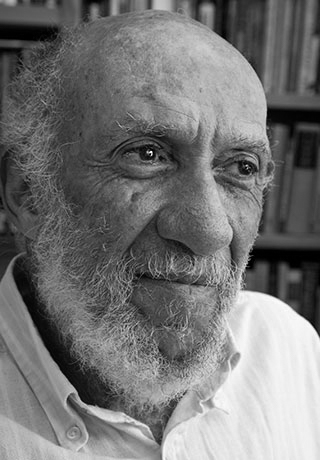

Professor Falk became an adviser to TFF when it was established in 1985.

Share

Leave a Reply

Your email address will not be published. Required fields are marked *

Related Posts

“En dag som berättigar till fest”, utropade den London-baserade al-Quds al-Arabi efter FN:s eldupphörresolution, “eftersom detta är första gången som Israel accepterar ett FN-beslut från en position som besegrad och inte som segrare”. Att ett arabisk-israeliskt krig för en gångs skull slutat med arabisk seger, är en helt dominerade åsikt i arabiska medier. Al-Quds al-Arabi tillåter sig att drömma om att det israeliska nederlaget skall leda till massflykt från Israel. Men i nästa andetag påminner tidningen om att Israel aldrig brukar genomföra sina internationella åtaganden och varnar för att förlorarna, liksom tidigare, kan hämnas genom att provocera fram inbördeskrig i Libanon. Med tanke på de otaliga massmediala vittnesmålen om det libanesiska folkets eniga motståndskraft förefaller risken för inre stridigheter i det sargade landet just nu liten. Men visst kan man urskilja nyansskillnader i libanesiska tidningar. Vänsterorganet al-Safir uppfattar FN-resolutionen som en komplott i syfte att rädda Israel från ännu större...
A donors’ conference, co-sponsered by the Burundian government, the Belgian government and UNDP will be held in Brussels January 12-13, 2004. This PressInfo offers a perspective on its urgency. See also TFF’s new Burundi Forum. Imagine for a moment that politics is about goodness and generosity. Where could a few million dollars of government aid and a few civil society organisations – guaranteed – win the hearts of extremely poor millions who want peace and already work hard to achieve it after 10 years of war and genocide? The answer is Burundi, the heart-shaped country in the heart of Africa. Burundi makes a good story from Africa. But what does the world know about Burundi, its problems and struggles? Burundi’s tough reality Here are the basic facts. Burundi’s population is about 7 million and it is number 171 out of the 175 countries on the UNDP’s human development index. Their life...
Peace is promoted by constructive proposals and dialogue Four preceding PressInfos have expressed concern over — and criticised — the ongoing, militarisation of the EU. Some will say: but there are no alternatives. We believe that there are always alternatives, that democracies are characterised by alternatives and choice, and that openly discussed alternatives will improve the quality and legitimacy of society’s decision–making. In addition, it is an intellectual and moral challenge to not only criticise but also be constructive. If we only tell people that we think they are wrong, they are not likely to listen. However, if we say: what are your views on this set of ideas and steps? — we may sometimes engage them in dialogue and sow a seed. Most people in power circles live their daily lives in in a time frame and a social space where certain ideas, viewpoints and concepts are just not...

Recent Articles

“En dag som berättigar till fest”, utropade den London-baserade al-Quds al-Arabi efter FN:s eldupphörresolution, “eftersom detta är första gången som Israel accepterar ett FN-beslut från en position som besegrad och inte som segrare”. Att ett arabisk-israeliskt krig för en gångs skull slutat med arabisk seger, är en helt dominerade åsikt i arabiska medier. Al-Quds al-Arabi tillåter sig att drömma om att det israeliska nederlaget skall leda till massflykt från Israel. Men i nästa andetag påminner tidningen om att Israel aldrig brukar genomföra sina internationella åtaganden och varnar för att förlorarna, liksom tidigare, kan hämnas genom att provocera fram inbördeskrig i Libanon. Med tanke på de otaliga massmediala vittnesmålen om det libanesiska folkets eniga motståndskraft förefaller risken för inre stridigheter i det sargade landet just nu liten. Men visst kan man urskilja nyansskillnader i libanesiska tidningar. Vänsterorganet al-Safir uppfattar FN-resolutionen som en komplott i syfte att rädda Israel från ännu större...
Greenland – the world’s largest island, a continent of its own with only 57.000 inhabitants. I visited it for the first time in May 2005. I flew across the inland ice to Nuuk, the tiny capital with some 14.000 inhabitants. I was overwhelmed by the pride and kindness of everyone I met as well as by the unique natural beauty. Unfortunately, due to weather conditions during my ten-day stay I could get nowhere else but Nuuk. Fortunately, however, among those I met was Gitte Arvegaard, a Danish lawyer and negotiator employed by the local government, Greenland Home Rule. She turned out to be an enthusiastic photographer with a lot of pictures taken during various trips around Greenland. So this Greeland series is the result of our cooperative effort. We both hope you enjoy it and are stimulated to visit Greenland – about which you may read more here. Finally, if you want to...
 Jan Oberg’s storyof how he met Sir Paul Liverpool – where else to meet Paul McCartney? Paul’s old class mate and TFF Associate, Jonathan Power introduced me to Paul McCartney in Liverpool at an informal reception. It was held at what used to be their school, now the Liverpool Institute for Performing Arts and we were there to celebrate that Jonathan had written Amnesty International’s 40th Anniversary book. This happy event for “righting wrongs and writing songs” gave me an opportunity to meet Paul and tell him about TFF and get straight to the matter: would he consider making a donation in support of our work for peace? While I was probably the only one with such a wish that day, I was certainly not the only one who wanted to shake hands and talk with him. In the last minutes before Paul was to leave, Jonathan brought us together and we got about three...

TFF on Substack

Discover more from TFF Transnational Foundation & Jan Oberg.

Most Popular

“En dag som berättigar till fest”, utropade den London-baserade al-Quds al-Arabi efter FN:s eldupphörresolution, “eftersom detta är första gången som Israel accepterar ett FN-beslut från en position som besegrad och inte som segrare”. Att ett arabisk-israeliskt krig för en gångs skull slutat med arabisk seger, är en helt dominerade åsikt i arabiska medier. Al-Quds al-Arabi tillåter sig att drömma om att det israeliska nederlaget skall leda till massflykt från Israel. Men i nästa andetag påminner tidningen om att Israel aldrig brukar genomföra sina internationella åtaganden och varnar för att förlorarna, liksom tidigare, kan hämnas genom att provocera fram inbördeskrig i Libanon. Med tanke på de otaliga massmediala vittnesmålen om det libanesiska folkets eniga motståndskraft förefaller risken för inre stridigheter i det sargade landet just nu liten. Men visst kan man urskilja nyansskillnader i libanesiska tidningar. Vänsterorganet al-Safir uppfattar FN-resolutionen som en komplott i syfte att rädda Israel från ännu större...
Greenland – the world’s largest island, a continent of its own with only 57.000 inhabitants. I visited it for the first time in May 2005. I flew across the inland ice to Nuuk, the tiny capital with some 14.000 inhabitants. I was overwhelmed by the pride and kindness of everyone I met as well as by the unique natural beauty. Unfortunately, due to weather conditions during my ten-day stay I could get nowhere else but Nuuk. Fortunately, however, among those I met was Gitte Arvegaard, a Danish lawyer and negotiator employed by the local government, Greenland Home Rule. She turned out to be an enthusiastic photographer with a lot of pictures taken during various trips around Greenland. So this Greeland series is the result of our cooperative effort. We both hope you enjoy it and are stimulated to visit Greenland – about which you may read more here. Finally, if you want to...
 Jan Oberg’s storyof how he met Sir Paul Liverpool – where else to meet Paul McCartney? Paul’s old class mate and TFF Associate, Jonathan Power introduced me to Paul McCartney in Liverpool at an informal reception. It was held at what used to be their school, now the Liverpool Institute for Performing Arts and we were there to celebrate that Jonathan had written Amnesty International’s 40th Anniversary book. This happy event for “righting wrongs and writing songs” gave me an opportunity to meet Paul and tell him about TFF and get straight to the matter: would he consider making a donation in support of our work for peace? While I was probably the only one with such a wish that day, I was certainly not the only one who wanted to shake hands and talk with him. In the last minutes before Paul was to leave, Jonathan brought us together and we got about three...
Read More
Imagen-thumbnail-The-Transnational-1
“En dag som berättigar till fest”, utropade den London-baserade al-Quds al-Arabi efter FN:s eldupphörresolution, “eftersom detta är första gången som Israel accepterar ett FN-beslut från en position som besegrad och inte som segrare”. Att ett arabisk-israeliskt krig för en gångs skull slutat med arabisk seger, är en helt dominerade åsikt i arabiska medier. Al-Quds al-Arabi tillåter sig att drömma om att det israeliska nederlaget skall leda till massflykt från Israel. Men i nästa andetag påminner tidningen om att Israel aldrig brukar genomföra sina internationella åtaganden och varnar för att förlorarna, liksom tidigare, kan hämnas genom att provocera fram inbördeskrig i Libanon. Med tanke på de otaliga massmediala vittnesmålen om det libanesiska folkets eniga motståndskraft förefaller risken för inre stridigheter i det sargade landet just nu liten. Men visst kan man urskilja nyansskillnader i libanesiska tidningar. Vänsterorganet al-Safir uppfattar FN-resolutionen som en komplott i syfte att rädda Israel från ännu större...
Greenland – the world’s largest island, a continent of its own with only 57.000 inhabitants. I visited it for the first time in May 2005. I flew across the inland ice to Nuuk, the tiny capital with some 14.000 inhabitants. I was overwhelmed by the pride and kindness of everyone I met as well as by the unique natural beauty. Unfortunately, due to weather conditions during my ten-day stay I could get nowhere else but Nuuk. Fortunately, however, among those I met was Gitte Arvegaard, a Danish lawyer and negotiator employed by the local government, Greenland Home Rule. She turned out to be an enthusiastic photographer with a lot of pictures taken during various trips around Greenland. So this Greeland series is the result of our cooperative effort. We both hope you enjoy it and are stimulated to visit Greenland – about which you may read more here. Finally, if you want to...
p_mccartney_poem
 Jan Oberg’s storyof how he met Sir Paul Liverpool – where else to meet Paul McCartney? Paul’s old class mate and TFF Associate, Jonathan Power introduced me to Paul McCartney in Liverpool at an informal reception. It was held at what used to be their school, now the Liverpool Institute for Performing Arts and we were there to celebrate that Jonathan had written Amnesty International’s 40th Anniversary book. This happy event for “righting wrongs and writing songs” gave me an opportunity to meet Paul and tell him about TFF and get straight to the matter: would he consider making a donation in support of our work for peace? While I was probably the only one with such a wish that day, I was certainly not the only one who wanted to shake hands and talk with him. In the last minutes before Paul was to leave, Jonathan brought us together and we got about three...
Logo-Transnational
1942James Paul McCartney is born in Liverpool on June 18th. 1956Paul writes his first song, I Lost My Little Girl. 1957Paul meets John Lennon at St. Peter’s Church Fete, Woolton, Liverpool. He joins his first group, The Quarrymen and performs in his first gig at The New Clubmoor Hall, Liverpool, on October 18th. 1960Formation of The Beatles, who play residencies in Hamburg and at The Cavern in Liverpool. 1961First Beatles recordings issued in Germany, as the backing group for Tony Sheridan. 1962The first Beatles Parlophone recording, Love Me Do, reaches number 17 in the British charts. 1963The birth of Beatlemania. Please Please Me gives the group their first British Number 1. She Loves You cements their success. Please Please Me and With The Beatles albums released. 1964First triumphant American tour. The Beatles perform at the Royal Command Performance and release their first film, A Hard Day’s Night. Their single I...
Logo-Transnational
  Back to the series “Bujumbura, Burundi”
By JONATHAN POWER August 16, 2000 LONDON – Remember the summer of ’98? In the sweltering, torpid heat of a Roman august, charged with exhaust fumes, the international community gave its overwhelming approval to the establishment of an International Criminal Court that will enable those accused of “crimes against humanity” to be tried and, if convicted, sentenced. Only seven nations opposed or abstained from the motion, including Israel, China, India and the U.S.A. where the Pentagon had successfully waged bureaucratic guerrilla war to undermine the initially sympathetic stance of President Bill Clinton. Two years on we can now see what an epochal event that was. In a the stroke of 120 pens it changed the climate on political thuggery. After numerous half-starts and false starts ever since the Nuremberg and Tokyo trials that convicted the war criminals of the Second World War, the world at last had agreed en masse a common...

