
America Menaced: An Impending Police State

Prefatory Note
I am posting some reflections on Gerry Spence’s Police State, an ominous book, finely wrought, that we should all read. Besides being my close friend, Gerry is a lawyer par excellence, as well as being someone possessed of deeply artistic, humanistic, and ethical disposition. The book pertains to the situation here in America, but as recent events in Paris, San Bernidino, and Colorado Springs confirm, we are in danger of moving without realizing it toward some kind of ‘global police state,’ all in the name of security, trampling on the rights and self-esteem of billions of people and extinguishing the freedom of all. Such a devastating scenario cannot be separated from the predatory features of global capitalism in its present neoliberal phase.

Gerry Spence
Police State: How America’s Cops Get Away with Murder
New York: St. Martin’s Press, 2015
$27.99 hardcover
Amazon $19.43; Kindle $14.99.

In an America gripped by one story after another of culpable police violence, it is hard to imagine a more timely book than Police State. Not only is the topic of urgent relevance, the author is supremely qualified by a long life of experience and reflection to give us an authoritative bird’s eye view.

Gerry Spence, a trial lawyer par excellence, with the extraordinary credential of never having lost a criminal case, which is some achievement, considering that he has been practicing law for well over half a century. Here on the West Coast, splitting his residence between native Wyoming and California, Spence is as close to being a celebrity as a lawyer can get.

He was a nightly TV commentator of the notorious O. J. Simpson trial and has been the lead lawyer in a whole series of high profile criminal cases whose vivid style of oratory creates unforgettable impressions on the part of those lucky enough to have Spence on their side or those so unfortunate as to have him as their adversary.

Somehow, Spence also finds time to write novels, publish books of superb photographs, compose poems, and even paint pictures and photomontages that no art gallery would be ashamed to display. Additionally, he founded a Trial Lawyers College in Wyoming that has over the years trained hundreds of criminal defense lawyers to become more effective in judicial settings, not primarily by knowing the law better, but by learning how to win the battle of hearts and minds of juries and judges.

It is Spence’s strong conviction that gaining the psychological edge in judicial cases decides many more cases than what is learned in even the best law schools.

In short, Spence is a remarkable polymath who both defies the imperative of specialization that haunts our age and dispenses wisdom in a manner that only a modern folk hero from Wyoming can do. And this is not all. Spence’s personality (and ego) overflows any container, whether it be geographic borders or the walls of a courtroom.

Such a vivid and fascinating presence creates a temptation to talk endlessly about this exceptional man rather than the compelling story he is telling in Police State. While struggling to resist the temptation, I should disclose that Gerry Spence is a cherished friend, we share intimacies over lunch whenever we both happen to be in Santa Barbara at the same time, which unhappily for me is not often enough.

We agree on most core issues, and fight about how to interpret the trivial ones, which is I think which is what always allows deep friendship to flourish.

Now to the book Police State. And in this 6 min video Spence talks about the book.

It consists of detailed and engagingly described narratives of eight cases, several of national prominence, in which Spence served as the lead lawyer of a high powered defense team.

The cases are framed by a more general introductory discussion of the national setting that produces abuses of power by the apparatus of state law enforcement, and especially the police. Particular attention is given to the injustices experienced by those marginalized by the color of their skin, heretical life style and beliefs, and lowly class standing.

So great are his persuasive skills that he credibly casts Imelda Marcos, the notorious widow of the Filipino autocrat Fernando Marcos, among those whose innocence has been violated by spurious criminal charges of stealing public funds. I have to admit that reading the Marcos chapter made me aware that brilliant lawyering can sometimes come at the expense of criminal justice!

Every defendant deserves a competent legal defense, yet not one that successfully whitewashes the fully documented cruel criminal record of the Marcos years of shared rulership in the Philippines, a record exposed in a museum in Manila that I have visited. A more general question is raised. Spence makes clear that a gifted trial lawyer can make the difference between winning and losing a case, but does that seems to mean that the guilty as well as the innocent get the benefits.

Actually, the Marcos case is an outlier in the book, and its removal would hardly be noticed. Spence’s preoccupation and primary knowledge is associated with how those accused of crime in this country are treated by the police, in courtrooms, and prisons, and it is these various facets of their (mis)treatment that is the subject-matter of the other seven cases.

What gives coherence to these widely disparate attempts to counteract the worst features of the system is Spence’s double vision: on the one side, he exposes the deep roots of injustice by way of police and governmental action and on the other, he depicts the capacity of determined and capable lawyering to overcome the biases of the system by rendering verdicts responsive to the dictates of justice. After all, Spence won all these cases, and so something must be working right.

In truly authoritarian states, the outcomes are known before the trial begins, contains no surprises, and accords with the wishes of the government as made known through the tenor and content of the prosecution.

In effect, in true police states the quality of the criminal defense is irrelevant, which it is not, at least not yet, in the United States. This raises a question as to whether Spence’s characterization of the U.S. as a police state is hyperbolic, and if so, whether this is useful in alerting Americans to a mounting danger.

Although written pre-Trump what Spence has to say about crime, law, and justice in America is deeply troubling, yet in the end he proposes recognizing the challenge, a program of reform, and hope for the future. His indictment of present trends is deep, and resonates with recent disclosures confirming racially motivated police killings, and their cover up, in several American cities:

“The police belong to a culture separate from ours. Police departments are often like the gangs they encounter—both strive to keep their crimes secret.” (9) More ominous is the link noted between what the police do and what the state wants done: “What I will show is that police brutality and killings are the product of the system, the specter of an enslaving police state is clearly visible on the horizon.” (page 9)

In the end, Spence challenges us as citizens to act to avoid this destiny: “This dismal prophesy will prevail, as indeed it always has, and always will, unless we, the people have the courage to take up this critical challenge and bring about a new police culture for the safety and well-being of we, the people who still wait patiently to enjoy the promise of America.” (10)

Spence connects police brutality and contrived prosecutions with what he calls “the rotten underbelly of Power.” (63) By capitalizing ‘power’ Spence is expressing his conviction that what is responsible for police behavior should be traced to those in control of governmental institutions who act in connivance with those who control money. After encountering this pattern in many of his cases, Spence believes that “the Constitution can be set aside by Power at its whim, that the FBI could, and did, change the law as if it, not the people, created the laws of the land.”

In this spirit, he asks, “Should we provide a name for such Power? Are we on the outer edges of the cliff looking down into the depths of a totalitarian state from which there is no return.” (63)

At another point in the book Spence poses some underlying rhetorical questions: “Are we capable of distinguishing between our fantasy, our hope, yes, our faith that we are free on the one hand, from the alarming approach of a police state on the other? And if we discover the truth, can we bear it? Will we confront it?” (238)

As a Jeffersonian populist, Spence unabashedly situates his hopes for change on the unpredictable energies of ‘the people,’ exhibiting no trust whatsoever in either government or political parties as both are presumably presently disabled by being rendered deferential to the whims and priorities of that mysterious force, the Power.’

Most of Spence’s cases do not focus on race as the explanation for or atmosphere of police abuse, but his defense of Dennis Williams who spent 17 agonizing years on death row after being framed by Cook County police in Illinois involved a mixture of racist abuse and institutional corruption of the worst sort.

Spence exhibits his keen awareness that racism compounds the problems, infecting our attitudes and behavior as if a poison we didn’t realize was circulating in the body politics. As Spence puts it, “I know that racism is alive and throbbing beneath the surface throughout America…Our personal racism is never acknowledged, not even to our closest friends, not to our spouses, not even to ourselves.” (237)

This is the message conveyed by the recently formed Black Lives Matter, and also articulated with subtlety and passion in the best-selling book, Between The World and Me by Ta-Nehisi Coates, and in the compelling poetic rendering of Claudia Rankine in Citizen: An American Lyric.

At the end, Spence argues that whether it is framing a witness, coercing a confession, shooting defenseless and innocent persons, there is a depraved unity of purpose being displayed. The separate stories “are essentially the same story: a story about the same perverse incentive of Power – the uncontrolled psychotic urge to dominate and intimidate the helpless in response to Power’s compulsion to serve itself.” (309)

Even more darkly, “Power has one purpose: to satisfy itself. In doing so Power kills, wrongfully persecutes, and criminally imposes itself on the innocent. (311) We all know the devil lives in the details, and so it is important to read through these cases to grasp the specifics that lends credence to this dire assessment.

And yet, Spence is far from one-dimensional even if we limit our concern to law and the American political scene. His hopeful side, although not easily escaping from the dark shadows cast by his overwhelmingly disconcerting experience over the decades, is not as revolutionary as one would expect given his diagnosis of where we are and where we are heading.

After the narratives of the cases, Spence offers a sensible 12-step program for law enforcement reform (an odd and suggestive echo of the famous AA formula for overcoming alcohol addiction), which if implemented would make police better trained, more accountable, and operating in an atmosphere where prosecutors and judges were more sensitized to the rights of the accused.

It is troublesome that this humane and sensible set of recommendations presupposes what is most lacking, that is, a political will among elites that is driven by integrity and a commitment to fairness rather than beholden to what Spence calls ‘the Power,’ money and status.

In other words, if the political will were realigned toward criminal justice such a transformed criminal justice system would be spontaneously generated and reforms superfluous, but if the existing established order is being so challenged it will resist vigorously for all the reasons that Spence delineates.

Here Spence allows us to drift on our own, not giving us much of a hint as to how to discredit the prevailing political will that he so vigorously deplores.

The most we are told is that during Spence’s long lifetime some good things have happened to women and minorities, and thus it is not a fool’s dream to suppose that a similar dynamic will make positive change happen so that those who are currently most abused by police and law enforcement will find themselves better protected. Maybe the furor generated by the Ferguson killing of Michael Brown and several related incidents of police homicide will produce the kind of political energy that will produce the results that Spence advocates and justice demands. Time will tell.

Gerry Spence brings his fine book, with its urgent message, to a fitting close: “One thing I know: An honestly informed nation can be trusted to eventually do right. Justice is the petulant child of truth.” (326)

We will have to wait and see, and more actively, do all we can to make these ugly truths known, and counteracted. There is no better place to begin than by reading this compelling book by Gerry Spence that tells us all we need to know if we want to renew our vows of citizenship by action and engagement.

As long as we stay quiet in the gated communities of our imaginations, we will regress even further from being citizens of a free society to becoming subjects of a police state.
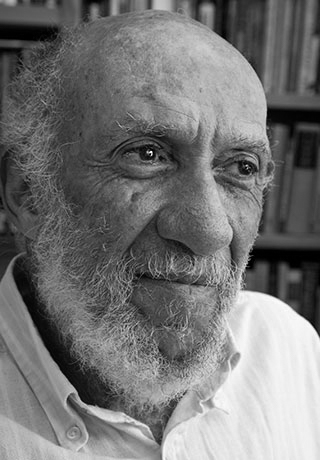

Professor Falk became an adviser to TFF when it was established in 1985.

Share

Leave a Reply

Your email address will not be published. Required fields are marked *

Related Posts

“En dag som berättigar till fest”, utropade den London-baserade al-Quds al-Arabi efter FN:s eldupphörresolution, “eftersom detta är första gången som Israel accepterar ett FN-beslut från en position som besegrad och inte som segrare”. Att ett arabisk-israeliskt krig för en gångs skull slutat med arabisk seger, är en helt dominerade åsikt i arabiska medier. Al-Quds al-Arabi tillåter sig att drömma om att det israeliska nederlaget skall leda till massflykt från Israel. Men i nästa andetag påminner tidningen om att Israel aldrig brukar genomföra sina internationella åtaganden och varnar för att förlorarna, liksom tidigare, kan hämnas genom att provocera fram inbördeskrig i Libanon. Med tanke på de otaliga massmediala vittnesmålen om det libanesiska folkets eniga motståndskraft förefaller risken för inre stridigheter i det sargade landet just nu liten. Men visst kan man urskilja nyansskillnader i libanesiska tidningar. Vänsterorganet al-Safir uppfattar FN-resolutionen som en komplott i syfte att rädda Israel från ännu större...
A donors’ conference, co-sponsered by the Burundian government, the Belgian government and UNDP will be held in Brussels January 12-13, 2004. This PressInfo offers a perspective on its urgency. See also TFF’s new Burundi Forum. Imagine for a moment that politics is about goodness and generosity. Where could a few million dollars of government aid and a few civil society organisations – guaranteed – win the hearts of extremely poor millions who want peace and already work hard to achieve it after 10 years of war and genocide? The answer is Burundi, the heart-shaped country in the heart of Africa. Burundi makes a good story from Africa. But what does the world know about Burundi, its problems and struggles? Burundi’s tough reality Here are the basic facts. Burundi’s population is about 7 million and it is number 171 out of the 175 countries on the UNDP’s human development index. Their life...
Peace is promoted by constructive proposals and dialogue Four preceding PressInfos have expressed concern over — and criticised — the ongoing, militarisation of the EU. Some will say: but there are no alternatives. We believe that there are always alternatives, that democracies are characterised by alternatives and choice, and that openly discussed alternatives will improve the quality and legitimacy of society’s decision–making. In addition, it is an intellectual and moral challenge to not only criticise but also be constructive. If we only tell people that we think they are wrong, they are not likely to listen. However, if we say: what are your views on this set of ideas and steps? — we may sometimes engage them in dialogue and sow a seed. Most people in power circles live their daily lives in in a time frame and a social space where certain ideas, viewpoints and concepts are just not...

Recent Articles

“En dag som berättigar till fest”, utropade den London-baserade al-Quds al-Arabi efter FN:s eldupphörresolution, “eftersom detta är första gången som Israel accepterar ett FN-beslut från en position som besegrad och inte som segrare”. Att ett arabisk-israeliskt krig för en gångs skull slutat med arabisk seger, är en helt dominerade åsikt i arabiska medier. Al-Quds al-Arabi tillåter sig att drömma om att det israeliska nederlaget skall leda till massflykt från Israel. Men i nästa andetag påminner tidningen om att Israel aldrig brukar genomföra sina internationella åtaganden och varnar för att förlorarna, liksom tidigare, kan hämnas genom att provocera fram inbördeskrig i Libanon. Med tanke på de otaliga massmediala vittnesmålen om det libanesiska folkets eniga motståndskraft förefaller risken för inre stridigheter i det sargade landet just nu liten. Men visst kan man urskilja nyansskillnader i libanesiska tidningar. Vänsterorganet al-Safir uppfattar FN-resolutionen som en komplott i syfte att rädda Israel från ännu större...
Greenland – the world’s largest island, a continent of its own with only 57.000 inhabitants. I visited it for the first time in May 2005. I flew across the inland ice to Nuuk, the tiny capital with some 14.000 inhabitants. I was overwhelmed by the pride and kindness of everyone I met as well as by the unique natural beauty. Unfortunately, due to weather conditions during my ten-day stay I could get nowhere else but Nuuk. Fortunately, however, among those I met was Gitte Arvegaard, a Danish lawyer and negotiator employed by the local government, Greenland Home Rule. She turned out to be an enthusiastic photographer with a lot of pictures taken during various trips around Greenland. So this Greeland series is the result of our cooperative effort. We both hope you enjoy it and are stimulated to visit Greenland – about which you may read more here. Finally, if you want to...
 Jan Oberg’s storyof how he met Sir Paul Liverpool – where else to meet Paul McCartney? Paul’s old class mate and TFF Associate, Jonathan Power introduced me to Paul McCartney in Liverpool at an informal reception. It was held at what used to be their school, now the Liverpool Institute for Performing Arts and we were there to celebrate that Jonathan had written Amnesty International’s 40th Anniversary book. This happy event for “righting wrongs and writing songs” gave me an opportunity to meet Paul and tell him about TFF and get straight to the matter: would he consider making a donation in support of our work for peace? While I was probably the only one with such a wish that day, I was certainly not the only one who wanted to shake hands and talk with him. In the last minutes before Paul was to leave, Jonathan brought us together and we got about three...

TFF on Substack

Discover more from TFF Transnational Foundation & Jan Oberg.

Most Popular

“En dag som berättigar till fest”, utropade den London-baserade al-Quds al-Arabi efter FN:s eldupphörresolution, “eftersom detta är första gången som Israel accepterar ett FN-beslut från en position som besegrad och inte som segrare”. Att ett arabisk-israeliskt krig för en gångs skull slutat med arabisk seger, är en helt dominerade åsikt i arabiska medier. Al-Quds al-Arabi tillåter sig att drömma om att det israeliska nederlaget skall leda till massflykt från Israel. Men i nästa andetag påminner tidningen om att Israel aldrig brukar genomföra sina internationella åtaganden och varnar för att förlorarna, liksom tidigare, kan hämnas genom att provocera fram inbördeskrig i Libanon. Med tanke på de otaliga massmediala vittnesmålen om det libanesiska folkets eniga motståndskraft förefaller risken för inre stridigheter i det sargade landet just nu liten. Men visst kan man urskilja nyansskillnader i libanesiska tidningar. Vänsterorganet al-Safir uppfattar FN-resolutionen som en komplott i syfte att rädda Israel från ännu större...
Greenland – the world’s largest island, a continent of its own with only 57.000 inhabitants. I visited it for the first time in May 2005. I flew across the inland ice to Nuuk, the tiny capital with some 14.000 inhabitants. I was overwhelmed by the pride and kindness of everyone I met as well as by the unique natural beauty. Unfortunately, due to weather conditions during my ten-day stay I could get nowhere else but Nuuk. Fortunately, however, among those I met was Gitte Arvegaard, a Danish lawyer and negotiator employed by the local government, Greenland Home Rule. She turned out to be an enthusiastic photographer with a lot of pictures taken during various trips around Greenland. So this Greeland series is the result of our cooperative effort. We both hope you enjoy it and are stimulated to visit Greenland – about which you may read more here. Finally, if you want to...
 Jan Oberg’s storyof how he met Sir Paul Liverpool – where else to meet Paul McCartney? Paul’s old class mate and TFF Associate, Jonathan Power introduced me to Paul McCartney in Liverpool at an informal reception. It was held at what used to be their school, now the Liverpool Institute for Performing Arts and we were there to celebrate that Jonathan had written Amnesty International’s 40th Anniversary book. This happy event for “righting wrongs and writing songs” gave me an opportunity to meet Paul and tell him about TFF and get straight to the matter: would he consider making a donation in support of our work for peace? While I was probably the only one with such a wish that day, I was certainly not the only one who wanted to shake hands and talk with him. In the last minutes before Paul was to leave, Jonathan brought us together and we got about three...
Read More
Imagen-thumbnail-The-Transnational-1
“En dag som berättigar till fest”, utropade den London-baserade al-Quds al-Arabi efter FN:s eldupphörresolution, “eftersom detta är första gången som Israel accepterar ett FN-beslut från en position som besegrad och inte som segrare”. Att ett arabisk-israeliskt krig för en gångs skull slutat med arabisk seger, är en helt dominerade åsikt i arabiska medier. Al-Quds al-Arabi tillåter sig att drömma om att det israeliska nederlaget skall leda till massflykt från Israel. Men i nästa andetag påminner tidningen om att Israel aldrig brukar genomföra sina internationella åtaganden och varnar för att förlorarna, liksom tidigare, kan hämnas genom att provocera fram inbördeskrig i Libanon. Med tanke på de otaliga massmediala vittnesmålen om det libanesiska folkets eniga motståndskraft förefaller risken för inre stridigheter i det sargade landet just nu liten. Men visst kan man urskilja nyansskillnader i libanesiska tidningar. Vänsterorganet al-Safir uppfattar FN-resolutionen som en komplott i syfte att rädda Israel från ännu större...
Greenland – the world’s largest island, a continent of its own with only 57.000 inhabitants. I visited it for the first time in May 2005. I flew across the inland ice to Nuuk, the tiny capital with some 14.000 inhabitants. I was overwhelmed by the pride and kindness of everyone I met as well as by the unique natural beauty. Unfortunately, due to weather conditions during my ten-day stay I could get nowhere else but Nuuk. Fortunately, however, among those I met was Gitte Arvegaard, a Danish lawyer and negotiator employed by the local government, Greenland Home Rule. She turned out to be an enthusiastic photographer with a lot of pictures taken during various trips around Greenland. So this Greeland series is the result of our cooperative effort. We both hope you enjoy it and are stimulated to visit Greenland – about which you may read more here. Finally, if you want to...
p_mccartney_poem
 Jan Oberg’s storyof how he met Sir Paul Liverpool – where else to meet Paul McCartney? Paul’s old class mate and TFF Associate, Jonathan Power introduced me to Paul McCartney in Liverpool at an informal reception. It was held at what used to be their school, now the Liverpool Institute for Performing Arts and we were there to celebrate that Jonathan had written Amnesty International’s 40th Anniversary book. This happy event for “righting wrongs and writing songs” gave me an opportunity to meet Paul and tell him about TFF and get straight to the matter: would he consider making a donation in support of our work for peace? While I was probably the only one with such a wish that day, I was certainly not the only one who wanted to shake hands and talk with him. In the last minutes before Paul was to leave, Jonathan brought us together and we got about three...
Logo-Transnational
1942James Paul McCartney is born in Liverpool on June 18th. 1956Paul writes his first song, I Lost My Little Girl. 1957Paul meets John Lennon at St. Peter’s Church Fete, Woolton, Liverpool. He joins his first group, The Quarrymen and performs in his first gig at The New Clubmoor Hall, Liverpool, on October 18th. 1960Formation of The Beatles, who play residencies in Hamburg and at The Cavern in Liverpool. 1961First Beatles recordings issued in Germany, as the backing group for Tony Sheridan. 1962The first Beatles Parlophone recording, Love Me Do, reaches number 17 in the British charts. 1963The birth of Beatlemania. Please Please Me gives the group their first British Number 1. She Loves You cements their success. Please Please Me and With The Beatles albums released. 1964First triumphant American tour. The Beatles perform at the Royal Command Performance and release their first film, A Hard Day’s Night. Their single I...
Logo-Transnational
  Back to the series “Bujumbura, Burundi”
By JONATHAN POWER August 16, 2000 LONDON – Remember the summer of ’98? In the sweltering, torpid heat of a Roman august, charged with exhaust fumes, the international community gave its overwhelming approval to the establishment of an International Criminal Court that will enable those accused of “crimes against humanity” to be tried and, if convicted, sentenced. Only seven nations opposed or abstained from the motion, including Israel, China, India and the U.S.A. where the Pentagon had successfully waged bureaucratic guerrilla war to undermine the initially sympathetic stance of President Bill Clinton. Two years on we can now see what an epochal event that was. In a the stroke of 120 pens it changed the climate on political thuggery. After numerous half-starts and false starts ever since the Nuremberg and Tokyo trials that convicted the war criminals of the Second World War, the world at last had agreed en masse a common...

