
Nelson Mandela's inspiration

Fifteen years ago I had the extraordinary pleasure of meeting Nelson Mandela in Cape Town while he was serving as President of South Africa. It was an odd occasion. I was a member of the International Commission on the Future of the Oceans, which was holding a meeting in South Africa. It happened that one of the vice chairs of the Commission was Kader Asmal, a cherished friend and a member of the first Mandela cabinet who himself played a major role in the writing of the South African Constition. Kader had arranged for Mandela to welcome the Commission to his country, and asked me if I would prepare some remarks on his behalf, which was for me an awesome assignment, but one that I undertook with trepidation, not at all confident that I could find the words to be of some slight help to this great man.

Compounding my personal challenge, the Brazilian Vice Chair of our oceans commission who was supposed to give a response on behalf of the Commission became ill, and I was asked by our chair to respond to Mandela on behalf of the commission. I did have the thrill of hearing 90% of my text delivered by Mandela, which years later I remember much better than my eminently forgettable words of response to the President.

What moved me most, and has led me to make this rather narcissistic introduction, is the conversation after the event. Mandela thanked me for my efforts and proceeded then to talk with each of our 40 commission members, making a specific reference to circumstances of relevance and concern in each of their particular countries. He went from person to person with such grace and composure as I had never encountered before on the part of a public figure of renown. It was above all Mandela’s spiritual presence that created such a strong impression of moral radiance on the part of all of us fortunate enough to be in the room. I was reinforced in my guiding belief that political greatness presupposes a spiritual orientation toward the meaning of life, not necessarily expressed by way of a formal religious commitment, but always implies living with an unconditional dedication to values and faith that transcend the practical, the immediate, and the material.

The political imaginary that accompanies such a life also has an integrity that challenges the proprieties and associated boundaries of conventional liberal thought. It is easy for almost everyone now to celebrate Mandela for his long struggle against South African apartheid that included 27 years in jail. It is less common to recall that as late as the 1980s leaders in Britain and the United States were condemning Mandela as ‘terrorist’ and ‘revolutionary’ who deserved to be indefinitely jailed, if not worse.

It is even less often remembered that Mandela rejected early offers to obtain his release from prison if he would ‘renounce violence’ and call for an end to ‘armed struggle.’ Although Mandela is justly honored for his role in achieving a non-violent transition to multi-racial constitutionalism in South Africa, he was never willing to say that those who were oppressed must renounce whatever means was available to them to gain their freedom. Indeed, Mandela as leader of the African National Congress, endorsed the creation of its military wing, and at one stage was supportive of armed resistance to obtain liberation and overcome the racist crimes being committed by the apartheid regime on a massive and systematic basis.

The Palestinian people, in the midst of their seemingly endless ordeal, have particularly reason to esteem the exemplary life and solidarity exhibited by Nelson Mandela for their cause. Mandela’s words reflected a deep intuition that what the Palestinians were seeking had a deep affinity with his own struggle: “We know too well that our freedom is incomplete without the freedom of the Palestinians.”

In a comment with a strong present resonance in the debate about whether Israel is not responsible for repeating the crime of apartheid in its occupation of the West Bank, Mandela words are strong: “Never in the darkest days of South Africa’s apartheid have there been separated roads for blacks and whites.” In Israel’s apartheid there exist a network of separated roads for Israeli settlers and the Palestinians, as well as a discriminatory dual legal administrative structure.

Mandela regarded Yasser Arafat as a ‘comrade in arms,’ identifying him as “one of the outstanding freedom fighters of his generation,” adding that “it is with great sadness that his and his people’s dream of a Palestinian state has not been realized.” By affirmations of Arafat, Castro, and even Qaddafi, Mandela made plain to the West in reaction to criticism, “Our enemies are not your enemies.” Such a voice of peace that never submitted to Western liberal notions of good behavior was fully appreciated by Indian followers of Gandhi who regarded Mandela as a natural political heir to their national hero because, like Gandhi, Mandela stood so firmly for dignity, independence, and the end of colonial domination in all its manifold forms.

It is also notable that Marwan Barghouti confined to an Israeli jail for five consecutive life sentences looked to Mandela for inspiration, writing an open letter from his prison cell not long ago. He wrote, “And from within my prison, I tell you that our freedom seems possible because you reached yours.” Beyond this he hailed Mandela whose torch of freedom burned so brightly as to cast universal light: “You carried a promise far beyond the limits of your country’s borders, a promise that oppression and injustice will be vanquished, paving the way to freedom and peace..All sacrifices become bearable by the sole prospect that one day the Palestinian people will also be able to enjoy freedom.” Barghouti is for Palestinians their strongest symbol of collective identity in resistance and struggle, and a comparison to Mandela’s lifelong journey is inevitable, including Barghouti’s clear turn toward the embrace of militant forms of nonviolent resistance.

I believe that when Israel is ready for a sustainable and just peace it will signal this to itself, to the Palestinians, and to the world by releasing Barghouti from prison and by treating Hamas as a political actor with genuine grievances and aspirations that needs to be included in any diplomacy of accommodation that deserves the label of ‘peace process.’ Until that most welcome moment arrives, the Palestinian march toward victory in the ongoing Legitimacy War must be continued with renewed vitality and dedication.

Mandela’s journey, like that of Gandhi, was not without its major disappointments. To gain the political end of apartheid, Mandela deferred challenges to social and economic apartheid. Part of his legacy to South Africa is to carry forward this mission to free the great majority of the country from the many disadvantages and burdens of their still segregated, subordinated, and humiliating reality.
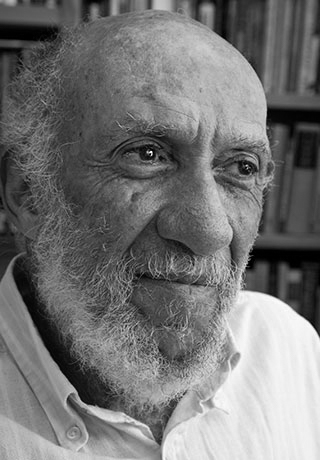

Professor Falk became an adviser to TFF when it was established in 1985.

Share

Leave a Reply

Your email address will not be published. Required fields are marked *

Related Posts

Peace is promoted by constructive proposals and dialogue Four preceding PressInfos have expressed concern over — and criticised — the ongoing, militarisation of the EU. Some will say: but there are no alternatives. We believe that there are always alternatives, that democracies are characterised by alternatives and choice, and that openly discussed alternatives will improve the quality and legitimacy of society’s decision–making. In addition, it is an intellectual and moral challenge to not only criticise but also be constructive. If we only tell people that we think they are wrong, they are not likely to listen. However, if we say: what are your views on this set of ideas and steps? — we may sometimes engage them in dialogue and sow a seed. Most people in power circles live their daily lives in in a time frame and a social space where certain ideas, viewpoints and concepts are just not...
Photos © TFF 2000 Read PressInfo 90 “Lift the Sanctions and Bring More Aid to Yugoslavia” See Pictures from Belgrade © TFF 2000 Please reprint, copy, archive, quote or re-post this item, but please retain the source.
Av FRANK SØHOLM GREVIL 16 augusti 2004  Vi er nu nået til tredje akt i det absurde teaterstykke, der i analogi med de store skueprocesser i Moskva 1936-38 er blevet døbt ‘Grevil-sagen’. Første akt bestod i min anonyme fremlæggelse af egenhændigt nedklassificerede rapporter i Berlingske Tidende i februar og marts. Andet akt udgjordes af min fremtræden med navn og billede i Information i april samt den efterfølgende mediestorm, som uden min direkte medvirken kostede en forsvarsminister taburetten samt en sigtelse for brud på tavshedspligten. Tredje akt bliver en retssag, hvor jeg står tiltalt for at have overtrådt straffelovens bestemmelser om uberettiget videregivelse eller udnyttelse af fortrolige oplysninger. Statsanklageren har ovenikøbet valgt at påberåbe sig særligt skærpende omstændigheder. Da jeg aldrig har modtaget betaling for at stille rapporterne til rådighed eller lade mig interviewe, må det skærpende bestå i, at “videregivelsen eller udnyttelsen er sket under sådanne omstændigheder, at det påfører...

Recent Articles

PressInfo # 141, December 21, 2001It’s time to prepare reconciliation between Albanians and Serbs PressInfo # 140, December 14, 2001Ibrahim Rugova’s decade-long leadership in Kosovo/a PressInfo # 139, 11. december, 2001En god nyhet: Jugoslaviens Sannings- och försoningskommission PressInfo # 139, 11. december, 2001Gode nyheder: Jugoslaviens Sandheds- og Forsoningskommission PressInfo # 139, December 11, 2001Good news: Yugoslavia’s Truth and Reconciliation Commission PressInfo # 138, November 8, 2001TFF co-founder PhD with thesis about young people with roots in other cultures PressInfo # 138, November 8, 2001TFF:s medstiftare doktor på avhandling om unga med ursprung i andra kulturer PressInfo # 137, October 17, 2001A new Marshall Plan: Advancing human security and controlling terrorism PressInfo # 136, October 15, 2001The UN and Annan really deserve it PressInfo # 135, October 10, 2001Preventing a terrorist mushroom cloud PressInfo # 134, 17 oktober, 2001Sverige og 11. september PressInfo # 134, October 9, 2001Sweden and September 11...
Peace is promoted by constructive proposals and dialogue Four preceding PressInfos have expressed concern over — and criticised — the ongoing, militarisation of the EU. Some will say: but there are no alternatives. We believe that there are always alternatives, that democracies are characterised by alternatives and choice, and that openly discussed alternatives will improve the quality and legitimacy of society’s decision–making. In addition, it is an intellectual and moral challenge to not only criticise but also be constructive. If we only tell people that we think they are wrong, they are not likely to listen. However, if we say: what are your views on this set of ideas and steps? — we may sometimes engage them in dialogue and sow a seed. Most people in power circles live their daily lives in in a time frame and a social space where certain ideas, viewpoints and concepts are just not...
Photos © TFF 2000 Read PressInfo 90 “Lift the Sanctions and Bring More Aid to Yugoslavia” See Pictures from Belgrade © TFF 2000 Please reprint, copy, archive, quote or re-post this item, but please retain the source.

TFF on Substack

Discover more from TFF Transnational Foundation & Jan Oberg.

Most Popular

PressInfo # 141, December 21, 2001It’s time to prepare reconciliation between Albanians and Serbs PressInfo # 140, December 14, 2001Ibrahim Rugova’s decade-long leadership in Kosovo/a PressInfo # 139, 11. december, 2001En god nyhet: Jugoslaviens Sannings- och försoningskommission PressInfo # 139, 11. december, 2001Gode nyheder: Jugoslaviens Sandheds- og Forsoningskommission PressInfo # 139, December 11, 2001Good news: Yugoslavia’s Truth and Reconciliation Commission PressInfo # 138, November 8, 2001TFF co-founder PhD with thesis about young people with roots in other cultures PressInfo # 138, November 8, 2001TFF:s medstiftare doktor på avhandling om unga med ursprung i andra kulturer PressInfo # 137, October 17, 2001A new Marshall Plan: Advancing human security and controlling terrorism PressInfo # 136, October 15, 2001The UN and Annan really deserve it PressInfo # 135, October 10, 2001Preventing a terrorist mushroom cloud PressInfo # 134, 17 oktober, 2001Sverige og 11. september PressInfo # 134, October 9, 2001Sweden and September 11...
Peace is promoted by constructive proposals and dialogue Four preceding PressInfos have expressed concern over — and criticised — the ongoing, militarisation of the EU. Some will say: but there are no alternatives. We believe that there are always alternatives, that democracies are characterised by alternatives and choice, and that openly discussed alternatives will improve the quality and legitimacy of society’s decision–making. In addition, it is an intellectual and moral challenge to not only criticise but also be constructive. If we only tell people that we think they are wrong, they are not likely to listen. However, if we say: what are your views on this set of ideas and steps? — we may sometimes engage them in dialogue and sow a seed. Most people in power circles live their daily lives in in a time frame and a social space where certain ideas, viewpoints and concepts are just not...
Photos © TFF 2000 Read PressInfo 90 “Lift the Sanctions and Bring More Aid to Yugoslavia” See Pictures from Belgrade © TFF 2000 Please reprint, copy, archive, quote or re-post this item, but please retain the source.
Read More
Imagen-thumbnail-The-Transnational-1
PressInfo # 141, December 21, 2001It’s time to prepare reconciliation between Albanians and Serbs PressInfo # 140, December 14, 2001Ibrahim Rugova’s decade-long leadership in Kosovo/a PressInfo # 139, 11. december, 2001En god nyhet: Jugoslaviens Sannings- och försoningskommission PressInfo # 139, 11. december, 2001Gode nyheder: Jugoslaviens Sandheds- og Forsoningskommission PressInfo # 139, December 11, 2001Good news: Yugoslavia’s Truth and Reconciliation Commission PressInfo # 138, November 8, 2001TFF co-founder PhD with thesis about young people with roots in other cultures PressInfo # 138, November 8, 2001TFF:s medstiftare doktor på avhandling om unga med ursprung i andra kulturer PressInfo # 137, October 17, 2001A new Marshall Plan: Advancing human security and controlling terrorism PressInfo # 136, October 15, 2001The UN and Annan really deserve it PressInfo # 135, October 10, 2001Preventing a terrorist mushroom cloud PressInfo # 134, 17 oktober, 2001Sverige og 11. september PressInfo # 134, October 9, 2001Sweden and September 11...
Imagen-thumbnail-The-Transnational-1
Peace is promoted by constructive proposals and dialogue Four preceding PressInfos have expressed concern over — and criticised — the ongoing, militarisation of the EU. Some will say: but there are no alternatives. We believe that there are always alternatives, that democracies are characterised by alternatives and choice, and that openly discussed alternatives will improve the quality and legitimacy of society’s decision–making. In addition, it is an intellectual and moral challenge to not only criticise but also be constructive. If we only tell people that we think they are wrong, they are not likely to listen. However, if we say: what are your views on this set of ideas and steps? — we may sometimes engage them in dialogue and sow a seed. Most people in power circles live their daily lives in in a time frame and a social space where certain ideas, viewpoints and concepts are just not...
Imagen-thumbnail-The-Transnational-1
Photos © TFF 2000 Read PressInfo 90 “Lift the Sanctions and Bring More Aid to Yugoslavia” See Pictures from Belgrade © TFF 2000 Please reprint, copy, archive, quote or re-post this item, but please retain the source.
Imagen-thumbnail-The-Transnational-1
Av FRANK SØHOLM GREVIL 16 augusti 2004  Vi er nu nået til tredje akt i det absurde teaterstykke, der i analogi med de store skueprocesser i Moskva 1936-38 er blevet døbt ‘Grevil-sagen’. Første akt bestod i min anonyme fremlæggelse af egenhændigt nedklassificerede rapporter i Berlingske Tidende i februar og marts. Andet akt udgjordes af min fremtræden med navn og billede i Information i april samt den efterfølgende mediestorm, som uden min direkte medvirken kostede en forsvarsminister taburetten samt en sigtelse for brud på tavshedspligten. Tredje akt bliver en retssag, hvor jeg står tiltalt for at have overtrådt straffelovens bestemmelser om uberettiget videregivelse eller udnyttelse af fortrolige oplysninger. Statsanklageren har ovenikøbet valgt at påberåbe sig særligt skærpende omstændigheder. Da jeg aldrig har modtaget betaling for at stille rapporterne til rådighed eller lade mig interviewe, må det skærpende bestå i, at “videregivelsen eller udnyttelsen er sket under sådanne omstændigheder, at det påfører...
Imagen-thumbnail-The-Transnational-1
Af Svenska Irakkommittén mot de Ekonomiska Sanktionerna (SIES) 13 september 2002 FN:s ekonomiska sanktioner mot Irak har nu pågått i tolv år och drabbat det irakiska folket med svåra lidanden. Enligt FN:s egna siffror har mer än 1,5 miljoner människor, varav ca 600 000 barn, dött som en direkt följd av sanktionerna. Dessutom har ett lågintensivt bombkrig mot landet pågått under dessa år. Av all denna förödelse- orsakad huvudsakligen av amerikansk och brittisk politik- har Saddam Husseins brutala och diktatoriska regim snarast stärkts än försvagats. Nu förbereder USA under president Bushs ledning ett storskaligt bombkrig mot Irak som kommer att innebära ett ännu större lidande för civilbefolkningen. Ett sådant krig kommer dessutom att ytterligare undergräva freden och säkerheten i världen. Att upprätta en demokratisk regim i Irak är det irakiska folkets angelägenhet och får enligt folkrätten inte ske med krigshandlingar utifrån. Folkrätten och FN:s stadgar måste respekteras. Vi vädjar till...

