
Globalizing homeland security - the U.S. drift toward autocracy

The drift toward autocracy: It is not just one thing that should worry us about the authoritarian tendencies of the Obama presidency, but one thing after another. The cumulative effect of it all.

The latest sign of the times was the August 19th detention of David Miranda, Glenn Greenwald’s partner, at Heathrow Airport under the British anti-terrorist law for nine hours. His laptop, cell phone, and other electronic devices were also confiscated, and presumably examined. We need to wonder what is so frightening about ‘the Snowden documents’ that it induces these flagrant intrusions on the privacy and confidentiality of journalists, and now even their associates who are not known to be accomplices.

President Obama keeps reassuring Americans, and indeed the world, that he shares a concern for protecting elemental rights, and yet he seems to spare no means to move against disclosures of information that seems awkward for the United States and some allies even when not of particular interest to Al Qaeda and the like.

Just as 40 years ago the government sought to prosecute Daniel Ellsberg for releasing the Pentagon Papers, revealing secrets being kept primarily from the American people, and not from the ‘enemy’ in the jungles and rice paddies of Vietnam. It was not a matter of secrecy for secrecy’s sake, but secrecy to sustain the trust of the citizenry by a cover up of lies and deception in an increasingly unpopular and failed war taking many Vietnamese and American lives.

Keep in mind that by the rules of the road in international affairs, Moscow could not extradite Snowden, and yet Washington insisted, and when spurned, ‘punished’ itself more than Russia and Putin, by canceling the presidential meeting scheduled for Russia in September to discuss issues of common concern, including Syria, Iran, North Korea, nuclear arms control, and presumably the horrifying turmoil that is turning the Middle East into a war zone.

Any fool would realize that at this point the United States has much more to gain from a cooperative rather than an alienated Russia, and so what is the point of showing Snowden childish pique by this rebuff of Putin?

It would seem that Washington’s concept of such cooperation between the two countries is entirely hegemonic: the United States sets the tune, and Russia is supposed to sing the song. There are no honest disagreements. Obama’s much heralded ‘reset’ approach to U.S./Russian relations is a one-way street as near as I can tell, and when the songsters in Moscow provide their own lyrics, the music makers in Washington turn hostile, claiming disappointment, dismissing the Russian version of the song as disruptive ‘noise.’

Also, it is not an unfriendly gesture to accord Snowden asylum in view of his political crimes, the punitive approach adopted by the Obama presidency for breaches of secrecy, and the unwarranted cancellation of his passport depriving him of valid travel documents by state fiat without even granting a day in court. On the contrary, asylum for Snowden is what a human rights culture should lead us to hope for in such situations.

Was it really sensible diplomacy to use America’s leverage in the NATO region to disrupt the European flight of Evo Morales, violating the civil air international navigational rights of Bolivia, and also encroaching upon its sovereignty and insulting its leader?

As it turned out, this effort to capture Snowden while he was mistakenly thought to be on his way to asylum in Bolivia, angered and affronted all of Latin America, including the usually placid Brazil, which even speculated that it might not now continue with its plan to make a large purchase of fighter aircraft from Boeing. It would seem that the Obama presidency loses its composure and moral compass as soon as some of its dirty secrets are told, whether involving war crimes in Iraq and Afghanistan or human rights violations around the world.

There are two principles at stake that both are protective of Snowden: first, extradition is not legally permissible because of the political nature of his crime; secondly, asylum is appropriate because of the evident intention of the United States to punish Snowden for the disclosure of information that is protective of the global public good, exposing surveillance, intrusions on privacy, and threats to democracy both in the United States and throughout the world.

Instead of such a display of childish frustration manifest as statist fury, Obama would have helped his cause much more by declaring the Snowden disclosures as a ‘teaching moment,’ an occasion both to discuss the post-9/11 pressures to gain information and the threats poses to freedom and democracy by the inflated demands of ‘homeland security,’ especially when the homeland becomes equated with the world.

The road to autocracy in America, aside from the plutocratic ride of the 1%, tunnels through mountains of secrecy, a panopticon of surveillance, drone warfare, White House approved assassination lists, death squads roaming foreign lands, and a globe-girdling militarism manifest in a network of hundreds of foreign bases, space satellites, provocative military exercises, and outmoded strategic doctrines.
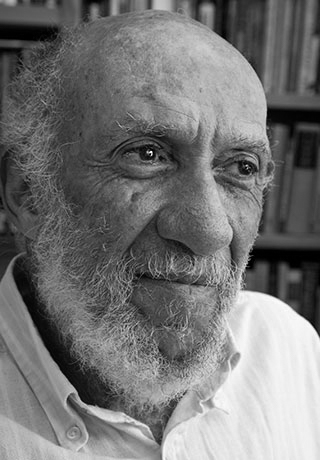

Professor Falk became an adviser to TFF when it was established in 1985.

Share

Leave a Reply

Your email address will not be published. Required fields are marked *

Related Posts

A donors’ conference, co-sponsered by the Burundian government, the Belgian government and UNDP will be held in Brussels January 12-13, 2004. This PressInfo offers a perspective on its urgency. See also TFF’s new Burundi Forum. Imagine for a moment that politics is about goodness and generosity. Where could a few million dollars of government aid and a few civil society organisations – guaranteed – win the hearts of extremely poor millions who want peace and already work hard to achieve it after 10 years of war and genocide? The answer is Burundi, the heart-shaped country in the heart of Africa. Burundi makes a good story from Africa. But what does the world know about Burundi, its problems and struggles? Burundi’s tough reality Here are the basic facts. Burundi’s population is about 7 million and it is number 171 out of the 175 countries on the UNDP’s human development index. Their life...
This is not another geopolitical commentary on the Arctic. It is a visionary peace proposal that can save the region from militarised rivalry and ecological ruin. A blueprint for shared security, sustainable development, and human dignity — benefitting Greenland, the Arctic, and the rest of us. Jan Oberg TFF director Lund, Sweden, February 17, 2026 I. Four Principles for a New Arctic Vision The Arctic is often framed as a cold arena of rivalry — a place where great powers test each other’s resolve. But this worldview is outdated, unimaginative, and ultimately self‑defeating. The Arctic is not a vacuum waiting to be militarised; it is a living region, a climate stabiliser, and a cultural homeland whose future will shape the future of humanity. If we begin from that understanding, a far more rational Arctic order becomes possible — one that is peaceful, cooperative, and centred on the people who actually live there. This vision rests...
Peace is promoted by constructive proposals and dialogue Four preceding PressInfos have expressed concern over — and criticised — the ongoing, militarisation of the EU. Some will say: but there are no alternatives. We believe that there are always alternatives, that democracies are characterised by alternatives and choice, and that openly discussed alternatives will improve the quality and legitimacy of society’s decision–making. In addition, it is an intellectual and moral challenge to not only criticise but also be constructive. If we only tell people that we think they are wrong, they are not likely to listen. However, if we say: what are your views on this set of ideas and steps? — we may sometimes engage them in dialogue and sow a seed. Most people in power circles live their daily lives in in a time frame and a social space where certain ideas, viewpoints and concepts are just not...

Recent Articles

Jan Oberg May 15, 2026 Go to this Fox News page and scroll the whole way down: President Donald Trump tells the world that his meeting with President Xi Jinping yielded a lot of very concrete political and economic results – of course, only where the Chinese side, according to him, agreed with him. He does not mention the Taiwan issue, but Secretary of State, Marco Rubio, says that it did not feature prominently in their talks and that the US policy on Taiwan has not changed. Then go to China Daily – or Global Times – and you will see that for the Chinese it is framework, principles, structure of cooperation etc. that matters – all embedded in the overall idea of “constructive bilateral relationship of strategic stability.” Nowhere is any concrete agreement or deal – all that Trump refers to – mentioned. At the general level, this gives you insights into the very different social...
Lena Petrova of “World Affairs In Context” with more than half a million subscribers on YouTube wanted to explore what a peace researcher like me has to say about, among other things, the First and the Second Cold War and why eethics has disappeared from politics. I am particularly happy about this conversation that also yielded an amazing number of very appreciative comments on YouTube. No doubt, people are longing for alternatives, including peace perspectives.
The MIMAC – Military-Industrial-Media-Academic Complex – drives the world’s rampant militarism and wars without end. Here is a short reflection of how it works against all interests of humanity. #5 deals with why there is no real enemy or threat images/analysis. It’s all ex-post constructions. And, btw, theTFF Peace Pulse is now on Rumble.

TFF on Substack

Discover more from TFF Transnational Foundation & Jan Oberg.

Most Popular

Jan Oberg May 15, 2026 Go to this Fox News page and scroll the whole way down: President Donald Trump tells the world that his meeting with President Xi Jinping yielded a lot of very concrete political and economic results – of course, only where the Chinese side, according to him, agreed with him. He does not mention the Taiwan issue, but Secretary of State, Marco Rubio, says that it did not feature prominently in their talks and that the US policy on Taiwan has not changed. Then go to China Daily – or Global Times – and you will see that for the Chinese it is framework, principles, structure of cooperation etc. that matters – all embedded in the overall idea of “constructive bilateral relationship of strategic stability.” Nowhere is any concrete agreement or deal – all that Trump refers to – mentioned. At the general level, this gives you insights into the very different social...
Lena Petrova of “World Affairs In Context” with more than half a million subscribers on YouTube wanted to explore what a peace researcher like me has to say about, among other things, the First and the Second Cold War and why eethics has disappeared from politics. I am particularly happy about this conversation that also yielded an amazing number of very appreciative comments on YouTube. No doubt, people are longing for alternatives, including peace perspectives.
The MIMAC – Military-Industrial-Media-Academic Complex – drives the world’s rampant militarism and wars without end. Here is a short reflection of how it works against all interests of humanity. #5 deals with why there is no real enemy or threat images/analysis. It’s all ex-post constructions. And, btw, theTFF Peace Pulse is now on Rumble.
Read More
Screenshot-2026-05-15-103534
Jan Oberg May 15, 2026 Go to this Fox News page and scroll the whole way down: President Donald Trump tells the world that his meeting with President Xi Jinping yielded a lot of very concrete political and economic results – of course, only where the Chinese side, according to him, agreed with him. He does not mention the Taiwan issue, but Secretary of State, Marco Rubio, says that it did not feature prominently in their talks and that the US policy on Taiwan has not changed. Then go to China Daily – or Global Times – and you will see that for the Chinese it is framework, principles, structure of cooperation etc. that matters – all embedded in the overall idea of “constructive bilateral relationship of strategic stability.” Nowhere is any concrete agreement or deal – all that Trump refers to – mentioned. At the general level, this gives you insights into the very different social...
Screenshot-2026-05-12-104023
Lena Petrova of “World Affairs In Context” with more than half a million subscribers on YouTube wanted to explore what a peace researcher like me has to say about, among other things, the First and the Second Cold War and why eethics has disappeared from politics. I am particularly happy about this conversation that also yielded an amazing number of very appreciative comments on YouTube. No doubt, people are longing for alternatives, including peace perspectives.
Screenshot-2026-04-13-154551 (2)
The MIMAC – Military-Industrial-Media-Academic Complex – drives the world’s rampant militarism and wars without end. Here is a short reflection of how it works against all interests of humanity. #5 deals with why there is no real enemy or threat images/analysis. It’s all ex-post constructions. And, btw, theTFF Peace Pulse is now on Rumble.
Screenshot-2026-04-13-154551 (1)
Jan Oberg, TFF director April 28, 2026 In this third TFF Peace Pulse, I make the important distinction between the violence and the conflict that violence is a symptom of. If you want peace, focus on the underlying conflict because that is the key to resolution, peacemaking, and a better future for the parties. The West is obsessed with violence, just look around you – and 90+ per cent of the public debate is about military issues and other violence – totally wasted for peace. These Peace Pulses will only be published here a few times. You will also not find them on YouTube and Vimeo because both platforms have blocked TFF and me; you know, peace is dangerous these days. Most TFF’s videos since 2007 are now on Rumble.
Screenshot-2026-04-13-154551
In contrast to most, we’ll bring alternatives, solutions, hope and strategies for a better future. Times are dangerous, yes, but that only intensifies the need for constructive thinking and action! Jan Oberg, TFF director April 13, 2026 The new TFF Peace Pulse uses video messages in a new way: Max 3-5-minute-long comments, ideas or perhaps mini-lectures, all about peace – positive peace. We launch them today on April 13, 2026 with a carefully crafted visual aesthetic fitting the content. We hope to publish them regularly from now on. We launch Peace Pulse (PP) – for a number of reasons. The world is in chaos, and there are countless reasons to feel concerned, frustrated, even angry. The atmosphere is saturated with doom and gloom, with negative energy and rear‑mirror thinking, while vision, imagination, alternatives, strategies and genuine future‑mindedness remain in short supply. And without them, we simply can’t save the world. Looking at problems from a hundred angles will...
IMG_5165 (1)
PART II — Publishing Peace in a System That Prioritises Militarism Jan Oberg, TFF director April 10, 2026 How TFF Maintains a Daily Voice in a Digital World Built for Noise This article is part of the series “TFF at 40″ and it invites you to learn about Four Decades of Publishing Peace. It takes a look at how a small, people‑financed peace foundation has communicated across four generations of technology — from wax stencils and fax machines to mass email and Substack — and why TFF continues to publish every single day in a system that rewards noise, conflict, and militarism. ◆ What it means to publish peace every single day in a digital system built for 24/7 news and other noise, confrontation, and militarism. How TFF’s independence, continuity, and global readership defy algorithms, donor cycles, and Western media censorhip — and why the Majority World keeps listening. When the...

