
Against world revolution - constructively!

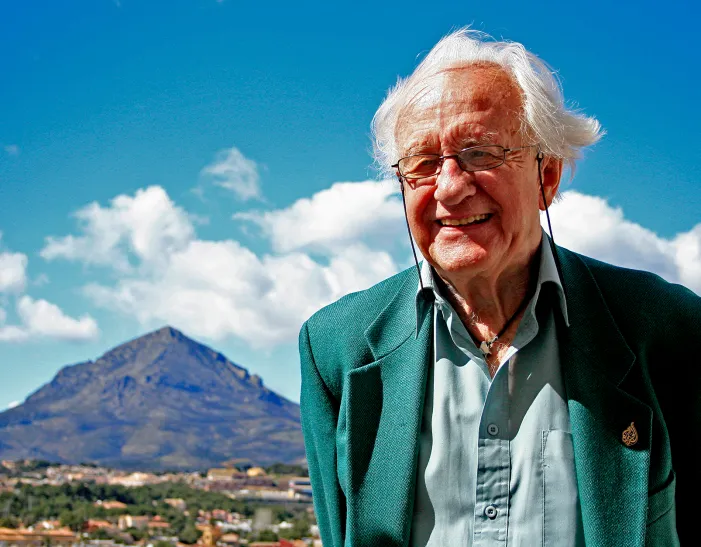
From Alicante, Spain

“Unemployment in Spain Tops 6.1M” – Unemployment rate is 26.6 percent; for those under the age of 25, 56.5 percent; all growing, all EU records. “Bank of Spain inspectors pen damning report about wrongdoing in Spanish banks: look the other way” was the reaction, while the government spends billions of Euros to bail out those banks. (El País, early January 2013).

And this: “300 Madrid health chiefs resign over privatization”; “Locksmiths in Pamplona refuse taking part in evictions involving families with young children”; “Theater chief sells carrots at 13 Euro as entrance ticket” – value-added tax down from 21 to 4 percent for food; “Mothers strip for erotic calendar to drum up funds for canceled school buses”.

A country rapidly de-developing, into low Third World levels, even in health. A country not only saving banks rather than people but also letting the banks get away with crimes. A country reacting with mini-revolutions, nonviolence, civil disobedience against such glaring injustices. A country where the class war is over for the time being; capitalism won and more particularly the bankers and their servants, the politicians, and even more particularly the finance-speculation capital.

And this in a Spain close to 40 years into democracy after 40 years of Franco dictatorship. Constitution + democracy + elections + human rights (also to property) + parliament vs finance capitalism. Weak vs strong.

What is Spain, and EU heading for? What will be fund further down this road?

Rather obvious: “more of the same”. There will be not only poverty but also widespread misery; people with capital by and large will survive intact. But then, Spain – like the USA, the model – is heading for a divided society, one part for the well-to-do, the other for the rest, from upper-middle class down to crime and prostitution. Like the 19th century societies in Tolstoy’s Anna Karenina, Jane Austen’s Pride and Prejudice, and Marcel Proust, sharply divided between those who lived off capital–including land–and those who worked for a living.

The former had receptions, balls, travels, card games and culture, busying themselves and marrying their offspring into wealthier families. The latter served them, busying themselves with survival. The rich will live more and more in enclosed security communities, as larger amounts of taxpayer money will be spent on secret and open police and military.

This cannot and will not stand. There is already a dialectic of resistance, some of it very creative. And below and beyond that a very old debate takes shape. The big-bang violent world revolution (in 2017, around October?), building a new system from scratch? The slow evolution relying on the time tested institution of democracy? Or – a third way, many nonviolent revolutions on behalf of humanity?

This column favors that third way in a crisis-ridden system with untold millions suffering alongside impotent institutions. But let us first argue against the violent revolution based on maximizing the contradictions, with no piecemeal evolutions or revolutions: the Big-Bang.

Given the right moment, after a natural or social catastrophe, what is left of a dying system can be destroyed. History may become plastic, ready to be molded: a tabula rasa, waiting for a new Creator. But is our species with good intentions – omniscient, omnipotent and omnipresent – enough to play God? The suffering from direct violence may exceed that of structural violence and not affect those who benefit from the pathologies; they know how to protect themselves. But there are two strong arguments against the Big, not only the Bang.

First: we humans are numerous and diverse, social formulas are few and simplistic; some humans will always find some shoes pinching. If not today, for sure tomorrow; we forget what fits, not what pinches.

Second: the problem is not an abrupt, radical change from an old to a new reality, but ushering in a new world for everybody everywhere forever. The more we create God in our own image, the more it becomes obvious that we are not up to it. Some other species, perhaps; not us.

Three countries presented their revolutions as iconic for the whole world: France for modernity, the USA for capitalism and Russia for socialism; one supposedly canceling the other. But look at them today! Fortunately, large parts of the world do not suffer the pathologies in the wake of their pretensions: for Russia a counter-revolution, for the USA the full weight of the crisis of capitalism. And nearly two centuries after Waterloo Napoleon’s gloire is fading, even in France.

They all suffered from the Western God-complex: erasing others through invasion and imperialism, imposing their own formulae. Yet, even they did not have the power to change the whole world into their own image. Nobody should have that power. There are many options between the omnipretension to change everything and a stagnant evolution.

Take four approaches to democracy–rule with the consent of the ruled: a) multi-party national elections; b) dialogues to consensus based on transparency-information-education; c) referenda local-national-global on basic issues; 4) petition democracy with critical-constructive proposals. All of the above, none of them? Who is to say what the answer is? Rather than imposing majority rule on a dialogue-consensus culture (West-UN in Cambodia) a range of options for here and now, not for everywhere forever. Experimenting on behalf of humanity (Sartre).

Take five approaches to the economy: capitalism, socialism, social capitalism, localism, Japanese-Chinese capi-communism; all of the above, none? Who is to say what the answer to livelihood is?

At the end of socialism in Eastern Europe there were debates about alternatives: “one country, both systems”, “two ways to socialism in the same country”, “private cooperative, not state, ownership”. But all disappeared in capitalism or socialism.

And China? One country, two systems? Converging, combining the best of both–or the worst? To be watched; a huge country that could experiment with more than two systems.

Like Spain should, right now.

Originally published by Transcend Media Service
Share

Leave a Reply

Your email address will not be published. Required fields are marked *

Related Posts

Peace is promoted by constructive proposals and dialogue Four preceding PressInfos have expressed concern over — and criticised — the ongoing, militarisation of the EU. Some will say: but there are no alternatives. We believe that there are always alternatives, that democracies are characterised by alternatives and choice, and that openly discussed alternatives will improve the quality and legitimacy of society’s decision–making. In addition, it is an intellectual and moral challenge to not only criticise but also be constructive. If we only tell people that we think they are wrong, they are not likely to listen. However, if we say: what are your views on this set of ideas and steps? — we may sometimes engage them in dialogue and sow a seed. Most people in power circles live their daily lives in in a time frame and a social space where certain ideas, viewpoints and concepts are just not...
Photos © TFF 2000 Read PressInfo 90 “Lift the Sanctions and Bring More Aid to Yugoslavia” See Pictures from Belgrade © TFF 2000 Please reprint, copy, archive, quote or re-post this item, but please retain the source.
Av FRANK SØHOLM GREVIL 16 augusti 2004  Vi er nu nået til tredje akt i det absurde teaterstykke, der i analogi med de store skueprocesser i Moskva 1936-38 er blevet døbt ‘Grevil-sagen’. Første akt bestod i min anonyme fremlæggelse af egenhændigt nedklassificerede rapporter i Berlingske Tidende i februar og marts. Andet akt udgjordes af min fremtræden med navn og billede i Information i april samt den efterfølgende mediestorm, som uden min direkte medvirken kostede en forsvarsminister taburetten samt en sigtelse for brud på tavshedspligten. Tredje akt bliver en retssag, hvor jeg står tiltalt for at have overtrådt straffelovens bestemmelser om uberettiget videregivelse eller udnyttelse af fortrolige oplysninger. Statsanklageren har ovenikøbet valgt at påberåbe sig særligt skærpende omstændigheder. Da jeg aldrig har modtaget betaling for at stille rapporterne til rådighed eller lade mig interviewe, må det skærpende bestå i, at “videregivelsen eller udnyttelsen er sket under sådanne omstændigheder, at det påfører...

Recent Articles

PressInfo # 141, December 21, 2001It’s time to prepare reconciliation between Albanians and Serbs PressInfo # 140, December 14, 2001Ibrahim Rugova’s decade-long leadership in Kosovo/a PressInfo # 139, 11. december, 2001En god nyhet: Jugoslaviens Sannings- och försoningskommission PressInfo # 139, 11. december, 2001Gode nyheder: Jugoslaviens Sandheds- og Forsoningskommission PressInfo # 139, December 11, 2001Good news: Yugoslavia’s Truth and Reconciliation Commission PressInfo # 138, November 8, 2001TFF co-founder PhD with thesis about young people with roots in other cultures PressInfo # 138, November 8, 2001TFF:s medstiftare doktor på avhandling om unga med ursprung i andra kulturer PressInfo # 137, October 17, 2001A new Marshall Plan: Advancing human security and controlling terrorism PressInfo # 136, October 15, 2001The UN and Annan really deserve it PressInfo # 135, October 10, 2001Preventing a terrorist mushroom cloud PressInfo # 134, 17 oktober, 2001Sverige og 11. september PressInfo # 134, October 9, 2001Sweden and September 11...
Peace is promoted by constructive proposals and dialogue Four preceding PressInfos have expressed concern over — and criticised — the ongoing, militarisation of the EU. Some will say: but there are no alternatives. We believe that there are always alternatives, that democracies are characterised by alternatives and choice, and that openly discussed alternatives will improve the quality and legitimacy of society’s decision–making. In addition, it is an intellectual and moral challenge to not only criticise but also be constructive. If we only tell people that we think they are wrong, they are not likely to listen. However, if we say: what are your views on this set of ideas and steps? — we may sometimes engage them in dialogue and sow a seed. Most people in power circles live their daily lives in in a time frame and a social space where certain ideas, viewpoints and concepts are just not...
Photos © TFF 2000 Read PressInfo 90 “Lift the Sanctions and Bring More Aid to Yugoslavia” See Pictures from Belgrade © TFF 2000 Please reprint, copy, archive, quote or re-post this item, but please retain the source.

TFF on Substack

Discover more from TFF Transnational Foundation & Jan Oberg.

Most Popular

PressInfo # 141, December 21, 2001It’s time to prepare reconciliation between Albanians and Serbs PressInfo # 140, December 14, 2001Ibrahim Rugova’s decade-long leadership in Kosovo/a PressInfo # 139, 11. december, 2001En god nyhet: Jugoslaviens Sannings- och försoningskommission PressInfo # 139, 11. december, 2001Gode nyheder: Jugoslaviens Sandheds- og Forsoningskommission PressInfo # 139, December 11, 2001Good news: Yugoslavia’s Truth and Reconciliation Commission PressInfo # 138, November 8, 2001TFF co-founder PhD with thesis about young people with roots in other cultures PressInfo # 138, November 8, 2001TFF:s medstiftare doktor på avhandling om unga med ursprung i andra kulturer PressInfo # 137, October 17, 2001A new Marshall Plan: Advancing human security and controlling terrorism PressInfo # 136, October 15, 2001The UN and Annan really deserve it PressInfo # 135, October 10, 2001Preventing a terrorist mushroom cloud PressInfo # 134, 17 oktober, 2001Sverige og 11. september PressInfo # 134, October 9, 2001Sweden and September 11...
Peace is promoted by constructive proposals and dialogue Four preceding PressInfos have expressed concern over — and criticised — the ongoing, militarisation of the EU. Some will say: but there are no alternatives. We believe that there are always alternatives, that democracies are characterised by alternatives and choice, and that openly discussed alternatives will improve the quality and legitimacy of society’s decision–making. In addition, it is an intellectual and moral challenge to not only criticise but also be constructive. If we only tell people that we think they are wrong, they are not likely to listen. However, if we say: what are your views on this set of ideas and steps? — we may sometimes engage them in dialogue and sow a seed. Most people in power circles live their daily lives in in a time frame and a social space where certain ideas, viewpoints and concepts are just not...
Photos © TFF 2000 Read PressInfo 90 “Lift the Sanctions and Bring More Aid to Yugoslavia” See Pictures from Belgrade © TFF 2000 Please reprint, copy, archive, quote or re-post this item, but please retain the source.
Read More
Imagen-thumbnail-The-Transnational-1
PressInfo # 141, December 21, 2001It’s time to prepare reconciliation between Albanians and Serbs PressInfo # 140, December 14, 2001Ibrahim Rugova’s decade-long leadership in Kosovo/a PressInfo # 139, 11. december, 2001En god nyhet: Jugoslaviens Sannings- och försoningskommission PressInfo # 139, 11. december, 2001Gode nyheder: Jugoslaviens Sandheds- og Forsoningskommission PressInfo # 139, December 11, 2001Good news: Yugoslavia’s Truth and Reconciliation Commission PressInfo # 138, November 8, 2001TFF co-founder PhD with thesis about young people with roots in other cultures PressInfo # 138, November 8, 2001TFF:s medstiftare doktor på avhandling om unga med ursprung i andra kulturer PressInfo # 137, October 17, 2001A new Marshall Plan: Advancing human security and controlling terrorism PressInfo # 136, October 15, 2001The UN and Annan really deserve it PressInfo # 135, October 10, 2001Preventing a terrorist mushroom cloud PressInfo # 134, 17 oktober, 2001Sverige og 11. september PressInfo # 134, October 9, 2001Sweden and September 11...
Imagen-thumbnail-The-Transnational-1
Peace is promoted by constructive proposals and dialogue Four preceding PressInfos have expressed concern over — and criticised — the ongoing, militarisation of the EU. Some will say: but there are no alternatives. We believe that there are always alternatives, that democracies are characterised by alternatives and choice, and that openly discussed alternatives will improve the quality and legitimacy of society’s decision–making. In addition, it is an intellectual and moral challenge to not only criticise but also be constructive. If we only tell people that we think they are wrong, they are not likely to listen. However, if we say: what are your views on this set of ideas and steps? — we may sometimes engage them in dialogue and sow a seed. Most people in power circles live their daily lives in in a time frame and a social space where certain ideas, viewpoints and concepts are just not...
Imagen-thumbnail-The-Transnational-1
Photos © TFF 2000 Read PressInfo 90 “Lift the Sanctions and Bring More Aid to Yugoslavia” See Pictures from Belgrade © TFF 2000 Please reprint, copy, archive, quote or re-post this item, but please retain the source.
Imagen-thumbnail-The-Transnational-1
Av FRANK SØHOLM GREVIL 16 augusti 2004  Vi er nu nået til tredje akt i det absurde teaterstykke, der i analogi med de store skueprocesser i Moskva 1936-38 er blevet døbt ‘Grevil-sagen’. Første akt bestod i min anonyme fremlæggelse af egenhændigt nedklassificerede rapporter i Berlingske Tidende i februar og marts. Andet akt udgjordes af min fremtræden med navn og billede i Information i april samt den efterfølgende mediestorm, som uden min direkte medvirken kostede en forsvarsminister taburetten samt en sigtelse for brud på tavshedspligten. Tredje akt bliver en retssag, hvor jeg står tiltalt for at have overtrådt straffelovens bestemmelser om uberettiget videregivelse eller udnyttelse af fortrolige oplysninger. Statsanklageren har ovenikøbet valgt at påberåbe sig særligt skærpende omstændigheder. Da jeg aldrig har modtaget betaling for at stille rapporterne til rådighed eller lade mig interviewe, må det skærpende bestå i, at “videregivelsen eller udnyttelsen er sket under sådanne omstændigheder, at det påfører...
Imagen-thumbnail-The-Transnational-1
Af Svenska Irakkommittén mot de Ekonomiska Sanktionerna (SIES) 13 september 2002 FN:s ekonomiska sanktioner mot Irak har nu pågått i tolv år och drabbat det irakiska folket med svåra lidanden. Enligt FN:s egna siffror har mer än 1,5 miljoner människor, varav ca 600 000 barn, dött som en direkt följd av sanktionerna. Dessutom har ett lågintensivt bombkrig mot landet pågått under dessa år. Av all denna förödelse- orsakad huvudsakligen av amerikansk och brittisk politik- har Saddam Husseins brutala och diktatoriska regim snarast stärkts än försvagats. Nu förbereder USA under president Bushs ledning ett storskaligt bombkrig mot Irak som kommer att innebära ett ännu större lidande för civilbefolkningen. Ett sådant krig kommer dessutom att ytterligare undergräva freden och säkerheten i världen. Att upprätta en demokratisk regim i Irak är det irakiska folkets angelägenhet och får enligt folkrätten inte ske med krigshandlingar utifrån. Folkrätten och FN:s stadgar måste respekteras. Vi vädjar till...


