
An open letter on my 82nd birthday

Exactly two years ago I wrote my first blog. Throughout this period it has been a bittersweet experience consisting of work, play, challenge, and occasional consternation. Many warm and generous responses have given me an appreciation of the distinctive satisfactions of cyber connectivity.

Such pleasures have been somewhat offset by hostile commentary and related monitoring, not mainly for disagreements as to substance, but to find discrediting material, usually torn from context, that might induce me to resign or be dismissed from my unpaid UN position as Special Rapporteur for Occupied Palestine on behalf of the Human Rights Council. What is most distressing is not the attacks that are well known to come with this territory, but the degree to which important government officials in the United States and at the UN so easily become willing accomplices in such malicious campaigns of defamation, and do so without ‘due diligence.’

Of course, someone more prudent than I, would have long ago abandoned the blogosphere, and more fully enjoyed the many serene satisfactions of southern California and the stimulating challenges of summers in Turkey. The magnetic appeal of this risky, still uncertain, medium of communication that was born in this century is both to reach others everywhere on the planet and to engage in a form of self-exploration and self-discovery that demonstrates almost daily that one is never too old to learn anew. These posts of mine have been mostly reflections of my experience around the world, interpretations of current global issues, and suggestions for a more peaceful, just, and sustainable world.

I have deeply appreciated the support and most of the reactions I have received from known and unknown persons throughout the planet. At the deepest level, it makes me realize that there exists a large invisible and informal community of shared faith in the healing power of love, and less grandly, of the gratifications of dialogue. It is as a charter member of this community that makes me feel that it is valuable to remain an active participant so long as my muse permits, perhaps at a reduced rate.

At the start of this experience I felt that it was best to allow all comments to appear, including the most unsavory. Yet as the months went by I realized that there is a cyber analogue to Gresham’s Law: ‘bad comments drive out good!’ I received many personal messages outside the blogosphere decrying the toxic atmosphere. This prompted me to try my best to monitor comments, excluding those that were uncivil in tone, as well as those that consisted of personal attacks. It was not easy. It is a fine line. I was criticized for straying across it, or using my discretion in a biased manner. I listened, and have tried to be sensitive to diverse viewpoints without denying my own passions.

I realize that many online media outlets allow comments to appear with only minimal filtering, but I have come to feel that this diminishes the quality and benefits of the dialogic potential of a blog, especially one devoted often to issues being debated in public space. It has taught me that while freedom of expression is a vital human right, and integral to democracy, it must be limited by context. The world is now a crowded theater. Koran burning and bible burning are the 21st century equivalent of shouting ‘fire!’ and inducing panic and causing mayhem in distant places. The problem of a blog is, of course, different. The justification for limiting expression to establish the kind of decorum that facilitates dialogue and conversation.

Among the side effects of my blog has been an opportunity to publish more widely. It was encouraging to be invited to become a regular contributor to Al Jazeera’s English online opinion section. I find this brilliantly edited source of news and commentary to be far more cosmopolitan in its orientation toward events of the day than the most authoritative mainstream Western media outlets. This post-colonial de-Westernization of information and interpretative assessment is integral to building a multi-civilizational world community dedicated to the principles of humane and sustainable governance at all levels of social interaction.

As time passes, the political circumstances of the peoples of the world are undergoing a variety of severe stresses, some local, others global, some presently experienced, others threatened in the near and medium future. There are extremely dangerous underlying patterns of behavior emerging: Among the most disturbing is the de-territorialization of conflict epitomized by kill lists and drone technology that ignores the sovereignty of others and defies the moral and legal limits embodied in international humanitarian law.

There are also some latent opportunities that will come as surprises if acted upon. Perhaps, the reelected Barack Obama might surprise us by being willing to take steps to convince the world that he deserved the Nobel Peace Price that had been prematurely, and somewhat perversely, awarded to him in 2009. One sure way to do this would be to revive his Prague vision of a world without nuclear weapons. There will never be a better time in world politics to convene the nine governments whose states possess nuclear weapons. There is no raging geopolitical conflict, a mounting risk of a dangerous surge in the proliferation, and the many countries beset by financial crisis would welcome uplifting moves toward denuclearization.

Nothing would more quickly restore America’s tarnished reputation as a benevolent force in the world than tabling a detailed proposal for phased and verified nuclear disarmament to be implemented within a decade. It is commonplace to applaud the vision but then immediately defer its realization to the distant future, which is to take back with one hand what was given with the other, raising expectations of those who are dedicated to abolishing the weaponry, and then reassuring nuclearists that they have nothing to worry about as nothing will actually happen. Now is the time for a genuine presidential initiative that is launched in Washington but negotiated under UN auspices to rid the world of the menace of nuclear weaponry, and to belatedly clear the conscience of humanity for its reliance on ‘security’ ever since1945 that rests on a genocidal doctrine of deterrence. Of course, the main responsibility for this reliance is not that of humanity, but of the governments that possess the weaponry and their supportive bureaucratic and economic-militarized infrastructures. Even if the initiative should not succeed in achieving agreement, the effort would assure the Obama presidency of a memorable legacy.

The other global challenge that presents the White House with an extraordinary opportunity for action is climate change. The world, including the United States, has ignored a multitude of wakeup calls, most recently super storm Sandy. It has also refused to take seriously the scientific consensus warning the world of the dire consequences of failing to curtail carbon emissions. Further delay is not neutral, causing a variety of effects that cumulatively disrupt the ecological balances that moderate weather, rainfall, and ocean levels to accommodate humans, plants, and animals. Inaction and denial is lavishly funded by the fossil fuel industries that have made climate skepticism so influential in the United States, and elsewhere. Nothing could do more to build the legacy of Obama’s second term than to tear down the high wall of silence that has been built to keep the dangers of global warming out of sight.

It is in this spirit of concern, struggle, hope, and love that I commit myself to carry on with this journey of a still aspiring citizen pilgrim journeying ever so slowly toward that unseen yet real promised land.
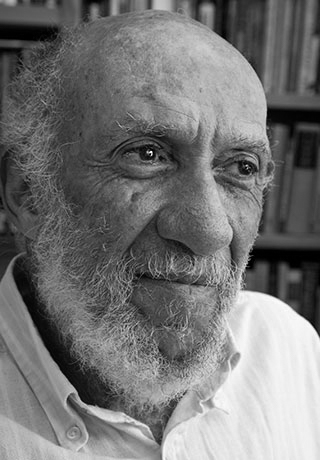

Professor Falk became an adviser to TFF when it was established in 1985.

Share

Leave a Reply

Your email address will not be published. Required fields are marked *

Related Posts

“En dag som berättigar till fest”, utropade den London-baserade al-Quds al-Arabi efter FN:s eldupphörresolution, “eftersom detta är första gången som Israel accepterar ett FN-beslut från en position som besegrad och inte som segrare”. Att ett arabisk-israeliskt krig för en gångs skull slutat med arabisk seger, är en helt dominerade åsikt i arabiska medier. Al-Quds al-Arabi tillåter sig att drömma om att det israeliska nederlaget skall leda till massflykt från Israel. Men i nästa andetag påminner tidningen om att Israel aldrig brukar genomföra sina internationella åtaganden och varnar för att förlorarna, liksom tidigare, kan hämnas genom att provocera fram inbördeskrig i Libanon. Med tanke på de otaliga massmediala vittnesmålen om det libanesiska folkets eniga motståndskraft förefaller risken för inre stridigheter i det sargade landet just nu liten. Men visst kan man urskilja nyansskillnader i libanesiska tidningar. Vänsterorganet al-Safir uppfattar FN-resolutionen som en komplott i syfte att rädda Israel från ännu större...
A donors’ conference, co-sponsered by the Burundian government, the Belgian government and UNDP will be held in Brussels January 12-13, 2004. This PressInfo offers a perspective on its urgency. See also TFF’s new Burundi Forum. Imagine for a moment that politics is about goodness and generosity. Where could a few million dollars of government aid and a few civil society organisations – guaranteed – win the hearts of extremely poor millions who want peace and already work hard to achieve it after 10 years of war and genocide? The answer is Burundi, the heart-shaped country in the heart of Africa. Burundi makes a good story from Africa. But what does the world know about Burundi, its problems and struggles? Burundi’s tough reality Here are the basic facts. Burundi’s population is about 7 million and it is number 171 out of the 175 countries on the UNDP’s human development index. Their life...
Peace is promoted by constructive proposals and dialogue Four preceding PressInfos have expressed concern over — and criticised — the ongoing, militarisation of the EU. Some will say: but there are no alternatives. We believe that there are always alternatives, that democracies are characterised by alternatives and choice, and that openly discussed alternatives will improve the quality and legitimacy of society’s decision–making. In addition, it is an intellectual and moral challenge to not only criticise but also be constructive. If we only tell people that we think they are wrong, they are not likely to listen. However, if we say: what are your views on this set of ideas and steps? — we may sometimes engage them in dialogue and sow a seed. Most people in power circles live their daily lives in in a time frame and a social space where certain ideas, viewpoints and concepts are just not...

Recent Articles

“En dag som berättigar till fest”, utropade den London-baserade al-Quds al-Arabi efter FN:s eldupphörresolution, “eftersom detta är första gången som Israel accepterar ett FN-beslut från en position som besegrad och inte som segrare”. Att ett arabisk-israeliskt krig för en gångs skull slutat med arabisk seger, är en helt dominerade åsikt i arabiska medier. Al-Quds al-Arabi tillåter sig att drömma om att det israeliska nederlaget skall leda till massflykt från Israel. Men i nästa andetag påminner tidningen om att Israel aldrig brukar genomföra sina internationella åtaganden och varnar för att förlorarna, liksom tidigare, kan hämnas genom att provocera fram inbördeskrig i Libanon. Med tanke på de otaliga massmediala vittnesmålen om det libanesiska folkets eniga motståndskraft förefaller risken för inre stridigheter i det sargade landet just nu liten. Men visst kan man urskilja nyansskillnader i libanesiska tidningar. Vänsterorganet al-Safir uppfattar FN-resolutionen som en komplott i syfte att rädda Israel från ännu större...
Greenland – the world’s largest island, a continent of its own with only 57.000 inhabitants. I visited it for the first time in May 2005. I flew across the inland ice to Nuuk, the tiny capital with some 14.000 inhabitants. I was overwhelmed by the pride and kindness of everyone I met as well as by the unique natural beauty. Unfortunately, due to weather conditions during my ten-day stay I could get nowhere else but Nuuk. Fortunately, however, among those I met was Gitte Arvegaard, a Danish lawyer and negotiator employed by the local government, Greenland Home Rule. She turned out to be an enthusiastic photographer with a lot of pictures taken during various trips around Greenland. So this Greeland series is the result of our cooperative effort. We both hope you enjoy it and are stimulated to visit Greenland – about which you may read more here. Finally, if you want to...
 Jan Oberg’s storyof how he met Sir Paul Liverpool – where else to meet Paul McCartney? Paul’s old class mate and TFF Associate, Jonathan Power introduced me to Paul McCartney in Liverpool at an informal reception. It was held at what used to be their school, now the Liverpool Institute for Performing Arts and we were there to celebrate that Jonathan had written Amnesty International’s 40th Anniversary book. This happy event for “righting wrongs and writing songs” gave me an opportunity to meet Paul and tell him about TFF and get straight to the matter: would he consider making a donation in support of our work for peace? While I was probably the only one with such a wish that day, I was certainly not the only one who wanted to shake hands and talk with him. In the last minutes before Paul was to leave, Jonathan brought us together and we got about three...

TFF on Substack

Discover more from TFF Transnational Foundation & Jan Oberg.

Most Popular

“En dag som berättigar till fest”, utropade den London-baserade al-Quds al-Arabi efter FN:s eldupphörresolution, “eftersom detta är första gången som Israel accepterar ett FN-beslut från en position som besegrad och inte som segrare”. Att ett arabisk-israeliskt krig för en gångs skull slutat med arabisk seger, är en helt dominerade åsikt i arabiska medier. Al-Quds al-Arabi tillåter sig att drömma om att det israeliska nederlaget skall leda till massflykt från Israel. Men i nästa andetag påminner tidningen om att Israel aldrig brukar genomföra sina internationella åtaganden och varnar för att förlorarna, liksom tidigare, kan hämnas genom att provocera fram inbördeskrig i Libanon. Med tanke på de otaliga massmediala vittnesmålen om det libanesiska folkets eniga motståndskraft förefaller risken för inre stridigheter i det sargade landet just nu liten. Men visst kan man urskilja nyansskillnader i libanesiska tidningar. Vänsterorganet al-Safir uppfattar FN-resolutionen som en komplott i syfte att rädda Israel från ännu större...
Greenland – the world’s largest island, a continent of its own with only 57.000 inhabitants. I visited it for the first time in May 2005. I flew across the inland ice to Nuuk, the tiny capital with some 14.000 inhabitants. I was overwhelmed by the pride and kindness of everyone I met as well as by the unique natural beauty. Unfortunately, due to weather conditions during my ten-day stay I could get nowhere else but Nuuk. Fortunately, however, among those I met was Gitte Arvegaard, a Danish lawyer and negotiator employed by the local government, Greenland Home Rule. She turned out to be an enthusiastic photographer with a lot of pictures taken during various trips around Greenland. So this Greeland series is the result of our cooperative effort. We both hope you enjoy it and are stimulated to visit Greenland – about which you may read more here. Finally, if you want to...
 Jan Oberg’s storyof how he met Sir Paul Liverpool – where else to meet Paul McCartney? Paul’s old class mate and TFF Associate, Jonathan Power introduced me to Paul McCartney in Liverpool at an informal reception. It was held at what used to be their school, now the Liverpool Institute for Performing Arts and we were there to celebrate that Jonathan had written Amnesty International’s 40th Anniversary book. This happy event for “righting wrongs and writing songs” gave me an opportunity to meet Paul and tell him about TFF and get straight to the matter: would he consider making a donation in support of our work for peace? While I was probably the only one with such a wish that day, I was certainly not the only one who wanted to shake hands and talk with him. In the last minutes before Paul was to leave, Jonathan brought us together and we got about three...
Read More
Imagen-thumbnail-The-Transnational-1
“En dag som berättigar till fest”, utropade den London-baserade al-Quds al-Arabi efter FN:s eldupphörresolution, “eftersom detta är första gången som Israel accepterar ett FN-beslut från en position som besegrad och inte som segrare”. Att ett arabisk-israeliskt krig för en gångs skull slutat med arabisk seger, är en helt dominerade åsikt i arabiska medier. Al-Quds al-Arabi tillåter sig att drömma om att det israeliska nederlaget skall leda till massflykt från Israel. Men i nästa andetag påminner tidningen om att Israel aldrig brukar genomföra sina internationella åtaganden och varnar för att förlorarna, liksom tidigare, kan hämnas genom att provocera fram inbördeskrig i Libanon. Med tanke på de otaliga massmediala vittnesmålen om det libanesiska folkets eniga motståndskraft förefaller risken för inre stridigheter i det sargade landet just nu liten. Men visst kan man urskilja nyansskillnader i libanesiska tidningar. Vänsterorganet al-Safir uppfattar FN-resolutionen som en komplott i syfte att rädda Israel från ännu större...
Greenland – the world’s largest island, a continent of its own with only 57.000 inhabitants. I visited it for the first time in May 2005. I flew across the inland ice to Nuuk, the tiny capital with some 14.000 inhabitants. I was overwhelmed by the pride and kindness of everyone I met as well as by the unique natural beauty. Unfortunately, due to weather conditions during my ten-day stay I could get nowhere else but Nuuk. Fortunately, however, among those I met was Gitte Arvegaard, a Danish lawyer and negotiator employed by the local government, Greenland Home Rule. She turned out to be an enthusiastic photographer with a lot of pictures taken during various trips around Greenland. So this Greeland series is the result of our cooperative effort. We both hope you enjoy it and are stimulated to visit Greenland – about which you may read more here. Finally, if you want to...
p_mccartney_poem
 Jan Oberg’s storyof how he met Sir Paul Liverpool – where else to meet Paul McCartney? Paul’s old class mate and TFF Associate, Jonathan Power introduced me to Paul McCartney in Liverpool at an informal reception. It was held at what used to be their school, now the Liverpool Institute for Performing Arts and we were there to celebrate that Jonathan had written Amnesty International’s 40th Anniversary book. This happy event for “righting wrongs and writing songs” gave me an opportunity to meet Paul and tell him about TFF and get straight to the matter: would he consider making a donation in support of our work for peace? While I was probably the only one with such a wish that day, I was certainly not the only one who wanted to shake hands and talk with him. In the last minutes before Paul was to leave, Jonathan brought us together and we got about three...
Logo-Transnational
1942James Paul McCartney is born in Liverpool on June 18th. 1956Paul writes his first song, I Lost My Little Girl. 1957Paul meets John Lennon at St. Peter’s Church Fete, Woolton, Liverpool. He joins his first group, The Quarrymen and performs in his first gig at The New Clubmoor Hall, Liverpool, on October 18th. 1960Formation of The Beatles, who play residencies in Hamburg and at The Cavern in Liverpool. 1961First Beatles recordings issued in Germany, as the backing group for Tony Sheridan. 1962The first Beatles Parlophone recording, Love Me Do, reaches number 17 in the British charts. 1963The birth of Beatlemania. Please Please Me gives the group their first British Number 1. She Loves You cements their success. Please Please Me and With The Beatles albums released. 1964First triumphant American tour. The Beatles perform at the Royal Command Performance and release their first film, A Hard Day’s Night. Their single I...
Logo-Transnational
  Back to the series “Bujumbura, Burundi”
By JONATHAN POWER August 16, 2000 LONDON – Remember the summer of ’98? In the sweltering, torpid heat of a Roman august, charged with exhaust fumes, the international community gave its overwhelming approval to the establishment of an International Criminal Court that will enable those accused of “crimes against humanity” to be tried and, if convicted, sentenced. Only seven nations opposed or abstained from the motion, including Israel, China, India and the U.S.A. where the Pentagon had successfully waged bureaucratic guerrilla war to undermine the initially sympathetic stance of President Bill Clinton. Two years on we can now see what an epochal event that was. In a the stroke of 120 pens it changed the climate on political thuggery. After numerous half-starts and false starts ever since the Nuremberg and Tokyo trials that convicted the war criminals of the Second World War, the world at last had agreed en masse a common...

