
Beyond language: Reflections on the Arakan tragedy

Yesterday I listened to the wife of the Prime Minister, Emine Erdogan, speak about her recent harrowing visit to the Rohingya people in the the federal state of Arakan (mainly known in the West as Rakhine) who are located in northwestern Myanmar (aka Burma).
The Rohingya are a Muslim minority numbering over one million, long victimized locally and nationally in Burma and on several occasions over the years their people have been brutally massacred and their villages burned. She spoke in a deeply moving way about this witnessing of acute human suffering shortly after the most recent bloody episode of communal violence in June of this year. She lamented that such an orgy of violence directed at an ethnic and religious minority by the Buddhist majority is almost totally ignored by most of the world, and is quietly consigned by media outlets to their outermost zones of indifference and irrelevance.
She especially appealed to the women present to respond with activist compassion, stressing that women are always the most victimized category in these extreme situations of minority persecution and ethnic cleansing.

The situation of the Rohingya is an archetypal example of acute vulnerability in a state-centric world. In 1982 the territorial government of Burma stripped away the citizen rights of the impoverished Rohingya Muslims who have lived in Arakan for many generations, but are cynically claimed by Rangoon to be unlawful new migrants from bordering Bangladesh who do not belong in Burma and have no right to remain or to burden the state or cause tension by their presence.
Bangladesh in turn, itself among the world’s poorest countries, already has 500,000 Rohingya who fled across the Burmese border after earlier attacks on their communities, and has closed its borders to any further crossings by those escaping persecution, displacement, destruction of their homes and villages, and threats to their lives.
To deepen this aspect of the tragedy, only 10% of these migrants who fled from Burma have been accepted as ‘refugees’ by the UN High Commission of Refugees, and the great majority of the Rohingya living in Bangladesh for years survive miserably as stateless persons without rights and living generally at or even below subsistence levels.
The Rohingya who continue to exist precariously within Arakan are stateless and unwanted, many are reported to wish openly for their own death. As a group they endure hardships and deprivations in many forms, including denial of health services, educational opportunity, and normal civil rights, while those who have left for the sake of survival, are considered to be comparatively fortunate if they manage to be accepted as ‘refugees’ even if their status as undocumented refugees means the absence of minimal protection, the denial of any realistic opportunity for a life of dignity, and the terrifying uncertainties of being at the continuing mercy of a hostile community and an inhospitable state.

The principal purpose of this educational conference sponsored by Mazlumder, a Turkish NGO with strong Muslim affinities, was to gather experts to report on the situation and urge the audience to take action and thereby mobilize public opinion in support of the Rohingya people. It served to reinforce the high profile diplomatic and aid initiatives undertaken in recent months by the Turkish government to relieve the Rohingya plight.
It also called attention to the strange and unacceptable silence of Aung San Suu Kyi, the widely admired democratic political leader in Myanmar, herself long placed under punitive house arrest by the ruling military junta and recipient of the 1992 Nobel Peace Prize honoring her heroic resistance to dictatorship in her country. Her voice on behalf of justice for Burmese ethnic and religious minorities, and especially for the Rohingya, would carry great weight among Buddhists in the country and with world public opinion, and might shame the government into taking appropriate action.
As it is, the present Burmese leadership and the prevailing tendency in domestic public opinion is to view the conflict as intractable, with preferred solutions being one or another version of ethnic cleansing, a crime against humanity – either forced deportation or the distribution of the Rohingya throughout the country so as to destroy their identity as a coherent people with deep historical roots in northern Arakan. Outside pressures from Saudi Arabia and the United States might help to rally wider international concern, especially if tied to Burma’s economic goals. Aside from Turkey, governments have been reluctant to put pressure on Rangoon in this period because the Rangoon leadership has softened their dictatorial style of governance and seem to be moving toward the establishment of constitutional democracy in the country.

What struck me while listening to the presentations at the conference was how powerful language can become when its role is to think with the heart. I have always found that women are far less afraid to do this in public spaces than men. We – fully secular children of the European Enlightenment – are brainwashed from infancy, taught in myriad ways that instrumental reason and logical analysis are the only acceptable ways to think and express serious interpretations of societal reality.
Mrs. Erdogan, not only thinks with her heart, but she infuses such thought with an obvious religious consciousness that conveys a spiritual commitment to empathy that neither needs nor relies upon some sort of rational justification.

Such a powerful rendering of suffering reminded me of James Douglass’ use of the realm of the ‘unspeakable’ (in turn inspired by the Catholic mystic author and poet, Thomas Merton) to address those crimes that shock our conscience but can only be diminished in their magnitude by speech. Their essential horror cannot be comprehended by expository language even if it is emotively heightened by an inspirational appeal.
Only that blend of thinking with the heart combined the existential validation of direct witnessing can begin to communicate what we know, in the organic sense of knowing, to be the reality. I have discovered in my attempt to address the Palestinian ordeal as honestly as possible that direct contact with the actualities of occupation and the experience of listening closely to those who have been most directly victimized is my only way to approximate the existential reality.
For this reason, my exclusion by Israel from visiting Occupied Palestine in my UN role does not affect the rational legal analysis of the violation of Palestinian rights under international law, but it does diminish my capacity as a witness to touch the live tissue of these violations, and erodes my capacity to convey to others a fuller sense of what this means for the lives and wellbeing of those so victimized. Of course, UN reports are edited to drain their emotive content in any event.

I recall also my experience with the world media after a 1968 visit to Hanoi in the midst of the Vietnam War. I had been invited by a European lawyers’ organization to view the bomb damage in North Vietnam at a time when American officials, especially the Secretary of Defense, Robert McNamara, were claiming ‘the most surgical strikes in the history of air warfare.’ I accepted this ‘controversial’ invitation to visit ‘the enemy’ during an ongoing war, although the fighting was somewhat paused at the time, as ‘a realist’ opponent of the war, basically accepting the position of Bernard Fall, George Kennan, and Hans Morgenthau that it was a losing proposition to suppose that the U.S. could achieve what the French colonial occupying power was unable to do and that it was a costly diversion of resources and attention from more important security concerns.
My experience in Hanoi transformed my understanding and outlook on the war. It was a result of meeting many of the leaders, including the Prime Minister on several occasions, visiting bombed villages, talking with peasants and ordinary Vietnamese, and most of all, realizing the total vulnerability of the country to the military superiority of the United States with no prospect of retaliation — the concrete and cumulative terror of being on the receiving end of one-sided war that continues for years.
I came away from North Vietnam convinced that ‘the enemy,’ and especially its people, was on the right side of history, and the United States, and the badly corrupted Saigon regime that it propped up, was on the wrong side; above all, I felt the pain of the Vietnamese and was moved by their courage, humanity, and under the dire circumstances, their uncanny faith in humanity and their own collective destiny as a free nation. It produced a sea change in my mindset concerning the Vietnam War, and ever since.

When I left Vietnam, and returned to Paris, I received lots of attention from mainstream media, but total disinterest from these prominent journalists in what was for me the most important outcome of the trip — the realization of what it meant humanly for a peasant society to be on the receiving end of a high tech war machine of a distant superpower whose homeland was completely outside what is now being called ‘the hot battlefield.’
The journalists had no interest in my (re)interpretation of the war, but they were keenly eager to report on proposals for ending the conflict that had been entrusted to me by Vietnamese leaders to convey to the United States Government upon my return. It turned out that the contour of these proposals was more favorable from Washington’s point of view than what was negotiated four years and many deaths later by Henry Kissinger, who ironically received a Nobel Peace Prize for his questionable efforts.
My main reflection relates back to the Arakan meeting. The media is completely deaf to the concerns of the heart, and is only capable of thinking, if at all, with the head. It limits thought to what can be set forth analytically, as if emotion, law, and morality are irrelevant to forming an understanding of public events.
What at the time interested the NY Times and CBS correspondents, who were sympathetic and intelligent individuals, was the shaping of a diplomatic bargain that might end the war, whether it was a serious proposal, and whether Washington might be interested. It turned out that Washington was not ready for even such a favorable compromise, and plodded on for several years, culminating in the unseemly withdrawal in 1975 in the setting of a thinly disguised surrender.

Poets in the West, caught between a cultural insistence on heeding the voice of reason and their inability to transfer feelings and perceptions into words, vent their frustration with language as the only available vehicle for truth-telling.

As T.S. Eliot memorably expressed it in the final section of his great poem East Coker:

Trying to use words, and every attempt
Is a wholly new start, and a different kind of failure

Imagine if the master poet of the English language in the prior century gives voice to such feelings of defeat (paradoxically in one of the great modern poems), how must the rest of us feel! We who are mere journeymen of the written word fault ourselves for inadequacies of depictions and usually lack the temerity to blame the imperfect medium of language for the shortcomings of efforts to communicate that which eludes precise expression.

Earlier in the same poem Eliot writes some lines that makes me wonder if I have not crossed a line in the sands of time, and should long ago have taken refuge in silent vigil:

…..Do not let me hear
Of the wisdom of old men, but rather of their folly
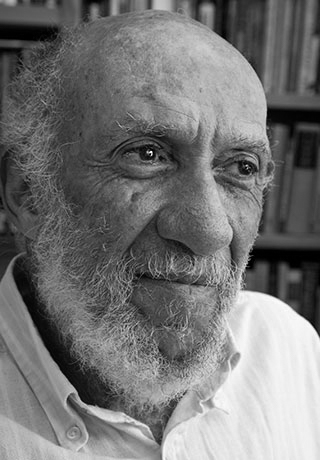
Professor Falk became an adviser to TFF when it was established in 1985.

Share

Leave a Reply

Your email address will not be published. Required fields are marked *

Related Posts

“En dag som berättigar till fest”, utropade den London-baserade al-Quds al-Arabi efter FN:s eldupphörresolution, “eftersom detta är första gången som Israel accepterar ett FN-beslut från en position som besegrad och inte som segrare”. Att ett arabisk-israeliskt krig för en gångs skull slutat med arabisk seger, är en helt dominerade åsikt i arabiska medier. Al-Quds al-Arabi tillåter sig att drömma om att det israeliska nederlaget skall leda till massflykt från Israel. Men i nästa andetag påminner tidningen om att Israel aldrig brukar genomföra sina internationella åtaganden och varnar för att förlorarna, liksom tidigare, kan hämnas genom att provocera fram inbördeskrig i Libanon. Med tanke på de otaliga massmediala vittnesmålen om det libanesiska folkets eniga motståndskraft förefaller risken för inre stridigheter i det sargade landet just nu liten. Men visst kan man urskilja nyansskillnader i libanesiska tidningar. Vänsterorganet al-Safir uppfattar FN-resolutionen som en komplott i syfte att rädda Israel från ännu större...
A donors’ conference, co-sponsered by the Burundian government, the Belgian government and UNDP will be held in Brussels January 12-13, 2004. This PressInfo offers a perspective on its urgency. See also TFF’s new Burundi Forum. Imagine for a moment that politics is about goodness and generosity. Where could a few million dollars of government aid and a few civil society organisations – guaranteed – win the hearts of extremely poor millions who want peace and already work hard to achieve it after 10 years of war and genocide? The answer is Burundi, the heart-shaped country in the heart of Africa. Burundi makes a good story from Africa. But what does the world know about Burundi, its problems and struggles? Burundi’s tough reality Here are the basic facts. Burundi’s population is about 7 million and it is number 171 out of the 175 countries on the UNDP’s human development index. Their life...
Peace is promoted by constructive proposals and dialogue Four preceding PressInfos have expressed concern over — and criticised — the ongoing, militarisation of the EU. Some will say: but there are no alternatives. We believe that there are always alternatives, that democracies are characterised by alternatives and choice, and that openly discussed alternatives will improve the quality and legitimacy of society’s decision–making. In addition, it is an intellectual and moral challenge to not only criticise but also be constructive. If we only tell people that we think they are wrong, they are not likely to listen. However, if we say: what are your views on this set of ideas and steps? — we may sometimes engage them in dialogue and sow a seed. Most people in power circles live their daily lives in in a time frame and a social space where certain ideas, viewpoints and concepts are just not...

Recent Articles

“En dag som berättigar till fest”, utropade den London-baserade al-Quds al-Arabi efter FN:s eldupphörresolution, “eftersom detta är första gången som Israel accepterar ett FN-beslut från en position som besegrad och inte som segrare”. Att ett arabisk-israeliskt krig för en gångs skull slutat med arabisk seger, är en helt dominerade åsikt i arabiska medier. Al-Quds al-Arabi tillåter sig att drömma om att det israeliska nederlaget skall leda till massflykt från Israel. Men i nästa andetag påminner tidningen om att Israel aldrig brukar genomföra sina internationella åtaganden och varnar för att förlorarna, liksom tidigare, kan hämnas genom att provocera fram inbördeskrig i Libanon. Med tanke på de otaliga massmediala vittnesmålen om det libanesiska folkets eniga motståndskraft förefaller risken för inre stridigheter i det sargade landet just nu liten. Men visst kan man urskilja nyansskillnader i libanesiska tidningar. Vänsterorganet al-Safir uppfattar FN-resolutionen som en komplott i syfte att rädda Israel från ännu större...
Greenland – the world’s largest island, a continent of its own with only 57.000 inhabitants. I visited it for the first time in May 2005. I flew across the inland ice to Nuuk, the tiny capital with some 14.000 inhabitants. I was overwhelmed by the pride and kindness of everyone I met as well as by the unique natural beauty. Unfortunately, due to weather conditions during my ten-day stay I could get nowhere else but Nuuk. Fortunately, however, among those I met was Gitte Arvegaard, a Danish lawyer and negotiator employed by the local government, Greenland Home Rule. She turned out to be an enthusiastic photographer with a lot of pictures taken during various trips around Greenland. So this Greeland series is the result of our cooperative effort. We both hope you enjoy it and are stimulated to visit Greenland – about which you may read more here. Finally, if you want to...
 Jan Oberg’s storyof how he met Sir Paul Liverpool – where else to meet Paul McCartney? Paul’s old class mate and TFF Associate, Jonathan Power introduced me to Paul McCartney in Liverpool at an informal reception. It was held at what used to be their school, now the Liverpool Institute for Performing Arts and we were there to celebrate that Jonathan had written Amnesty International’s 40th Anniversary book. This happy event for “righting wrongs and writing songs” gave me an opportunity to meet Paul and tell him about TFF and get straight to the matter: would he consider making a donation in support of our work for peace? While I was probably the only one with such a wish that day, I was certainly not the only one who wanted to shake hands and talk with him. In the last minutes before Paul was to leave, Jonathan brought us together and we got about three...

TFF on Substack

Discover more from TFF Transnational Foundation & Jan Oberg.

Most Popular

“En dag som berättigar till fest”, utropade den London-baserade al-Quds al-Arabi efter FN:s eldupphörresolution, “eftersom detta är första gången som Israel accepterar ett FN-beslut från en position som besegrad och inte som segrare”. Att ett arabisk-israeliskt krig för en gångs skull slutat med arabisk seger, är en helt dominerade åsikt i arabiska medier. Al-Quds al-Arabi tillåter sig att drömma om att det israeliska nederlaget skall leda till massflykt från Israel. Men i nästa andetag påminner tidningen om att Israel aldrig brukar genomföra sina internationella åtaganden och varnar för att förlorarna, liksom tidigare, kan hämnas genom att provocera fram inbördeskrig i Libanon. Med tanke på de otaliga massmediala vittnesmålen om det libanesiska folkets eniga motståndskraft förefaller risken för inre stridigheter i det sargade landet just nu liten. Men visst kan man urskilja nyansskillnader i libanesiska tidningar. Vänsterorganet al-Safir uppfattar FN-resolutionen som en komplott i syfte att rädda Israel från ännu större...
Greenland – the world’s largest island, a continent of its own with only 57.000 inhabitants. I visited it for the first time in May 2005. I flew across the inland ice to Nuuk, the tiny capital with some 14.000 inhabitants. I was overwhelmed by the pride and kindness of everyone I met as well as by the unique natural beauty. Unfortunately, due to weather conditions during my ten-day stay I could get nowhere else but Nuuk. Fortunately, however, among those I met was Gitte Arvegaard, a Danish lawyer and negotiator employed by the local government, Greenland Home Rule. She turned out to be an enthusiastic photographer with a lot of pictures taken during various trips around Greenland. So this Greeland series is the result of our cooperative effort. We both hope you enjoy it and are stimulated to visit Greenland – about which you may read more here. Finally, if you want to...
 Jan Oberg’s storyof how he met Sir Paul Liverpool – where else to meet Paul McCartney? Paul’s old class mate and TFF Associate, Jonathan Power introduced me to Paul McCartney in Liverpool at an informal reception. It was held at what used to be their school, now the Liverpool Institute for Performing Arts and we were there to celebrate that Jonathan had written Amnesty International’s 40th Anniversary book. This happy event for “righting wrongs and writing songs” gave me an opportunity to meet Paul and tell him about TFF and get straight to the matter: would he consider making a donation in support of our work for peace? While I was probably the only one with such a wish that day, I was certainly not the only one who wanted to shake hands and talk with him. In the last minutes before Paul was to leave, Jonathan brought us together and we got about three...
Read More
Imagen-thumbnail-The-Transnational-1
“En dag som berättigar till fest”, utropade den London-baserade al-Quds al-Arabi efter FN:s eldupphörresolution, “eftersom detta är första gången som Israel accepterar ett FN-beslut från en position som besegrad och inte som segrare”. Att ett arabisk-israeliskt krig för en gångs skull slutat med arabisk seger, är en helt dominerade åsikt i arabiska medier. Al-Quds al-Arabi tillåter sig att drömma om att det israeliska nederlaget skall leda till massflykt från Israel. Men i nästa andetag påminner tidningen om att Israel aldrig brukar genomföra sina internationella åtaganden och varnar för att förlorarna, liksom tidigare, kan hämnas genom att provocera fram inbördeskrig i Libanon. Med tanke på de otaliga massmediala vittnesmålen om det libanesiska folkets eniga motståndskraft förefaller risken för inre stridigheter i det sargade landet just nu liten. Men visst kan man urskilja nyansskillnader i libanesiska tidningar. Vänsterorganet al-Safir uppfattar FN-resolutionen som en komplott i syfte att rädda Israel från ännu större...
Greenland – the world’s largest island, a continent of its own with only 57.000 inhabitants. I visited it for the first time in May 2005. I flew across the inland ice to Nuuk, the tiny capital with some 14.000 inhabitants. I was overwhelmed by the pride and kindness of everyone I met as well as by the unique natural beauty. Unfortunately, due to weather conditions during my ten-day stay I could get nowhere else but Nuuk. Fortunately, however, among those I met was Gitte Arvegaard, a Danish lawyer and negotiator employed by the local government, Greenland Home Rule. She turned out to be an enthusiastic photographer with a lot of pictures taken during various trips around Greenland. So this Greeland series is the result of our cooperative effort. We both hope you enjoy it and are stimulated to visit Greenland – about which you may read more here. Finally, if you want to...
p_mccartney_poem
 Jan Oberg’s storyof how he met Sir Paul Liverpool – where else to meet Paul McCartney? Paul’s old class mate and TFF Associate, Jonathan Power introduced me to Paul McCartney in Liverpool at an informal reception. It was held at what used to be their school, now the Liverpool Institute for Performing Arts and we were there to celebrate that Jonathan had written Amnesty International’s 40th Anniversary book. This happy event for “righting wrongs and writing songs” gave me an opportunity to meet Paul and tell him about TFF and get straight to the matter: would he consider making a donation in support of our work for peace? While I was probably the only one with such a wish that day, I was certainly not the only one who wanted to shake hands and talk with him. In the last minutes before Paul was to leave, Jonathan brought us together and we got about three...
Logo-Transnational
1942James Paul McCartney is born in Liverpool on June 18th. 1956Paul writes his first song, I Lost My Little Girl. 1957Paul meets John Lennon at St. Peter’s Church Fete, Woolton, Liverpool. He joins his first group, The Quarrymen and performs in his first gig at The New Clubmoor Hall, Liverpool, on October 18th. 1960Formation of The Beatles, who play residencies in Hamburg and at The Cavern in Liverpool. 1961First Beatles recordings issued in Germany, as the backing group for Tony Sheridan. 1962The first Beatles Parlophone recording, Love Me Do, reaches number 17 in the British charts. 1963The birth of Beatlemania. Please Please Me gives the group their first British Number 1. She Loves You cements their success. Please Please Me and With The Beatles albums released. 1964First triumphant American tour. The Beatles perform at the Royal Command Performance and release their first film, A Hard Day’s Night. Their single I...
Logo-Transnational
  Back to the series “Bujumbura, Burundi”
By JONATHAN POWER August 16, 2000 LONDON – Remember the summer of ’98? In the sweltering, torpid heat of a Roman august, charged with exhaust fumes, the international community gave its overwhelming approval to the establishment of an International Criminal Court that will enable those accused of “crimes against humanity” to be tried and, if convicted, sentenced. Only seven nations opposed or abstained from the motion, including Israel, China, India and the U.S.A. where the Pentagon had successfully waged bureaucratic guerrilla war to undermine the initially sympathetic stance of President Bill Clinton. Two years on we can now see what an epochal event that was. In a the stroke of 120 pens it changed the climate on political thuggery. After numerous half-starts and false starts ever since the Nuremberg and Tokyo trials that convicted the war criminals of the Second World War, the world at last had agreed en masse a common...


