
Paradoxes of Turkish pride

I have been struck by the strange firmament of Turkish pride. In one respect, the nationalist and patriotic fervor of Turkish holidays confirms the enduring success of Kemal Ataturk’s great nation-building project after World War I. Huge Turkish flags are more prominently displayed than in any country I know, and Turkey has earned dubious notoriety for its criminal code provision that punishes insults to Turkishness, potentially including even imprisonment. Such a law has been used in a manner that encroaches upon freedom of expression, targeting even such cultural icons as Orhan Pamuk and Elif Shafik, and undoubtedly intimidating thousands of others who hesitate to make any assertion that might be interpreted as offensive by the Turkish custodians of national pride.

Even many of those who reject the idea of criminalizing anti-Turkish comments were still angered by Pamuk’s interview in which he acknowledged the 1915 genocide against the Armenian community, first because it was contained in an interview conducted in Switzerland and, secondly, because he added the annoying aside “and only I will say this.” Instead of examining the substance of his indictment, the focus was on Pamuk’s supposed anti-Turkishness.

Shafik faced a similar storm of criticism when she published the Bastard of Istanbul, which also in a fictionalized context essentially accepts the Armenian narrative of the tragic events that occurred almost a hundred years ago. Neither Pamuk nor Shaifk were convicted, but prosecution was bad enough. My point here is to take note of the extreme sensitivity that Turkey continues to feel whenever critical commentary is regarded as a taint on national pride and collective memory.

At the same time, as with most countries, but perhaps with an added intensity, Turkey celebrates its athletic exploits. Recently it welcomed home its medal winning woman runners with great fanfare after the London Olympics as if they had made epic contributions to the wellbeing of the country, and it seems they had. And on that day sometime in the near future when Turkish football ascends the heights of a World Cup final, national fervor will certainly become hysterical. This is to be welcomed as an expression of national joy over the most loved sporting event in the world.

And yet, on different planes of discourse there is a strange national reluctance among Turks to enjoy certain achievements of their citizens, even a widespread tendency to belittle them. Over the years in the course of countless conversations about the Turkish Nobel Prize winning author Orhan Pamuk I have encountered such a tendency among Turkish intellectuals intent on downgrading his stature as a world class literary master: “he knows how to appeal to foreigners,” “he is very good at promoting his work overseas,” “he benefits from his translators,” “he is derivative,” “there are many better Turkish writers,” “his fame rests on a heavily funded PR campaign,” “his use of the Turkish language is undistinguished.”

Less intellectually minded Turkish detractors, and there are many, complain that Pamuk is personally unreliable and selfish, that he is a womanizer, that his books are unreadable, or at best, that his imagination only works when he is fictionalizing historical themes or contents himself with being “the biographer of the city of Isranbul.” What he should not do, according to his Turkish critics, is attempt to interpret the contemporary Turkish reality as he did so persuasively in Snow.

I would not suggest that all of these criticisms are unfounded, but what I would say is that their tenor exhibits an unaccustomed Turkish lack of generosity and balance. As an admirer of Pamuk, along with many friends with stronger literary credentials than mine outside of Turkey, I can report that Pamuk’s best books, and there are several candidates, have a vivid resonance for readers that rests on deserved literary acclaim, and cannot be explained away as a triumph of self-promotion.

Pamuk has a great gift for breathing life and its mysteries into a variety of persons, places, situations, and uses the metaphor of ‘the detective’ or ‘the traveler’ with great skill in constructing his captivating plots. Why don’t Turks take great pride in Pamuk’s recognition by the Nobel Prize Committee? Would many Turks diminish a sporting team victory by examining the allegedly compromised private lives of its star athletes?

This brings me to a more controversial set of considerations bearing on Turkish foreign policy, which I view as an extraordinary series of successes, coupled with some disappointments, and several understandable missteps. Such an assessment is far from the perceptions common among Turkish critics of the AKP leadership, and deprives Turkish society as a whole of the satisfaction of being justly proud of what their government has achieved at a time that has been exceedingly difficult for almost every other country in the world.

Turkey emerged from the shadowland of its role as junior alliance member of NATO during the Cold War era and non-presence in the Arab world to become the most admired country in the region, especially during 2011 in the aftermath of the early successes of the popular uprisings in Tunisia and Egypt. On the basis of my visits to the region over the course of the past two years, this admiration rested on three principal sources: deep respect for the diplomatic skill, dedication to conflict resolution, and the great energy and intelligence of the Turkish Foreign Minister, Ahmet Davutoglu; the adoption of an equi-distance diplomacy that allowed Turkey to be critical of Israel and supportive of the Palestinian struggle without alienating the United States and Europe; and most important of all, establishing a flourishing economy that was supported by the more deprived segments of Turkish society, while creating a political leadership that was sensitive to Islamic values without abandoning the core principles of secular government, that is, the emergence of a so-called ‘Turkish Model’ that is contrasted throughout the region with the negativity associated with the ‘Iran Model.’

I would have thought and hoped that however critical a Turkish citizen would be of some domestic policies of the AKP there would be uniform applause for this formidable array of foreign policy achievements. Much critical attention in the Turkish media has been directed at ‘zero problems with neighbors,” especially in light of the debacle in Syria and the upsurge of violence in relation to the Kurdish minority, and it is true that the doctrine from the outset undoubtedly expressed more a hope than a guideline.

At the time it was enunciated, there was no Arab Spring, no Mavi Marmara, no uprising against Qaddafi or Assad, but these unanticipated circumstances required, and produced, a major restatement. Davutoglu made clear that the real commitment of zero problems was in relation to the people and not necessarily to the government, and more specifically, the regimes in Tripoli and Damascus lost their legitimacy when they committed Crimes Against Humanity in relation to their own citizens.

Similarly, Turkey sought to mediate the conflict between Israel and Syria centered on the Golan Heights, lending great energy to the endeavor, but once Israel attacked Gaza at the end of 2008, it was clearly not possible to proceed further toward a resolution of the conflict. Turkey tried a number of other bold initiatives that ended in disappointment, but seemed as though they should have succeeded if the values of peace and justice were genuinely shared and not just proclaimed.

One was the effort to bring Hamas in from the cold, be accepted as a normal political actor, and shift the Isreal/Palestine conflict from sites of violent struggle to diplomatic arenas. After all, in 2006 Hamas had been encouraged by the West to compete in Gaza elections, but they were not supposed to win, and as a result an unlawful blockade has been imposed since 2007 on the people of Gaza and the Israeli insistence upon treating Hamas as ‘a terrorist organization’ has blocked a political solution.

Similarly, in 2010 a brave attempt by Ankara, in collaboration with Brazil, was made to dampen the pre-war flames that surrounded Iran’s alleged nuclear weapons program, but the United States and Israel were intent on confronting Iran by way of coercive diplomacy in the form of escalating sanctions and unlawful threats of a military attack. The disappointment here reflected the impact of mainstream geopolitics on relations with Iran, but it only highlighted the constructive nature of the Turkish effort to produce a shift in tactics and vision in the direction of soft power diplomacy.

The discourse in Turkey takes no account of the radically changed regional circumstances or the boldness of peacemaking experiments that deserved to succeed. Instead, the failures are dwelled upon to establish that Davutoglu is out of touch, that he does not comprehend the true nature of world politics or the conditions prevailing in the Middle East.

Mainly, such conversations shift to a barrage of criticisms directed at the AKP and Erdogan: “they have lost touch,” “they have become too powerful,” “the government imprisons its opposition and silences its critics,” “Erdogan is planning to run an authoritarian state,” “the government is bending to the will of Washington,” “despite its promises it has failed to solve the Kurdish problem.” To varying degrees these criticisms are justified, although exaggerated, given the overall reality of state/society relations in Turkey.

My surprise is the unwillingness of many Turkish friends to separate these appropriate concerns from an appreciation of the extraordinary rise in Turkish stature as a political actor, not only regionally, but globally. Turkey is now an important middle power at the United Nations. It provides a diplomatic venue for many international events that used to be held in Europe. Its courageous Somalia initiative has given Turkey a post-colonial identity in Africa that no other non-African government has been able to achieve. It is my belief that Turkey more than any other country in the 21st century has increased its relevance to the conduct of regional and global politics, and this is something that all Turks can be proud of in a world of 195 or so sovereign states!

Waving the national flag is fine, yet finer still, is taking justifiable pride in what has been accomplished by those who act on behalf of one’s country.
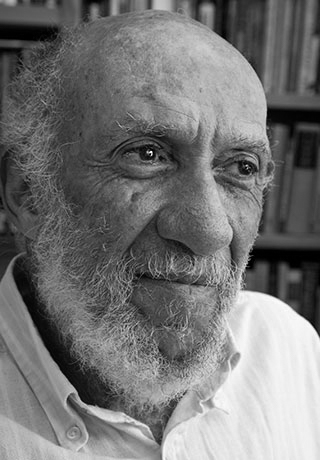

Professor Falk became an adviser to TFF when it was established in 1985.

Share

Leave a Reply

Your email address will not be published. Required fields are marked *

Related Posts

“En dag som berättigar till fest”, utropade den London-baserade al-Quds al-Arabi efter FN:s eldupphörresolution, “eftersom detta är första gången som Israel accepterar ett FN-beslut från en position som besegrad och inte som segrare”. Att ett arabisk-israeliskt krig för en gångs skull slutat med arabisk seger, är en helt dominerade åsikt i arabiska medier. Al-Quds al-Arabi tillåter sig att drömma om att det israeliska nederlaget skall leda till massflykt från Israel. Men i nästa andetag påminner tidningen om att Israel aldrig brukar genomföra sina internationella åtaganden och varnar för att förlorarna, liksom tidigare, kan hämnas genom att provocera fram inbördeskrig i Libanon. Med tanke på de otaliga massmediala vittnesmålen om det libanesiska folkets eniga motståndskraft förefaller risken för inre stridigheter i det sargade landet just nu liten. Men visst kan man urskilja nyansskillnader i libanesiska tidningar. Vänsterorganet al-Safir uppfattar FN-resolutionen som en komplott i syfte att rädda Israel från ännu större...
A donors’ conference, co-sponsered by the Burundian government, the Belgian government and UNDP will be held in Brussels January 12-13, 2004. This PressInfo offers a perspective on its urgency. See also TFF’s new Burundi Forum. Imagine for a moment that politics is about goodness and generosity. Where could a few million dollars of government aid and a few civil society organisations – guaranteed – win the hearts of extremely poor millions who want peace and already work hard to achieve it after 10 years of war and genocide? The answer is Burundi, the heart-shaped country in the heart of Africa. Burundi makes a good story from Africa. But what does the world know about Burundi, its problems and struggles? Burundi’s tough reality Here are the basic facts. Burundi’s population is about 7 million and it is number 171 out of the 175 countries on the UNDP’s human development index. Their life...
Peace is promoted by constructive proposals and dialogue Four preceding PressInfos have expressed concern over — and criticised — the ongoing, militarisation of the EU. Some will say: but there are no alternatives. We believe that there are always alternatives, that democracies are characterised by alternatives and choice, and that openly discussed alternatives will improve the quality and legitimacy of society’s decision–making. In addition, it is an intellectual and moral challenge to not only criticise but also be constructive. If we only tell people that we think they are wrong, they are not likely to listen. However, if we say: what are your views on this set of ideas and steps? — we may sometimes engage them in dialogue and sow a seed. Most people in power circles live their daily lives in in a time frame and a social space where certain ideas, viewpoints and concepts are just not...

Recent Articles

“En dag som berättigar till fest”, utropade den London-baserade al-Quds al-Arabi efter FN:s eldupphörresolution, “eftersom detta är första gången som Israel accepterar ett FN-beslut från en position som besegrad och inte som segrare”. Att ett arabisk-israeliskt krig för en gångs skull slutat med arabisk seger, är en helt dominerade åsikt i arabiska medier. Al-Quds al-Arabi tillåter sig att drömma om att det israeliska nederlaget skall leda till massflykt från Israel. Men i nästa andetag påminner tidningen om att Israel aldrig brukar genomföra sina internationella åtaganden och varnar för att förlorarna, liksom tidigare, kan hämnas genom att provocera fram inbördeskrig i Libanon. Med tanke på de otaliga massmediala vittnesmålen om det libanesiska folkets eniga motståndskraft förefaller risken för inre stridigheter i det sargade landet just nu liten. Men visst kan man urskilja nyansskillnader i libanesiska tidningar. Vänsterorganet al-Safir uppfattar FN-resolutionen som en komplott i syfte att rädda Israel från ännu större...
Greenland – the world’s largest island, a continent of its own with only 57.000 inhabitants. I visited it for the first time in May 2005. I flew across the inland ice to Nuuk, the tiny capital with some 14.000 inhabitants. I was overwhelmed by the pride and kindness of everyone I met as well as by the unique natural beauty. Unfortunately, due to weather conditions during my ten-day stay I could get nowhere else but Nuuk. Fortunately, however, among those I met was Gitte Arvegaard, a Danish lawyer and negotiator employed by the local government, Greenland Home Rule. She turned out to be an enthusiastic photographer with a lot of pictures taken during various trips around Greenland. So this Greeland series is the result of our cooperative effort. We both hope you enjoy it and are stimulated to visit Greenland – about which you may read more here. Finally, if you want to...
 Jan Oberg’s storyof how he met Sir Paul Liverpool – where else to meet Paul McCartney? Paul’s old class mate and TFF Associate, Jonathan Power introduced me to Paul McCartney in Liverpool at an informal reception. It was held at what used to be their school, now the Liverpool Institute for Performing Arts and we were there to celebrate that Jonathan had written Amnesty International’s 40th Anniversary book. This happy event for “righting wrongs and writing songs” gave me an opportunity to meet Paul and tell him about TFF and get straight to the matter: would he consider making a donation in support of our work for peace? While I was probably the only one with such a wish that day, I was certainly not the only one who wanted to shake hands and talk with him. In the last minutes before Paul was to leave, Jonathan brought us together and we got about three...

TFF on Substack

Discover more from TFF Transnational Foundation & Jan Oberg.

Most Popular

“En dag som berättigar till fest”, utropade den London-baserade al-Quds al-Arabi efter FN:s eldupphörresolution, “eftersom detta är första gången som Israel accepterar ett FN-beslut från en position som besegrad och inte som segrare”. Att ett arabisk-israeliskt krig för en gångs skull slutat med arabisk seger, är en helt dominerade åsikt i arabiska medier. Al-Quds al-Arabi tillåter sig att drömma om att det israeliska nederlaget skall leda till massflykt från Israel. Men i nästa andetag påminner tidningen om att Israel aldrig brukar genomföra sina internationella åtaganden och varnar för att förlorarna, liksom tidigare, kan hämnas genom att provocera fram inbördeskrig i Libanon. Med tanke på de otaliga massmediala vittnesmålen om det libanesiska folkets eniga motståndskraft förefaller risken för inre stridigheter i det sargade landet just nu liten. Men visst kan man urskilja nyansskillnader i libanesiska tidningar. Vänsterorganet al-Safir uppfattar FN-resolutionen som en komplott i syfte att rädda Israel från ännu större...
Greenland – the world’s largest island, a continent of its own with only 57.000 inhabitants. I visited it for the first time in May 2005. I flew across the inland ice to Nuuk, the tiny capital with some 14.000 inhabitants. I was overwhelmed by the pride and kindness of everyone I met as well as by the unique natural beauty. Unfortunately, due to weather conditions during my ten-day stay I could get nowhere else but Nuuk. Fortunately, however, among those I met was Gitte Arvegaard, a Danish lawyer and negotiator employed by the local government, Greenland Home Rule. She turned out to be an enthusiastic photographer with a lot of pictures taken during various trips around Greenland. So this Greeland series is the result of our cooperative effort. We both hope you enjoy it and are stimulated to visit Greenland – about which you may read more here. Finally, if you want to...
 Jan Oberg’s storyof how he met Sir Paul Liverpool – where else to meet Paul McCartney? Paul’s old class mate and TFF Associate, Jonathan Power introduced me to Paul McCartney in Liverpool at an informal reception. It was held at what used to be their school, now the Liverpool Institute for Performing Arts and we were there to celebrate that Jonathan had written Amnesty International’s 40th Anniversary book. This happy event for “righting wrongs and writing songs” gave me an opportunity to meet Paul and tell him about TFF and get straight to the matter: would he consider making a donation in support of our work for peace? While I was probably the only one with such a wish that day, I was certainly not the only one who wanted to shake hands and talk with him. In the last minutes before Paul was to leave, Jonathan brought us together and we got about three...
Read More
Imagen-thumbnail-The-Transnational-1
“En dag som berättigar till fest”, utropade den London-baserade al-Quds al-Arabi efter FN:s eldupphörresolution, “eftersom detta är första gången som Israel accepterar ett FN-beslut från en position som besegrad och inte som segrare”. Att ett arabisk-israeliskt krig för en gångs skull slutat med arabisk seger, är en helt dominerade åsikt i arabiska medier. Al-Quds al-Arabi tillåter sig att drömma om att det israeliska nederlaget skall leda till massflykt från Israel. Men i nästa andetag påminner tidningen om att Israel aldrig brukar genomföra sina internationella åtaganden och varnar för att förlorarna, liksom tidigare, kan hämnas genom att provocera fram inbördeskrig i Libanon. Med tanke på de otaliga massmediala vittnesmålen om det libanesiska folkets eniga motståndskraft förefaller risken för inre stridigheter i det sargade landet just nu liten. Men visst kan man urskilja nyansskillnader i libanesiska tidningar. Vänsterorganet al-Safir uppfattar FN-resolutionen som en komplott i syfte att rädda Israel från ännu större...
Greenland – the world’s largest island, a continent of its own with only 57.000 inhabitants. I visited it for the first time in May 2005. I flew across the inland ice to Nuuk, the tiny capital with some 14.000 inhabitants. I was overwhelmed by the pride and kindness of everyone I met as well as by the unique natural beauty. Unfortunately, due to weather conditions during my ten-day stay I could get nowhere else but Nuuk. Fortunately, however, among those I met was Gitte Arvegaard, a Danish lawyer and negotiator employed by the local government, Greenland Home Rule. She turned out to be an enthusiastic photographer with a lot of pictures taken during various trips around Greenland. So this Greeland series is the result of our cooperative effort. We both hope you enjoy it and are stimulated to visit Greenland – about which you may read more here. Finally, if you want to...
p_mccartney_poem
 Jan Oberg’s storyof how he met Sir Paul Liverpool – where else to meet Paul McCartney? Paul’s old class mate and TFF Associate, Jonathan Power introduced me to Paul McCartney in Liverpool at an informal reception. It was held at what used to be their school, now the Liverpool Institute for Performing Arts and we were there to celebrate that Jonathan had written Amnesty International’s 40th Anniversary book. This happy event for “righting wrongs and writing songs” gave me an opportunity to meet Paul and tell him about TFF and get straight to the matter: would he consider making a donation in support of our work for peace? While I was probably the only one with such a wish that day, I was certainly not the only one who wanted to shake hands and talk with him. In the last minutes before Paul was to leave, Jonathan brought us together and we got about three...
Logo-Transnational
1942James Paul McCartney is born in Liverpool on June 18th. 1956Paul writes his first song, I Lost My Little Girl. 1957Paul meets John Lennon at St. Peter’s Church Fete, Woolton, Liverpool. He joins his first group, The Quarrymen and performs in his first gig at The New Clubmoor Hall, Liverpool, on October 18th. 1960Formation of The Beatles, who play residencies in Hamburg and at The Cavern in Liverpool. 1961First Beatles recordings issued in Germany, as the backing group for Tony Sheridan. 1962The first Beatles Parlophone recording, Love Me Do, reaches number 17 in the British charts. 1963The birth of Beatlemania. Please Please Me gives the group their first British Number 1. She Loves You cements their success. Please Please Me and With The Beatles albums released. 1964First triumphant American tour. The Beatles perform at the Royal Command Performance and release their first film, A Hard Day’s Night. Their single I...
Logo-Transnational
  Back to the series “Bujumbura, Burundi”
By JONATHAN POWER August 16, 2000 LONDON – Remember the summer of ’98? In the sweltering, torpid heat of a Roman august, charged with exhaust fumes, the international community gave its overwhelming approval to the establishment of an International Criminal Court that will enable those accused of “crimes against humanity” to be tried and, if convicted, sentenced. Only seven nations opposed or abstained from the motion, including Israel, China, India and the U.S.A. where the Pentagon had successfully waged bureaucratic guerrilla war to undermine the initially sympathetic stance of President Bill Clinton. Two years on we can now see what an epochal event that was. In a the stroke of 120 pens it changed the climate on political thuggery. After numerous half-starts and false starts ever since the Nuremberg and Tokyo trials that convicted the war criminals of the Second World War, the world at last had agreed en masse a common...

