
For what?

Being disinclined to look in mirrors, not only to avoid evidences of aging, but also because of an autobiographical deficit, I have recently started to question the vectors of my motivation. Not to raise doubts but to seek some understanding of ‘for what?’ I am especially wondering the reasons behind my solidarity with the struggles of distant strangers, why such solidarity is not more widely shared with likeminded friends, and why the inevitable priorities as to what is emphasized and what is ignored have the shape they do.

Most pointedly, why am I giving the Palestinians so much more attention and psychic energy than the Kurds, Tibetans, or Kashmiris, and a host of other worthy causes? And how do I explain to myself a preoccupation with the unlawful, immoral, and imprudent foreign policy of the U.S. Government, the sovereign state of my residence upon whose governmental resources I depend upon for security and a range of rights?

There are rational answers that tell part of the story, but only a part, and probably the least illuminating part. I was drawn to the Palestinian struggle as a result of friendship with prominent Palestinian exiles while still a student. I formed a well-evidence belief that the U.S. Government and the organized Jewish community were responsible for the massive and enduring confiscation of Palestinian land and rights. And with this awareness came some added sense of responsibility. ‘Just don’t sit and stare, do something.’

And with this modest kind of engagement came pressures to do more by way of public identification and witnessing, which led to a somewhat deeper awareness, greater familiarity, and of course, a dumpster full of harsh criticism. After many years of speaking and writing, the opportunity and challenge to do more in relation to Palestine/Israel conflict came my way unexpectedly in the form of an unsolicited invitation in 2008 to become the next Special Rapporteur for Occupied Palestine on behalf of the UN Human Rights Council.

I never sought such a position, and realized that it would expose me to an escalating onslaught of vicious personal attacks and threats, an expectation that has been amply fulfilled. It is always uncomfortable to be the target of toxic language, and it is even more scary and disturbing to expose my closest partner in life and love to such calumny.

Besides the hotly contested terrain that exists whenever Israeli policies are subject to objective scrutiny and criticism, a position within the UN hierarchy is both burdensome and often frustrating. True, being a Special Rapporteur is essentially a voluntary post, without salary or civil service affiliations, although ‘compensated’ to some degree by institutional independence within the UN, which I have discovered in my four years, can be a considerable blessing. There is little doubt in my mind that if I had been a paid employee I would long ago have been handed a pink slip. As it is I have merely endured a barrage of slanderous insults, including from the Secretary General and Susan Rice, the American ambassador to the UN in New York.

Lest I protest and complain too much, I hasten to add that there are also deep and moving satisfactions. I find particularly satisfying the extent to which my two reports each year on the Israeli occupation of Palestine provides a truthful witnessing to the unspeakable ordeal of this prolonged and harsh occupation.

Actually, it is less and less an occupation and more and more an apartheid style form of annexation, aggravated by continuous land grabs, various instruments of ethnic cleansing, and a range of gratuitous cruelties most recently dramatized by a series of heroic hunger strikes by Palestinians protesting those aspects of their plight resulting from violent arrest procedures, administrative detention, and deplorable prison conditions falling far below accepted international standards.

Bearing witness, giving the Palestinians an authentic voice with which to formulate their grievances, and having the means to issue press releases calling attention to particular incidents of abuse, makes me feel as though my time is well spent even if the bodies keep piling up on the Palestinian side of the border. Part of the challenge in such a role is to realize the discouraging constraints on what can be achieved. Governments mainly don’t listen, and even when they do, their actions and policies are rarely informed by moral imperatives, and so nothing changes however much the evidence is present.

The devastating impact of the Gaza blockade has been known and lamented for years by political leaders, and yet the costs of doing anything about it have seemed so great that even those who complain most loudly in the chambers of the UN are silent or worse when it comes to doing something. Someone at my level is shouting to be heard amid the clamor that prevails in the diplomatic discotheques of New York and Geneva, and even when heard, must learn to expect nothing to be done or else despair, even madness, will soon follow.

Beyond this rational balance sheet of gains and losses, is a deeper less accessible convergence of feelings and impulses, which cannot be explained, but only acknowledged. I am not sure why direct exposure to victimization has such a powerful animating effect on my behavior, but it does. I do feel that a sense of responsibility emerges with such knowledge, especially that derived from direct contact with the suffering of victims caught in some historical trap not of their own making.

Also, whether visiting North Vietnam as a peace activist during the Vietnam War or seeking to understand the Iranian Revolution by talking with its leaders as the extraordinary process was unfolding in Tehran, I felt a meta-professional obligation to share this privileged exposure by talking and writing about it, however inadequately, particularly, as seemed generally to be the case, that the mainstream media distorted and manipulated their presentations of such historic happenings as misleadingly seen through their Western optic of (mis)perception.

Somewhere in this agonizingly slow formation of my character there was being constructed a self that took the shape of ‘engaged scholar’ and ‘citizen pilgrim.’

In retrospect, I think I was reacting somewhat dialectically to my academic colleagues who mostly felt it inappropriate to speak out on controversial issues although they viewed it as entirely professional to consult with the government and quite all right to avoid the public sphere altogether by packaging themselves as experts who should not be expected to take public stands on partisan issues that divided the polity. I felt, increasingly with age, the opposite.

I came to believe that it was an organic part of my integrity as teacher/scholar to create a seamless interface between classroom and sites of political struggle. In truth, not entirely seamless as the classroom must always be treated as a sacred space by a faculty member. It should be maintained as a sanctuary for the uninhibited exchange of views however diverse and antagonistic in an atmosphere of disciplined civility.

I have always felt that it is a primary duty of a teacher is to establish sufficient trust with students, that is, permission and encouragement of openness of expression with a clear understanding that performance will be objectively assessed, and not affected by agreement or disagreement with what the teacher happens to believe. This is a delicate balance yet far more conducive to learning than a sterile and journeyman insistence that what people beyond the campus are dying for can be usefully addressed with sanitary dispassion.

In the end, this vital domain of conscious pedagogy and unconscious morality, is spiritually validated by an unmediated and uninterrogated sense that this or that is ‘the right thing to do.’ It certainly helps to remain as free as possible of vested interests and career ambitions that tend to crush an implicit pledge of truthfulness that authentic witnessing depends upon.

And beyond witnessing there exists an iron wall of moral obligation: caring about the future, doing what I can to make the world a better place for human habitation and co-evolution with nature, which I have understood as a species obligation that has been made historically urgent ever since an atomic bomb was exploded over the Japanese city of Hiroshima and is now also deeply connected with protecting the planet from the multiple hazards of global warming hopelessly embedded in our carbon-dependent life styles as promiscuously promoted in disastrous directions by the greed of superrich fossil fuel billionaires and their far too powerful corporate allies.

I have not rested these life commitments on the teachings of any particular religious tradition or institution, although I have long found the great world religions, East and West, despite their menacing contradictions and multiple readings, as providing me with the most profound sources of wisdom and guidance.

It is the basis of my ecumenical longing for human solidarity, along with my feelings of awe produced by contact with cosmic and natural wonders, and deeply informs my sense of the spiritual ground of the human adventure.

These sentiments are reinforced in my case by a commitment to an emergent form of cosmopolitan citizenship that owes allegiance to the ethics and praxis of human sustainability, the individual and collective dignity of all human beings, and a respectful kinship with and love of our non-human co-inhabitants of the planet. Such perspectives, I believe, respond to our historically precarious situation as a species, and here in America, this concern is accentuated.

For this is a country with a surfeit of moral and political pretensions. It exhibits hubris to an alarming degree, and in extravagant ways, and is endangering itself along with the rest of the world by a refusal to heed what the geopolitical mirror of reflection warns about.
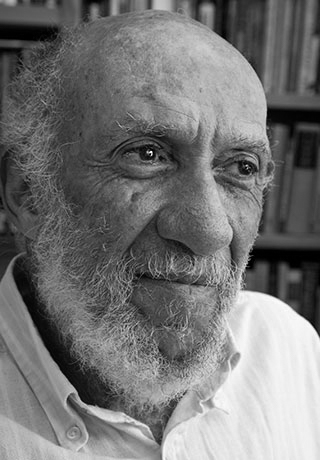

Professor Falk became an adviser to TFF when it was established in 1985.

Share

Leave a Reply

Your email address will not be published. Required fields are marked *

Related Posts

“En dag som berättigar till fest”, utropade den London-baserade al-Quds al-Arabi efter FN:s eldupphörresolution, “eftersom detta är första gången som Israel accepterar ett FN-beslut från en position som besegrad och inte som segrare”. Att ett arabisk-israeliskt krig för en gångs skull slutat med arabisk seger, är en helt dominerade åsikt i arabiska medier. Al-Quds al-Arabi tillåter sig att drömma om att det israeliska nederlaget skall leda till massflykt från Israel. Men i nästa andetag påminner tidningen om att Israel aldrig brukar genomföra sina internationella åtaganden och varnar för att förlorarna, liksom tidigare, kan hämnas genom att provocera fram inbördeskrig i Libanon. Med tanke på de otaliga massmediala vittnesmålen om det libanesiska folkets eniga motståndskraft förefaller risken för inre stridigheter i det sargade landet just nu liten. Men visst kan man urskilja nyansskillnader i libanesiska tidningar. Vänsterorganet al-Safir uppfattar FN-resolutionen som en komplott i syfte att rädda Israel från ännu större...
Lena Petrova of “World Affairs In Context” with more than half a million subscribers on YouTube wanted to explore what a peace researcher like me has to say about, among other things, the First and the Second Cold War and why eethics has disappeared from politics. I am particularly happy about this conversation that also yielded an amazing number of very appreciative comments on YouTube. No doubt, people are longing for alternatives, including peace perspectives.
A donors’ conference, co-sponsered by the Burundian government, the Belgian government and UNDP will be held in Brussels January 12-13, 2004. This PressInfo offers a perspective on its urgency. See also TFF’s new Burundi Forum. Imagine for a moment that politics is about goodness and generosity. Where could a few million dollars of government aid and a few civil society organisations – guaranteed – win the hearts of extremely poor millions who want peace and already work hard to achieve it after 10 years of war and genocide? The answer is Burundi, the heart-shaped country in the heart of Africa. Burundi makes a good story from Africa. But what does the world know about Burundi, its problems and struggles? Burundi’s tough reality Here are the basic facts. Burundi’s population is about 7 million and it is number 171 out of the 175 countries on the UNDP’s human development index. Their life...

Recent Articles

“En dag som berättigar till fest”, utropade den London-baserade al-Quds al-Arabi efter FN:s eldupphörresolution, “eftersom detta är första gången som Israel accepterar ett FN-beslut från en position som besegrad och inte som segrare”. Att ett arabisk-israeliskt krig för en gångs skull slutat med arabisk seger, är en helt dominerade åsikt i arabiska medier. Al-Quds al-Arabi tillåter sig att drömma om att det israeliska nederlaget skall leda till massflykt från Israel. Men i nästa andetag påminner tidningen om att Israel aldrig brukar genomföra sina internationella åtaganden och varnar för att förlorarna, liksom tidigare, kan hämnas genom att provocera fram inbördeskrig i Libanon. Med tanke på de otaliga massmediala vittnesmålen om det libanesiska folkets eniga motståndskraft förefaller risken för inre stridigheter i det sargade landet just nu liten. Men visst kan man urskilja nyansskillnader i libanesiska tidningar. Vänsterorganet al-Safir uppfattar FN-resolutionen som en komplott i syfte att rädda Israel från ännu större...
Greenland – the world’s largest island, a continent of its own with only 57.000 inhabitants. I visited it for the first time in May 2005. I flew across the inland ice to Nuuk, the tiny capital with some 14.000 inhabitants. I was overwhelmed by the pride and kindness of everyone I met as well as by the unique natural beauty. Unfortunately, due to weather conditions during my ten-day stay I could get nowhere else but Nuuk. Fortunately, however, among those I met was Gitte Arvegaard, a Danish lawyer and negotiator employed by the local government, Greenland Home Rule. She turned out to be an enthusiastic photographer with a lot of pictures taken during various trips around Greenland. So this Greeland series is the result of our cooperative effort. We both hope you enjoy it and are stimulated to visit Greenland – about which you may read more here. Finally, if you want to...
 Jan Oberg’s storyof how he met Sir Paul Liverpool – where else to meet Paul McCartney? Paul’s old class mate and TFF Associate, Jonathan Power introduced me to Paul McCartney in Liverpool at an informal reception. It was held at what used to be their school, now the Liverpool Institute for Performing Arts and we were there to celebrate that Jonathan had written Amnesty International’s 40th Anniversary book. This happy event for “righting wrongs and writing songs” gave me an opportunity to meet Paul and tell him about TFF and get straight to the matter: would he consider making a donation in support of our work for peace? While I was probably the only one with such a wish that day, I was certainly not the only one who wanted to shake hands and talk with him. In the last minutes before Paul was to leave, Jonathan brought us together and we got about three...

TFF on Substack

Discover more from TFF Transnational Foundation & Jan Oberg.

Most Popular

“En dag som berättigar till fest”, utropade den London-baserade al-Quds al-Arabi efter FN:s eldupphörresolution, “eftersom detta är första gången som Israel accepterar ett FN-beslut från en position som besegrad och inte som segrare”. Att ett arabisk-israeliskt krig för en gångs skull slutat med arabisk seger, är en helt dominerade åsikt i arabiska medier. Al-Quds al-Arabi tillåter sig att drömma om att det israeliska nederlaget skall leda till massflykt från Israel. Men i nästa andetag påminner tidningen om att Israel aldrig brukar genomföra sina internationella åtaganden och varnar för att förlorarna, liksom tidigare, kan hämnas genom att provocera fram inbördeskrig i Libanon. Med tanke på de otaliga massmediala vittnesmålen om det libanesiska folkets eniga motståndskraft förefaller risken för inre stridigheter i det sargade landet just nu liten. Men visst kan man urskilja nyansskillnader i libanesiska tidningar. Vänsterorganet al-Safir uppfattar FN-resolutionen som en komplott i syfte att rädda Israel från ännu större...
Greenland – the world’s largest island, a continent of its own with only 57.000 inhabitants. I visited it for the first time in May 2005. I flew across the inland ice to Nuuk, the tiny capital with some 14.000 inhabitants. I was overwhelmed by the pride and kindness of everyone I met as well as by the unique natural beauty. Unfortunately, due to weather conditions during my ten-day stay I could get nowhere else but Nuuk. Fortunately, however, among those I met was Gitte Arvegaard, a Danish lawyer and negotiator employed by the local government, Greenland Home Rule. She turned out to be an enthusiastic photographer with a lot of pictures taken during various trips around Greenland. So this Greeland series is the result of our cooperative effort. We both hope you enjoy it and are stimulated to visit Greenland – about which you may read more here. Finally, if you want to...
 Jan Oberg’s storyof how he met Sir Paul Liverpool – where else to meet Paul McCartney? Paul’s old class mate and TFF Associate, Jonathan Power introduced me to Paul McCartney in Liverpool at an informal reception. It was held at what used to be their school, now the Liverpool Institute for Performing Arts and we were there to celebrate that Jonathan had written Amnesty International’s 40th Anniversary book. This happy event for “righting wrongs and writing songs” gave me an opportunity to meet Paul and tell him about TFF and get straight to the matter: would he consider making a donation in support of our work for peace? While I was probably the only one with such a wish that day, I was certainly not the only one who wanted to shake hands and talk with him. In the last minutes before Paul was to leave, Jonathan brought us together and we got about three...
Read More
Imagen-thumbnail-The-Transnational-1
“En dag som berättigar till fest”, utropade den London-baserade al-Quds al-Arabi efter FN:s eldupphörresolution, “eftersom detta är första gången som Israel accepterar ett FN-beslut från en position som besegrad och inte som segrare”. Att ett arabisk-israeliskt krig för en gångs skull slutat med arabisk seger, är en helt dominerade åsikt i arabiska medier. Al-Quds al-Arabi tillåter sig att drömma om att det israeliska nederlaget skall leda till massflykt från Israel. Men i nästa andetag påminner tidningen om att Israel aldrig brukar genomföra sina internationella åtaganden och varnar för att förlorarna, liksom tidigare, kan hämnas genom att provocera fram inbördeskrig i Libanon. Med tanke på de otaliga massmediala vittnesmålen om det libanesiska folkets eniga motståndskraft förefaller risken för inre stridigheter i det sargade landet just nu liten. Men visst kan man urskilja nyansskillnader i libanesiska tidningar. Vänsterorganet al-Safir uppfattar FN-resolutionen som en komplott i syfte att rädda Israel från ännu större...
Greenland – the world’s largest island, a continent of its own with only 57.000 inhabitants. I visited it for the first time in May 2005. I flew across the inland ice to Nuuk, the tiny capital with some 14.000 inhabitants. I was overwhelmed by the pride and kindness of everyone I met as well as by the unique natural beauty. Unfortunately, due to weather conditions during my ten-day stay I could get nowhere else but Nuuk. Fortunately, however, among those I met was Gitte Arvegaard, a Danish lawyer and negotiator employed by the local government, Greenland Home Rule. She turned out to be an enthusiastic photographer with a lot of pictures taken during various trips around Greenland. So this Greeland series is the result of our cooperative effort. We both hope you enjoy it and are stimulated to visit Greenland – about which you may read more here. Finally, if you want to...
p_mccartney_poem
 Jan Oberg’s storyof how he met Sir Paul Liverpool – where else to meet Paul McCartney? Paul’s old class mate and TFF Associate, Jonathan Power introduced me to Paul McCartney in Liverpool at an informal reception. It was held at what used to be their school, now the Liverpool Institute for Performing Arts and we were there to celebrate that Jonathan had written Amnesty International’s 40th Anniversary book. This happy event for “righting wrongs and writing songs” gave me an opportunity to meet Paul and tell him about TFF and get straight to the matter: would he consider making a donation in support of our work for peace? While I was probably the only one with such a wish that day, I was certainly not the only one who wanted to shake hands and talk with him. In the last minutes before Paul was to leave, Jonathan brought us together and we got about three...
Logo-Transnational
1942James Paul McCartney is born in Liverpool on June 18th. 1956Paul writes his first song, I Lost My Little Girl. 1957Paul meets John Lennon at St. Peter’s Church Fete, Woolton, Liverpool. He joins his first group, The Quarrymen and performs in his first gig at The New Clubmoor Hall, Liverpool, on October 18th. 1960Formation of The Beatles, who play residencies in Hamburg and at The Cavern in Liverpool. 1961First Beatles recordings issued in Germany, as the backing group for Tony Sheridan. 1962The first Beatles Parlophone recording, Love Me Do, reaches number 17 in the British charts. 1963The birth of Beatlemania. Please Please Me gives the group their first British Number 1. She Loves You cements their success. Please Please Me and With The Beatles albums released. 1964First triumphant American tour. The Beatles perform at the Royal Command Performance and release their first film, A Hard Day’s Night. Their single I...
Logo-Transnational
  Back to the series “Bujumbura, Burundi”
By JONATHAN POWER August 16, 2000 LONDON – Remember the summer of ’98? In the sweltering, torpid heat of a Roman august, charged with exhaust fumes, the international community gave its overwhelming approval to the establishment of an International Criminal Court that will enable those accused of “crimes against humanity” to be tried and, if convicted, sentenced. Only seven nations opposed or abstained from the motion, including Israel, China, India and the U.S.A. where the Pentagon had successfully waged bureaucratic guerrilla war to undermine the initially sympathetic stance of President Bill Clinton. Two years on we can now see what an epochal event that was. In a the stroke of 120 pens it changed the climate on political thuggery. After numerous half-starts and false starts ever since the Nuremberg and Tokyo trials that convicted the war criminals of the Second World War, the world at last had agreed en masse a common...

