
Choosing a president for the World Bank: West centrism prevails over global democracy

This post is a revised version of a text that appeared a few days ago in Al Jazeera English, and seeks to use the selection of an American as the new President of the World Bank both to expose the fraudulent claim of a merit-based selection process and to insist indirectly that the future peace and justice of the world requires a more democratic and legitimate structure of global governance that reflects the post-colonial rise of the non-West, a rise that is not reflected in antiquated structures that persist despite changed conditions.

******************************************

The unsurprising announcement that the Board of the World Bank had voted in favor of the American candidate, Jim Yong Kim, presents an opportune moment to reflect upon the soft power structures that shape global public policy in the early 21st Century inside the UN system and beyond.

It is necessary to draw a distinction between Mr. Kim’s substantive qualifications and the procedure by which he was selected. Substantively, although lacking in either financial or diplomatic experience, Dr. Kim is in certain respects an interesting choice because of his lifelong dedication to improving the health of the very poor in the global South, as well as his training in medicine and PhD in anthropology.

He has had extensive relevant experience on the ground, and in working with NGOs (he co-founded the widely admired Partners in Health) and in institutional settings (for some years he directed the HIV/AIDs program for the World Health Organization) and has been president of Dartmouth University for the past three years, although stirring controversy during his brief period of administrative tenure. It may be still wondered whether Dr. Kim understands sufficiently the economic dimensions of World Bank policy to enjoy the respect of the professional staff, and might have been more appropriately chosen to head an enhanced program of the Bank devoted to health and poverty.

Overall, still, the substantive case for the appointment is relatively strong, although the two opposing candidates, both former finance ministers of developing countries, certainly had equally impressive substantive résumés and ethical profiles, and were plausible choices for this position.

The procedural criticisms of the appointment process are far more serious… and raise fundamental questions about the legitimacy of global institutions in the post-colonial period.

It was not surprising that Dr. Kim’s two opponents, Ngozi Okonjo-Iweala of Nigera and José Antonio Ocampo of Colombia, openly expressed their disgust with the process, complaining that the most qualified candidate had not been chosen despite the institutional promise of a ‘merit-based’ selection process. Ms Okonjo-Iweala uttered a truism when she said that selecting the Bank president was not “open, transparent and merit-based.” Mr. Ocampo was even more direct, saying, “[Y]ou know this thing is not really being decided on merit.”

In this fundamental respect, the supposed international search for a director was a charade. It became clear as other candidate were put forward by their respective governments that the decision would be made in Washington and that the person proposed would be, as in every instance, since the World Bank was established would be an American – just as every Managing Director of the International Monetary Fund has been a European. This is a quid pro quo never formalized but decreasingly legitimate given the new de-Westernized geopolitical landscape that is becoming the most prominent reality of the early 21st century.

More specifically, this vote was a foregone conclusion, despite some mutterings to the effect that this World Bank search would be open as compared to the past, because Europe had bargained away their independence with respect to the Bank some months earlier so as to secure American support for Christine Lagarde’s appointment to head of the IMF.

She too had been faced with non-Western well qualified candidates for the position that she now occupies. In fact, there were feeble boasts made in Western circles that at least this time there were non-Western candidates for these positions would be considered fairly.

In a letter to The Financial Times (April 19, 2012), Mr. Moen Qureshi, former Prime Minister of Pakistan and former Senior Vice President of the World Bank, expresses his annoyance with this new assertion of American ‘old boy’ privileges in staffing the top positions in world order. He does not offer criticisms in the wider context of a dysfunctional institutional rigidities that fail to register historical changes, and instead makes the temporizing suggestion that the World Bank establish a new No. 2 position who would be a person with banking experience and knowledge of the World Bank, allowing the Bank to clarify its role in a global setting with changing priorities.

He proposes that Ngozi Okonjo-Iweala be given the job, partially to overcome the injustice of her losing out in the competition for top position, but also to bring into the World Bank a person of stature and experience who can offset the limitations of Kim’s background. Of course, even in the unlikely event that Qureshi’s sensible advice is followed, it fails to address the fundamental issue of creating a more legitimate, just, and effective structure of global governance.

If the credibility of global financial leadership is considered more critically, given American responsibility for the global meltdown and recession going back to 2008 and the ongoing failed European efforts to solve the sovereign debt problems and internal budgetary, and taking account, in contrast, of how well the leading emerging economies handled the crisis of the last several years, this would have seemed to be an ideal moment to acknowledge the globalization of economic know-how and competence, and pick a non-Westerner to head the Bank.

President Obama might even have restored some of his tarnished reputation as a visionary and post-nationalist global citizen if he had gratuitously given up this informal prerogative enjoyed by the United States ever since the end of World War II, although those who preside over the erosion of imperial prerogatives are invariably appreciated at home for accommodating changing realities that downgrade the role of their own country, however compelling the case for such an overdue adjustment may be.

Arguably, the more overdue the adjustment, the more intense the likely backlash from those with strong ideological affinities and entrenched interests in maintaining the old order as long as possible. It certainly would not have been a wise tactical move for Obama to make in an election year, but at anytime any gesture toward a more globally democratic structure for global public policy in the economic realm would have elicited a bitter screed from the likes of the Wall Street Journal.

The informal lock on Western domination of the Bretton Woods institutions continues without much challenge. It is reported that both China and India supported the selection of Dr. Kim, apparently not wanting to alter expectations about the locus of global economic leadership, and even Russia and Mexico apparently voted for the American candidate (the votes are cast by secret ballot, and so their attribution is based on leaks and speculation).

It seems that the geopolitical comfort level of the BRIC countries remains largely accommodationist in character, suggesting that decolonizing the mind of the global South has a long way to go.

It would seem almost self-evident that the informal power/prestige sharing that might have appeared natural in 1945 when access to American capital markets were crucial for the success of international financial initiatives should no longer govern behavior more than 65 years later when the United States is close to being a failed state when it comes to financial viability having even suffered the indignity of having its credit rating downgraded by an independent market-oriented private agency.

As it is, despite broadening the G-8 to the G-20 with regard to some global economic issues, the governance of the world economy remains determinedly neo-liberal and West-centric, and for this reason less than legitimate, especially when consideration is given to widening disparities of wealth and income within and between countries and the persistence of high levels of deep poverty and material deprivation.

The geopolitical passivity of the BRICs is not encouraging from the perspective either of the wellbeing of the peoples of the world or the prospects for global democracy. It is notable that such passivity is also evident in other policy domains: climate change, control of nuclear weaponry and even recourse to military intervention (the most that BRIC countries were willing to do to express their opposition to the NATO intervention in Libya was to abstain when it came to the crucial March 2011 vote in the Security Council, although Russia and China deceived in the Libyan setting have refused to go along with R2P approach in the Syrian context).

Undoubtedly, the most vivid institutional effort to achieve global reform that reflects the world we now live in rather than the one that existed at the end of World War II when most of the non-West was formally or informally operating under Western surveillance and control, has been the endlessly frustrating struggle to broaden and reconstitute the membership in the UN Security Council.

It is scandalously anachronistic that the United Kingdom and France, at best secondary countries in the present global hierarchy, both hold permanent seats in the Security Council and enjoy a veto right, while countries such as Brazil, India, Nigeria, Indonesia, Pakistan, and Turkey must compete for the nine seats with two-year terms that are shared with the other 189 members of the UN.

It is not only a problem of representation for important states, but also the fact that there is no Muslim or Hindu majority state that is permanently represented in the supposedly global body. At least with the UN there is an excuse that the Charter makes amendments almost impossible, prescribing that there must be total acquiescence in any change in the composition of the Security Council by all five of its permanent members, as well as two-thirds of the overall membership.

I suppose it is far too much to expect that France and the UK would accept a single rotating European permanent seat, and relinquish their dysfunctional separate membership on the Council. In the meantime, the UN System is largely frozen in time, and the world is deprived of a more legitimate and effective global problem-solving capability that is desperately needed at this time.

It is important to move toward the achievement of global democracy for the sake of both global policymaking and the overall legitimacy of world order. To move away from violent geopolitics, acknowledging changes in the status of governments by reliance on soft power criteria leadership of international institutions has never been more useful.

From this perspective the selection of Dr. Kim, even if he lives up to his considerable potential for a turn toward global empathy, is one more lost opportunity to move beyond the West-centric structuring of world order after World War II.
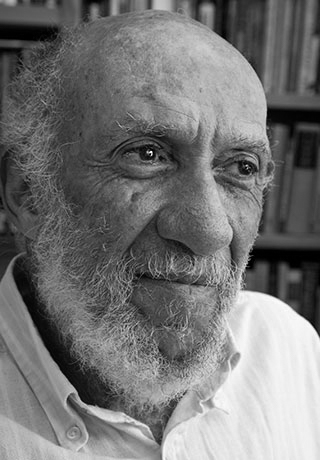

Professor Falk became an adviser to TFF when it was established in 1985.

Share

Leave a Reply

Your email address will not be published. Required fields are marked *

Related Posts

“En dag som berättigar till fest”, utropade den London-baserade al-Quds al-Arabi efter FN:s eldupphörresolution, “eftersom detta är första gången som Israel accepterar ett FN-beslut från en position som besegrad och inte som segrare”. Att ett arabisk-israeliskt krig för en gångs skull slutat med arabisk seger, är en helt dominerade åsikt i arabiska medier. Al-Quds al-Arabi tillåter sig att drömma om att det israeliska nederlaget skall leda till massflykt från Israel. Men i nästa andetag påminner tidningen om att Israel aldrig brukar genomföra sina internationella åtaganden och varnar för att förlorarna, liksom tidigare, kan hämnas genom att provocera fram inbördeskrig i Libanon. Med tanke på de otaliga massmediala vittnesmålen om det libanesiska folkets eniga motståndskraft förefaller risken för inre stridigheter i det sargade landet just nu liten. Men visst kan man urskilja nyansskillnader i libanesiska tidningar. Vänsterorganet al-Safir uppfattar FN-resolutionen som en komplott i syfte att rädda Israel från ännu större...
A donors’ conference, co-sponsered by the Burundian government, the Belgian government and UNDP will be held in Brussels January 12-13, 2004. This PressInfo offers a perspective on its urgency. See also TFF’s new Burundi Forum. Imagine for a moment that politics is about goodness and generosity. Where could a few million dollars of government aid and a few civil society organisations – guaranteed – win the hearts of extremely poor millions who want peace and already work hard to achieve it after 10 years of war and genocide? The answer is Burundi, the heart-shaped country in the heart of Africa. Burundi makes a good story from Africa. But what does the world know about Burundi, its problems and struggles? Burundi’s tough reality Here are the basic facts. Burundi’s population is about 7 million and it is number 171 out of the 175 countries on the UNDP’s human development index. Their life...
Peace is promoted by constructive proposals and dialogue Four preceding PressInfos have expressed concern over — and criticised — the ongoing, militarisation of the EU. Some will say: but there are no alternatives. We believe that there are always alternatives, that democracies are characterised by alternatives and choice, and that openly discussed alternatives will improve the quality and legitimacy of society’s decision–making. In addition, it is an intellectual and moral challenge to not only criticise but also be constructive. If we only tell people that we think they are wrong, they are not likely to listen. However, if we say: what are your views on this set of ideas and steps? — we may sometimes engage them in dialogue and sow a seed. Most people in power circles live their daily lives in in a time frame and a social space where certain ideas, viewpoints and concepts are just not...

Recent Articles

“En dag som berättigar till fest”, utropade den London-baserade al-Quds al-Arabi efter FN:s eldupphörresolution, “eftersom detta är första gången som Israel accepterar ett FN-beslut från en position som besegrad och inte som segrare”. Att ett arabisk-israeliskt krig för en gångs skull slutat med arabisk seger, är en helt dominerade åsikt i arabiska medier. Al-Quds al-Arabi tillåter sig att drömma om att det israeliska nederlaget skall leda till massflykt från Israel. Men i nästa andetag påminner tidningen om att Israel aldrig brukar genomföra sina internationella åtaganden och varnar för att förlorarna, liksom tidigare, kan hämnas genom att provocera fram inbördeskrig i Libanon. Med tanke på de otaliga massmediala vittnesmålen om det libanesiska folkets eniga motståndskraft förefaller risken för inre stridigheter i det sargade landet just nu liten. Men visst kan man urskilja nyansskillnader i libanesiska tidningar. Vänsterorganet al-Safir uppfattar FN-resolutionen som en komplott i syfte att rädda Israel från ännu större...
Greenland – the world’s largest island, a continent of its own with only 57.000 inhabitants. I visited it for the first time in May 2005. I flew across the inland ice to Nuuk, the tiny capital with some 14.000 inhabitants. I was overwhelmed by the pride and kindness of everyone I met as well as by the unique natural beauty. Unfortunately, due to weather conditions during my ten-day stay I could get nowhere else but Nuuk. Fortunately, however, among those I met was Gitte Arvegaard, a Danish lawyer and negotiator employed by the local government, Greenland Home Rule. She turned out to be an enthusiastic photographer with a lot of pictures taken during various trips around Greenland. So this Greeland series is the result of our cooperative effort. We both hope you enjoy it and are stimulated to visit Greenland – about which you may read more here. Finally, if you want to...
 Jan Oberg’s storyof how he met Sir Paul Liverpool – where else to meet Paul McCartney? Paul’s old class mate and TFF Associate, Jonathan Power introduced me to Paul McCartney in Liverpool at an informal reception. It was held at what used to be their school, now the Liverpool Institute for Performing Arts and we were there to celebrate that Jonathan had written Amnesty International’s 40th Anniversary book. This happy event for “righting wrongs and writing songs” gave me an opportunity to meet Paul and tell him about TFF and get straight to the matter: would he consider making a donation in support of our work for peace? While I was probably the only one with such a wish that day, I was certainly not the only one who wanted to shake hands and talk with him. In the last minutes before Paul was to leave, Jonathan brought us together and we got about three...

TFF on Substack

Discover more from TFF Transnational Foundation & Jan Oberg.

Most Popular

“En dag som berättigar till fest”, utropade den London-baserade al-Quds al-Arabi efter FN:s eldupphörresolution, “eftersom detta är första gången som Israel accepterar ett FN-beslut från en position som besegrad och inte som segrare”. Att ett arabisk-israeliskt krig för en gångs skull slutat med arabisk seger, är en helt dominerade åsikt i arabiska medier. Al-Quds al-Arabi tillåter sig att drömma om att det israeliska nederlaget skall leda till massflykt från Israel. Men i nästa andetag påminner tidningen om att Israel aldrig brukar genomföra sina internationella åtaganden och varnar för att förlorarna, liksom tidigare, kan hämnas genom att provocera fram inbördeskrig i Libanon. Med tanke på de otaliga massmediala vittnesmålen om det libanesiska folkets eniga motståndskraft förefaller risken för inre stridigheter i det sargade landet just nu liten. Men visst kan man urskilja nyansskillnader i libanesiska tidningar. Vänsterorganet al-Safir uppfattar FN-resolutionen som en komplott i syfte att rädda Israel från ännu större...
Greenland – the world’s largest island, a continent of its own with only 57.000 inhabitants. I visited it for the first time in May 2005. I flew across the inland ice to Nuuk, the tiny capital with some 14.000 inhabitants. I was overwhelmed by the pride and kindness of everyone I met as well as by the unique natural beauty. Unfortunately, due to weather conditions during my ten-day stay I could get nowhere else but Nuuk. Fortunately, however, among those I met was Gitte Arvegaard, a Danish lawyer and negotiator employed by the local government, Greenland Home Rule. She turned out to be an enthusiastic photographer with a lot of pictures taken during various trips around Greenland. So this Greeland series is the result of our cooperative effort. We both hope you enjoy it and are stimulated to visit Greenland – about which you may read more here. Finally, if you want to...
 Jan Oberg’s storyof how he met Sir Paul Liverpool – where else to meet Paul McCartney? Paul’s old class mate and TFF Associate, Jonathan Power introduced me to Paul McCartney in Liverpool at an informal reception. It was held at what used to be their school, now the Liverpool Institute for Performing Arts and we were there to celebrate that Jonathan had written Amnesty International’s 40th Anniversary book. This happy event for “righting wrongs and writing songs” gave me an opportunity to meet Paul and tell him about TFF and get straight to the matter: would he consider making a donation in support of our work for peace? While I was probably the only one with such a wish that day, I was certainly not the only one who wanted to shake hands and talk with him. In the last minutes before Paul was to leave, Jonathan brought us together and we got about three...
Read More
Imagen-thumbnail-The-Transnational-1
“En dag som berättigar till fest”, utropade den London-baserade al-Quds al-Arabi efter FN:s eldupphörresolution, “eftersom detta är första gången som Israel accepterar ett FN-beslut från en position som besegrad och inte som segrare”. Att ett arabisk-israeliskt krig för en gångs skull slutat med arabisk seger, är en helt dominerade åsikt i arabiska medier. Al-Quds al-Arabi tillåter sig att drömma om att det israeliska nederlaget skall leda till massflykt från Israel. Men i nästa andetag påminner tidningen om att Israel aldrig brukar genomföra sina internationella åtaganden och varnar för att förlorarna, liksom tidigare, kan hämnas genom att provocera fram inbördeskrig i Libanon. Med tanke på de otaliga massmediala vittnesmålen om det libanesiska folkets eniga motståndskraft förefaller risken för inre stridigheter i det sargade landet just nu liten. Men visst kan man urskilja nyansskillnader i libanesiska tidningar. Vänsterorganet al-Safir uppfattar FN-resolutionen som en komplott i syfte att rädda Israel från ännu större...
Greenland – the world’s largest island, a continent of its own with only 57.000 inhabitants. I visited it for the first time in May 2005. I flew across the inland ice to Nuuk, the tiny capital with some 14.000 inhabitants. I was overwhelmed by the pride and kindness of everyone I met as well as by the unique natural beauty. Unfortunately, due to weather conditions during my ten-day stay I could get nowhere else but Nuuk. Fortunately, however, among those I met was Gitte Arvegaard, a Danish lawyer and negotiator employed by the local government, Greenland Home Rule. She turned out to be an enthusiastic photographer with a lot of pictures taken during various trips around Greenland. So this Greeland series is the result of our cooperative effort. We both hope you enjoy it and are stimulated to visit Greenland – about which you may read more here. Finally, if you want to...
p_mccartney_poem
 Jan Oberg’s storyof how he met Sir Paul Liverpool – where else to meet Paul McCartney? Paul’s old class mate and TFF Associate, Jonathan Power introduced me to Paul McCartney in Liverpool at an informal reception. It was held at what used to be their school, now the Liverpool Institute for Performing Arts and we were there to celebrate that Jonathan had written Amnesty International’s 40th Anniversary book. This happy event for “righting wrongs and writing songs” gave me an opportunity to meet Paul and tell him about TFF and get straight to the matter: would he consider making a donation in support of our work for peace? While I was probably the only one with such a wish that day, I was certainly not the only one who wanted to shake hands and talk with him. In the last minutes before Paul was to leave, Jonathan brought us together and we got about three...
Logo-Transnational
1942James Paul McCartney is born in Liverpool on June 18th. 1956Paul writes his first song, I Lost My Little Girl. 1957Paul meets John Lennon at St. Peter’s Church Fete, Woolton, Liverpool. He joins his first group, The Quarrymen and performs in his first gig at The New Clubmoor Hall, Liverpool, on October 18th. 1960Formation of The Beatles, who play residencies in Hamburg and at The Cavern in Liverpool. 1961First Beatles recordings issued in Germany, as the backing group for Tony Sheridan. 1962The first Beatles Parlophone recording, Love Me Do, reaches number 17 in the British charts. 1963The birth of Beatlemania. Please Please Me gives the group their first British Number 1. She Loves You cements their success. Please Please Me and With The Beatles albums released. 1964First triumphant American tour. The Beatles perform at the Royal Command Performance and release their first film, A Hard Day’s Night. Their single I...
Logo-Transnational
  Back to the series “Bujumbura, Burundi”
By JONATHAN POWER August 16, 2000 LONDON – Remember the summer of ’98? In the sweltering, torpid heat of a Roman august, charged with exhaust fumes, the international community gave its overwhelming approval to the establishment of an International Criminal Court that will enable those accused of “crimes against humanity” to be tried and, if convicted, sentenced. Only seven nations opposed or abstained from the motion, including Israel, China, India and the U.S.A. where the Pentagon had successfully waged bureaucratic guerrilla war to undermine the initially sympathetic stance of President Bill Clinton. Two years on we can now see what an epochal event that was. In a the stroke of 120 pens it changed the climate on political thuggery. After numerous half-starts and false starts ever since the Nuremberg and Tokyo trials that convicted the war criminals of the Second World War, the world at last had agreed en masse a common...

