
Nuclear-free Middle East: Desirable, necessary and impossible

Finally, there is some argumentation in the West supportive of a nuclear free zone for the Middle East. Such thinking is still treated as politically marginal, and hardly audible above the beat of the war drums. It also tends to be defensively and pragmatically phrased as in the NY Times article by Shibley Telhami and Steven Kull (January 15, 2012) with full disclosure title, “Preventing a Nuclear Iran, Peacefully.”

The article makes a prudential argument against attacking Iran based on prospects of a damaging Iranian retaliation and the inability of an attack to destroy Iran’s nuclear program at an acceptable cost. The most that could be achieved for would be a short delay in Iran’s acquisition of weaponry, and maybe not even that. An attack seems likely to create irresistible pressure in Iran to everything possible to obtain a nuclear option with a renewed sense of urgency.

This argument is sensibly reinforced by pointing to respected public opinion surveys that show Israeli attitudes to be less war-inclined than had been generally assumed. According to a Israeli recent poll, only 43% of Israelis favoring a military strike, while 64% favored establishing a nuclear free zone (NFZ) in the region that included Israel. In effect, then, establishing a NFZ that includes Israel would seem politically feasible, although not a course of action that would be entertained by the current Tel Aviv governmental political climate. We can conclude that the silence of Washington with respect to such an alternative approach to the dispute with Iran confirms what is widely believed, namely, that the U.S. Government adheres to the official Israeli line, and is not particularly sensitive to the wishes of the Israeli public even to the extent of serving America’s own strong national interest in finding a peaceful solution to the conflict.

A variant of NFZ thinking has recently been attributed to Saudi Prince Turki Al-Faisal, former Saudi ambassador to the United States and once the head of Saudi intelligence. He too argues that NFZ is a better alternative than the military option, which he contends should be removed from the table.

Prince Turki insists that sanctions have not altered Iran’s behavior. His proposal is more complex than simply advocating a NFZ. He would favor sanctions against Iran if there is convincing evidence that it is seeking nuclear weapons, but he also supports sanctions imposed on Israel if it does not disclose openly the full extent of its nuclear weapons arsenal.

His approach has several additional features: extending the scope of the undertaking to all weapons of mass destruction (WMD), that is, including biological and chemical weapons; establishing a nuclear security umbrella for the region by the five permanent members of the UN Security Council; and seeking a resolution of outstanding conflicts in the region in accordance with the Mecca Arab proposals of 2002 that calls for Israeli withdrawal from Palestinian territories and the Golan Heights occupied in 1967, as well as the political and commercial normalization of relations between Israel and the Arab world.

Prince Turki warns that if such an arrangement is not soon put in place, and Iran proceeds with its nuclear program, other countries in the region, including Turkey, are likely to be drawn into an expensive and destabilizing nuclear arms race. In effect, as with Telhami and Kull, Prince Turki’s approach is designed to avoid worst case scenarios, but is framed mainly in relation to the future of the region rather than confined to the Israel/Iran confrontation.

It concretely urges establishing such a framework with or without Israeli support at a conference of parties to the Nuclear Nonproliferation Treaty scheduled for later in the year in Finland. Israel, not a party to the NPT, has not indicated its willingness to attend the conference at this point. As long ago as the 1995 NPT Review Conference the Arab countries put forward a proposal to establish in the Middle East a WMD free zone, but it has never been acted upon at any subsequent session. Israel, which is not a member of the NPT, has consistently taken the position over the years that a complete peace involving the region must precede any prohibition directed at the possession of nuclear weapons.

The NFZ or WMDFZ initiatives need to be seen in the setting established by the NPT regime. An initial observation involves Israel’s failure to become a party to the NPT coupled with its covert nuclear program that resulted in the acquisition of the weaponry with the complicity of the West as documented in Seymour Hersh’s 1991 The Samson Option.

Such a pattern of behavior needs to be contrasted with that of Iran, a party to the NPT that has reported to and accepted, with some friction, inspections on its territory by the Western oriented International Atomic Energy Agency. Iran has consistently denied any ambition to acquire nuclear weapons, but has insisted on its rights under Article IV of the treaty to exercise “..its inalienable right..to develop research, production and use of nuclear energy for peaceful purposes without discrimination..” Iran has been under constant threat of an attack by Israel, the target for several years of Israel’s dirty low intensity war, the target of a Congressionally funded destabilization program of the United States reinforced by a diplomacy that constantly reaffirms the relevance of the military option, and operates in a political climate that excludes consideration of Israel’s nuclear arsenal.

What is surprising under these circumstances is that Iran has not freed itself from NPT obligation by exercising its option to withdraw from the treaty as it entitled to do by Article X provided only that it gives notice to other treaty parties and an explanation of its reasons for withdrawing.

Comparing these Israeli and Iran patterns of behavior with respect to nuclear weapons, it is difficult not to conclude that it is Israel, not Iran, that should be subjected to sanctions, and pressure to participate in denuclearizing negotiations. After all, Israel acquired the weaponry secretly, has not been willing to participate in the near universal discipline to the NPT, and has engaged in aggressive wars repeatedly against its neighbors resulting in long-term occupations.

It can be argued that Israel was entitled to enhance its security by remaining outside the NPT, and thus is acting within its sovereign rights. This is a coherent legalistic position, but we should all realize by now that the NPT is more a geopolitical than a legal regime, and that Iran, for instance, would be immediately subject to a punitive response if it tried to withdraw from the treaty. In other words geopolitical priorities override legal rights in the NPT setting.

The NPT is shaped by its geopolitical nature. This is best illustrated by the utter refusal of the nuclear weapons states, above all the United States, to fulfill its obligation under Article VI “to pursue negotiations in good faith on effective measures relating to the cessation of the nuclear arms race at an early date and to nuclear disarmament, and on a treaty on general and complete disarmament under strict and effective international control.”

The International Court of Justice in its 1996 Advisory Opinion on The Legality of Nuclear Weapons unanimously affirmed in its findings the legal imperative embodied in Article VI: “There exists an obligation to pursue in good faith and bring to a conclusion negotiations leading to nuclear disarmament, and on a treaty on general and complete disarmament in all its aspects under strict international control.” This finding that has been completely ignored by the nuclear weapons states (who had earlier made a furious failed effort to dissuade the UN General Assembly from seeking guidance from the ICJ with respect to the legal status of nuclear weapons and the obligations of the NPT).

The refusal to uphold these obligations of Article VI would certainly appear to be a material breach of the treaty that authorizes any party to regard the treaty as void. Again the international discourse on nuclear weapons is so distorted that it is a rarity to encounter criticism of its discriminatory application, its double standards as between nuclear and non-nuclear states, and its geopolitical style of selective enforcement. In this regard it should be appreciated that the threat of military attack directed at Iran resembles reliance on the so-called Bush Doctrine of preventive war that had been used to justify aggression against Iraq in 2003.

In summary, it is of utmost importance to avoid a war in the Middle East arising from the unresolved dispute about Iran’s nuclear program. One way to do this is to seek a NFZ or a WMDFZ for the entire region that includes the participation of Israel. What has given this approach a renewed credibility for the West is that it seems the only way to avoid a lose/lose war option, that it possesses some prudential appeal to change minds in Tehran and Tel Aviv, and also to engage Washington in a less destructive and self-destructive course of action.

Whether this prudential appeal is sufficiently strong to overcome the iron cage of militarism that guides policy choices in Israel and the United States remains doubtful. Thinking outside the militarist box remains a forbidden activity, partly reflecting the domestic lock on the political and moral imagination of these countries by their respective military industrial media think tank complexes.

I would conclude this commentary with three pessimistic assessments that casts a dark shadow over the regional future:

(1) An NFZ or WMDFZ for the Middle East is necessary and desirable, but it almost certainly will not be placed on the political agenda of American-led diplomacy relating to the conflict;

(2) Moves toward nuclear disarmament negotiations that have been legally mandated and would be beneficial for the world, and for the nuclear weapons states and their peoples, will not be made in the current atmosphere that blocks all serious initiatives to abolish nuclear weapons;

(3) The drift toward a devastating attack on Iran will only be stopped by an urgent mobilization of anti-war forces in civil society, which seems unlikely given other preoccupations.
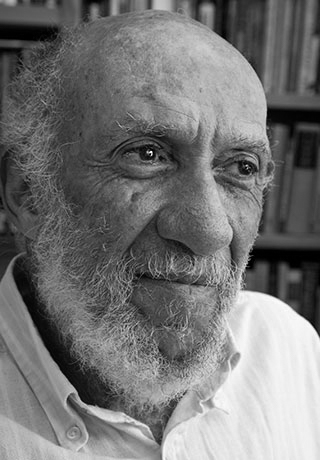

Professor Falk became an adviser to TFF when it was established in 1985.

Share

Leave a Reply

Your email address will not be published. Required fields are marked *

Related Posts

“En dag som berättigar till fest”, utropade den London-baserade al-Quds al-Arabi efter FN:s eldupphörresolution, “eftersom detta är första gången som Israel accepterar ett FN-beslut från en position som besegrad och inte som segrare”. Att ett arabisk-israeliskt krig för en gångs skull slutat med arabisk seger, är en helt dominerade åsikt i arabiska medier. Al-Quds al-Arabi tillåter sig att drömma om att det israeliska nederlaget skall leda till massflykt från Israel. Men i nästa andetag påminner tidningen om att Israel aldrig brukar genomföra sina internationella åtaganden och varnar för att förlorarna, liksom tidigare, kan hämnas genom att provocera fram inbördeskrig i Libanon. Med tanke på de otaliga massmediala vittnesmålen om det libanesiska folkets eniga motståndskraft förefaller risken för inre stridigheter i det sargade landet just nu liten. Men visst kan man urskilja nyansskillnader i libanesiska tidningar. Vänsterorganet al-Safir uppfattar FN-resolutionen som en komplott i syfte att rädda Israel från ännu större...
A donors’ conference, co-sponsered by the Burundian government, the Belgian government and UNDP will be held in Brussels January 12-13, 2004. This PressInfo offers a perspective on its urgency. See also TFF’s new Burundi Forum. Imagine for a moment that politics is about goodness and generosity. Where could a few million dollars of government aid and a few civil society organisations – guaranteed – win the hearts of extremely poor millions who want peace and already work hard to achieve it after 10 years of war and genocide? The answer is Burundi, the heart-shaped country in the heart of Africa. Burundi makes a good story from Africa. But what does the world know about Burundi, its problems and struggles? Burundi’s tough reality Here are the basic facts. Burundi’s population is about 7 million and it is number 171 out of the 175 countries on the UNDP’s human development index. Their life...
Peace is promoted by constructive proposals and dialogue Four preceding PressInfos have expressed concern over — and criticised — the ongoing, militarisation of the EU. Some will say: but there are no alternatives. We believe that there are always alternatives, that democracies are characterised by alternatives and choice, and that openly discussed alternatives will improve the quality and legitimacy of society’s decision–making. In addition, it is an intellectual and moral challenge to not only criticise but also be constructive. If we only tell people that we think they are wrong, they are not likely to listen. However, if we say: what are your views on this set of ideas and steps? — we may sometimes engage them in dialogue and sow a seed. Most people in power circles live their daily lives in in a time frame and a social space where certain ideas, viewpoints and concepts are just not...

Recent Articles

“En dag som berättigar till fest”, utropade den London-baserade al-Quds al-Arabi efter FN:s eldupphörresolution, “eftersom detta är första gången som Israel accepterar ett FN-beslut från en position som besegrad och inte som segrare”. Att ett arabisk-israeliskt krig för en gångs skull slutat med arabisk seger, är en helt dominerade åsikt i arabiska medier. Al-Quds al-Arabi tillåter sig att drömma om att det israeliska nederlaget skall leda till massflykt från Israel. Men i nästa andetag påminner tidningen om att Israel aldrig brukar genomföra sina internationella åtaganden och varnar för att förlorarna, liksom tidigare, kan hämnas genom att provocera fram inbördeskrig i Libanon. Med tanke på de otaliga massmediala vittnesmålen om det libanesiska folkets eniga motståndskraft förefaller risken för inre stridigheter i det sargade landet just nu liten. Men visst kan man urskilja nyansskillnader i libanesiska tidningar. Vänsterorganet al-Safir uppfattar FN-resolutionen som en komplott i syfte att rädda Israel från ännu större...
Greenland – the world’s largest island, a continent of its own with only 57.000 inhabitants. I visited it for the first time in May 2005. I flew across the inland ice to Nuuk, the tiny capital with some 14.000 inhabitants. I was overwhelmed by the pride and kindness of everyone I met as well as by the unique natural beauty. Unfortunately, due to weather conditions during my ten-day stay I could get nowhere else but Nuuk. Fortunately, however, among those I met was Gitte Arvegaard, a Danish lawyer and negotiator employed by the local government, Greenland Home Rule. She turned out to be an enthusiastic photographer with a lot of pictures taken during various trips around Greenland. So this Greeland series is the result of our cooperative effort. We both hope you enjoy it and are stimulated to visit Greenland – about which you may read more here. Finally, if you want to...
 Jan Oberg’s storyof how he met Sir Paul Liverpool – where else to meet Paul McCartney? Paul’s old class mate and TFF Associate, Jonathan Power introduced me to Paul McCartney in Liverpool at an informal reception. It was held at what used to be their school, now the Liverpool Institute for Performing Arts and we were there to celebrate that Jonathan had written Amnesty International’s 40th Anniversary book. This happy event for “righting wrongs and writing songs” gave me an opportunity to meet Paul and tell him about TFF and get straight to the matter: would he consider making a donation in support of our work for peace? While I was probably the only one with such a wish that day, I was certainly not the only one who wanted to shake hands and talk with him. In the last minutes before Paul was to leave, Jonathan brought us together and we got about three...

TFF on Substack

Discover more from TFF Transnational Foundation & Jan Oberg.

Most Popular

“En dag som berättigar till fest”, utropade den London-baserade al-Quds al-Arabi efter FN:s eldupphörresolution, “eftersom detta är första gången som Israel accepterar ett FN-beslut från en position som besegrad och inte som segrare”. Att ett arabisk-israeliskt krig för en gångs skull slutat med arabisk seger, är en helt dominerade åsikt i arabiska medier. Al-Quds al-Arabi tillåter sig att drömma om att det israeliska nederlaget skall leda till massflykt från Israel. Men i nästa andetag påminner tidningen om att Israel aldrig brukar genomföra sina internationella åtaganden och varnar för att förlorarna, liksom tidigare, kan hämnas genom att provocera fram inbördeskrig i Libanon. Med tanke på de otaliga massmediala vittnesmålen om det libanesiska folkets eniga motståndskraft förefaller risken för inre stridigheter i det sargade landet just nu liten. Men visst kan man urskilja nyansskillnader i libanesiska tidningar. Vänsterorganet al-Safir uppfattar FN-resolutionen som en komplott i syfte att rädda Israel från ännu större...
Greenland – the world’s largest island, a continent of its own with only 57.000 inhabitants. I visited it for the first time in May 2005. I flew across the inland ice to Nuuk, the tiny capital with some 14.000 inhabitants. I was overwhelmed by the pride and kindness of everyone I met as well as by the unique natural beauty. Unfortunately, due to weather conditions during my ten-day stay I could get nowhere else but Nuuk. Fortunately, however, among those I met was Gitte Arvegaard, a Danish lawyer and negotiator employed by the local government, Greenland Home Rule. She turned out to be an enthusiastic photographer with a lot of pictures taken during various trips around Greenland. So this Greeland series is the result of our cooperative effort. We both hope you enjoy it and are stimulated to visit Greenland – about which you may read more here. Finally, if you want to...
 Jan Oberg’s storyof how he met Sir Paul Liverpool – where else to meet Paul McCartney? Paul’s old class mate and TFF Associate, Jonathan Power introduced me to Paul McCartney in Liverpool at an informal reception. It was held at what used to be their school, now the Liverpool Institute for Performing Arts and we were there to celebrate that Jonathan had written Amnesty International’s 40th Anniversary book. This happy event for “righting wrongs and writing songs” gave me an opportunity to meet Paul and tell him about TFF and get straight to the matter: would he consider making a donation in support of our work for peace? While I was probably the only one with such a wish that day, I was certainly not the only one who wanted to shake hands and talk with him. In the last minutes before Paul was to leave, Jonathan brought us together and we got about three...
Read More
Imagen-thumbnail-The-Transnational-1
“En dag som berättigar till fest”, utropade den London-baserade al-Quds al-Arabi efter FN:s eldupphörresolution, “eftersom detta är första gången som Israel accepterar ett FN-beslut från en position som besegrad och inte som segrare”. Att ett arabisk-israeliskt krig för en gångs skull slutat med arabisk seger, är en helt dominerade åsikt i arabiska medier. Al-Quds al-Arabi tillåter sig att drömma om att det israeliska nederlaget skall leda till massflykt från Israel. Men i nästa andetag påminner tidningen om att Israel aldrig brukar genomföra sina internationella åtaganden och varnar för att förlorarna, liksom tidigare, kan hämnas genom att provocera fram inbördeskrig i Libanon. Med tanke på de otaliga massmediala vittnesmålen om det libanesiska folkets eniga motståndskraft förefaller risken för inre stridigheter i det sargade landet just nu liten. Men visst kan man urskilja nyansskillnader i libanesiska tidningar. Vänsterorganet al-Safir uppfattar FN-resolutionen som en komplott i syfte att rädda Israel från ännu större...
Greenland – the world’s largest island, a continent of its own with only 57.000 inhabitants. I visited it for the first time in May 2005. I flew across the inland ice to Nuuk, the tiny capital with some 14.000 inhabitants. I was overwhelmed by the pride and kindness of everyone I met as well as by the unique natural beauty. Unfortunately, due to weather conditions during my ten-day stay I could get nowhere else but Nuuk. Fortunately, however, among those I met was Gitte Arvegaard, a Danish lawyer and negotiator employed by the local government, Greenland Home Rule. She turned out to be an enthusiastic photographer with a lot of pictures taken during various trips around Greenland. So this Greeland series is the result of our cooperative effort. We both hope you enjoy it and are stimulated to visit Greenland – about which you may read more here. Finally, if you want to...
p_mccartney_poem
 Jan Oberg’s storyof how he met Sir Paul Liverpool – where else to meet Paul McCartney? Paul’s old class mate and TFF Associate, Jonathan Power introduced me to Paul McCartney in Liverpool at an informal reception. It was held at what used to be their school, now the Liverpool Institute for Performing Arts and we were there to celebrate that Jonathan had written Amnesty International’s 40th Anniversary book. This happy event for “righting wrongs and writing songs” gave me an opportunity to meet Paul and tell him about TFF and get straight to the matter: would he consider making a donation in support of our work for peace? While I was probably the only one with such a wish that day, I was certainly not the only one who wanted to shake hands and talk with him. In the last minutes before Paul was to leave, Jonathan brought us together and we got about three...
Logo-Transnational
1942James Paul McCartney is born in Liverpool on June 18th. 1956Paul writes his first song, I Lost My Little Girl. 1957Paul meets John Lennon at St. Peter’s Church Fete, Woolton, Liverpool. He joins his first group, The Quarrymen and performs in his first gig at The New Clubmoor Hall, Liverpool, on October 18th. 1960Formation of The Beatles, who play residencies in Hamburg and at The Cavern in Liverpool. 1961First Beatles recordings issued in Germany, as the backing group for Tony Sheridan. 1962The first Beatles Parlophone recording, Love Me Do, reaches number 17 in the British charts. 1963The birth of Beatlemania. Please Please Me gives the group their first British Number 1. She Loves You cements their success. Please Please Me and With The Beatles albums released. 1964First triumphant American tour. The Beatles perform at the Royal Command Performance and release their first film, A Hard Day’s Night. Their single I...
Logo-Transnational
  Back to the series “Bujumbura, Burundi”
By JONATHAN POWER August 16, 2000 LONDON – Remember the summer of ’98? In the sweltering, torpid heat of a Roman august, charged with exhaust fumes, the international community gave its overwhelming approval to the establishment of an International Criminal Court that will enable those accused of “crimes against humanity” to be tried and, if convicted, sentenced. Only seven nations opposed or abstained from the motion, including Israel, China, India and the U.S.A. where the Pentagon had successfully waged bureaucratic guerrilla war to undermine the initially sympathetic stance of President Bill Clinton. Two years on we can now see what an epochal event that was. In a the stroke of 120 pens it changed the climate on political thuggery. After numerous half-starts and false starts ever since the Nuremberg and Tokyo trials that convicted the war criminals of the Second World War, the world at last had agreed en masse a common...

