
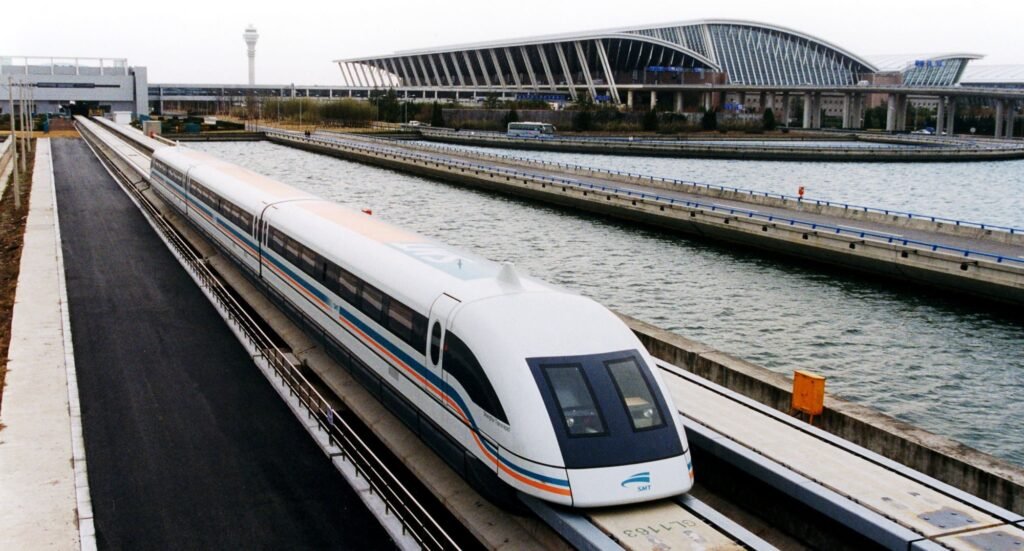
Why don't we have China trains in Norway?

Thore Vestby & Arild Vollan

Visiting today’s China is like travelling into the future. So much has happened in the last 20-30 years that we should travel to China to learn and see what is happening. It’s incredible what the country has achieved in just a few years.

Soon, China will have built 50,000 kilometres of high-speed train lines. Just travelling by train in China is such a great experience that it’s worth the visit. These trains are completely silent and offer a level of comfort you’ll find in first-class aeroplanes—an enchanting and must-experience travel experience.

Strangely, we in Norway can’t make “pirate copies” of Chinese trains. We are told that Chinese companies are happy to build new high-speed train lines in Norway. But we ran into problems when we tried to explain to the Chinese that we in Norway have introduced “Bus for Train”. It’s a term that doesn’t exist in the Chinese language. We didn’t really manage to explain what we meant.

Trains are too expensive

Those who don’t want to invest in trains in Norway say that they will be too expensive. This argument was also used in China, but here, politicians did not consider what “transport economists” thought. The policy in China means that infrastructure must be developed to create development in a country. Our travels around China show that this is precisely what has happened. The country has been developed and modernised with a well-functioning infrastructure, which has created development and jobs even outside China.

A 2020 study showed that China’s net benefit of the high-speed rail system is approximately USD 378 billion. This gives an annual return on investment of 6.5%. The development of high-speed rail has also led to a significant reduction in domestic air traffic.

With high-speed trains in Norway, domestic air routes will no longer be needed. The new China trains have a speed of 300 to 400 km/h. China’s new Maglev trains recently completed demonstration tests at up to 1000 km/h speeds. Even a train journey from Oslo-Tromsø will take a long time. Why can’t we get China to build the Northern Norway Railway?
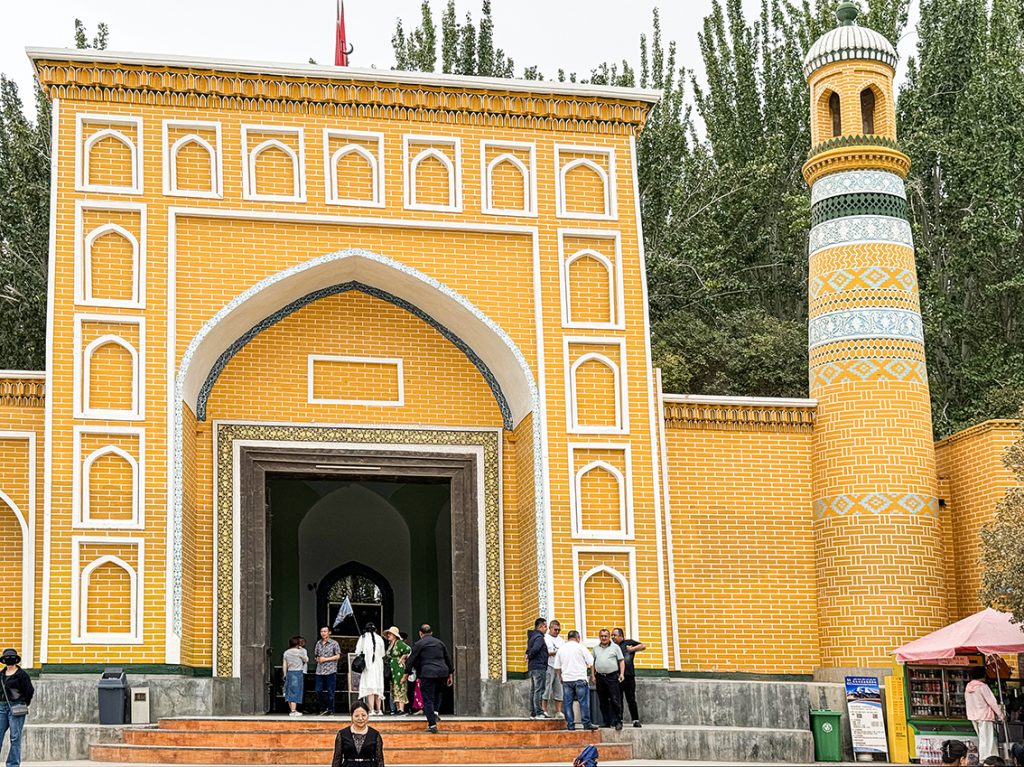
The central mosque in Kashi, Xinjiang © Jan Oberg 2024

Is China a security threat?

Unfortunately, it’s unlikely that rail cooperation will occur between Norway and China. China has suddenly become a significant security threat to the West. According to NATO, even the Chinese are coming to take our “values” from us.

From China’s point of view, these are incredible claims. China has no ambitions to threaten the Western world or to seek hegemony. The generally negative attitude towards China in our media, research and politics stems not from China, but from the West itself.
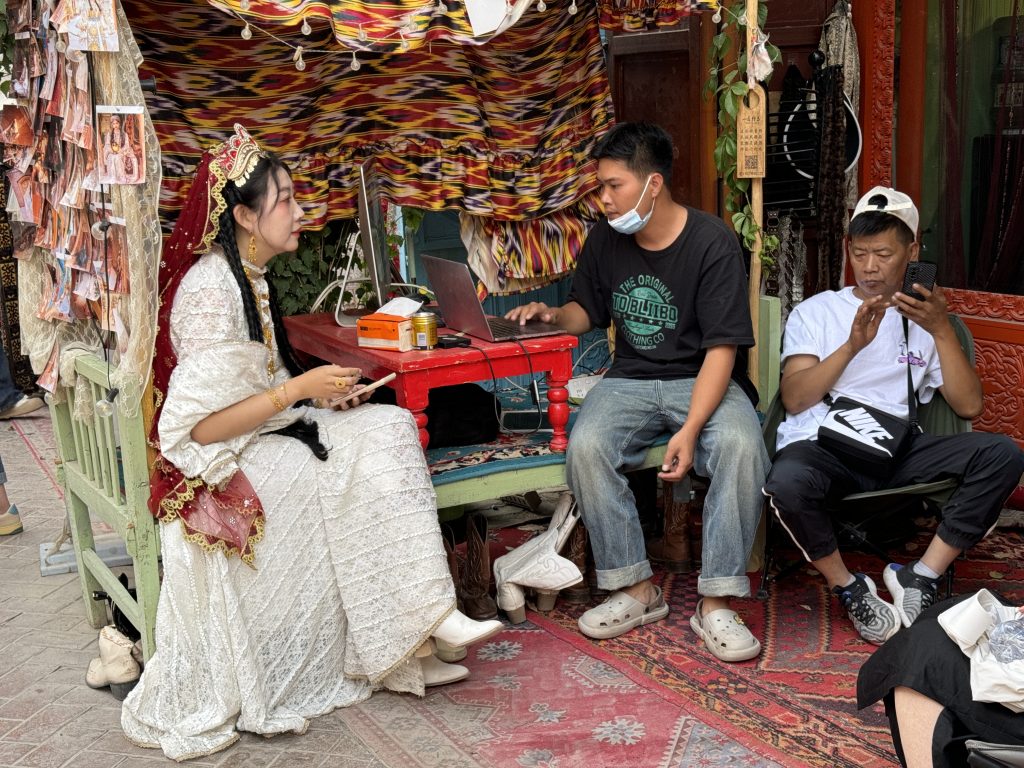
Street shot from Kashi/Kashgar in Xinjiang © Jan Oberg 2024.

Chinese foreign policy is founded on the Five Principles of Peaceful Coexistence – mutual respect for territorial integrity and sovereignty, non-aggression, non-interference in each other’s internal affairs, equality and mutual benefit, and peaceful coexistence. These principles are recognised by important legal instruments such as the UN Charter, but not by most countries in their daily decisions.

It is wrong to judge China by Western criteria, not by its own criteria and achievements.

Recently, the US Congress has allocated no less than US $ 1.6 billion to influence operations aimed at creating negative images of China.

The propaganda war

In a carefully planned propaganda war, China is portrayed as a threat to the rest of the world. The US aims to turn public opinion in the West and Africa against China. Perhaps this shows how weak the West has become? It’s indeed sad for everyone who used to fight for free media and free expression of opinion.

To understand and see what’s happening in China, we need to visit China. We cannot rely on being informed through a carefully planned propaganda war.

We recently visited the province of Xinjiang, strategically located in the northwest as a gateway to Eurasia and Europe. About two-thirds of the province’s 26 million people are members of numerous ethnic minorities – and it is a crucial province for the Belt and Road Initiative. This is where the US claims China maintains concentration camps and where genocide against minorities is taking place.
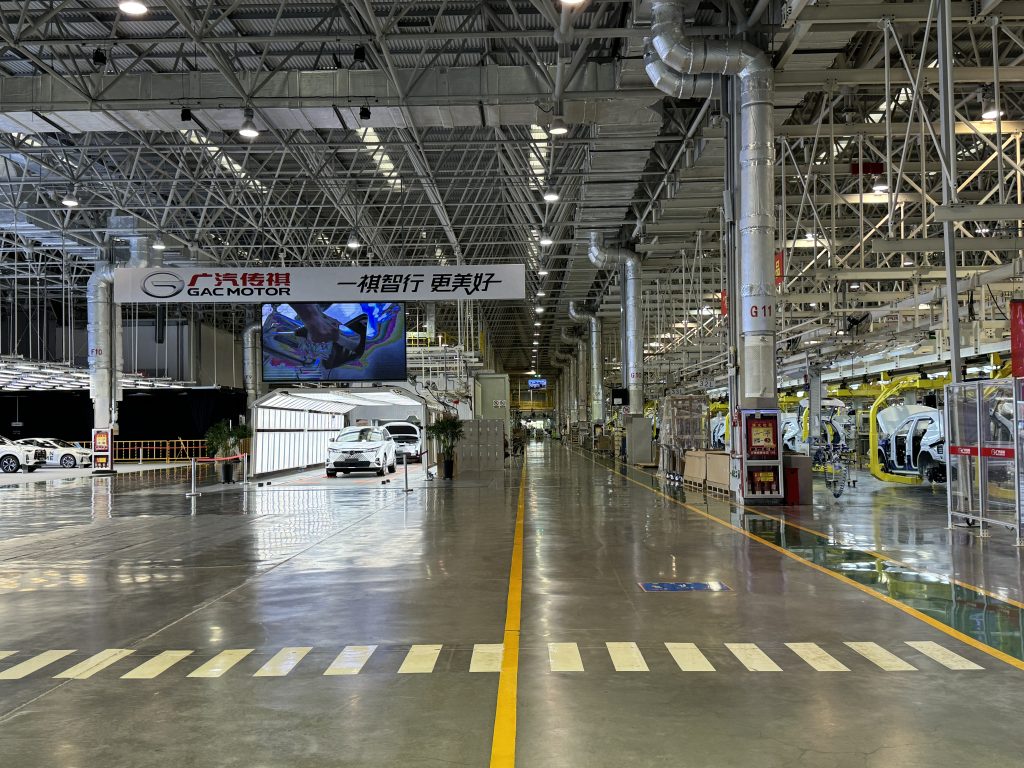
The GAC Passenger Vehicle Factory in Xinjiang © Jan Oberg 2024

A dynamic province

But where is the genocide? We met a dynamic province that is busy with its development. We didn’t find a trace of genocide, forced labour, or arbitrary detentions, but we did visit a documentation centre showing the numerous terrorist acts and China’s fight against terrorism.

The US has no case to present regarding any of these accusations. What the US seems to have latched onto, and even today refers to, is China’s anti-terrorism campaign.

This was an anti-separatist and anti-religious extremism campaign to stop Isis, al-Qaeda and other terrorists. China defeated terrorism in Xinjiang in 2019.

Should China also be criticised for its fight against terrorism?

The authors

Thore Vestby
– former Member of the Norwegian Parliament (H), former mayor and present TFF Board member. Private photo.

Arild Vollan
– a partner in Arctic Development, Ibestad/Oslo, Norway. Private photo.

Comment
The article above is a translation of the authors’ article in Norwegian in Nordnorsk Debatt here with some photos added. Since I participated in the same delegation, I can add that in response to our questions, we were told that China had practised legal processes against the perpetrators of terrorism and established re-orientation/de-radicalisation institutions and vocational training centres as well as promoted reintegration into society’s economic development to solve the terrorism problem and prevent it from coming back in the future.

Jan Oberg – TFF director and editor.

Urumqi, the capital of the Xinjiang Province, by night © Jan Oberg 2024.


1972-2003 IT and business-related education by IBM in economy, sales, marketing and business development.1971-1972 Military service1968-1971 Gymnasium, mathematics and physics1965-1968 High-school

Share

Leave a Reply

Your email address will not be published. Required fields are marked *

Related Posts

Professor Zhang Weiwei is a highly respected Chinese intellectual and professor at Fudan University in Shanghai. He is the director of its China Institute and also runs a series of conversations with many different people around the world. Here is what came out of their meetings there and in Skopje, Macedonia in October 2024: & As you can see, also at the end of the second one, we both enjoy win-win exchanges like these about world order issues. Zhang Weiwei is known for using videos and social media to reach a large audience in China and worldwide. We suggest you see many more of Zhang Weiwei’s conversations – like recently with Professor Jeffrey Sachs – on the Thinkers’ Forum on YouTube. PSTFF posts hundreds of videos, its own and those of others, in our Video Collections on TFF Substack – including those that appear on YouTube. However, TFF has been cancelled by Google-owned...
Launched on November 17, 2024Updated with new materials regularly TFF Board members Thore Vest. Everywhere, the delegation was met with a sincere wish to develop knowledge, dialogue, cooperative projects, and initiatives based on citizens’ diplomacy – in general, but with the West in particular. For more, see “Report from the Nordic delegation to China’s Xinjiang Province, September 7-15, 2024.” While the delegation was in Xinjiang, various ideas were already being discussed from the local to the top level, i.e., with the governor and party leaders of Xinjiang. The two TFF Associates suggested that TFF set up a special section – in addition to its “China and Silk” – where various quality materials about Xinjiang would regularly be published to promote public education about Xinjiang, particularly its contemporary development – worldwide but in the West in particular. This is now a reality – as can be seen below – but it...
Photo Jan Oberg China has recently garnered significant attention due to its advancements in various technological fields, such as quantum physics and artificial intelligence. In media discussions and my lectures on China, it is common to encounter objections asserting that the West, particularly the United States, is certainly ahead of China. These assertions appear to be more emotional than factual. However, a more fundamental consideration is whether this question holds any significance. Cultural Perspective One aspect that Westerners often overlook is the cultural variation in understanding the relationship between abstract academic insights and practical applications of those insights. To comprehend the origin and significance of discussions on technological superiority, it is essential to acknowledge cultural and social differences between China and the West. I have explored this topic before in some of my previous articles published on the TFF website. Particularism On the cultural dimension universalist – particularist, China exhibits...

Recent Articles

PressInfo # 141, December 21, 2001It’s time to prepare reconciliation between Albanians and Serbs PressInfo # 140, December 14, 2001Ibrahim Rugova’s decade-long leadership in Kosovo/a PressInfo # 139, 11. december, 2001En god nyhet: Jugoslaviens Sannings- och försoningskommission PressInfo # 139, 11. december, 2001Gode nyheder: Jugoslaviens Sandheds- og Forsoningskommission PressInfo # 139, December 11, 2001Good news: Yugoslavia’s Truth and Reconciliation Commission PressInfo # 138, November 8, 2001TFF co-founder PhD with thesis about young people with roots in other cultures PressInfo # 138, November 8, 2001TFF:s medstiftare doktor på avhandling om unga med ursprung i andra kulturer PressInfo # 137, October 17, 2001A new Marshall Plan: Advancing human security and controlling terrorism PressInfo # 136, October 15, 2001The UN and Annan really deserve it PressInfo # 135, October 10, 2001Preventing a terrorist mushroom cloud PressInfo # 134, 17 oktober, 2001Sverige og 11. september PressInfo # 134, October 9, 2001Sweden and September 11...
Peace is promoted by constructive proposals and dialogue Four preceding PressInfos have expressed concern over — and criticised — the ongoing, militarisation of the EU. Some will say: but there are no alternatives. We believe that there are always alternatives, that democracies are characterised by alternatives and choice, and that openly discussed alternatives will improve the quality and legitimacy of society’s decision–making. In addition, it is an intellectual and moral challenge to not only criticise but also be constructive. If we only tell people that we think they are wrong, they are not likely to listen. However, if we say: what are your views on this set of ideas and steps? — we may sometimes engage them in dialogue and sow a seed. Most people in power circles live their daily lives in in a time frame and a social space where certain ideas, viewpoints and concepts are just not...
Photos © TFF 2000 Read PressInfo 90 “Lift the Sanctions and Bring More Aid to Yugoslavia” See Pictures from Belgrade © TFF 2000 Please reprint, copy, archive, quote or re-post this item, but please retain the source.

TFF on Substack

Discover more from TFF Transnational Foundation & Jan Oberg.

Most Popular

PressInfo # 141, December 21, 2001It’s time to prepare reconciliation between Albanians and Serbs PressInfo # 140, December 14, 2001Ibrahim Rugova’s decade-long leadership in Kosovo/a PressInfo # 139, 11. december, 2001En god nyhet: Jugoslaviens Sannings- och försoningskommission PressInfo # 139, 11. december, 2001Gode nyheder: Jugoslaviens Sandheds- og Forsoningskommission PressInfo # 139, December 11, 2001Good news: Yugoslavia’s Truth and Reconciliation Commission PressInfo # 138, November 8, 2001TFF co-founder PhD with thesis about young people with roots in other cultures PressInfo # 138, November 8, 2001TFF:s medstiftare doktor på avhandling om unga med ursprung i andra kulturer PressInfo # 137, October 17, 2001A new Marshall Plan: Advancing human security and controlling terrorism PressInfo # 136, October 15, 2001The UN and Annan really deserve it PressInfo # 135, October 10, 2001Preventing a terrorist mushroom cloud PressInfo # 134, 17 oktober, 2001Sverige og 11. september PressInfo # 134, October 9, 2001Sweden and September 11...
Peace is promoted by constructive proposals and dialogue Four preceding PressInfos have expressed concern over — and criticised — the ongoing, militarisation of the EU. Some will say: but there are no alternatives. We believe that there are always alternatives, that democracies are characterised by alternatives and choice, and that openly discussed alternatives will improve the quality and legitimacy of society’s decision–making. In addition, it is an intellectual and moral challenge to not only criticise but also be constructive. If we only tell people that we think they are wrong, they are not likely to listen. However, if we say: what are your views on this set of ideas and steps? — we may sometimes engage them in dialogue and sow a seed. Most people in power circles live their daily lives in in a time frame and a social space where certain ideas, viewpoints and concepts are just not...
Photos © TFF 2000 Read PressInfo 90 “Lift the Sanctions and Bring More Aid to Yugoslavia” See Pictures from Belgrade © TFF 2000 Please reprint, copy, archive, quote or re-post this item, but please retain the source.
Read More
Imagen-thumbnail-The-Transnational-1
PressInfo # 141, December 21, 2001It’s time to prepare reconciliation between Albanians and Serbs PressInfo # 140, December 14, 2001Ibrahim Rugova’s decade-long leadership in Kosovo/a PressInfo # 139, 11. december, 2001En god nyhet: Jugoslaviens Sannings- och försoningskommission PressInfo # 139, 11. december, 2001Gode nyheder: Jugoslaviens Sandheds- og Forsoningskommission PressInfo # 139, December 11, 2001Good news: Yugoslavia’s Truth and Reconciliation Commission PressInfo # 138, November 8, 2001TFF co-founder PhD with thesis about young people with roots in other cultures PressInfo # 138, November 8, 2001TFF:s medstiftare doktor på avhandling om unga med ursprung i andra kulturer PressInfo # 137, October 17, 2001A new Marshall Plan: Advancing human security and controlling terrorism PressInfo # 136, October 15, 2001The UN and Annan really deserve it PressInfo # 135, October 10, 2001Preventing a terrorist mushroom cloud PressInfo # 134, 17 oktober, 2001Sverige og 11. september PressInfo # 134, October 9, 2001Sweden and September 11...
Imagen-thumbnail-The-Transnational-1
Peace is promoted by constructive proposals and dialogue Four preceding PressInfos have expressed concern over — and criticised — the ongoing, militarisation of the EU. Some will say: but there are no alternatives. We believe that there are always alternatives, that democracies are characterised by alternatives and choice, and that openly discussed alternatives will improve the quality and legitimacy of society’s decision–making. In addition, it is an intellectual and moral challenge to not only criticise but also be constructive. If we only tell people that we think they are wrong, they are not likely to listen. However, if we say: what are your views on this set of ideas and steps? — we may sometimes engage them in dialogue and sow a seed. Most people in power circles live their daily lives in in a time frame and a social space where certain ideas, viewpoints and concepts are just not...
Imagen-thumbnail-The-Transnational-1
Photos © TFF 2000 Read PressInfo 90 “Lift the Sanctions and Bring More Aid to Yugoslavia” See Pictures from Belgrade © TFF 2000 Please reprint, copy, archive, quote or re-post this item, but please retain the source.
Imagen-thumbnail-The-Transnational-1
Av FRANK SØHOLM GREVIL 16 augusti 2004  Vi er nu nået til tredje akt i det absurde teaterstykke, der i analogi med de store skueprocesser i Moskva 1936-38 er blevet døbt ‘Grevil-sagen’. Første akt bestod i min anonyme fremlæggelse af egenhændigt nedklassificerede rapporter i Berlingske Tidende i februar og marts. Andet akt udgjordes af min fremtræden med navn og billede i Information i april samt den efterfølgende mediestorm, som uden min direkte medvirken kostede en forsvarsminister taburetten samt en sigtelse for brud på tavshedspligten. Tredje akt bliver en retssag, hvor jeg står tiltalt for at have overtrådt straffelovens bestemmelser om uberettiget videregivelse eller udnyttelse af fortrolige oplysninger. Statsanklageren har ovenikøbet valgt at påberåbe sig særligt skærpende omstændigheder. Da jeg aldrig har modtaget betaling for at stille rapporterne til rådighed eller lade mig interviewe, må det skærpende bestå i, at “videregivelsen eller udnyttelsen er sket under sådanne omstændigheder, at det påfører...
Imagen-thumbnail-The-Transnational-1
Af Svenska Irakkommittén mot de Ekonomiska Sanktionerna (SIES) 13 september 2002 FN:s ekonomiska sanktioner mot Irak har nu pågått i tolv år och drabbat det irakiska folket med svåra lidanden. Enligt FN:s egna siffror har mer än 1,5 miljoner människor, varav ca 600 000 barn, dött som en direkt följd av sanktionerna. Dessutom har ett lågintensivt bombkrig mot landet pågått under dessa år. Av all denna förödelse- orsakad huvudsakligen av amerikansk och brittisk politik- har Saddam Husseins brutala och diktatoriska regim snarast stärkts än försvagats. Nu förbereder USA under president Bushs ledning ett storskaligt bombkrig mot Irak som kommer att innebära ett ännu större lidande för civilbefolkningen. Ett sådant krig kommer dessutom att ytterligare undergräva freden och säkerheten i världen. Att upprätta en demokratisk regim i Irak är det irakiska folkets angelägenhet och får enligt folkrätten inte ske med krigshandlingar utifrån. Folkrätten och FN:s stadgar måste respekteras. Vi vädjar till...

