
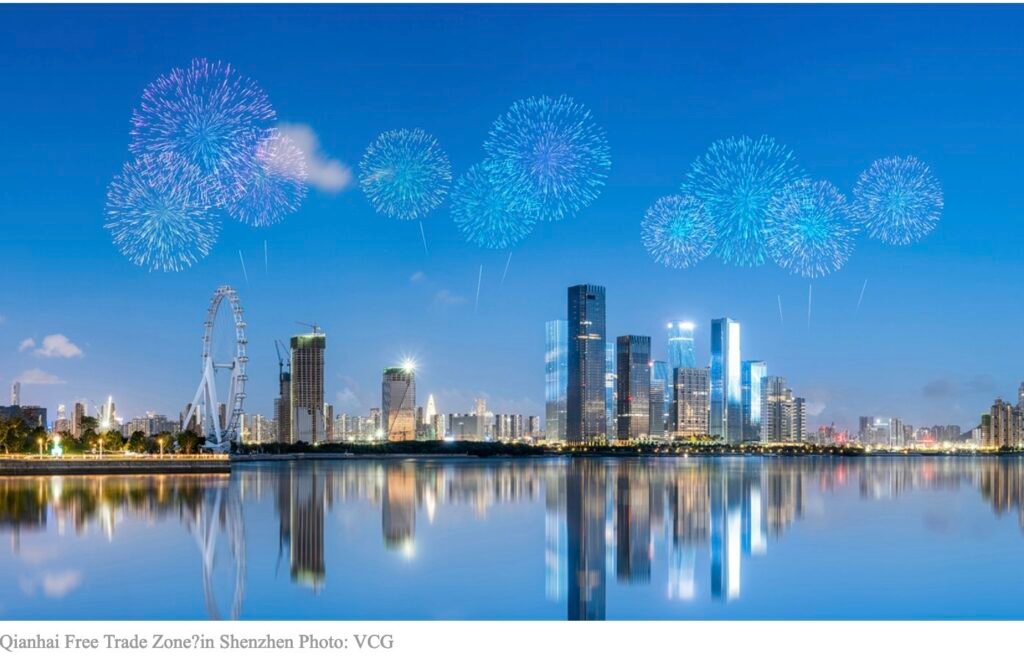
Martin Jacques: Five key points that the West can learn from China’s governance

Martin Jacques

December 28, 2022

The West could learn a great deal from China’s system of governance. It is highly unlikely this will happen, at least anytime soon. On the contrary, the West believes that its governance system is the best in the world, cannot be improved upon, and is incomparably superior to that of China. Why then is the West in rampant decline? And why has China, in contrast, enjoyed a dramatic rise over the last four decades.

Have these contrasting fortunes got nothing to do with their respective governing systems? Are national success and the system of governance utterly disconnected from each other? Is the system of governance little more than an ornament of decoration, with little bearing on the performance of a nation?
 
This is obviously nonsense. The quality of governance is fundamental to the success or failure of a country. If a country is doing well, then the system of governance is clearly working. If a country is failing, then its system of governance is patently wanting. Shocking as this might sound to most Western ears, the West has much to learn from Chinese governance. This is not to suggest that Western governance could or should be like the Chinese – on the contrary, systems of governance are necessarily and inevitably highly indigenous to each country. But they can and should learn from each other. So what can Western governance learn from China’s whole-process people’s democracy system? There are five key points. 

Originally published by Global Times, China, on December 21, 2022


First, consensus. A society cannot be successful without a fundamental and overarching consensus. In China the embodiment and expression of this is the Chinese Communist Party. All classes, occupations, every part of the country, all ethnicities, and various political trends are represented within its ranks. The Chinese Communist Party reflects China. The task of the Communist Party is to achieve a consensus amongst the people on the way forward for the country. It has been remarkably successful in this endeavor. The West has also been able to achieve a consensus when the major political parties have been agreed on fundamental questions. But this is becoming less and less true. In the US, UK, France, and Italy, for example, there is growing political polarization. In a period of decline, centrifugal forces grow stronger, tearing at the social fabric. In contrast, China is patently of a consensual mind, as demonstrated by its extraordinary progress and social stability. During the present era of dramatic global change, a one-party state has proved far better at achieving consensus than the Western multi-party systems.
 
Second, participation. Democracy is supposed to be about giving voice and power to the people. That means involving them in governance. The Western system of democracy is threadbare when it comes to involving the people. The key mode of Western democracy is elections. They only take place periodically and in between there is virtually no involvement of the people. For the great majority of the time, politics is the exclusive preserve of professional politicians. Democracy should be a continuous process, not something that happens every four or five years. Compare that with China. Democracy takes many different forms: elections, a continuous process of consultation, self-government, popular involvement in the law-making process, and the drawing up of five-year plans. Whole-process people’s democracy seeks to involve the people in a host of different ways. The whole point of democracy is the people not the politicians. If people are not continuously involved in the political process, they have no real stake in it. Ultimately, the energy, strength, and capacity of a democracy depends on the extent to which the people are involved in it. The reason why China has been so successful has been its ability to enthuse, involve, and mobilize the people in the political process and thereby contribute to the country’s future.
 
Third, the long-term. Western democracies demonstrate little capacity to think long-term. Horizons are almost invariably defined by the next election. Alternation in government conspires against continuity and, as a consequence, the pursuit of longer-term objectives. The party system emphasizes party loyalty and the winning of the next election, while paying little attention to the next ten years, which helps to explain why the Western political world is largely bereft of long-term thinking. It also explains why Western societies are so poor at infrastructure, which requires a much longer time-frame than is the norm for government. Compare that with China. It is constantly thinking long-term; the short-term is always informed, and framed, by a long-term perspective, be it a five-year plan, 2035, or 2049. This produces a very dynamic and creative relationship between different time-scales, short-term, medium-term, long-term, or very long-term. This is the only way to achieve profound change in a modern society. China’s penchant for the long term lies deep in the country’s DNA, as symbolized by the Great Wall and the Grand Canal. Ever since 1949, the Chinese Communist Party has demonstrated a huge commitment to achieving a very different future for the country. China’s embrace of the future contrasts with the almost complete absence of the future in Western political discourse. In Chinese governance, the present and the future are joined at the hip: in the West, they are in entirely separate boxes.
 
Fourth, expertise. Western politics attaches little importance to expertise. Professional politicians in the main have few qualifications or skills other than that of being politicians. With honorable exceptions, they have rarely run or administered anything of great importance or size; as a result, they have little idea how large institutions work. This greatly detracts from what they can offer and diminishes their authority in the eyes of the people. The contrast with China could not be greater. The only way a party official can rise up the political hierarchy is by virtue of their performance and success in running and administering party and government bodies, and enterprises, at lower levels. By the time they arrive at the top they have accumulated enormous knowledge about how to run the country. The Chinese model is the consummate professional; the Western model is, to use an old English term, the gentleman amateur. The primary skill of Western politicians is talking, that of their Chinese equivalents is doing. 
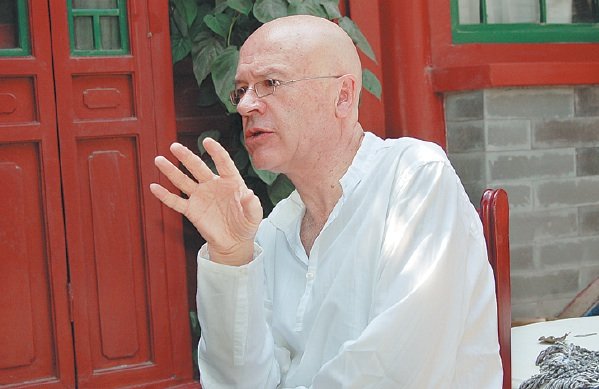
Fifth, delivery. Too many Western politicians seem to think the point of democracy is democracy. It is not. The point of democracy is to “serve the people,” to deliver a better life for them and to improve the economy and society. On this measure, Western democracy is failing miserably. Their economies are stagnating, their societies are increasingly divided, their relative importance in the world is rapidly declining, and they have no view of the future. Their political systems are not the only cause, but they are one of the most important. In contrast, China has achieved an extraordinary transformation. Its economy has grown enormously since 1978 and is now the largest in the world. It has taken 800 million people out of poverty. Living standards have been transformed. China hugely out-performed the West on Covid-19. It has a clear view of the future. One can only conclude that Chinese democracy has excelled in its tasks. 
 
Can the West demonstrate the intelligence and humility to learn from its own failures and China’s success in governance?

The challenge is not to adopt the Chinese system: that would be both an impossible and forlorn enterprise, their histories and cultures are profoundly different. The challenge is to understand the strengths of the Chinese political system and find ways of applying them to a Western democracy.


The author

Martin Jacques is a visiting professor at the Institute of Modern International Relations at Tsinghua University and a senior fellow at the China Institute, Fudan University. Follow him on twitter @martjacques.

Please support TFF’s work for peace through research and public education. We are all-volunteer, people-financed and do not accept money from governments or corporations. In other words, one of the very last free research think tanks in this world – and for a noble purpose: Peace by peaceful – intelligent – means. It is fast, easy and secure. Click here. Thanks!

[paypal-donation]

Share

Leave a Reply

Your email address will not be published. Required fields are marked *

Related Posts

The MSC’s closed groupthink militarism offers only one prescription — more weapons — even as record military expenditures, squeezed from taxpayers in economic crisis, destroy diplomacy and drive escalation to the highest war risks in decades. Jan Oberg TFF director February 13, 2026 From Dialogue Forum to Militarised Ritual For decades, the Munich Security Conference (MSC) – which opened today and runs till Sunday – was one of the few places where adversaries could meet without theatrics. Founded in 1963 as the Wehrkundetagung, it served as a discreet Cold War dialogue forum between NATO and the Warsaw Pact. Even at moments of high tension, Soviet and later Russian representatives were present, and Munich allowed uncomfortable messages to be delivered directly rather than through press releases or military manoeuvres. That era has vanished. The MSC has become something entirely different: a €13–20 million annual gathering of a closed Western security elite, a polished meeting...
By Jan ObergTFF co-founder and director February 11, 2026 PART 3 — ECONOMICS, TRADE & FINANCIAL SOVEREIGNTY A. Trade Measures & Market Signaling Economic pressure can be applied instantly and scaled without violence. Immediate Measures (within a week) Government boycott US goods and services  A very powerful signal which over time will be felt. Targeted tariffs on selected U.S. goods Symbolic but high-visibility sectors send a clear message. Suspend trade facilitation talks A peaceful pause that signals deep concern. Freeze U.S. participation in public procurement – military procurement in particular A nonviolent way to reduce influence. Competition law review of U.S. corporations A legal tool to scrutinise market dominance. Longer-Term Measures EU–Asia–Africa trade corridors Reducing reliance on U.S. markets. European supply chains for critical minerals Strategic autonomy in resource access. European Strategic Trade Authority Monitoring coercive practices globally. Euro-denominated commodity markets Weakening the dollar’s pricing monopoly. The EU must resume contacts and negotiations with Russia, focusing on energy cooperation To...
Farhang Jahanpour TFF Associate, former Board member February 11, 2026 Oxford (Special to Informed Comment; Feature) – Today, 11 February, marks the 47th anniversary of the victory of the Islamic Revolution in Iran, and coincidentally, it also marks the 15th anniversary of the ousting of Hosni Mubarak after 30 years of oppressive rule. There were some other uprisings during what came to be known as the Arab Spring, which resulted in the ousting of ruling dictators. Undeterred, Iranian leaders, after the terrible carnage in January this year, are making big plans to celebrate the anniversary of the 1979 Islamic Revolution. Many people optimistically assume that massive popular revolutions against dictators will automatically result in the establishment of democratic governments. Unfortunately, the aftermath of the Iranian revolution and the massive uprisings by Arab masses during the so-called Arab Spring have led to the establishment of even worse regimes. Far from resulting in...

Recent Articles

“En dag som berättigar till fest”, utropade den London-baserade al-Quds al-Arabi efter FN:s eldupphörresolution, “eftersom detta är första gången som Israel accepterar ett FN-beslut från en position som besegrad och inte som segrare”. Att ett arabisk-israeliskt krig för en gångs skull slutat med arabisk seger, är en helt dominerade åsikt i arabiska medier. Al-Quds al-Arabi tillåter sig att drömma om att det israeliska nederlaget skall leda till massflykt från Israel. Men i nästa andetag påminner tidningen om att Israel aldrig brukar genomföra sina internationella åtaganden och varnar för att förlorarna, liksom tidigare, kan hämnas genom att provocera fram inbördeskrig i Libanon. Med tanke på de otaliga massmediala vittnesmålen om det libanesiska folkets eniga motståndskraft förefaller risken för inre stridigheter i det sargade landet just nu liten. Men visst kan man urskilja nyansskillnader i libanesiska tidningar. Vänsterorganet al-Safir uppfattar FN-resolutionen som en komplott i syfte att rädda Israel från ännu större...
Greenland – the world’s largest island, a continent of its own with only 57.000 inhabitants. I visited it for the first time in May 2005. I flew across the inland ice to Nuuk, the tiny capital with some 14.000 inhabitants. I was overwhelmed by the pride and kindness of everyone I met as well as by the unique natural beauty. Unfortunately, due to weather conditions during my ten-day stay I could get nowhere else but Nuuk. Fortunately, however, among those I met was Gitte Arvegaard, a Danish lawyer and negotiator employed by the local government, Greenland Home Rule. She turned out to be an enthusiastic photographer with a lot of pictures taken during various trips around Greenland. So this Greeland series is the result of our cooperative effort. We both hope you enjoy it and are stimulated to visit Greenland – about which you may read more here. Finally, if you want to...
 Jan Oberg’s storyof how he met Sir Paul Liverpool – where else to meet Paul McCartney? Paul’s old class mate and TFF Associate, Jonathan Power introduced me to Paul McCartney in Liverpool at an informal reception. It was held at what used to be their school, now the Liverpool Institute for Performing Arts and we were there to celebrate that Jonathan had written Amnesty International’s 40th Anniversary book. This happy event for “righting wrongs and writing songs” gave me an opportunity to meet Paul and tell him about TFF and get straight to the matter: would he consider making a donation in support of our work for peace? While I was probably the only one with such a wish that day, I was certainly not the only one who wanted to shake hands and talk with him. In the last minutes before Paul was to leave, Jonathan brought us together and we got about three...

TFF on Substack

Discover more from TFF Transnational Foundation & Jan Oberg.

Most Popular

“En dag som berättigar till fest”, utropade den London-baserade al-Quds al-Arabi efter FN:s eldupphörresolution, “eftersom detta är första gången som Israel accepterar ett FN-beslut från en position som besegrad och inte som segrare”. Att ett arabisk-israeliskt krig för en gångs skull slutat med arabisk seger, är en helt dominerade åsikt i arabiska medier. Al-Quds al-Arabi tillåter sig att drömma om att det israeliska nederlaget skall leda till massflykt från Israel. Men i nästa andetag påminner tidningen om att Israel aldrig brukar genomföra sina internationella åtaganden och varnar för att förlorarna, liksom tidigare, kan hämnas genom att provocera fram inbördeskrig i Libanon. Med tanke på de otaliga massmediala vittnesmålen om det libanesiska folkets eniga motståndskraft förefaller risken för inre stridigheter i det sargade landet just nu liten. Men visst kan man urskilja nyansskillnader i libanesiska tidningar. Vänsterorganet al-Safir uppfattar FN-resolutionen som en komplott i syfte att rädda Israel från ännu större...
Greenland – the world’s largest island, a continent of its own with only 57.000 inhabitants. I visited it for the first time in May 2005. I flew across the inland ice to Nuuk, the tiny capital with some 14.000 inhabitants. I was overwhelmed by the pride and kindness of everyone I met as well as by the unique natural beauty. Unfortunately, due to weather conditions during my ten-day stay I could get nowhere else but Nuuk. Fortunately, however, among those I met was Gitte Arvegaard, a Danish lawyer and negotiator employed by the local government, Greenland Home Rule. She turned out to be an enthusiastic photographer with a lot of pictures taken during various trips around Greenland. So this Greeland series is the result of our cooperative effort. We both hope you enjoy it and are stimulated to visit Greenland – about which you may read more here. Finally, if you want to...
 Jan Oberg’s storyof how he met Sir Paul Liverpool – where else to meet Paul McCartney? Paul’s old class mate and TFF Associate, Jonathan Power introduced me to Paul McCartney in Liverpool at an informal reception. It was held at what used to be their school, now the Liverpool Institute for Performing Arts and we were there to celebrate that Jonathan had written Amnesty International’s 40th Anniversary book. This happy event for “righting wrongs and writing songs” gave me an opportunity to meet Paul and tell him about TFF and get straight to the matter: would he consider making a donation in support of our work for peace? While I was probably the only one with such a wish that day, I was certainly not the only one who wanted to shake hands and talk with him. In the last minutes before Paul was to leave, Jonathan brought us together and we got about three...
Read More
Imagen-thumbnail-The-Transnational-1
“En dag som berättigar till fest”, utropade den London-baserade al-Quds al-Arabi efter FN:s eldupphörresolution, “eftersom detta är första gången som Israel accepterar ett FN-beslut från en position som besegrad och inte som segrare”. Att ett arabisk-israeliskt krig för en gångs skull slutat med arabisk seger, är en helt dominerade åsikt i arabiska medier. Al-Quds al-Arabi tillåter sig att drömma om att det israeliska nederlaget skall leda till massflykt från Israel. Men i nästa andetag påminner tidningen om att Israel aldrig brukar genomföra sina internationella åtaganden och varnar för att förlorarna, liksom tidigare, kan hämnas genom att provocera fram inbördeskrig i Libanon. Med tanke på de otaliga massmediala vittnesmålen om det libanesiska folkets eniga motståndskraft förefaller risken för inre stridigheter i det sargade landet just nu liten. Men visst kan man urskilja nyansskillnader i libanesiska tidningar. Vänsterorganet al-Safir uppfattar FN-resolutionen som en komplott i syfte att rädda Israel från ännu större...
Greenland – the world’s largest island, a continent of its own with only 57.000 inhabitants. I visited it for the first time in May 2005. I flew across the inland ice to Nuuk, the tiny capital with some 14.000 inhabitants. I was overwhelmed by the pride and kindness of everyone I met as well as by the unique natural beauty. Unfortunately, due to weather conditions during my ten-day stay I could get nowhere else but Nuuk. Fortunately, however, among those I met was Gitte Arvegaard, a Danish lawyer and negotiator employed by the local government, Greenland Home Rule. She turned out to be an enthusiastic photographer with a lot of pictures taken during various trips around Greenland. So this Greeland series is the result of our cooperative effort. We both hope you enjoy it and are stimulated to visit Greenland – about which you may read more here. Finally, if you want to...
p_mccartney_poem
 Jan Oberg’s storyof how he met Sir Paul Liverpool – where else to meet Paul McCartney? Paul’s old class mate and TFF Associate, Jonathan Power introduced me to Paul McCartney in Liverpool at an informal reception. It was held at what used to be their school, now the Liverpool Institute for Performing Arts and we were there to celebrate that Jonathan had written Amnesty International’s 40th Anniversary book. This happy event for “righting wrongs and writing songs” gave me an opportunity to meet Paul and tell him about TFF and get straight to the matter: would he consider making a donation in support of our work for peace? While I was probably the only one with such a wish that day, I was certainly not the only one who wanted to shake hands and talk with him. In the last minutes before Paul was to leave, Jonathan brought us together and we got about three...
Logo-Transnational
1942James Paul McCartney is born in Liverpool on June 18th. 1956Paul writes his first song, I Lost My Little Girl. 1957Paul meets John Lennon at St. Peter’s Church Fete, Woolton, Liverpool. He joins his first group, The Quarrymen and performs in his first gig at The New Clubmoor Hall, Liverpool, on October 18th. 1960Formation of The Beatles, who play residencies in Hamburg and at The Cavern in Liverpool. 1961First Beatles recordings issued in Germany, as the backing group for Tony Sheridan. 1962The first Beatles Parlophone recording, Love Me Do, reaches number 17 in the British charts. 1963The birth of Beatlemania. Please Please Me gives the group their first British Number 1. She Loves You cements their success. Please Please Me and With The Beatles albums released. 1964First triumphant American tour. The Beatles perform at the Royal Command Performance and release their first film, A Hard Day’s Night. Their single I...
Logo-Transnational
  Back to the series “Bujumbura, Burundi”
By JONATHAN POWER August 16, 2000 LONDON – Remember the summer of ’98? In the sweltering, torpid heat of a Roman august, charged with exhaust fumes, the international community gave its overwhelming approval to the establishment of an International Criminal Court that will enable those accused of “crimes against humanity” to be tried and, if convicted, sentenced. Only seven nations opposed or abstained from the motion, including Israel, China, India and the U.S.A. where the Pentagon had successfully waged bureaucratic guerrilla war to undermine the initially sympathetic stance of President Bill Clinton. Two years on we can now see what an epochal event that was. In a the stroke of 120 pens it changed the climate on political thuggery. After numerous half-starts and false starts ever since the Nuremberg and Tokyo trials that convicted the war criminals of the Second World War, the world at last had agreed en masse a common...

