The Munich ‘Security’ Conference (MSC) – the West’s premier – has become a €20‑Million militarist echo chamber

The MSC’s closed groupthink militarism offers only one prescription — more weapons — even as record military expenditures, squeezed from taxpayers in economic crisis, destroy diplomacy and drive escalation to the highest war risks in decades.

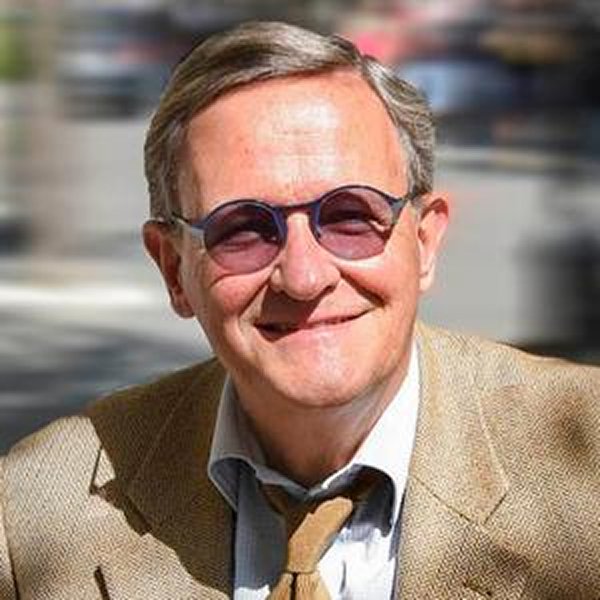
Jan Oberg

TFF director

February 13, 2026

From Dialogue Forum to Militarised Ritual

For decades, the Munich Security Conference (MSC) – which opened today and runs till Sunday – was one of the few places where adversaries could meet without theatrics. Founded in 1963 as the Wehrkundetagung, it served as a discreet Cold War dialogue forum between NATO and the Warsaw Pact. Even at moments of high tension, Soviet and later Russian representatives were present, and Munich allowed uncomfortable messages to be delivered directly rather than through press releases or military manoeuvres.

That era has vanished. The MSC has become something entirely different: a €13–20 million annual gathering of a closed Western security elite, a polished meeting of governments, defence industries, major media and aligned think tanks, all wrapped in the language of dialogue but operating as a self‑reinforcing militarist echo chamber. It is the Military-Industrial-Media Academic Complex, MIMAC, that meets here.

A €20‑Million Structure That Predetermines Its Outcome

The MSC’s financing reveals its orientation more clearly than any mission statement. Roughly €5–7 million comes from the German federal government; €6–10 million from corporate sponsors, including major defence and security companies; and €2–3 million from foundations and institutional partners.

When governments and arms‑industry actors are the primary funders, the gravitational pull inevitably shifts toward military‑centric definitions of security, technological solutions, alliance cohesion and deterrence doctrines, while peacebuilding, conflict transformation, diplomacy, mediation and non‑military approaches — which lack comparable financial backers — quietly disappear from the agenda.

In consequence, the MSC will be devoid of free thinking, alternative non-military security measures and every vision of a better world.

Speaking About the World, Not With It

The MSC’s agenda is curated by a tight circle of leadership, advisory‑council members, government partners, corporate sponsors and security‑aligned think tanks. Each layer reinforces the others, producing a remarkably coherent worldview in which the same actors define the problems, propose the solutions and moderate the discussions.

Panels are dominated by Western officials, military leaders and analysts funded by the same governments and industries that support the MSC; moderators from major Western media outlets reinforce prevailing assumptions rather than interrogating them.

The result is predictable: panels on Russia without Russians; panels on China with only one Chinese representative (its foreign minister whose different perspectives are hardly ever quoted by Western media); panels on peace without peace researchers; panels on the Global South without Global South voices.

Thanks to remarkable intellectual inbreeding, the MSC increasingly speaks about adversaries, about diplomacy, about peace — but not with the actors concerned, nor with those who work professionally on conflict resolution, least of all the UN.

This is an intentional architecture crafted by the congregation of the NATO Church, and so it is only logical that its former Secretary‑General, Jens Stoltenberg, now takes over as its presiding priest.

The Only Prescription: More Weapons

Across the MSC, the policy prescriptions are strikingly uniform: more weapons, stronger deterrence, longer‑range strike capabilities, higher military spending, deeper alliance integration.

The logic is circular: insecurity is met with more armament, which produces more insecurity, which justifies more armament. Offensive long‑range deterrence is a 100 percent predictable insecurity generator, because the opponent sees it as a threat, not reassurance – no matter your argument that you have no bad intentions.

Furthermore, the world has never spent more on weaponry than it does today, yet the objective risk of a major war is rising, not falling. Citizens facing economic crises are told to pay through their noses for “security” that demonstrably increases their risk.

In any rational forum, someone would stand up and say: Something must be wrong: let us stop and think. At Munich, no one does.

The Kabuki theatre must continue. Remember, anyone can start a fight in a bar – or a war – but it requires a few capacities to avoid war and create peaceful coexistence.

From Dialogue to Narrative Consolidation

Since the Obama-orchestrated Maidan regime-change in Kiev on 22 February 2014 and Russia’s Crimea annexation of 18 March 2014, the MSC has steadily closed the door on dialogue with Russia — a far cry from 2007 when Putin gave his now historic low-key speech in which he asked what had happened to the promises given to Gorbachev about not expanding NATO one inch.

The MSC has aligned itself fully with the strategic posture of NATO and the EU. Dialogue with adversaries has been replaced by discussions about adversaries; panels on Russia or China are framed entirely through Western threat lenses; and the conference has become a stage where governments, industries, media and aligned academics reinforce a single worldview that defines security almost exclusively in military terms and is unable to see the larger world and its opportunities.

The tragedy is not that the MSC has a perspective; the tragedy is that it has only one. And it is anything but trust, confidence, conflict-resolution and peace.

The Missing Counterpart: A Global Peace Conference

The MSC’s official prominence and media attention highlights a deeper structural absence: there is no equivalent high‑level forum for peace. No annual gathering where peace researchers, mediators, peace workers, conflict‑resolution practitioners, civil society, Global South voices, non‑aligned states and humanitarian actors and people of culture meet to explore non‑military approaches to security.

The most unrealistic and debunked assumption is that security is about arms and more arms lead to more stability, security and peace – the mantra of the NATO Church, no matter what the alliance does, including violating it own treaty 24/7 since bombing Yugoslavia in 1999.

There is no €20‑million (or cheaper) platform for diplomacy, prevention, reconciliation or structural peacebuilding; no global stage where peace is treated with the same seriousness, resources and media attention as deterrence, rearmament and unlimited militarist thinking.

The imbalance is not accidental; it reflects political priorities and the MIMAC‑shaped worldview that now dominates Western security thinking.

It is dead dangerous for you and me – in substance and because of its own self-affirming blindness.

Understanding Munich for What It Has Become

The Munich Security Conference no longer functions as a platform for dialogue between adversaries or as a space for exploring diverse approaches to security. Instead, it has become a high‑profile meeting point for a closed security groupthink — a place where elite interests converge, narratives are synchronised and the boundaries of acceptable discourse are tightly managed.

It is time understand it honestly. It is time for free media (if they still exist) to have a critical perspective. Will they, or have they been co-opted completely?

Until someone invests in a serious, well‑funded, global peace conference — something with the scale, visibility and ambition of Munich — the imbalance will remain. And so will the risks of warfare.

Perhaps it is time for BRICS, the Belt & Road Initiative, a coalition of peace-willing in cooperation with the United Nations and non-Western regions and actors – governments and citizens – to arrange a conference for true peace and human security where the military dimension has its proper – minimal – place.

We must never accept that violence becomes the first resort. It should always be the last resort after everything else has been tried and found in vain.

P.S. A conference that invites María Corina Machado to speak about Venezuela, Lindsey Graham to speak about Russia, Tony Blair to speak about peace, and uses only conservative Western media as moderators, documents not global security thinking but the intellectual and ethical disarmament of a declining West and – who knows? – a disintegrating EU and NATO.
Peace & future researcher + ‌Art Photographer

Share

Leave a Reply

Your email address will not be published. Required fields are marked *

Related Posts

Jan Oberg May 15, 2026 Go to this Fox News page and scroll the whole way down: President Donald Trump tells the world that his meeting with President Xi Jinping yielded a lot of very concrete political and economic results – of course, only where the Chinese side, according to him, agreed with him. He does not mention the Taiwan issue, but Secretary of State, Marco Rubio, says that it did not feature prominently in their talks and that the US policy on Taiwan has not changed. Then go to China Daily – or Global Times – and you will see that for the Chinese it is framework, principles, structure of cooperation etc. that matters – all embedded in the overall idea of “constructive bilateral relationship of strategic stability.” Nowhere is any concrete agreement or deal – all that Trump refers to – mentioned. At the general level, this gives you insights into the very different social...
Lena Petrova of “World Affairs In Context” with more than half a million subscribers on YouTube wanted to explore what a peace researcher like me has to say about, among other things, the First and the Second Cold War and why eethics has disappeared from politics. I am particularly happy about this conversation that also yielded an amazing number of very appreciative comments on YouTube. No doubt, people are longing for alternatives, including peace perspectives.
The MIMAC – Military-Industrial-Media-Academic Complex – drives the world’s rampant militarism and wars without end. Here is a short reflection of how it works against all interests of humanity. #5 deals with why there is no real enemy or threat images/analysis. It’s all ex-post constructions. And, btw, theTFF Peace Pulse is now on Rumble.

Recent Articles

“En dag som berättigar till fest”, utropade den London-baserade al-Quds al-Arabi efter FN:s eldupphörresolution, “eftersom detta är första gången som Israel accepterar ett FN-beslut från en position som besegrad och inte som segrare”. Att ett arabisk-israeliskt krig för en gångs skull slutat med arabisk seger, är en helt dominerade åsikt i arabiska medier. Al-Quds al-Arabi tillåter sig att drömma om att det israeliska nederlaget skall leda till massflykt från Israel. Men i nästa andetag påminner tidningen om att Israel aldrig brukar genomföra sina internationella åtaganden och varnar för att förlorarna, liksom tidigare, kan hämnas genom att provocera fram inbördeskrig i Libanon. Med tanke på de otaliga massmediala vittnesmålen om det libanesiska folkets eniga motståndskraft förefaller risken för inre stridigheter i det sargade landet just nu liten. Men visst kan man urskilja nyansskillnader i libanesiska tidningar. Vänsterorganet al-Safir uppfattar FN-resolutionen som en komplott i syfte att rädda Israel från ännu större...
Greenland – the world’s largest island, a continent of its own with only 57.000 inhabitants. I visited it for the first time in May 2005. I flew across the inland ice to Nuuk, the tiny capital with some 14.000 inhabitants. I was overwhelmed by the pride and kindness of everyone I met as well as by the unique natural beauty. Unfortunately, due to weather conditions during my ten-day stay I could get nowhere else but Nuuk. Fortunately, however, among those I met was Gitte Arvegaard, a Danish lawyer and negotiator employed by the local government, Greenland Home Rule. She turned out to be an enthusiastic photographer with a lot of pictures taken during various trips around Greenland. So this Greeland series is the result of our cooperative effort. We both hope you enjoy it and are stimulated to visit Greenland – about which you may read more here. Finally, if you want to...
 Jan Oberg’s storyof how he met Sir Paul Liverpool – where else to meet Paul McCartney? Paul’s old class mate and TFF Associate, Jonathan Power introduced me to Paul McCartney in Liverpool at an informal reception. It was held at what used to be their school, now the Liverpool Institute for Performing Arts and we were there to celebrate that Jonathan had written Amnesty International’s 40th Anniversary book. This happy event for “righting wrongs and writing songs” gave me an opportunity to meet Paul and tell him about TFF and get straight to the matter: would he consider making a donation in support of our work for peace? While I was probably the only one with such a wish that day, I was certainly not the only one who wanted to shake hands and talk with him. In the last minutes before Paul was to leave, Jonathan brought us together and we got about three...

TFF on Substack

Discover more from TFF Transnational Foundation & Jan Oberg.

Most Popular

“En dag som berättigar till fest”, utropade den London-baserade al-Quds al-Arabi efter FN:s eldupphörresolution, “eftersom detta är första gången som Israel accepterar ett FN-beslut från en position som besegrad och inte som segrare”. Att ett arabisk-israeliskt krig för en gångs skull slutat med arabisk seger, är en helt dominerade åsikt i arabiska medier. Al-Quds al-Arabi tillåter sig att drömma om att det israeliska nederlaget skall leda till massflykt från Israel. Men i nästa andetag påminner tidningen om att Israel aldrig brukar genomföra sina internationella åtaganden och varnar för att förlorarna, liksom tidigare, kan hämnas genom att provocera fram inbördeskrig i Libanon. Med tanke på de otaliga massmediala vittnesmålen om det libanesiska folkets eniga motståndskraft förefaller risken för inre stridigheter i det sargade landet just nu liten. Men visst kan man urskilja nyansskillnader i libanesiska tidningar. Vänsterorganet al-Safir uppfattar FN-resolutionen som en komplott i syfte att rädda Israel från ännu större...
Greenland – the world’s largest island, a continent of its own with only 57.000 inhabitants. I visited it for the first time in May 2005. I flew across the inland ice to Nuuk, the tiny capital with some 14.000 inhabitants. I was overwhelmed by the pride and kindness of everyone I met as well as by the unique natural beauty. Unfortunately, due to weather conditions during my ten-day stay I could get nowhere else but Nuuk. Fortunately, however, among those I met was Gitte Arvegaard, a Danish lawyer and negotiator employed by the local government, Greenland Home Rule. She turned out to be an enthusiastic photographer with a lot of pictures taken during various trips around Greenland. So this Greeland series is the result of our cooperative effort. We both hope you enjoy it and are stimulated to visit Greenland – about which you may read more here. Finally, if you want to...
 Jan Oberg’s storyof how he met Sir Paul Liverpool – where else to meet Paul McCartney? Paul’s old class mate and TFF Associate, Jonathan Power introduced me to Paul McCartney in Liverpool at an informal reception. It was held at what used to be their school, now the Liverpool Institute for Performing Arts and we were there to celebrate that Jonathan had written Amnesty International’s 40th Anniversary book. This happy event for “righting wrongs and writing songs” gave me an opportunity to meet Paul and tell him about TFF and get straight to the matter: would he consider making a donation in support of our work for peace? While I was probably the only one with such a wish that day, I was certainly not the only one who wanted to shake hands and talk with him. In the last minutes before Paul was to leave, Jonathan brought us together and we got about three...
Read More
Imagen-thumbnail-The-Transnational-1
“En dag som berättigar till fest”, utropade den London-baserade al-Quds al-Arabi efter FN:s eldupphörresolution, “eftersom detta är första gången som Israel accepterar ett FN-beslut från en position som besegrad och inte som segrare”. Att ett arabisk-israeliskt krig för en gångs skull slutat med arabisk seger, är en helt dominerade åsikt i arabiska medier. Al-Quds al-Arabi tillåter sig att drömma om att det israeliska nederlaget skall leda till massflykt från Israel. Men i nästa andetag påminner tidningen om att Israel aldrig brukar genomföra sina internationella åtaganden och varnar för att förlorarna, liksom tidigare, kan hämnas genom att provocera fram inbördeskrig i Libanon. Med tanke på de otaliga massmediala vittnesmålen om det libanesiska folkets eniga motståndskraft förefaller risken för inre stridigheter i det sargade landet just nu liten. Men visst kan man urskilja nyansskillnader i libanesiska tidningar. Vänsterorganet al-Safir uppfattar FN-resolutionen som en komplott i syfte att rädda Israel från ännu större...
Greenland – the world’s largest island, a continent of its own with only 57.000 inhabitants. I visited it for the first time in May 2005. I flew across the inland ice to Nuuk, the tiny capital with some 14.000 inhabitants. I was overwhelmed by the pride and kindness of everyone I met as well as by the unique natural beauty. Unfortunately, due to weather conditions during my ten-day stay I could get nowhere else but Nuuk. Fortunately, however, among those I met was Gitte Arvegaard, a Danish lawyer and negotiator employed by the local government, Greenland Home Rule. She turned out to be an enthusiastic photographer with a lot of pictures taken during various trips around Greenland. So this Greeland series is the result of our cooperative effort. We both hope you enjoy it and are stimulated to visit Greenland – about which you may read more here. Finally, if you want to...
p_mccartney_poem
 Jan Oberg’s storyof how he met Sir Paul Liverpool – where else to meet Paul McCartney? Paul’s old class mate and TFF Associate, Jonathan Power introduced me to Paul McCartney in Liverpool at an informal reception. It was held at what used to be their school, now the Liverpool Institute for Performing Arts and we were there to celebrate that Jonathan had written Amnesty International’s 40th Anniversary book. This happy event for “righting wrongs and writing songs” gave me an opportunity to meet Paul and tell him about TFF and get straight to the matter: would he consider making a donation in support of our work for peace? While I was probably the only one with such a wish that day, I was certainly not the only one who wanted to shake hands and talk with him. In the last minutes before Paul was to leave, Jonathan brought us together and we got about three...
Logo-Transnational
1942James Paul McCartney is born in Liverpool on June 18th. 1956Paul writes his first song, I Lost My Little Girl. 1957Paul meets John Lennon at St. Peter’s Church Fete, Woolton, Liverpool. He joins his first group, The Quarrymen and performs in his first gig at The New Clubmoor Hall, Liverpool, on October 18th. 1960Formation of The Beatles, who play residencies in Hamburg and at The Cavern in Liverpool. 1961First Beatles recordings issued in Germany, as the backing group for Tony Sheridan. 1962The first Beatles Parlophone recording, Love Me Do, reaches number 17 in the British charts. 1963The birth of Beatlemania. Please Please Me gives the group their first British Number 1. She Loves You cements their success. Please Please Me and With The Beatles albums released. 1964First triumphant American tour. The Beatles perform at the Royal Command Performance and release their first film, A Hard Day’s Night. Their single I...
Logo-Transnational
  Back to the series “Bujumbura, Burundi”
By JONATHAN POWER August 16, 2000 LONDON – Remember the summer of ’98? In the sweltering, torpid heat of a Roman august, charged with exhaust fumes, the international community gave its overwhelming approval to the establishment of an International Criminal Court that will enable those accused of “crimes against humanity” to be tried and, if convicted, sentenced. Only seven nations opposed or abstained from the motion, including Israel, China, India and the U.S.A. where the Pentagon had successfully waged bureaucratic guerrilla war to undermine the initially sympathetic stance of President Bill Clinton. Two years on we can now see what an epochal event that was. In a the stroke of 120 pens it changed the climate on political thuggery. After numerous half-starts and false starts ever since the Nuremberg and Tokyo trials that convicted the war criminals of the Second World War, the world at last had agreed en masse a common...