Sergey Vinograd, Unsplash

TFF Associate
February 7, 2022
The post below is my stimulus essay for a Forum sponsored by Great Transition Initiative, a project of the Tellus Institute, dedicated to the exploration of humane and ecologically resonant adjustments to the challenges and threats posed by the onset of the Anthropocentric Age. The text of the full Forum can be found by clicking here. It contains many wise and illuminating responses to my reflections, including by leading thinkers of our time. The Forum closes with my effort to respond to the responses, but due to space limitations, in a very truncated manner. Also, the Forum format conveys some information about the underlying philosophy that guides this ambitious undertaking.
Global Solidarity: Toward a Politics of Impossibility
A Captive Imagination
As the COVID-19 pandemic slowly subsides, it is not clear what lessons will be drawn by political leaders and publics around the world. Entrenched power, wealth, and conventional wisdom have demonstrated the overwhelming resilience of the global order even while the virus continues to ravage many national societies. Despite some notable exceptions revealing extremes of solidarity or discrimination, efficient competence or irresponsible partisanship, this reversion to the status quo occurred at all levels of social organization from the village to the world, especially the sovereign state.
For the most part, rich and powerful governments used their leverage to corner the vaccine market, allowing a draconian market-driven logic to drive distribution that privileged intellectual property rights and technical know-how, leading to grotesque disparities in vaccine access between the peoples of the North and those of the South. It has become a truism to observe that no country will be safe from the virus, or its variants until the entire world is vaccinated. Never had the self-interest of the species so vividly and concretely coincided with an ethos of global solidarity. And yet such an ethos did not materialize. We must search for explanations and correctives.
Originally posted on Richard Falk’s homepage on August 14, 2021
A people-first approach to the global health emergency would have transcended statist and profit-making domains at all phases of COVID prevention and treatment, and situated them within a global commons framework. Such an approach might have dramatically heightened prospects for the social transformation at the heart of the Great Transition and would at least have restored some confidence that the human species, at least in an emergency, is capable of meeting the challenges of the Anthropocene.
As the pandemic instead revealed the resounding strength of statist structures and private sector interests, it seems necessary to acknowledge this tragic interlude as but one more lost opportunity for the human species to awaken from its prolonged slumber before it is too late.
To some extent, the failure has been masked by the newfound generosity of some countries as the sense of a world health emergency receded and virus supplies exceeded national demands in some countries. In a spirit of philanthropy rather than solidarity, shipments of the virus to countries in need were made, recipients often selected on the basis of pragmatic diplomatic advantage. Perhaps charity towards those less fortunate can be considered a weak form of solidarity, even if filtered by political leaders motivated by selfish national interests.
More than ever, we must face the question: Can the peoples of Earth, doomed to share a ravaged planet, learn to live together in ways that encourage our species to flourish in an emergent future?
The concept of a Great Transition invites us to reimagine such a future by exploring what might be possible, which requires an initial willingness of the imagination to let go of the trappings of the present without engaging in wishful thinking. Such a balancing act is not as straightforward as it sounds. What was science fiction a generation ago is increasingly entering the realm of the possible, and even the feasible in the near future. It is an opportune time to explore the seedlings of possibility sprouting around us, inscribing a more hopeful mapping of the human future in the prevailing collective consciousness.
On What is Possible
“Some men see things as they are and say ‘why?’ I dream of things that never were and ask ‘why not?’”
– George Bernard Shaw
We must start by rejecting conventional foreclosures of the imagination. We cannot accept that politics is “the art of the possible” if the “possible” remains circumscribed by the play of current forces of stasis, confining the idea of change to policy shifts at the margin or—at the most ambitious—elite-driven national revolutions. The structures of state and market remain essentially untouched and continue to run the show. As long as these constraints are not removed, the Great Transition will be stymied. The first challenge is to find effective ways to subvert and transform these primordial structures. Meeting this challenge starts with liberating the mind from ingrained conventions that solidify the ideological biases of modernity.
If we carefully consider our own lives, we are likely to appreciate how many epochal public happenings had been previously deemed “impossible,” or only seemed possible after the fact. A potent illustration of the tyranny of a status quo bias is Winston Churchill’s derisive attitude toward Gandhi during the early stages of the rise of Indian nationalism.
Dismissive of any threat to Indian colonial rule, Churchill described Gandhi as a “malignant subversive fanatic” and “a seditious Middle Temple lawyer, now posing as a fakir of a type well known in the East, striding half-naked up the steps of the Viceregal palace.” The great British war leader displayed his attachment to a Western understanding of power that had little insight into historical circumstances vulnerable to anti-colonial nationalism.
Similar patterns of the seemingly impossible happening are evident in contemporary history, such as the peaceful ending of the Cold War followed by the collapse of the Soviet Union; the American defeat in the Vietnam War despite overwhelming military superiority; China’s half-century rise from mass impoverishment and backwardness to prime geopolitical challenger, including threatening Western mastery of innovative technology such as AI, G5 connectivity, robotics, and genetic engineering; and the abandonment of apartheid by South Africa in the face of nonviolent resistance from within and anti-apartheid solidarity from without.
What these examples demonstrate is that our understanding of the scope of the possible has been artificially circumscribed in ways that protect the interests of various elites in the maintenance of the status quo, making it seem reckless and futile to mount structural challenges however justified they may be morally or bio-politically. Such foreclosures of imagined futures have been key to the protection of institutions like slavery, discrimination, and warfare but often remain limited in scope to specific locales or policy areas. The uniqueness of the Anthropocene is to restrict the possible to unsustainable and dysfunctional structures and modes of behaviour, while bringing to a head the question of finding more viable ways of organizing life on the planet and living together in a manner that protects future generations.
Such foreclosures of the imagination inflict damage both by shortening our temporal vision and by constraining our understanding of useful knowledge. Despite what science and rationality tell us about the future, our leaders—and, indeed, most of us—give scant practical attention to what is needed to preserve and improve the life prospects for future generations. Given the scope and depth of the challenges, responsible anthropocentrism in the twenty-first century should incorporate a sense of urgency to temporal axes of concern.
We now need a “politics of the impossible,” a necessary utopianism that stands as an avowal of the attainability of the Great Transition. We must begin by interrogating the semantics of the possible as a cultural, political, economic, and ideological construct binding humanity to a system that is increasingly bio-politically self-destructive for the species and its natural habitat.
Closely connected to this foreclosure of our temporal vision has been a scientifically conditioned epistemology asserting the limits of useful knowledge. Within the most influential epistemic communities, an Enlightenment ideology prevails that sets boundaries limiting productive intellectual inquiry.
The positive legacies of the Enlightenment in grounding knowledge on scientifically verified evidence rather than cultural superstitions and religiously guided prejudice and dogma are real and important, but there have been costs as well. Notably, a bias against subjectivity discourages normative inquiry and advocacy, which is dismissed as “non-scientific.” The noted Confucian scholar Tu Wei-Ming has powerfully criticized the impact of what he calls “instrumental rationalism” on the capacity of Western civilization to embrace the value of empathy, which he views as integral to human dignity and humane governance.
We need a moral epistemology to achieve responsible anthropocentrism, exploring right and wrong, and distinguishing between desirable and diminished futures, not as matters of opinion, but as the underpinnings of “normative knowledge.” Universities, split into specialized disciplines and privileging work within the Enlightenment paradigm, are largely oblivious to the need for a holistic understanding of the complexities and solidarities with which we must grapple in order for humanity to extricate itself from the present structures that divide and fragment the human experience, strangling possibilities.
It may be helpful to distinguish “the feasible,” “the necessary,” and “the desirable” to further illuminate “the pursuit of the impossible.” In short, “the feasible” from the perspective of the status quo seems incapable, under the best of circumstances, of achieving “the necessary” and “the desirable.” We will need to pursue “the desirable” to mobilize the capabilities needed to engage effectively in realizing “the necessary.”
If existing conditions continue, the bio-political destiny of the human species seems destined for dark times. In the past, before the Nuclear Age, we could ignore the future and address the material, security, and spiritual needs of bounded communities, and success or failure had no ramifications for larger systems.
Now we must find ways to attend to the whole, or the parts will perish and likely destroy one another in the process. St. Francis found some fitting words for such an emancipatory path: “Start by doing what is necessary, then what is possible, and suddenly you are doing the impossible.”
Traditional Worldviews
When seeking alternative worldviews not defined by states, empires, or markets, many have turned toward the pre-modern realities and cosmologies of native peoples. Recovering that a pre-modern worldview might be instructive in certain respects, but it is not responsive to the practical contours of contemporary liberation. Retreating to the pre-modern past is not an option, except as a result of a planetary calamity.
Instead of the realities of localism and tribal community, our way forward needs to engage globalism and human community and to affirm that such strivings fall within the realm of possibility. We must reimagine a sense of our place in the cosmos so that it becomes our standpoint: a patriotism for humanity in which the whole becomes greater than the part, and the part is no longer the dominant organizing principle of life on the planet. Understanding the interplay of parts and wholes is a helpful place to begin this transformative journey. Parts are not only enclaves of space on world maps, but the separate identities of race, gender, class, belief, and habitat. An ethos of human solidarity would not eliminate differences but would complement them with a sense of commonality while sustaining their separate and distinctive identities. Such an ethos would generate new modes of being for addressing the challenges of transition.
For this to happen, a sense of global solidarity must take over the commanding heights of the imagination rather than continue to inhabit echo chambers hidden in underground hiding places far from the domains of policy formation.
Global Solidarity Must Increase as the Great Transition Unfolds
Without global solidarity, the structural features of the status quo will remain too deeply entrenched to allow a more cooperative, peaceful, just, and ecologically mindful world to emerge. Such a benevolent future is blocked by the prevailing consciousness in government and corporate board rooms, a paralyzing blend of ignorance, denial, incrementalism, and most of all, an unconscious respect for and deference to fragmenting boundaries that make global solidarity seem “impossible” to achieve. Assuming the paralysis has been overcome by an enhanced conception of the possible, then what?
Global solidarity would benefit humanity functionally, ethically, ecologically, and spiritually. Its functional role is most immediately obvious from a problem-solving perspective. Whether we consider vaccine diplomacy, climate change, or nuclear weapons, it becomes clear that only on the basis of human solidarity will we treat vaccines in the midst of epidemics or pandemics as part of the global commons rather than as a source of national diplomacy, international property rights, and pharmaceutical profits. With climate change, whether we will manage a displacement of national and financial interests on the basis of general global wellbeing depends on achieving an unprecedented level of global solidarity.
Similarly, with nuclear weapons, will we find the courage to live without such weaponry within a security framing that represents the well-being of people rather than the shortsighted hegemony of a few governments and their self-regarding societal elites?
Higher measures of global solidarity would enhance the quality and nature of global governance. Even if the defining unit of solidarity remained the sovereign state rather than the human being, a sense of global citizenship could underpin a much more robust United Nations whose membership sought shared goals proclaimed by its Charter rather than the competition that has been its dominant experience, especially on issues of peace and security.
The world economy would become much less tied to militarized forms of security, freeing resources for peacebuilding processes. From a broadening sense of global identity, we could also expect a much more effective approach to biodiversity, preserving, for example, the rainforests and polar regions as indispensable aspects of our common heritage. And as heightened empathy would accompany global solidarity, there would be a greater tendency to take human suffering seriously, including poverty, displacement, and the victimization that follows from natural disasters and political strife.
Perhaps the greatest benefits of global solidarity would be felt ethically and spiritually. We can presume that the collective self of a world exhibiting high levels of global solidarity would shift loyalties and identities. The enmities of difference (race, nation, religion, gender, class) would lose their primacy, replaced by a different calibration of “otherness”—perhaps with the cosmos regarded as the great other of the earth. It seems reasonable to anticipate the emergence of a less metaphysical religious consciousness inspired by the greater harmonies on earth and a growing experience of cosmic awe as knowledge of this larger realm spreads and is reinforced by mind-broadening experiences such as space tourism.
Do We Have the Time?
An ethos of global solidarity led an idealistic group of jurists in 1976 to draft the Declaration of the Rights of People to be implemented by a Permanent Peoples Tribunal, and many inquiries have been carried out since to hold states and their leaders symbolically accountable for violations of international law. People throughout the world have organized many civic initiatives organized by in defence of nature and of peace.
Recently, Bolivia and Ecuador enacted a text devoted to the Rights of Mother Nature. New Zealand passed a law recognizing that animals are sentient beings with a legal entitlement to decent treatment. A movement is underway to regard “wild rivers” as subjects of rights, prohibiting the construction of hydroelectric dams. Civil society groups in Europe and South America have formed the International Rights of Nature Tribunal to protect various natural habitats from predatory human behaviour.
Within the wider orbit of UN activities, many quiet undertakings involving health, children, food, cultural heritage, and environment proceed in an atmosphere of global solidarity interrupted by only occasional intrusions from the more conflictual arenas of the Security Council and General Assembly. There are no vetoes, and partisanship is kept at a minimum.
Gestating within the cultural bosom of world civilizations and world religions have been subversive ideas of global solidarity. Philosophic and religious affirmations of unity in ideas of “cosmopolitanism” have garnered increasing numbers of adherents. Growing attachments to nature proclaimed in many forms gives rise to loyalties that find no place on world maps or national boundaries. Fears of future catastrophe by way of nuclear war and ecosystem collapse expand awareness that present arrangements are not sustainable, thereby making many persons receptive to creating other more inclusive forms of organizing life on the planet.
Transition is not off in the distance or only in dreamscapes or science fiction imaginaries; it is happening around us if we only learn to open our eyes and hearts to the possibilities now emerging.
Concluding Remark
We cannot know the future, but we can know that the great enhancement of global solidarity would underpin the future we need and desire. Although this enhancement may currently seem “impossible,” we know that the impossible can happen when the historical moment is conducive. This century of interdependent risks and hopes has germinated the possibility of human solidarity globalizing. We know what is to be done, the value of struggling on behalf of our beliefs, and the urgency of the quest. This is the time to dedicate our hopes and indeed our lives to making the Great Transition happen, which is coincident with learning to live in accord with the ethical and ecological precepts of responsible anthropocentrism.
Please support TFF’s work for peace through research and public education. We are all-volunteer, people-financed and do not accept money from governments of corporations. In other words, one of the very last free research think tanks in this world – and for a noble purpose: Peace by peaceful – intelligent – means. Thanks!
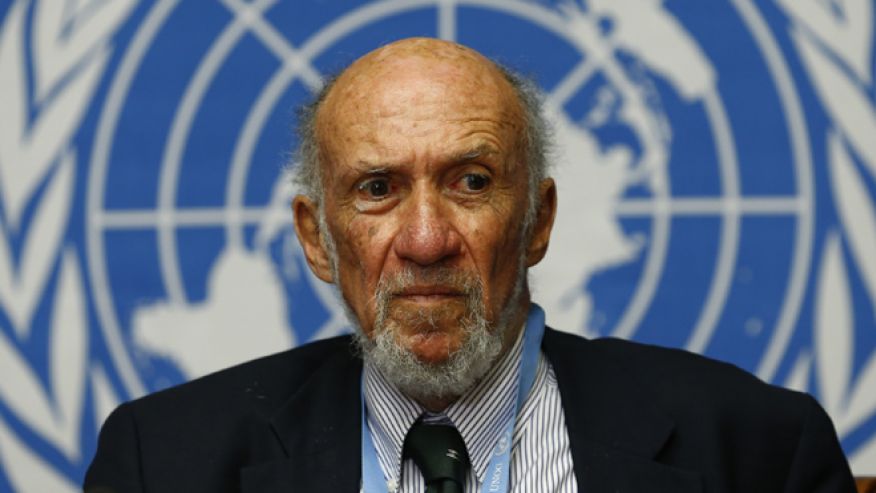
Richard Falk is an international law and international relations scholar who taught at Princeton University for forty years. Since 2002 he has lived in Santa Barbara, California, and in Turkey and taught at the local campus of the University of California in Global and International Studies and since 2005 chaired the Board of the Nuclear Age Peace Foundation. He has been a TFF Associate since 1986.