
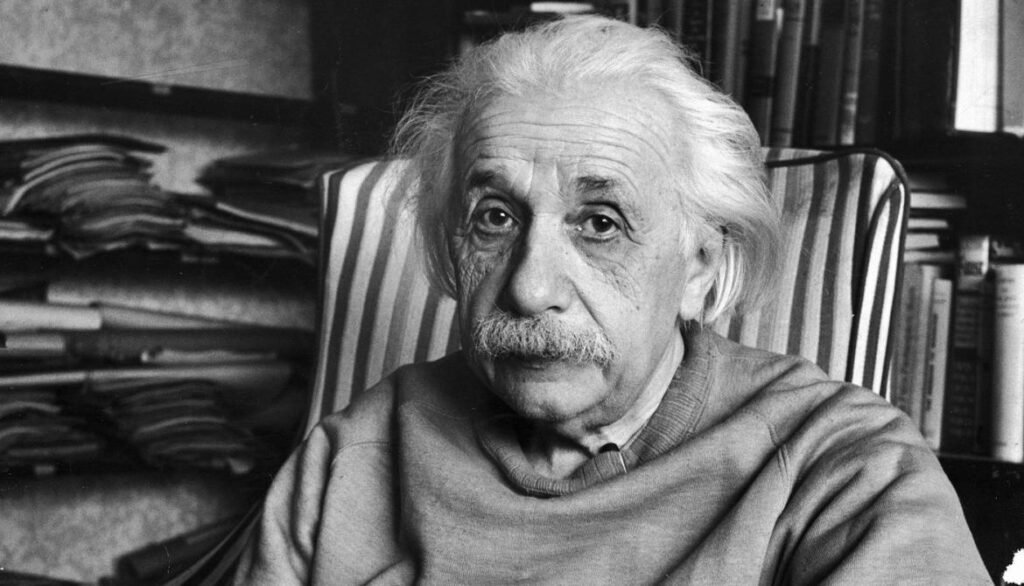

Albert Einstein
February 27, 2021 (Originally published in May 1949)
Is it advisable for one who is not an expert on economic and social issues to express views on the subject of socialism? I believe for a number of reasons that it is.
Let us first consider the question from the point of view of scientific knowledge. It might appear that there are no essential methodological differences between astronomy and economics: scientists in both fields attempt to discover laws of general acceptability for a circumscribed group of phenomena in order to make the interconnection of these phenomena as clearly understandable as possible.
Originally published by Monthly Review
But in reality such methodological differences do exist. The discovery of general laws in the field of economics is made difficult by the circumstance that observed economic phenomena are often affected by many factors which are very hard to evaluate separately.
In addition, the experience which has accumulated since the beginning of the so-called civilized period of human history has—as is well known—been largely influenced and limited by causes which are by no means exclusively economic in nature.
For example, most of the major states of history owed their existence to conquest. The conquering peoples established themselves, legally and economically, as the privileged class of the conquered country. They seized for themselves a monopoly of the land ownership and appointed a priesthood from among their own ranks.
The priests, in control of education, made the class division of society into a permanent institution and created a system of values by which the people were thenceforth, to a large extent unconsciously, guided in their social behavior.
But historic tradition is, so to speak, of yesterday; nowhere have we really overcome what Thorstein Veblen called “the predatory phase” of human development. The observable economic facts belong to that phase and even such laws as we can derive from them are not applicable to other phases.
Since the real purpose of socialism is precisely to overcome and advance beyond the predatory phase of human development, economic science in its present state can throw little light on the socialist society of the future.
Second, socialism is directed towards a social-ethical end. Science, however, cannot create ends and, even less, instill them in human beings; science, at most, can supply the means by which to attain certain ends.
But the ends themselves are conceived by personalities with lofty ethical ideals and—if these ends are not stillborn, but vital and vigorous—are adopted and carried forward by those many human beings who, half unconsciously, determine the slow evolution of society.
For these reasons, we should be on our guard not to overestimate science and scientific methods when it is a question of human problems; and we should not assume that experts are the only ones who have a right to express themselves on questions affecting the organization of society.
Innumerable voices have been asserting for some time now that human society is passing through a crisis, that its stability has been gravely shattered. It is characteristic of such a situation that individuals feel indifferent or even hostile toward the group, small or large, to which they belong. In order to illustrate my meaning, let me record here a personal experience.
I recently discussed with an intelligent and well-disposed man the threat of another war, which in my opinion would seriously endanger the existence of mankind, and I remarked that only a supra-national organization would offer protection from that danger.
Thereupon my visitor, very calmly and coolly, said to me: “Why are you so deeply opposed to the disappearance of the human race?”
I am sure that as little as a century ago no one would have so lightly made a statement of this kind. It is the statement of a man who has striven in vain to attain an equilibrium within himself and has more or less lost hope of succeeding.
It is the expression of a painful solitude and isolation from which so many people are suffering in these days. What is the cause? Is there a way out?
It is easy to raise such questions, but difficult to answer them with any degree of assurance. I must try, however, as best I can, although I am very conscious of the fact that our feelings and strivings are often contradictory and obscure and that they cannot be expressed in easy and simple formulas.
Man is, at one and the same time, a solitary being and a social being. As a solitary being, he attempts to protect his own existence and that of those who are closest to him, to satisfy his personal desires, and to develop his innate abilities.
As a social being, he seeks to gain the recognition and affection of his fellow human beings, to share in their pleasures, to comfort them in their sorrows, and to improve their conditions of life.
Only the existence of these varied, frequently conflicting, strivings accounts for the special character of a man, and their specific combination determines the extent to which an individual can achieve an inner equilibrium and can contribute to the well-being of society.
It is quite possible that the relative strength of these two drives is, in the main, fixed by inheritance. But the personality that finally emerges is largely formed by the environment in which a man happens to find himself during his development, by the structure of the society in which he grows up, by the tradition of that society, and by its appraisal of particular types of behavior.
The abstract concept “society” means to the individual human being the sum total of his direct and indirect relations to his contemporaries and to all the people of earlier generations. The individual is able to think, feel, strive, and work by himself; but he depends so much upon society—in his physical, intellectual, and emotional existence—that it is impossible to think of him, or to understand him, outside the framework of society.
It is “society” which provides man with food, clothing, a home, the tools of work, language, the forms of thought, and most of the content of thought; his life is made possible through the labor and the accomplishments of the many millions past and present who are all hidden behind the small word “society.”
It is evident, therefore, that the dependence of the individual upon society is a fact of nature which cannot be abolished—just as in the case of ants and bees. However, while the whole life process of ants and bees is fixed down to the smallest detail by rigid, hereditary instincts, the social pattern and interrelationships of human beings are very variable and susceptible to change.
Memory, the capacity to make new combinations, the gift of oral communication have made possible developments among human being which are not dictated by biological necessities. Such developments manifest themselves in traditions, institutions, and organizations; in literature; in scientific and engineering accomplishments; in works of art.
This explains how it happens that, in a certain sense, man can influence his life through his own conduct, and that in this process conscious thinking and wanting can play a part.
Man acquires at birth, through heredity, a biological constitution which we must consider fixed and unalterable, including the natural urges which are characteristic of the human species. In addition, during his lifetime, he acquires a cultural constitution which he adopts from society through communication and through many other types of influences.
It is this cultural constitution which, with the passage of time, is subject to change and which determines to a very large extent the relationship between the individual and society. Modern anthropology has taught us, through comparative investigation of so-called primitive cultures, that the social behavior of human beings may differ greatly, depending upon prevailing cultural patterns and the types of organization which predominate in society.
It is on this that those who are striving to improve the lot of man may ground their hopes: human beings are not condemned, because of their biological constitution, to annihilate each other or to be at the mercy of a cruel, self-inflicted fate.
If we ask ourselves how the structure of society and the cultural attitude of man should be changed in order to make human life as satisfying as possible, we should constantly be conscious of the fact that there are certain conditions which we are unable to modify.
As mentioned before, the biological nature of man is, for all practical purposes, not subject to change. Furthermore, technological and demographic developments of the last few centuries have created conditions which are here to stay.
In relatively densely settled populations with the goods which are indispensable to their continued existence, an extreme division of labor and a highly-centralized productive apparatus are absolutely necessary.
The time—which, looking back, seems so idyllic—is gone forever when individuals or relatively small groups could be completely self-sufficient. It is only a slight exaggeration to say that mankind constitutes even now a planetary community of production and consumption.
I have now reached the point where I may indicate briefly what to me constitutes the essence of the crisis of our time. It concerns the relationship of the individual to society. The individual has become more conscious than ever of his dependence upon society. But he does not experience this dependence as a positive asset, as an organic tie, as a protective force, but rather as a threat to his natural rights, or even to his economic existence.
Moreover, his position in society is such that the egotistical drives of his make-up are constantly being accentuated, while his social drives, which are by nature weaker, progressively deteriorate. All human beings, whatever their position in society, are suffering from this process of deterioration.
Unknowingly prisoners of their own egotism, they feel insecure, lonely, and deprived of the naive, simple, and unsophisticated enjoyment of life. Man can find meaning in life, short and perilous as it is, only through devoting himself to society.
The economic anarchy of capitalist society as it exists today is, in my opinion, the real source of the evil. We see before us a huge community of producers the members of which are unceasingly striving to deprive each other of the fruits of their collective labor—not by force, but on the whole in faithful compliance with legally established rules.
In this respect, it is important to realize that the means of production—that is to say, the entire productive capacity that is needed for producing consumer goods as well as additional capital goods—may legally be, and for the most part are, the private property of individuals.
For the sake of simplicity, in the discussion that follows I shall call “workers” all those who do not share in the ownership of the means of production—although this does not quite correspond to the customary use of the term. The owner of the means of production is in a position to purchase the labor power of the worker. By using the means of production, the worker produces new goods which become the property of the capitalist.
The essential point about this process is the relation between what the worker produces and what he is paid, both measured in terms of real value. Insofar as the labor contract is “free,” what the worker receives is determined not by the real value of the goods he produces, but by his minimum needs and by the capitalists’ requirements for labor power in relation to the number of workers competing for jobs.
It is important to understand that even in theory the payment of the worker is not determined by the value of his product.
Private capital tends to become concentrated in few hands, partly because of competition among the capitalists, and partly because technological development and the increasing division of labor encourage the formation of larger units of production at the expense of smaller ones.
The result of these developments is an oligarchy of private capital the enormous power of which cannot be effectively checked even by a democratically organized political society. This is true since the members of legislative bodies are selected by political parties, largely financed or otherwise influenced by private capitalists who, for all practical purposes, separate the electorate from the legislature.
The consequence is that the representatives of the people do not in fact sufficiently protect the interests of the underprivileged sections of the population. Moreover, under existing conditions, private capitalists inevitably control, directly or indirectly, the main sources of information (press, radio, education).
It is thus extremely difficult, and indeed in most cases quite impossible, for the individual citizen to come to objective conclusions and to make intelligent use of his political rights.
The situation prevailing in an economy based on the private ownership of capital is thus characterized by two main principles: first, means of production (capital) are privately owned and the owners dispose of them as they see fit; second, the labor contract is free. Of course, there is no such thing as a pure capitalist society in this sense.
In particular, it should be noted that the workers, through long and bitter political struggles, have succeeded in securing a somewhat improved form of the “free labor contract” for certain categories of workers. But taken as a whole, the present day economy does not differ much from “pure” capitalism.
Production is carried on for profit, not for use. There is no provision that all those able and willing to work will always be in a position to find employment; an “army of unemployed” almost always exists. The worker is constantly in fear of losing his job.
Since unemployed and poorly paid workers do not provide a profitable market, the production of consumers’ goods is restricted, and great hardship is the consequence. Technological progress frequently results in more unemployment rather than in an easing of the burden of work for all.
The profit motive, in conjunction with competition among capitalists, is responsible for an instability in the accumulation and utilization of capital which leads to increasingly severe depressions. Unlimited competition leads to a huge waste of labor, and to that crippling of the social consciousness of individuals which I mentioned before.
This crippling of individuals I consider the worst evil of capitalism. Our whole educational system suffers from this evil. An exaggerated competitive attitude is inculcated into the student, who is trained to worship acquisitive success as a preparation for his future career.
I am convinced there is only one way to eliminate these grave evils, namely through the establishment of a socialist economy, accompanied by an educational system which would be oriented toward social goals.
In such an economy, the means of production are owned by society itself and are utilized in a planned fashion. A planned economy, which adjusts production to the needs of the community, would distribute the work to be done among all those able to work and would guarantee a livelihood to every man, woman, and child.
The education of the individual, in addition to promoting his own innate abilities, would attempt to develop in him a sense of responsibility for his fellow men in place of the glorification of power and success in our present society.
Nevertheless, it is necessary to remember that a planned economy is not yet socialism. A planned economy as such may be accompanied by the complete enslavement of the individual.
The achievement of socialism requires the solution of some extremely difficult socio-political problems: how is it possible, in view of the far-reaching centralization of political and economic power, to prevent bureaucracy from becoming all-powerful and overweening?
How can the rights of the individual be protected and therewith a democratic counterweight to the power of bureaucracy be assured?
Clarity about the aims and problems of socialism is of greatest significance in our age of transition.
Since, under present circumstances, free and unhindered discussion of these problems has come under a powerful taboo, I consider the foundation of this magazine to be an important public service.
Originally published by Monthly Review
Albert Einstein is the world famous physicist. This article was originally published in the first issue of Monthly Review (May 1949). It was subsequently published in May 1998 to commemorate the first issue of MR‘s fiftieth year.
Please help TFF remain truly independent by contributing if you benefited from this article
[paypal-donation]


