
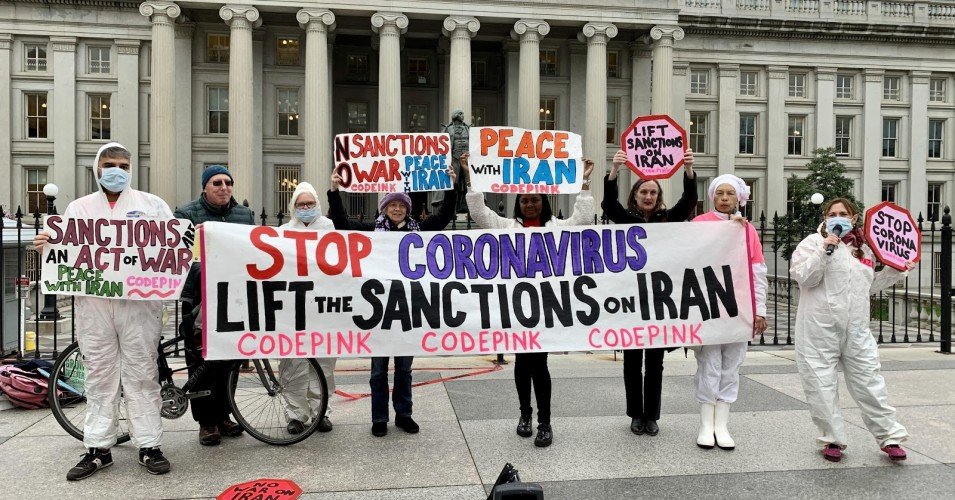

US Sanctions Have Caused Iranians Untold Misery – And Achieved Nothing

Negar Mortazavi and Sina Toossi

February 25, 2020

Iranians’ stories reflect the devastating human costs of US economic sanctions that are often ignored by Washington’s foreign policy elite

Originally posted on Global Research on December 8th, 2020

“My young cousin passed away last week,” an Iranian Twitter user recently lamented. “She needed medication for her cancer that doctors said can’t be found.”

The tweet tragically went on: “Maybe she’d be alongside her little daughter now if she had this medicine and not under a pile of cold dirt.”

These heartbreaking words are from journalist Katayoon Lamezadeh, one of thousands of Iranians who have taken to social media to speak of how sanctions have upended their lives. Their stories reflect the devastating human costs of US economic sanctions that are often ignored by Washington’s foreign policy elite and largely unknown to the American public.

The assassination of Iranian scientist Mohsen Fakhrizadeh is the latest in a long-running pressure campaign against Iran by the US and its allies such as Israel. However, in the case of sanctions, it is ordinary Iranians who are paying the biggest price.

The onslaught of sanctions and covert actions on Iran during the Trump era has not elicited concessions from the Iranian government, but it has caused immense pain inside Iran. Today, Iran’s population is being crushed by the twofold blows of US sanctions and the Covid-19 crisis, all while under the yoke of an increasingly repressive government.

The Trump administration imposed new sanctions after it pulled out of the Iran nuclear deal in May 2018, crippling an economy that supports over 83 million lives. And despite the harrowing toll of the pandemic in Iran, the epicentre of the virus in the Middle East, Trump is bent on increasing sanctions all the way up to President-elect Joe Biden’s inauguration on 20 January. The administration has ignored a wide range of calls from world leaders and the United Nations to provide sanctions relief amid the coronavirus outbreak.

Recently, 75 Democrats in Congress also sent a letter to the Trump administration to demand measures to ensure that all countries can get essential medical equipment during the pandemic despite ramped-up US sanctions.

A humanitarian crisis

In recent weeks, many Iranians have begun documenting the humanitarian crisis unleashed by sanctions using the hashtag, Ravayat-e Tahrim (روایت_تحریم#) meaning “the story of sanctions”. The personal accounts corroborate the dismal economic data coming out of Iran, which show striking declines in the consumption of even staple goods such as red meat and rice.

The suffering and helplessness of the Iranian people today underscores the callous nature of President Trump’s approach to Iran, and the moral and strategic need for relieving pressure on the Iranian people and rethinking America’s sanctions policy under the incoming Biden administration.

Many of the stories Iranians have shared online relate to a loss of access to life-saving medicines. While humanitarian goods such as food and medicine are technically exempt from the US sanctions regime, groups such as Human Rights Watch have documented how the blanket economic and financial sanctions have deterred foreign firms and banks from facilitating humanitarian trade with Iran, including for “vital medicines and medical equipment”.

The outcome of this policy has harmed Iran’s most vulnerable, especially patients suffering from chronic and rare diseases such as multiple sclerosis, haemophilia, HIV/AIDS, epilepsy, and cancers. For many Iranians, their lives now depend on scrounging for increasingly scarce medicine.

One Iranian Twitter user wrote how he searched for his father’s diabetes medication at “seven or eight” pharmacies to no avail. Then, at a pharmacy in Tehran’s Ferdowsi square, he saw a woman who was searching for but could not find the blood thinner medication Plavix. “I forgot my own troubles and stared at her as she left the pharmacy hopeless,” he wrote. “I felt ashamed that we had Plavix at home for my father who suffered a stroke.”

Rapid decline

The firsthand reports of the desperation wreaked by US sanctions are made even bleaker by the overall economic picture in the country. According to the Statistical Centre of Iran, from March 2016 to March this year, GDP per capita decreased by roughly 10 percent. The price of basic foodstuffs such as butter and beans has more than doubled over this period, while housing and automobile prices have skyrocketed to an extent that they are unaffordable for all but the wealthiest citizens.

As the incomes of Iranian households have decreased, so too have domestic consumption patterns, even for vital foodstuffs. The statistics in this regard show how shockingly impoverished Iranians have become: from 2011 to 2020, red meat consumption has declined by 51.6 percent, rice by 34.7 percent, and dairy products by 35.3 percent. Notably, the previous round of sanctions imposed by the Obama administration was only beginning to lift in 2016 before being reimposed with greater severity by President Trump in 2018.

While perennial corruption and domestic mismanagement have long played a role in Iran’s economic malaise, Iran experienced 13 percent growth in 2016, the year the nuclear deal went into effect, and was on the path to further growth.

The rapid economic decline of recent years is directly attributable to the Trump administration’s so-called “maximum pressure” campaign, which has slashed Iran’s oil exports, cut the value of its currency by two-thirds, and resulted in rampant inflation. The Iranian people have been subject to great misery with no discernable dividends for US national security interests or regional stability.

US sanctions have also helped crush Iran’s civil society, which has already been under immense pressure from the state. Over the last several years, Iranian civil society activists, like other Iranians, have grown poorer, sicker, and more hopeless.

“Being poorer means that many engaged in this sector as volunteers are no longer able to continue their activism, as they have to work multiple jobs to make ends meet. As such, Iranian civil society is losing its most valuable asset: its volunteer activists,” said Sussan Tahmasebi, a prominent women’s rights activist and civil society leader.

However, the sad reality is that Iran’s civil society that once advocated rights is now shifting gears to meet basic demands such as for food and medical care. “It will take years for Iranian civil society to recover from these setbacks, just as it will take years for Iranians to recover from the economic setbacks of the last few years,” Tahmasebi added.

Restoring Iranians’ trust

The Trump administration’s sanctions on Iran become an end unto themselves. They have triggered a humanitarian disaster while failing to meet any reasonably defined US objectives towards Iran.

After years of maximum pressure, the Iranian government’s foreign policy is unchanged, its nuclear programme is more advanced, and its most hardline factions are greatly empowered. The current US policy has only managed to brutally immiserate a population already under the yoke of a repressive government.

Hossein Nooraninejad, the spokesperson of Iran’s largest reformist party, the United People’s Party, told us that sanctions have not resulted in their stated goals because the Iranian people have endured them, some as an act of “resistance” to the US and others due to coercion. Nooraninejad adds that Iranians are also increasingly demanding a diplomatic resolution to tensions with the US, because of the impact of sanctions on their lives.

The Biden administration must rethink the use of broad sanctions as a foreign policy tool. As the Iran case currently shows, the net outcome of such sanctions is only widespread suffering and geopolitical instability.

To restore US trust with the Iranian people and its credibility as a defender of human rights globally, President Biden must provide relief from collectively punishing sanctions as a first step to finding diplomatic solutions to disputes with Iran.

Please help TFF remain truly independent and highly productive by contributing if you benefited from this article

[paypal-donation]

Negar Mortazavi is a journalist and political analyst based in Washington DC. She is a columnist for The Independent and host of the Iran Podcast. @NegarMortazavi

Sina Toossi is a Senior Research Analyst at the National Iranian American Council (NIAC). He tweets @SinaToossi

Recommended

Medea Benjamin and Ariel Gold,
To Help Stem Coronavirus, Lift Sanctions on Iran
Among those in Iran who have been unable to get critical medications have been patients with leukemia, epidermolysis bullosa, epilepsy, and chronic eye injuries from exposure to chemical weapons during the Iran-Iraq war. Now coronavirus is added to that list.


Share

Leave a Reply

Your email address will not be published. Required fields are marked *

Related Posts

By Jan ObergTFF co-founder and director February 11, 2026 PART 3 — ECONOMICS, TRADE & FINANCIAL SOVEREIGNTY A. Trade Measures & Market Signaling Economic pressure can be applied instantly and scaled without violence. Immediate Measures (within a week) Government boycott US goods and services  A very powerful signal which over time will be felt. Targeted tariffs on selected U.S. goods Symbolic but high-visibility sectors send a clear message. Suspend trade facilitation talks A peaceful pause that signals deep concern. Freeze U.S. participation in public procurement – military procurement in particular A nonviolent way to reduce influence. Competition law review of U.S. corporations A legal tool to scrutinise market dominance. Longer-Term Measures EU–Asia–Africa trade corridors Reducing reliance on U.S. markets. European supply chains for critical minerals Strategic autonomy in resource access. European Strategic Trade Authority Monitoring coercive practices globally. Euro-denominated commodity markets Weakening the dollar’s pricing monopoly. The EU must resume contacts and negotiations with Russia, focusing on energy cooperation To...
PART 2 — Diplomacy, Law and Nonviolent Power By Jan ObergTFF co-founder and director January 26, 2026 This is the second of four TFF-created idea portfolios designed to curb the global reach of the United States and, in both the short and long term, help catalyse a worldwide nonviolent resistance to what many observers describe as the Trump administration’s uniquely confrontational, destructive and world-threatening policies. These portfolios outline what governments and citizens across the world can do through dynamic diplomacy, creative initiatives, and strictly nonviolent means. They are typical TFF works in that we do not only tell what the problem is and how bad it will go – as 90+% of all commentators, experts and scholars do – we tell what we think can be done, inviting you to think of what you think you can do. It seems painfully clear to me that the current political dynamics in Washington increasingly resemble the most dangerous...
PART 1 — Media, Culture and Information Sovereignty By Jan ObergTFF co-founder and director January 20, 2026 This is the first of four TFF-created idea portfolios designed to curb the global reach of the United States and, in both the short and long term, help catalyse a worldwide nonviolent resistance to what many observers describe as the Trump administration’s uniquely confrontational, destructive and world-threatening policies. These portfolios outline what governments and citizens across the world can do through dynamic diplomacy, creative initiatives, and strictly nonviolent means. They are typical TFF works in that we do not only tell what the problem is and how bad it will go – as 90+% of all commentators, experts and scholars do – we tell what we think can be done, inviting you to think of what you think you can do. It seems painfully clear to me that the current political dynamics in Washington increasingly resemble the most...

Recent Articles

“En dag som berättigar till fest”, utropade den London-baserade al-Quds al-Arabi efter FN:s eldupphörresolution, “eftersom detta är första gången som Israel accepterar ett FN-beslut från en position som besegrad och inte som segrare”. Att ett arabisk-israeliskt krig för en gångs skull slutat med arabisk seger, är en helt dominerade åsikt i arabiska medier. Al-Quds al-Arabi tillåter sig att drömma om att det israeliska nederlaget skall leda till massflykt från Israel. Men i nästa andetag påminner tidningen om att Israel aldrig brukar genomföra sina internationella åtaganden och varnar för att förlorarna, liksom tidigare, kan hämnas genom att provocera fram inbördeskrig i Libanon. Med tanke på de otaliga massmediala vittnesmålen om det libanesiska folkets eniga motståndskraft förefaller risken för inre stridigheter i det sargade landet just nu liten. Men visst kan man urskilja nyansskillnader i libanesiska tidningar. Vänsterorganet al-Safir uppfattar FN-resolutionen som en komplott i syfte att rädda Israel från ännu större...
Greenland – the world’s largest island, a continent of its own with only 57.000 inhabitants. I visited it for the first time in May 2005. I flew across the inland ice to Nuuk, the tiny capital with some 14.000 inhabitants. I was overwhelmed by the pride and kindness of everyone I met as well as by the unique natural beauty. Unfortunately, due to weather conditions during my ten-day stay I could get nowhere else but Nuuk. Fortunately, however, among those I met was Gitte Arvegaard, a Danish lawyer and negotiator employed by the local government, Greenland Home Rule. She turned out to be an enthusiastic photographer with a lot of pictures taken during various trips around Greenland. So this Greeland series is the result of our cooperative effort. We both hope you enjoy it and are stimulated to visit Greenland – about which you may read more here. Finally, if you want to...
 Jan Oberg’s storyof how he met Sir Paul Liverpool – where else to meet Paul McCartney? Paul’s old class mate and TFF Associate, Jonathan Power introduced me to Paul McCartney in Liverpool at an informal reception. It was held at what used to be their school, now the Liverpool Institute for Performing Arts and we were there to celebrate that Jonathan had written Amnesty International’s 40th Anniversary book. This happy event for “righting wrongs and writing songs” gave me an opportunity to meet Paul and tell him about TFF and get straight to the matter: would he consider making a donation in support of our work for peace? While I was probably the only one with such a wish that day, I was certainly not the only one who wanted to shake hands and talk with him. In the last minutes before Paul was to leave, Jonathan brought us together and we got about three...

TFF on Substack

Discover more from TFF Transnational Foundation & Jan Oberg.

Most Popular

“En dag som berättigar till fest”, utropade den London-baserade al-Quds al-Arabi efter FN:s eldupphörresolution, “eftersom detta är första gången som Israel accepterar ett FN-beslut från en position som besegrad och inte som segrare”. Att ett arabisk-israeliskt krig för en gångs skull slutat med arabisk seger, är en helt dominerade åsikt i arabiska medier. Al-Quds al-Arabi tillåter sig att drömma om att det israeliska nederlaget skall leda till massflykt från Israel. Men i nästa andetag påminner tidningen om att Israel aldrig brukar genomföra sina internationella åtaganden och varnar för att förlorarna, liksom tidigare, kan hämnas genom att provocera fram inbördeskrig i Libanon. Med tanke på de otaliga massmediala vittnesmålen om det libanesiska folkets eniga motståndskraft förefaller risken för inre stridigheter i det sargade landet just nu liten. Men visst kan man urskilja nyansskillnader i libanesiska tidningar. Vänsterorganet al-Safir uppfattar FN-resolutionen som en komplott i syfte att rädda Israel från ännu större...
Greenland – the world’s largest island, a continent of its own with only 57.000 inhabitants. I visited it for the first time in May 2005. I flew across the inland ice to Nuuk, the tiny capital with some 14.000 inhabitants. I was overwhelmed by the pride and kindness of everyone I met as well as by the unique natural beauty. Unfortunately, due to weather conditions during my ten-day stay I could get nowhere else but Nuuk. Fortunately, however, among those I met was Gitte Arvegaard, a Danish lawyer and negotiator employed by the local government, Greenland Home Rule. She turned out to be an enthusiastic photographer with a lot of pictures taken during various trips around Greenland. So this Greeland series is the result of our cooperative effort. We both hope you enjoy it and are stimulated to visit Greenland – about which you may read more here. Finally, if you want to...
 Jan Oberg’s storyof how he met Sir Paul Liverpool – where else to meet Paul McCartney? Paul’s old class mate and TFF Associate, Jonathan Power introduced me to Paul McCartney in Liverpool at an informal reception. It was held at what used to be their school, now the Liverpool Institute for Performing Arts and we were there to celebrate that Jonathan had written Amnesty International’s 40th Anniversary book. This happy event for “righting wrongs and writing songs” gave me an opportunity to meet Paul and tell him about TFF and get straight to the matter: would he consider making a donation in support of our work for peace? While I was probably the only one with such a wish that day, I was certainly not the only one who wanted to shake hands and talk with him. In the last minutes before Paul was to leave, Jonathan brought us together and we got about three...
Read More
Imagen-thumbnail-The-Transnational-1
“En dag som berättigar till fest”, utropade den London-baserade al-Quds al-Arabi efter FN:s eldupphörresolution, “eftersom detta är första gången som Israel accepterar ett FN-beslut från en position som besegrad och inte som segrare”. Att ett arabisk-israeliskt krig för en gångs skull slutat med arabisk seger, är en helt dominerade åsikt i arabiska medier. Al-Quds al-Arabi tillåter sig att drömma om att det israeliska nederlaget skall leda till massflykt från Israel. Men i nästa andetag påminner tidningen om att Israel aldrig brukar genomföra sina internationella åtaganden och varnar för att förlorarna, liksom tidigare, kan hämnas genom att provocera fram inbördeskrig i Libanon. Med tanke på de otaliga massmediala vittnesmålen om det libanesiska folkets eniga motståndskraft förefaller risken för inre stridigheter i det sargade landet just nu liten. Men visst kan man urskilja nyansskillnader i libanesiska tidningar. Vänsterorganet al-Safir uppfattar FN-resolutionen som en komplott i syfte att rädda Israel från ännu större...
Greenland – the world’s largest island, a continent of its own with only 57.000 inhabitants. I visited it for the first time in May 2005. I flew across the inland ice to Nuuk, the tiny capital with some 14.000 inhabitants. I was overwhelmed by the pride and kindness of everyone I met as well as by the unique natural beauty. Unfortunately, due to weather conditions during my ten-day stay I could get nowhere else but Nuuk. Fortunately, however, among those I met was Gitte Arvegaard, a Danish lawyer and negotiator employed by the local government, Greenland Home Rule. She turned out to be an enthusiastic photographer with a lot of pictures taken during various trips around Greenland. So this Greeland series is the result of our cooperative effort. We both hope you enjoy it and are stimulated to visit Greenland – about which you may read more here. Finally, if you want to...
p_mccartney_poem
 Jan Oberg’s storyof how he met Sir Paul Liverpool – where else to meet Paul McCartney? Paul’s old class mate and TFF Associate, Jonathan Power introduced me to Paul McCartney in Liverpool at an informal reception. It was held at what used to be their school, now the Liverpool Institute for Performing Arts and we were there to celebrate that Jonathan had written Amnesty International’s 40th Anniversary book. This happy event for “righting wrongs and writing songs” gave me an opportunity to meet Paul and tell him about TFF and get straight to the matter: would he consider making a donation in support of our work for peace? While I was probably the only one with such a wish that day, I was certainly not the only one who wanted to shake hands and talk with him. In the last minutes before Paul was to leave, Jonathan brought us together and we got about three...
Logo-Transnational
1942James Paul McCartney is born in Liverpool on June 18th. 1956Paul writes his first song, I Lost My Little Girl. 1957Paul meets John Lennon at St. Peter’s Church Fete, Woolton, Liverpool. He joins his first group, The Quarrymen and performs in his first gig at The New Clubmoor Hall, Liverpool, on October 18th. 1960Formation of The Beatles, who play residencies in Hamburg and at The Cavern in Liverpool. 1961First Beatles recordings issued in Germany, as the backing group for Tony Sheridan. 1962The first Beatles Parlophone recording, Love Me Do, reaches number 17 in the British charts. 1963The birth of Beatlemania. Please Please Me gives the group their first British Number 1. She Loves You cements their success. Please Please Me and With The Beatles albums released. 1964First triumphant American tour. The Beatles perform at the Royal Command Performance and release their first film, A Hard Day’s Night. Their single I...
Logo-Transnational
  Back to the series “Bujumbura, Burundi”
By JONATHAN POWER August 16, 2000 LONDON – Remember the summer of ’98? In the sweltering, torpid heat of a Roman august, charged with exhaust fumes, the international community gave its overwhelming approval to the establishment of an International Criminal Court that will enable those accused of “crimes against humanity” to be tried and, if convicted, sentenced. Only seven nations opposed or abstained from the motion, including Israel, China, India and the U.S.A. where the Pentagon had successfully waged bureaucratic guerrilla war to undermine the initially sympathetic stance of President Bill Clinton. Two years on we can now see what an epochal event that was. In a the stroke of 120 pens it changed the climate on political thuggery. After numerous half-starts and false starts ever since the Nuremberg and Tokyo trials that convicted the war criminals of the Second World War, the world at last had agreed en masse a common...
