
Can Israel be a Jewish State and a Democratic State?


By Richard Falk


Prefatory Note

This post is a somewhat revised version of a book review that was published by the Journal of Palestine Studies, Vol. XLVII, No. 2 (Winter 2018), p. 81.

The book is an important contribution to an understanding of two dimensions of the Palestinian experience within the state of Israel: First, the reliance on law to ‘legalize’ discrimination, and the accompanying denial of fundamental rights that has resulted.

Secondly, to develop a distinct Israeli jurisprudence that seeks to legitimize ‘ethnocracy,’ yet disguise this reality by claiming that the nationality laws and regulations distinguishing Jews and non-Jews do not invalidate Israeli claims to be a democracy.


The Dynamic of Exclusionary Constitutionalism: Israel as a Jewish and Democratic State
By Mazen Masri
Hart Publishing, 2017
Oxford, UK & Portland
256 pages. $79.70 hardcover.

This book is an odd scholarly achievement. It relies on a sophisticated analysis to reach conclusions long obvious to close observers of the manner in which Israeli judges and jurists manipulate law to maintain the Zionist claim that Israel is both a Jewish and a democratic state. The author explores the various ways by which Israel has kept this delicate balance between core goals in obvious tension, if not outright conflict.

What makes Mazen Masri’s scholarship worthwhile is his scrupulous analysis of precisely how Israeli scholars and jurists have squared this legal circle.

Mazri, a Senior Lecturer in Law at the City Law School, University of London, also demonstrates how members of the Knesset, jurists, and judges have adapted the rule of law so that it has become a sharp instrument of pervasive injustice at the expense of the Palestinian people.

Masri is more cautious than I would be in drawing broader policy conclusions. He asserts “[p]rimie facie, the Jewish and democratic elements are at odds, or at least at tension, with each other” (p.4).

I would not hesitate to conclude these elements flagrantly contradict one another throughout the evolving Israeli narrative in practice as well as in theory. I would argue that the ideological role of Israeli law is to camouflage this contradiction to soothe the conscience of liberal Zionists and project an international image of democratic legitimacy.

Up until recently, this Zionist enterprise has been largely successful, highlighted by the uncritical recitation of the mantra that ‘Israel is the only democracy in the Middle East.’

Although Masri acknowledges the relevance of the settler colonial origins of Israel, the focus of his book is limited to the internal workings of the Israeli legal system as a complex operational reality. The scope of Masri’s critique makes no effort to encompass the Palestinian national movement. It is confined to the juridical treatment of the Palestinian minority within the Israeli state.

The book is at its best when depicting the legalistic acrobatics of Arahon Barak, former chief justice of the Israeli Supreme Court, and Ruth Gavison, an influential professor, who do their utmost to resolve the contradictions in practice between sustaining the Jewish identity of the state and its central legitimating claim to be a democracy.’

This is not to say that the democratic torch should be handed to one of Israel’s Arab neighbors, but rather that it has become increasingly clear to anyone willing to look closely at the Israeli reality that it has long forfeited the democratic side of its defining identity, except as a figment of the public-relations imagination of the Zionist movement and its geopolitical support structure.

What the author skillfully shows, with an impressive exposition of Israeli legal rationalizations, is how Israeli demographic concerns exerted a structural influence on lawmaking, especially, with respect to the differential rights of return enjoyed by Jews and Palestinians, as expressed in immigration laws and interpretations of citizen rights.

For instance, Masri shows how Gavison cleverly argues, and the courts follow along, that it is permissible for a democratic state to sustain the ethnographic identity of its existing political community by favoring one ethnicity over another. In practical terms this meant it was legally acceptable for the Knesset to discriminate between Jews and others in the context of immigration so as to maintain the Jewish identity of Israel.

There is an Orwellian trope here. In order to preserve the Jewish state as ‘democratic’ it was necessary, and hence permissible, to discriminate against the Palestinian minority, thereby violating ‘the spirit of equality’ that has been understood as vital for true democracies since the time of the French Revolution.

This green light given to ethnic discrimination included a legal endorsement of an unlimited right of return for Jews anywhere in the world no matter how tenuous their connection with the land and its history of Israel. The demographic impacts of this dual treatment of immigration rights as between Jews and non-Jews was accentuated by intense efforts to induce Jewish immigration through a reliance on a variety of economic incentives and subsidies, as well as on appeals to diaspora Jews to fulfill their identity as Jews by emigrating to Israel.

In contrast, Palestinians, even those with the deepest conceivable roots in the territory, now occupied by the Israeli state could be and were legally excluded, even if exclusion resulted in permanent family separation or other hardships. As Masri persuasively shows, it was vitally important to the Zionist Project that their discriminatory treatment of Palestinians be made to seem consistent with Israeli applications of the rule of law.

It was also important to rely on law to identify who was entitled to be considered ‘a Jew.’ In effect, law was useful in implementing ethnocracy, especially its features that discriminated against non-Jews.

Masri has written an admirably scholarly account of the way Israeli legal thought and governmental institutions have produced this outcome by his meticulous examination of the internal workings of the Israeli legal system. He labels the overall phenomenon as “exclusionary constitutionalism.” This emphasis on constitutional foundational verities of Israel is important and persuasive, and is most authoritatively set forth in the Declaration of the Establishment of the State of Israel (14 May 1948), which not only prefigures the Jewish/democratic problematique that is the concern of Masri, but also helps us understand that an apartheid future for Israel seemed inevitable from the moment of its inception as a state.

As Masri notes, “the logic of elimination” (p.125) virtually compels a settler colonial political community, which aspires to achieve sovereign statehood and international legitimacy, to suppress and discredit resistance challenges mounted by the natives. Although the point is not directly made, I finished Masri’s book with the realization from its Zionist origins in the late 19th century that the goal of a Jewish state in Palestine could never be credibly reconciled with achieving a democracy based on the substantive equality of its citizens unless their ethnicity were to be disregarded.

An ethnocracy was within the realm of the Zionist attainability, and that is what Israel has always been from the day of its establishment, however much elaborate legal cosmetics were applied to hide the blemishes and nurture more benign visions of the Israeli reality.

Masri’s contribution extends beyond its immediate relevance to the Palestinian experience in Israel. It offers a frightening template for how law can serve the purposes of injustice if deployed even by individuals endowed with subjectivities of good will yet pursued for the sake of unworthy goals. In this regard, the creativity of the jurist becomes the subservient handmaiden of an oppressive state, and likely unknowingly assists in the dirty work of fashioning an apartheid state.

Of course, the problems of the Palestinian minority is but the tip of the bloodied iceberg of Israeli subjugation of the Palestinian people as a whole, an apartheid structure of ethnic victimization that extends to those living under occupation, in refugee camps and involuntary exile, as well as Gazan captivity.

In effect, the torments of Palestinians in Israel, which Masri so usefully depicts, is a relatively small piece in the larger Israeli matrix of control that comprises the entire Palestinian ordeal.

In this respect, those that rally for peace beneath the slogan ‘End the Occupation’ are missing the point that the Zionist bottom line has always required the fragmentation and subjugation of the Palestinian people as a whole.

To achieve peace, a precondition for constructive negotiations, must be a clear commitment by Israel to ‘End Apartheid’ as it now applied to the Palestinian people, whether they live under occupation, in refugee camps, in exile, or as a subordinated minority in Israel.

When Israel produced the Nabka in 1948, it dispossessed Palestinians so as to ensure a Jewish majority population in Israel, a coherent catastrophe afflicting all Palestinians.

It has been a destructive tactic by Israel and its supporters to treat the Palestinian struggle as primarily about territory rather than about people.

Shifting the discourse on peace and struggle to apartheid corrects this fundamental mistake of perception and peace strategy.
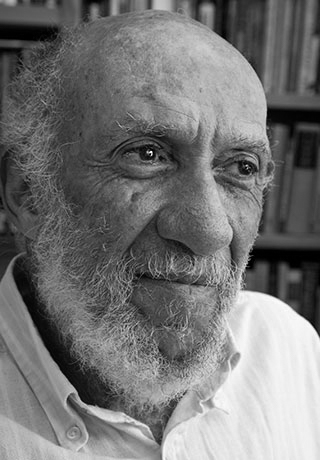

 

Professor Falk became an adviser to TFF when it was established in 1985.

Share

Leave a Reply

Your email address will not be published. Required fields are marked *

Related Posts

The MIMAC – Military-Industrial-Media-Academic Complex – drives the world’s rampant militarism and wars without end. Here is a short reflection of how it works against all interests of humanity. #5 deals with why there is no real enemy or threat images/analysis. It’s all ex-post constructions. And, btw, theTFF Peace Pulse is now on Rumble.
Jan Oberg, TFF director April 28, 2026 In this third TFF Peace Pulse, I make the important distinction between the violence and the conflict that violence is a symptom of. If you want peace, focus on the underlying conflict because that is the key to resolution, peacemaking, and a better future for the parties. The West is obsessed with violence, just look around you – and 90+ per cent of the public debate is about military issues and other violence – totally wasted for peace. These Peace Pulses will only be published here a few times. You will also not find them on YouTube and Vimeo because both platforms have blocked TFF and me; you know, peace is dangerous these days. Most TFF’s videos since 2007 are now on Rumble.
In contrast to most, we’ll bring alternatives, solutions, hope and strategies for a better future. Times are dangerous, yes, but that only intensifies the need for constructive thinking and action! Jan Oberg, TFF director April 13, 2026 The new TFF Peace Pulse uses video messages in a new way: Max 3-5-minute-long comments, ideas or perhaps mini-lectures, all about peace – positive peace. We launch them today on April 13, 2026 with a carefully crafted visual aesthetic fitting the content. We hope to publish them regularly from now on. We launch Peace Pulse (PP) – for a number of reasons. The world is in chaos, and there are countless reasons to feel concerned, frustrated, even angry. The atmosphere is saturated with doom and gloom, with negative energy and rear‑mirror thinking, while vision, imagination, alternatives, strategies and genuine future‑mindedness remain in short supply. And without them, we simply can’t save the world. Looking at problems from a hundred angles will...

Recent Articles

Jan Oberg May 15, 2026 Go to this Fox News page and scroll the whole way down: President Donald Trump tells the world that his meeting with President Xi Jinping yielded a lot of very concrete political and economic results – of course, only where the Chinese side, according to him, agreed with him. He does not mention the Taiwan issue, but Secretary of State, Marco Rubio, says that it did not feature prominently in their talks and that the US policy on Taiwan has not changed. Then go to China Daily – or Global Times – and you will see that for the Chinese it is framework, principles, structure of cooperation etc. that matters – all embedded in the overall idea of “constructive bilateral relationship of strategic stability.” Nowhere is any concrete agreement or deal – all that Trump refers to – mentioned. At the general level, this gives you insights into the very different social...
Lena Petrova of “World Affairs In Context” with more than half a million subscribers on YouTube wanted to explore what a peace researcher like me has to say about, among other things, the First and the Second Cold War and why eethics has disappeared from politics. I am particularly happy about this conversation that also yielded an amazing number of very appreciative comments on YouTube. No doubt, people are longing for alternatives, including peace perspectives.
The MIMAC – Military-Industrial-Media-Academic Complex – drives the world’s rampant militarism and wars without end. Here is a short reflection of how it works against all interests of humanity. #5 deals with why there is no real enemy or threat images/analysis. It’s all ex-post constructions. And, btw, theTFF Peace Pulse is now on Rumble.

TFF on Substack

Discover more from TFF Transnational Foundation & Jan Oberg.

Most Popular

Jan Oberg May 15, 2026 Go to this Fox News page and scroll the whole way down: President Donald Trump tells the world that his meeting with President Xi Jinping yielded a lot of very concrete political and economic results – of course, only where the Chinese side, according to him, agreed with him. He does not mention the Taiwan issue, but Secretary of State, Marco Rubio, says that it did not feature prominently in their talks and that the US policy on Taiwan has not changed. Then go to China Daily – or Global Times – and you will see that for the Chinese it is framework, principles, structure of cooperation etc. that matters – all embedded in the overall idea of “constructive bilateral relationship of strategic stability.” Nowhere is any concrete agreement or deal – all that Trump refers to – mentioned. At the general level, this gives you insights into the very different social...
Lena Petrova of “World Affairs In Context” with more than half a million subscribers on YouTube wanted to explore what a peace researcher like me has to say about, among other things, the First and the Second Cold War and why eethics has disappeared from politics. I am particularly happy about this conversation that also yielded an amazing number of very appreciative comments on YouTube. No doubt, people are longing for alternatives, including peace perspectives.
The MIMAC – Military-Industrial-Media-Academic Complex – drives the world’s rampant militarism and wars without end. Here is a short reflection of how it works against all interests of humanity. #5 deals with why there is no real enemy or threat images/analysis. It’s all ex-post constructions. And, btw, theTFF Peace Pulse is now on Rumble.
Read More
Screenshot-2026-05-15-103534
Jan Oberg May 15, 2026 Go to this Fox News page and scroll the whole way down: President Donald Trump tells the world that his meeting with President Xi Jinping yielded a lot of very concrete political and economic results – of course, only where the Chinese side, according to him, agreed with him. He does not mention the Taiwan issue, but Secretary of State, Marco Rubio, says that it did not feature prominently in their talks and that the US policy on Taiwan has not changed. Then go to China Daily – or Global Times – and you will see that for the Chinese it is framework, principles, structure of cooperation etc. that matters – all embedded in the overall idea of “constructive bilateral relationship of strategic stability.” Nowhere is any concrete agreement or deal – all that Trump refers to – mentioned. At the general level, this gives you insights into the very different social...
Screenshot-2026-05-12-104023
Lena Petrova of “World Affairs In Context” with more than half a million subscribers on YouTube wanted to explore what a peace researcher like me has to say about, among other things, the First and the Second Cold War and why eethics has disappeared from politics. I am particularly happy about this conversation that also yielded an amazing number of very appreciative comments on YouTube. No doubt, people are longing for alternatives, including peace perspectives.
Screenshot-2026-04-13-154551 (2)
The MIMAC – Military-Industrial-Media-Academic Complex – drives the world’s rampant militarism and wars without end. Here is a short reflection of how it works against all interests of humanity. #5 deals with why there is no real enemy or threat images/analysis. It’s all ex-post constructions. And, btw, theTFF Peace Pulse is now on Rumble.
Screenshot-2026-04-13-154551 (1)
Jan Oberg, TFF director April 28, 2026 In this third TFF Peace Pulse, I make the important distinction between the violence and the conflict that violence is a symptom of. If you want peace, focus on the underlying conflict because that is the key to resolution, peacemaking, and a better future for the parties. The West is obsessed with violence, just look around you – and 90+ per cent of the public debate is about military issues and other violence – totally wasted for peace. These Peace Pulses will only be published here a few times. You will also not find them on YouTube and Vimeo because both platforms have blocked TFF and me; you know, peace is dangerous these days. Most TFF’s videos since 2007 are now on Rumble.
Screenshot-2026-04-13-154551
In contrast to most, we’ll bring alternatives, solutions, hope and strategies for a better future. Times are dangerous, yes, but that only intensifies the need for constructive thinking and action! Jan Oberg, TFF director April 13, 2026 The new TFF Peace Pulse uses video messages in a new way: Max 3-5-minute-long comments, ideas or perhaps mini-lectures, all about peace – positive peace. We launch them today on April 13, 2026 with a carefully crafted visual aesthetic fitting the content. We hope to publish them regularly from now on. We launch Peace Pulse (PP) – for a number of reasons. The world is in chaos, and there are countless reasons to feel concerned, frustrated, even angry. The atmosphere is saturated with doom and gloom, with negative energy and rear‑mirror thinking, while vision, imagination, alternatives, strategies and genuine future‑mindedness remain in short supply. And without them, we simply can’t save the world. Looking at problems from a hundred angles will...
IMG_5165 (1)
PART II — Publishing Peace in a System That Prioritises Militarism Jan Oberg, TFF director April 10, 2026 How TFF Maintains a Daily Voice in a Digital World Built for Noise This article is part of the series “TFF at 40″ and it invites you to learn about Four Decades of Publishing Peace. It takes a look at how a small, people‑financed peace foundation has communicated across four generations of technology — from wax stencils and fax machines to mass email and Substack — and why TFF continues to publish every single day in a system that rewards noise, conflict, and militarism. ◆ What it means to publish peace every single day in a digital system built for 24/7 news and other noise, confrontation, and militarism. How TFF’s independence, continuity, and global readership defy algorithms, donor cycles, and Western media censorhip — and why the Majority World keeps listening. When the...

