
Can Israel be a Jewish State and a Democratic State?


By Richard Falk


Prefatory Note

This post is a somewhat revised version of a book review that was published by the Journal of Palestine Studies, Vol. XLVII, No. 2 (Winter 2018), p. 81.

The book is an important contribution to an understanding of two dimensions of the Palestinian experience within the state of Israel: First, the reliance on law to ‘legalize’ discrimination, and the accompanying denial of fundamental rights that has resulted.

Secondly, to develop a distinct Israeli jurisprudence that seeks to legitimize ‘ethnocracy,’ yet disguise this reality by claiming that the nationality laws and regulations distinguishing Jews and non-Jews do not invalidate Israeli claims to be a democracy.


The Dynamic of Exclusionary Constitutionalism: Israel as a Jewish and Democratic State
By Mazen Masri
Hart Publishing, 2017
Oxford, UK & Portland
256 pages. $79.70 hardcover.

This book is an odd scholarly achievement. It relies on a sophisticated analysis to reach conclusions long obvious to close observers of the manner in which Israeli judges and jurists manipulate law to maintain the Zionist claim that Israel is both a Jewish and a democratic state. The author explores the various ways by which Israel has kept this delicate balance between core goals in obvious tension, if not outright conflict.

What makes Mazen Masri’s scholarship worthwhile is his scrupulous analysis of precisely how Israeli scholars and jurists have squared this legal circle.

Mazri, a Senior Lecturer in Law at the City Law School, University of London, also demonstrates how members of the Knesset, jurists, and judges have adapted the rule of law so that it has become a sharp instrument of pervasive injustice at the expense of the Palestinian people.

Masri is more cautious than I would be in drawing broader policy conclusions. He asserts “[p]rimie facie, the Jewish and democratic elements are at odds, or at least at tension, with each other” (p.4).

I would not hesitate to conclude these elements flagrantly contradict one another throughout the evolving Israeli narrative in practice as well as in theory. I would argue that the ideological role of Israeli law is to camouflage this contradiction to soothe the conscience of liberal Zionists and project an international image of democratic legitimacy.

Up until recently, this Zionist enterprise has been largely successful, highlighted by the uncritical recitation of the mantra that ‘Israel is the only democracy in the Middle East.’

Although Masri acknowledges the relevance of the settler colonial origins of Israel, the focus of his book is limited to the internal workings of the Israeli legal system as a complex operational reality. The scope of Masri’s critique makes no effort to encompass the Palestinian national movement. It is confined to the juridical treatment of the Palestinian minority within the Israeli state.

The book is at its best when depicting the legalistic acrobatics of Arahon Barak, former chief justice of the Israeli Supreme Court, and Ruth Gavison, an influential professor, who do their utmost to resolve the contradictions in practice between sustaining the Jewish identity of the state and its central legitimating claim to be a democracy.’

This is not to say that the democratic torch should be handed to one of Israel’s Arab neighbors, but rather that it has become increasingly clear to anyone willing to look closely at the Israeli reality that it has long forfeited the democratic side of its defining identity, except as a figment of the public-relations imagination of the Zionist movement and its geopolitical support structure.

What the author skillfully shows, with an impressive exposition of Israeli legal rationalizations, is how Israeli demographic concerns exerted a structural influence on lawmaking, especially, with respect to the differential rights of return enjoyed by Jews and Palestinians, as expressed in immigration laws and interpretations of citizen rights.

For instance, Masri shows how Gavison cleverly argues, and the courts follow along, that it is permissible for a democratic state to sustain the ethnographic identity of its existing political community by favoring one ethnicity over another. In practical terms this meant it was legally acceptable for the Knesset to discriminate between Jews and others in the context of immigration so as to maintain the Jewish identity of Israel.

There is an Orwellian trope here. In order to preserve the Jewish state as ‘democratic’ it was necessary, and hence permissible, to discriminate against the Palestinian minority, thereby violating ‘the spirit of equality’ that has been understood as vital for true democracies since the time of the French Revolution.

This green light given to ethnic discrimination included a legal endorsement of an unlimited right of return for Jews anywhere in the world no matter how tenuous their connection with the land and its history of Israel. The demographic impacts of this dual treatment of immigration rights as between Jews and non-Jews was accentuated by intense efforts to induce Jewish immigration through a reliance on a variety of economic incentives and subsidies, as well as on appeals to diaspora Jews to fulfill their identity as Jews by emigrating to Israel.

In contrast, Palestinians, even those with the deepest conceivable roots in the territory, now occupied by the Israeli state could be and were legally excluded, even if exclusion resulted in permanent family separation or other hardships. As Masri persuasively shows, it was vitally important to the Zionist Project that their discriminatory treatment of Palestinians be made to seem consistent with Israeli applications of the rule of law.

It was also important to rely on law to identify who was entitled to be considered ‘a Jew.’ In effect, law was useful in implementing ethnocracy, especially its features that discriminated against non-Jews.

Masri has written an admirably scholarly account of the way Israeli legal thought and governmental institutions have produced this outcome by his meticulous examination of the internal workings of the Israeli legal system. He labels the overall phenomenon as “exclusionary constitutionalism.” This emphasis on constitutional foundational verities of Israel is important and persuasive, and is most authoritatively set forth in the Declaration of the Establishment of the State of Israel (14 May 1948), which not only prefigures the Jewish/democratic problematique that is the concern of Masri, but also helps us understand that an apartheid future for Israel seemed inevitable from the moment of its inception as a state.

As Masri notes, “the logic of elimination” (p.125) virtually compels a settler colonial political community, which aspires to achieve sovereign statehood and international legitimacy, to suppress and discredit resistance challenges mounted by the natives. Although the point is not directly made, I finished Masri’s book with the realization from its Zionist origins in the late 19th century that the goal of a Jewish state in Palestine could never be credibly reconciled with achieving a democracy based on the substantive equality of its citizens unless their ethnicity were to be disregarded.

An ethnocracy was within the realm of the Zionist attainability, and that is what Israel has always been from the day of its establishment, however much elaborate legal cosmetics were applied to hide the blemishes and nurture more benign visions of the Israeli reality.

Masri’s contribution extends beyond its immediate relevance to the Palestinian experience in Israel. It offers a frightening template for how law can serve the purposes of injustice if deployed even by individuals endowed with subjectivities of good will yet pursued for the sake of unworthy goals. In this regard, the creativity of the jurist becomes the subservient handmaiden of an oppressive state, and likely unknowingly assists in the dirty work of fashioning an apartheid state.

Of course, the problems of the Palestinian minority is but the tip of the bloodied iceberg of Israeli subjugation of the Palestinian people as a whole, an apartheid structure of ethnic victimization that extends to those living under occupation, in refugee camps and involuntary exile, as well as Gazan captivity.

In effect, the torments of Palestinians in Israel, which Masri so usefully depicts, is a relatively small piece in the larger Israeli matrix of control that comprises the entire Palestinian ordeal.

In this respect, those that rally for peace beneath the slogan ‘End the Occupation’ are missing the point that the Zionist bottom line has always required the fragmentation and subjugation of the Palestinian people as a whole.

To achieve peace, a precondition for constructive negotiations, must be a clear commitment by Israel to ‘End Apartheid’ as it now applied to the Palestinian people, whether they live under occupation, in refugee camps, in exile, or as a subordinated minority in Israel.

When Israel produced the Nabka in 1948, it dispossessed Palestinians so as to ensure a Jewish majority population in Israel, a coherent catastrophe afflicting all Palestinians.

It has been a destructive tactic by Israel and its supporters to treat the Palestinian struggle as primarily about territory rather than about people.

Shifting the discourse on peace and struggle to apartheid corrects this fundamental mistake of perception and peace strategy.
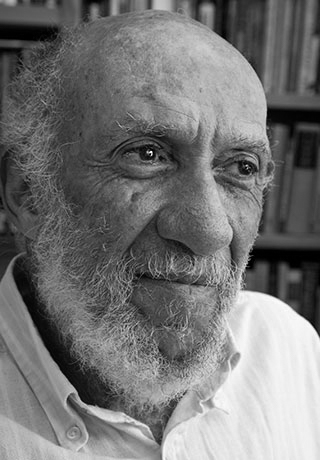

 

Professor Falk became an adviser to TFF when it was established in 1985.

Share

Leave a Reply

Your email address will not be published. Required fields are marked *

Related Posts

Officially, the drones were not identified. By simply thinking critically – which journalists and selected experts no longer do – there may be a good reason for that. And this article will never be mentioned in Denmark… Drones over Denmark. No damage. No trace. No answers. Yet the headlines scream “Russian threat,” and Prime Minister Mette Frederiksen speaks with a certainty that defies logic: “We don’t know they were Russian—but we know Russia is the biggest threat to Europe.” It could be nobody else – unless you make an interest analysis which I did two days ago. This is not security policy. It’s theatre. And the audience is being played. Let’s rewind. These drones—unphotographed, untracked, unclaimed—appear and vanish like ghosts. Airports shut down. Panic spreads. Military budgets swell. And the narrative hardens: Russia is behind it. But what if that’s not just wrong but deliberately misleading? Here’s a hypothesis for...
And why the world, especially the EU, must now declare itself independent of the United States. UN’s 80th anniversary This year, the United Nations celebrates the 80th anniversary of its founding. The UN was formed after the scourge of the Second World War, in which 70 to 85 million people were killed and many countries were destroyed. That war came on the heels of the First World War, which also killed between 15 and 22 million people. After the Second World War, especially after the use of nuclear weapons by the United States, which marked a turning point in the history of warfare that could result in the end of civilisation as we know it, humanity decided to move away from the era of empires and big power politics and usher in a new era of peace, freedom and cooperation. These were the principles enshrined in the UN Charter. The United States...
Drones over Nordic airports. No damage. No trace. No answers. Most assume Russia—but what if that’s not so? Why is there so much we are not told? This article explores the strategic ambiguity behind recent drone incursions and asks: Who else might benefit from sending drones into NATO airspace? From Ukraine’s surprising drone supremacy to Russia’s possible signalling, the silence itself may be the loudest message. These are the kinds of questions decent, intelligent investigative journalists and commentators could easily research. Why don’t they? Did you, dear reader, know or think of this? That the most powerful weapon in today’s conflicts might be the one that leaves no trace – and no answers. Just enough fear to justify the next move? Recently, drones have repeatedly appeared over Nordic airports and near some military facilities. They cause no damage – for which reason the designation “hybrid attack” is misleading but serves a purpose. These...

Recent Articles

PressInfo # 141, December 21, 2001It’s time to prepare reconciliation between Albanians and Serbs PressInfo # 140, December 14, 2001Ibrahim Rugova’s decade-long leadership in Kosovo/a PressInfo # 139, 11. december, 2001En god nyhet: Jugoslaviens Sannings- och försoningskommission PressInfo # 139, 11. december, 2001Gode nyheder: Jugoslaviens Sandheds- og Forsoningskommission PressInfo # 139, December 11, 2001Good news: Yugoslavia’s Truth and Reconciliation Commission PressInfo # 138, November 8, 2001TFF co-founder PhD with thesis about young people with roots in other cultures PressInfo # 138, November 8, 2001TFF:s medstiftare doktor på avhandling om unga med ursprung i andra kulturer PressInfo # 137, October 17, 2001A new Marshall Plan: Advancing human security and controlling terrorism PressInfo # 136, October 15, 2001The UN and Annan really deserve it PressInfo # 135, October 10, 2001Preventing a terrorist mushroom cloud PressInfo # 134, 17 oktober, 2001Sverige og 11. september PressInfo # 134, October 9, 2001Sweden and September 11...
Peace is promoted by constructive proposals and dialogue Four preceding PressInfos have expressed concern over — and criticised — the ongoing, militarisation of the EU. Some will say: but there are no alternatives. We believe that there are always alternatives, that democracies are characterised by alternatives and choice, and that openly discussed alternatives will improve the quality and legitimacy of society’s decision–making. In addition, it is an intellectual and moral challenge to not only criticise but also be constructive. If we only tell people that we think they are wrong, they are not likely to listen. However, if we say: what are your views on this set of ideas and steps? — we may sometimes engage them in dialogue and sow a seed. Most people in power circles live their daily lives in in a time frame and a social space where certain ideas, viewpoints and concepts are just not...
Photos © TFF 2000 Read PressInfo 90 “Lift the Sanctions and Bring More Aid to Yugoslavia” See Pictures from Belgrade © TFF 2000 Please reprint, copy, archive, quote or re-post this item, but please retain the source.

TFF on Substack

Discover more from TFF Transnational Foundation & Jan Oberg.

Most Popular

PressInfo # 141, December 21, 2001It’s time to prepare reconciliation between Albanians and Serbs PressInfo # 140, December 14, 2001Ibrahim Rugova’s decade-long leadership in Kosovo/a PressInfo # 139, 11. december, 2001En god nyhet: Jugoslaviens Sannings- och försoningskommission PressInfo # 139, 11. december, 2001Gode nyheder: Jugoslaviens Sandheds- og Forsoningskommission PressInfo # 139, December 11, 2001Good news: Yugoslavia’s Truth and Reconciliation Commission PressInfo # 138, November 8, 2001TFF co-founder PhD with thesis about young people with roots in other cultures PressInfo # 138, November 8, 2001TFF:s medstiftare doktor på avhandling om unga med ursprung i andra kulturer PressInfo # 137, October 17, 2001A new Marshall Plan: Advancing human security and controlling terrorism PressInfo # 136, October 15, 2001The UN and Annan really deserve it PressInfo # 135, October 10, 2001Preventing a terrorist mushroom cloud PressInfo # 134, 17 oktober, 2001Sverige og 11. september PressInfo # 134, October 9, 2001Sweden and September 11...
Peace is promoted by constructive proposals and dialogue Four preceding PressInfos have expressed concern over — and criticised — the ongoing, militarisation of the EU. Some will say: but there are no alternatives. We believe that there are always alternatives, that democracies are characterised by alternatives and choice, and that openly discussed alternatives will improve the quality and legitimacy of society’s decision–making. In addition, it is an intellectual and moral challenge to not only criticise but also be constructive. If we only tell people that we think they are wrong, they are not likely to listen. However, if we say: what are your views on this set of ideas and steps? — we may sometimes engage them in dialogue and sow a seed. Most people in power circles live their daily lives in in a time frame and a social space where certain ideas, viewpoints and concepts are just not...
Photos © TFF 2000 Read PressInfo 90 “Lift the Sanctions and Bring More Aid to Yugoslavia” See Pictures from Belgrade © TFF 2000 Please reprint, copy, archive, quote or re-post this item, but please retain the source.
Read More
Imagen-thumbnail-The-Transnational-1
PressInfo # 141, December 21, 2001It’s time to prepare reconciliation between Albanians and Serbs PressInfo # 140, December 14, 2001Ibrahim Rugova’s decade-long leadership in Kosovo/a PressInfo # 139, 11. december, 2001En god nyhet: Jugoslaviens Sannings- och försoningskommission PressInfo # 139, 11. december, 2001Gode nyheder: Jugoslaviens Sandheds- og Forsoningskommission PressInfo # 139, December 11, 2001Good news: Yugoslavia’s Truth and Reconciliation Commission PressInfo # 138, November 8, 2001TFF co-founder PhD with thesis about young people with roots in other cultures PressInfo # 138, November 8, 2001TFF:s medstiftare doktor på avhandling om unga med ursprung i andra kulturer PressInfo # 137, October 17, 2001A new Marshall Plan: Advancing human security and controlling terrorism PressInfo # 136, October 15, 2001The UN and Annan really deserve it PressInfo # 135, October 10, 2001Preventing a terrorist mushroom cloud PressInfo # 134, 17 oktober, 2001Sverige og 11. september PressInfo # 134, October 9, 2001Sweden and September 11...
Imagen-thumbnail-The-Transnational-1
Peace is promoted by constructive proposals and dialogue Four preceding PressInfos have expressed concern over — and criticised — the ongoing, militarisation of the EU. Some will say: but there are no alternatives. We believe that there are always alternatives, that democracies are characterised by alternatives and choice, and that openly discussed alternatives will improve the quality and legitimacy of society’s decision–making. In addition, it is an intellectual and moral challenge to not only criticise but also be constructive. If we only tell people that we think they are wrong, they are not likely to listen. However, if we say: what are your views on this set of ideas and steps? — we may sometimes engage them in dialogue and sow a seed. Most people in power circles live their daily lives in in a time frame and a social space where certain ideas, viewpoints and concepts are just not...
Imagen-thumbnail-The-Transnational-1
Photos © TFF 2000 Read PressInfo 90 “Lift the Sanctions and Bring More Aid to Yugoslavia” See Pictures from Belgrade © TFF 2000 Please reprint, copy, archive, quote or re-post this item, but please retain the source.
Imagen-thumbnail-The-Transnational-1
Av FRANK SØHOLM GREVIL 16 augusti 2004  Vi er nu nået til tredje akt i det absurde teaterstykke, der i analogi med de store skueprocesser i Moskva 1936-38 er blevet døbt ‘Grevil-sagen’. Første akt bestod i min anonyme fremlæggelse af egenhændigt nedklassificerede rapporter i Berlingske Tidende i februar og marts. Andet akt udgjordes af min fremtræden med navn og billede i Information i april samt den efterfølgende mediestorm, som uden min direkte medvirken kostede en forsvarsminister taburetten samt en sigtelse for brud på tavshedspligten. Tredje akt bliver en retssag, hvor jeg står tiltalt for at have overtrådt straffelovens bestemmelser om uberettiget videregivelse eller udnyttelse af fortrolige oplysninger. Statsanklageren har ovenikøbet valgt at påberåbe sig særligt skærpende omstændigheder. Da jeg aldrig har modtaget betaling for at stille rapporterne til rådighed eller lade mig interviewe, må det skærpende bestå i, at “videregivelsen eller udnyttelsen er sket under sådanne omstændigheder, at det påfører...
Imagen-thumbnail-The-Transnational-1
Af Svenska Irakkommittén mot de Ekonomiska Sanktionerna (SIES) 13 september 2002 FN:s ekonomiska sanktioner mot Irak har nu pågått i tolv år och drabbat det irakiska folket med svåra lidanden. Enligt FN:s egna siffror har mer än 1,5 miljoner människor, varav ca 600 000 barn, dött som en direkt följd av sanktionerna. Dessutom har ett lågintensivt bombkrig mot landet pågått under dessa år. Av all denna förödelse- orsakad huvudsakligen av amerikansk och brittisk politik- har Saddam Husseins brutala och diktatoriska regim snarast stärkts än försvagats. Nu förbereder USA under president Bushs ledning ett storskaligt bombkrig mot Irak som kommer att innebära ett ännu större lidande för civilbefolkningen. Ett sådant krig kommer dessutom att ytterligare undergräva freden och säkerheten i världen. Att upprätta en demokratisk regim i Irak är det irakiska folkets angelägenhet och får enligt folkrätten inte ske med krigshandlingar utifrån. Folkrätten och FN:s stadgar måste respekteras. Vi vädjar till...

