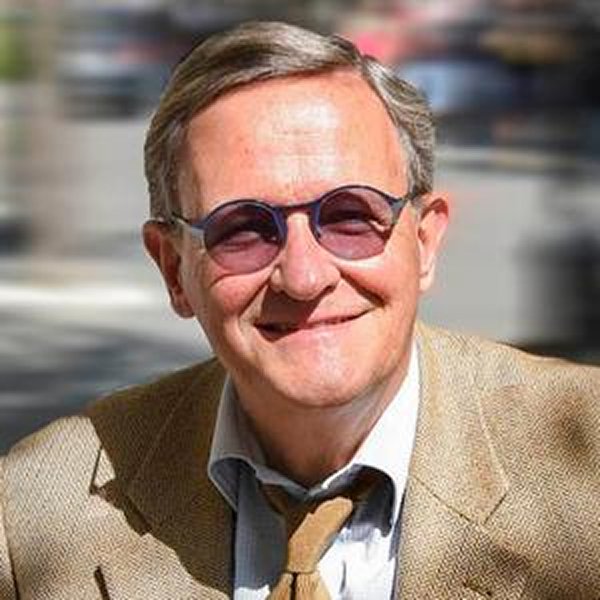
For the last time, I am stating my views on the West’s genocide accusation and why I refuse to let the US/NATO/EU Cold War policy set the agenda and discourse about China in general and Xinjiang in particular.
PART I
A daring prediction
I shall be surprised if, in about 10-15 years, Xinjiang – the North-Western province of China, its largest province three times larger than France – has not become a world-leading cultural and economic hub in humanity’s multipolar/nodal future world.
It exhibits a tremendous cultural variety that seems to be moving towards unity in an amazing diversity. It has a vast natural resource potential. It interacts with eight very important neighbouring countries. It’s the crossroads of past, present and future.
Xinjiang is the sine qua non of the new Silk Roads, also called the Belt and Road Initiative (BRI), which involves over 140 countries worldwide and is humanity’s largest cooperative project. It has breathtaking natural scenery and obvious tourism potential, also because of the kind, smiling and very hospitable people you meet everywhere.
Last but not least, over 70 per cent of its development finance comes from the central government in Beijing, which is bent on promoting its potential to the benefit of Xinjiang, China, and the BRI world.
It’s definitely a land to be curious about and to follow, a place with a long-range vision but also a long and laborious way to go before it has realised itself as a world hub of the kind just mentioned.
This – I emphasise, daring – scenario for Xinjiang’s possible future is based on – only – a week of travelling around a small part of the province as a member of an independent Nordic delegation. Perhaps it is too bold? But it gave me the rare opportunity to meet very many people in Xinjiang – people you meet in the streets, factories, research facilities, agriculture and homes, province officials, interpreters you talk with outside the program, people who tell how it once was and how it is today, politicians and local administrators.
The delegation – see its text and photo “Report from the Nordic delegation to China’s Xinjiang Province, September 7-15, 2024” – was also honoured to be invited to dialogue at length with the province’s governor and party leadership. (For your information, although you would think that diplomats are tasked with getting to know their host country well, most Western diplomats don’t go to Xinjiang; it would be politically incorrect and raise US eyebrows. We – all independent fellow human beings interested in learning about China – were warmly welcomed everywhere).
The Nordic delegation’s visit in September 2024 was arranged as a cooperation between the Chinese Embassy in Oslo, the local authorities and the delegation and its wishes. We saw development projects, mosques, bazaars, private homes, cotton production, science laboratories, agribusinesses, windmill energy production, a hospital for traditional Chinese medicine, cultural performances – almost everywhere – as well as a fish processing factory, cultural centres where musical instruments were produced and used – just to give the flavour of the visit. It was an intensive program with up to 12 hours of visit and transport a day.
And one more thing, the importance of which researchers (and others) tend to overlook: In breaks and evenings, we could freely walk the streets, pop into shops, speak – again freely – with everyone and observe: How are you received or welcomed as a foreigner, a Westerner? Do people look sad, depressed or repressed – or happy, convivial? Can they, and do they want to speak with you, to try their English with yu (I cannot speak Chinese) or have they been told not to talk to foreigners like in Eastern Europe in the days of the First Cold War?
We passed through Kashgar/Kashi, Yining, Bortala and, finally, Urumqi, the province’s 4-million bustling and modern capital. We also did excursions into villages and projects far into the countryside and stopped at Lake Sayram where a fish in the Nordic salmon family is being cultivated.
Undoubtedly, we saw some of the best and most successful projects the Xinjiang province has to offer. And why not? It can safely be assumed that an official Chinese delegation visiting Skåne, Sweden, where I live would be treated in precisely the same manner.
That said, my impressions of the wonderful, open-minded, kind and hospitable – and very often humourous – people, as well as roughly 2000 freely and spontaneously taken photos remain empirical documentation to myself as a researcher, fellow human being and a person who refuse to believe blindly in what Western dependent media tell me but want to check it against the reality – seeing with my own eyes.
The Xinjiang visit added very important elements to my still rather limited knowledge about China, developed since my first visit there in 1983.

Of course I agree that just one week is far too little anywhere in China. Like you do not get to visit all corners of France or know all about it in one week, a visit like this certainly does not make you an expert on Xinjiang. But it does make a substantial difference compared with no on-site visit at all and being at the mercy of what Western media and politicians will have you believe. It is also way more fruitful than participating in insipid discussions between individuals, media or actors who have never visited the province and are basically just seeking confirmation by repeatedly quoting each other.
Furthermore, it is an experience that deserves to be shared – one, because very few get this opportunity and, two, because it is an important element of global politics: the US/Western accusation against China as part of its Cold War policy on China. And that stands in the way of a better future for us all.
Before I proceed, let me point you in the direction of TFF’s now-classic ”Smokescreen” Report about this Cold War and our analysis of the reports that convey the accusations, “The Xinjiang Genocide Determination as Agenda”– both from 2021. The documentation for some of what I say below can be found there.
My final statement on the West’s Xinjiang genocide accusation
Few Westerners may be able to point out where Xinjiang is on the map, but it is China’s largest province, with only 25 million inhabitants out of China’s total of 1400 million. If they have heard about it, it is not the above-mentioned dimensions and potentials, cultural diversity or natural beauty.
It is that China’s government has carried out or still carries out a genocide on the mainly Muslim Uyghur people, who are the biggest people (among some 30 ethnic groups) in the province, which explains why Xinjiang is officially called the Uyghur Autonomous Province.
However, I judge the genocide term used so frequently by the West as factually wrong, unlikely by common sense, propagandistic and therefore untrustworthy. It cannot make up the main discourse or be the agenda-setter anymore. This section plus TFF’s mentioned reports tell you why this is so.
Between 2010 and 2020, the Uyghur people increased by 1,6 million, i.e. 16,2 per cent. (See Chinese population statistics here, here and here. As is very clear, while the alleged genocide has taken place, the victim population has grown markedly bigger.
The data brought here is Chinese, and, of course, some will dismiss it as unreliable, twisted, fake, or propaganda and rather rely instead on sources financed by the West, such as Radio Free Asia and US State Department/Pentagon-related sources and the U.S. Agency for Global Media, USAGM, which is an “independent” government-financed federal agency. But I allow myself to have more faith in what the first source above terms ”the concerted efforts and dedications of the 137,000 census staff in the region.”
A visit to the Exhibition on Counter-Terrorism and De-Radicalization at the Xinjiang International Convention and Exhibition Center in Urumqi will give you the Chinese perspective: For decades up to 2016, there have been hundreds of terrorist attacks in Xinjiang and elsewhere, even in Beijing, where innocent people have been wounded and killed. These were masterminded by a tiny minority of religiously extremist and secessionist-oriented Uyghurs (and others) who, with the use of such methods, wanted to carve out Xinjiang from China and create an independent East Turkestan. I have met local leaders in Xinjiang who themselves are Uyghurs and do not shy away from telling that story. Again, sceptics may say that these are just regime-loyalist, ‘good’ Uyghurs or brainwashed people. However, they did not come across as being so.

As mentioned above, TFF has published a detailed analysis of the reports that determine that this is a genocide. In it, we pointed out many strange aspects, their close relations and often financial support from the State Department or Pentagon, as well as documented – in contrast to virtually every Western report – that the United States, since more than 20 years back, has officially hosted and supported the exile government of the self-proclaimed country of East Turkestan.
Here in Radio Free Asia’s report of November 15, 2024, you will see how former House Speaker Nancy Pelosi and other high-level US lawmakers in the US mark East Turkestan’s National Day.
So, the Chinese perspective on this issue is that it has had to fight terrorism and secessionism as well as religious extremism. As is well-known from the US’s Global War on Terror, GWOT, in the wake of September 11, 2001, such fights or “wars” make the soft gloves come off. One must assume that, in Xinjiang, some terrorists have been killed in their action at the crime scene; that others have received lifetime or very long prison sentences, and yet others have been detained in re-education and vocational training centres.
The US method of killing terrorists to get rid of terrorism – and in the process devastating whole countries – has not led to the end of terrorism; for each terrorist killed, new ones turn up. Furthermore, by also having cooperated with terrorist movements in, for instance, Syria, U.S. policies have worked against its own stated aims.
The texts at the exhibition mentioned above make it abundantly clear that China has seen a huge threat to its regional and national stability and socio-economic development. Given China’s history, its catastrophes and the historical foreign interference in it, China values stability extremely highly.
Therefore, it is “relentless in striking hard,” and Xinjiang has taken “resolute action” (see “Foreword” at the exhibition below) against terrorism/extremism and secessionism. But that is only one side. It has also invested enormously – impressively and visibly – in Xinjiang to provide socio-economic development – better life opportunities – to all who follow the law. Furthermore, former terrorists who have been de-radicalised and re-educated now have a possibility of being re-integrated and benefiting from the overall positive development in the province. Noteworthy is that China emphasizes that Chinese laws have been applied throughout.

The overall impression I got away with is that Xinjiang has succeeded in combatting terrorism and secessionism. There have been no violent attacks since 2017. Like anywhere else I have been, China is safe and orderly day and night 24/7. Given what I have seen, it is extremely unlikely – if not impossible – to combine the very impressive life improvement measures and huge socio-economic, cultural and infrastructural investments one so clearly sees in Xinjiang with a wish to mass kill – genocide – its people – Uyghurs and/or other ethnicities or, as some sources try to make us believe, all Muslims in China.
90+ per cent of the Western sources on Xinjiang’s “genocide” leave out – deliberately or by ignorance – this terrorism/secessionism dimension or mention it only as a fake Chinese counterargument/propaganda. That is meant to convey that the Uyghurs and others have been killed, prosecuted or interned because they are Muslim. In my view, these reports are not worth the paper or bandwidth on which they appear.
It must be kept in mind that from China’s horizon, very much is at stake. If Xinjiang were to be torn away from China, there could be no new Silk Roads/BRI, which is a gigantic project both inside China and worldwide. To reach the West from, say, Xian, Shanghai or Beijing, you must pass through Xinjiang. So obviously, Beijing and Urumqi have strong reasons to keep the province safe and calm and prioritise socio-economic development and integration of all peoples instead of provoking troubles by systematically repressing, marginalising and mass-killing some.

The mentioned Centre’s exhibition documents, incident-by-incident, these terrorist attacks up till 2016, after which there have been no new attacks. There are no more police in Urumqi’s streets than in, say, Shanghai. The exhibition as well as numerous visits to various places in Xinjiang, give a strong impression of how a legal and organic/holistic policy has been implemented to integrate all minorities in the socio-economic development of the province and China as such. I learned that many young from Xinjiang now receive higher education at various universities in other parts of China.
That said, the Exhibition Centre’s displays do not show how the terrorists who committed these crimes were treated. When asked, officials answer that some were punished with prison sentences after due legal process and that others were sent to re-education and vocational training centres so that they would get rid of their extremist inclinations and could then be integrated into society. It was not possible to get any figures of how many got what kind of treatment.
There were no displays at the documentation centre of those types of re-education and vocational training centres, and our delegation was also not invited to visit any such centre. Presumably, they are not precisely pleasant places, and the treatment there of people convicted of terrorism, including killing innocent fellow citizens, is probably quite rough.
One can have several speculations and hypotheses.
But does a country exist in which people being punished for terrorism live a life of luxury and entertainment? The US and other foreign countries also do not invite foreign visitors inside its prisons or detention centres or to Guantanamo (where, by the way, some Uyghurs are detained). Every society has its darker sides, but I reserve the right to say that I have experienced an overall very impressive socio-economic and cultural development in Xinjiang that does not substantiate or make likely that the US/Western accusations about genocide, concentration camps, forced labour, forced birth control, gross discrimination and systematic human rights crimes appear likely, valid or even reasonable.
In all fairness, I also cannot prove that none of it has taken place, somewhere, at some point and to some extent – see what I wrote above about what you can and cannot learn during a one-week travelling fact-finding in a huge land.
Still, words like ‘genocide’ (with the tacit, implied tasteless connotation that Xi Jinping is a Hitler and China a Nazi-like country) seem all the more bizarre coming from the same US/NATO/EU political circles that politically, militarily, and media-wise fully support Israel’s de facto genocide.
Against such a background, Western accusations cannot have and do not deserve my respect.
They must, rather, be seen as an ongoing politically motivated weaponisation of human rights. Or as part of an accusation industry serving Western policies that are heavily influenced by the MIMAC – the Military-Industrial-Media-Academic Complex – and seek to invent threats and enemies. And such inventions are dearly needed as justification for squeezing even more money out of the taxpayers and wasting it on ongoing armament, war-mongering and overarching militarism – where in fact, in the real world, there are no threats and enemies.
In other words and NATO parlance: China is a threat to us who respect human rights and freedom so much because it exterminates most or all of its Muslims. And here it must be left untold how many Muslims the US/NATO/EU system has killed or harassed, for instance, in the Middle East.
It merits repetition: If you can, go and see for yourself before you trust your politicians and media as a deaf and blind. I may add that, due to my work in conflict and war zones over decades, I have developed some skills in sensing foreign countries, cultures, people’s body language, and the like that are quite relevant indicators when you try to interpret what people say and show you and what they don’t tell and show you.
Be that as it may, China has fought a terrorist/secessionist problem in an integrated societal—and perhaps hard to a select few—manner with what seems to be a successful result: years of no further terrorism. As a sociologist, I would not exclude that the West—which has not achieved such a result—could learn something from Chinese thinking about how to combat terrorism.
And here are a couple of related issues.

The official number of mosques in Xinjiang is 24,000; Muslims (Uyghurs and others) make up 58 per cent or 14,5 million of Xinjiang’s 25 million inhabitants. This means that there is a mosque for every 604 Muslim citizens. The Chinese Xinhua News Agency recently published the information that there are 4,469 mosques in the US and UK combined. These two countries combined host around 9 million Muslims; that means a mosque for every 2013 Muslim citizens.
That said, Western media will tell you that China is cracking down on everything Muslim, desecrating, partly destroying, rebuilding, changing, or completely demolishing thousands upon thousands of its mosques. Here is just one example, the Financial Times from November 27, 2023. However, upon closer examination, its main source for this story is the Australian ASPI Institute, which receives funds from US military companies and the Pentagon, but that is left out by the FT.
Indeed, even search engines have been changed to be politically correct concerning Xinjiang and churn out propaganda, that is – Sinophobic and pro-West accusation-oriented in the extreme. See here what I searched on November 18, 2024 – a completely factual question – and what came up on top of DuckDuckGo:

And here Google:

These search results speak volumes about the penetration of US propaganda. On this issue – and likely many others – both companies have abdicated their task of assisting you and me in obtaining valid, unbiased, credible public education materials; they present you with only US/Western-generated and extremely biased “information” with perspectives very distant from the question asked. All the ten inks offered on top are American, most governmental!

If you want to see Chinese Muslims and how they go about their lives, just go to Xinjiang and China’s old capital, Xian. I have been there and seen it with my own eyes. Surprisingly, what you hardly ever see are Muslim women with their faces or hair covered. They wear their traditional, colourfully patterned clothes, elements of them perhaps combined with blue jeans (if younger) or elements of national dresses. Generally, they are incredibly colourful and beam anything but repression; actually, many would melt into the crowd in Western cities and know every foreign fashion brand.
And now, finally, to my decision to no longer accept the Western discourse and agenda.
It serves a cultural and political purpose that I detest. I refuse to, first, and beyond everything else, address the alleged ‘genocide’ and thereby spend my own and my readers’ and viewers’ time, energy and attention on this single issue. The self-evident purpose is to deceive Westerners, to focus on only the negatives and systematically prevent attention from being paid to the remarkable overall development of China and Xinjiang in particular.
I consider it a nasty aspect of cultural and media warfare that – as an advocate of peace by peaceful means – I shall no longer participate in.
Whatever the whole truth about human rights in Xinjiang is, it remains only one out of hundreds of perspectives – of truths. In the real world, there is a China and a Xinjiang, not just a ‘genocide Xinjiang.’ There is so much interesting to explore and learn about in all of China – including how the Chinese think and do politics in ways different from us – and we better learn more because we are behind the curve, as I have argued in “China’s Comparative Advantage in Knowledge About the West” and which you can also read more about in the TFF anthology “If You Want To Understand China.”
Why should genocide and repression be the only one Westerners hear about? Why are 99 per cent of all stories in the Western press shining a dark light upon China? Why does the US – allegedly the champion of human freedom, including free media – operate several state media and has also, recently, set off billions of dollars to fund the training of media people to write exclusively negative stories about China and its Belt and Road Initiative? Why do leading Western search engines “de-rank” every truthful, unbiased and comprehensive information about China in general and Xinjiang in particular – as I have shown above?
I feel the intent, and I get petrified. Do you?
All this is simply not fair. Neither is it truthful. Nothing as big and complex as China is exclusively black – no shades of grey and never any white. All this is part of a Cold War policy that the United States should be too wise and decent to fight but presumably must fight because of its intellectual and moral decay and imperial decline. I firmly believe it will turn out to be an increasingly self- and not China-destroying policy.