Why Europe Remains Silent: After Gaza and Venezuela now also no criticism of the illegal war on Iran. Here is exactly what the EU should have stated

Smilingly supporting gross violations of international law and the UN Charter again and again. It is the US, stupid!

Jan Oberg

March 2, 2026

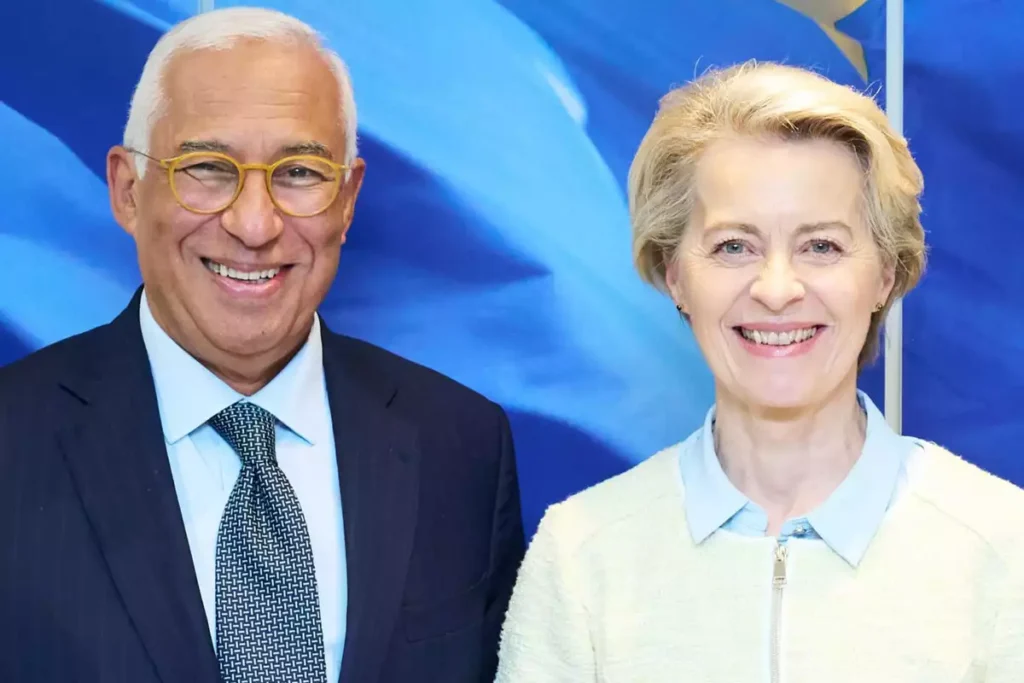
Here is all that EU Presidents von der Leyen and Costa had to say on February 28, 2026:

“The developments in Iran are greatly concerning. We remain in close contact with our partners in the region. We reaffirm our steadfast commitment to safeguarding regional security and stability. 
Ensuring nuclear safety and preventing any actions that could further escalate tensions or undermine the global non-proliferation regime is of critical importance.
The European Union has adopted extensive sanctions in response to the actions of Iran’s murderous regime and the Revolutionary Guards and has consistently promoted diplomatic efforts aimed at addressing the nuclear and ballistic programmes through a negotiated solution.
In close coordination with EU Member States, we will take all necessary steps to ensure that EU citizens in the region can count on our full support. We call on all parties to exercise maximum restraint, to protect civilians, and to fully respect international law.”

The near‑total silence from European leaders following the 28 February 2026 attack on Iran is striking, not least because the legal situation is unusually clear. The strikes were carried out without UN Security Council authorisation and without a credible claim of immediate self‑defence. Under any reasonable reading of the UN Charter, this constitutes a violation of international law. Yet European governments have avoided naming this reality. Their language has been limited to “restraint,” “concern,” and “de‑escalation”—phrases that carefully avoid the central legal and moral issue.

This silence is not a coincidence. It reflects a set of structural forces that have shaped European foreign‑policy behaviour for decades, especially when close allies act outside the law. The first of these forces is the deep entanglement of Europe’s security architecture with the United States. Even if the EU or Euro-NATO could defend itself, its political class has internalised the belief that strategic alignment with Washington must be preserved at any cost. Therefore, criticism of U.S. military action is treated as destabilising, even when the action itself destabilises the international order.

A second structural factor is the EU’s own institutional design. Foreign‑policy statements require unanimity among 27 states with divergent histories, threat perceptions, and political cultures. Some are strongly Atlanticist; some maintain close ties with Israel; others prioritise international law. Achieving consensus under these conditions almost always produces the lowest common denominator. Strong legal language becomes politically impossible, even when the facts demand it. As I wrote in an analysis about 20 years ago, the EU is not geared to make peace.

A third driver is the political cost of naming illegality. To say that an ally has violated the UN Charter is not merely rhetorical. It implies obligations: pressure for sanctions, suspension of arms exports, parliamentary scrutiny, and diplomatic consequences. European governments avoid this because it forces them into actions they do not wish to take. By framing events as “complex,” they avoid triggering the mechanisms that international law would otherwise require.

A fourth factor is Europe’s credibility dilemma. The EU has condemned Russia’s invasion of Ukraine using the strongest legal vocabulary available. If it applied the same standards to U.S. or Israeli actions, it would expose its own double standards. This is, of course, nothing but a selective application of norms and ethics. And reveals a fundamental lack of ethics and a principled policy.

A fifth structural element is the nature of EU–Israel relations. Beyond political sympathy, Europe maintains deep economic, technological, and intelligence ties with Israel. These ties create additional caution. Many governments also frame their relationship with Israel through historical responsibility – ad absurdum, given what Israel does – making them reluctant to issue strong public criticism even when they disagree privately.

The widening government-people gap in foreign and security politics

Finally, there is the widening gap between European publics and their governments. Across the continent, majorities oppose escalation, support adherence to international law, and express solidarity with civilians caught in conflict. The reaction to the genocide in Gaza shows this with abundant clarity. Yet foreign policy remains insulated from public pressure. Decisions are made within small circles of diplomats and security officials who prioritise alliance management over alignment with public sentiment. The result is a growing sense of democratic dissonance: citizens see the illegality clearly, while leaders speak in euphemisms.

In other words, it is becoming increasingly problematic that democracy does not apply to foreign and security policy-making. A few European leaders can meet and decide what they want; the citizens can only protest. Additionally, the leadership of the EU is not the result of democratic voting; they have been appointed and many – if not most – of them relate to the narrow groupthinking Military-Industrial-Media-Academic Complex, MIMAC, which represents another non-democratic actors in this policy field.

It is difficult not to get the feeling that European leaders, in their de facto supportive response to the U.S.–Israeli attack, prioritise alliance ties over the security and peace interests of their own citizens—citizens who undoubtedly view the aggression through a more legal and principled lens than their governments appear willing to acknowledge.

This is intellectually and morally troubling. Europe claims to be a defender of international law, yet it hesitates to speak when the law is broken by its closest partner.

This is what the EU should have stated

It is important to be constructive and not just critical. So, for the purpose of illustrating a truly diplomatic and law‑anchored approach, I hereby put forward the text of an EU Statement that we have every right to expect that the EU leadership had had the moral and intellectual capacity to state:

The European Union condemns the military strikes carried out against Iran on 28 February 2026. These actions were undertaken without authorisation from the United Nations Security Council and without a credible basis in the right of self‑defence as defined under the UN Charter. They therefore constitute a serious violation of international law and pose a grave threat to regional and international stability.

The EU’s position is guided by principles, not by preferences for any government. The Union has long expressed deep concern about the nature of governance in Iran, including systemic violations of human rights and the absence of democratic accountability. However, no matter how one views the authorities in Tehran, unilateral military action, targeted killings, or externally imposed regime change cannot under any circumstances be accepted as instruments of international conduct.

The EU expresses its solidarity with the people of Iran, who now face heightened danger and uncertainty. Their safety, dignity, and fundamental rights must be protected. The EU cannot accept a world in which powerful states act outside the law. International law applies to all, without exception. The protection of civilians, the prevention of regional war, and the integrity of the multilateral system require an immediate end to hostilities and a return to diplomacy.

Simple as that.

Share

Leave a Reply

Your email address will not be published. Required fields are marked *

Related Posts

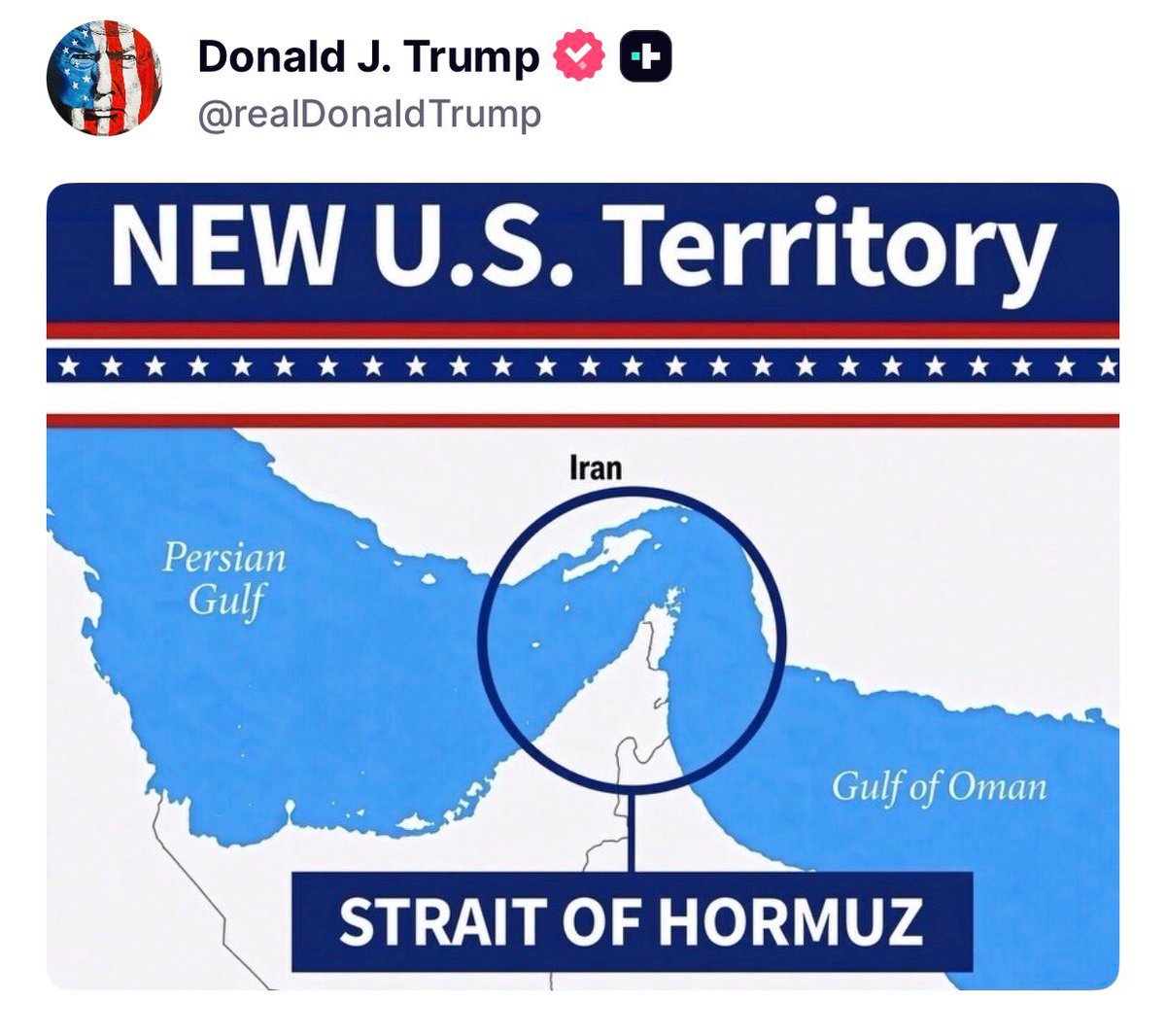
Jan ObergTFF director ☮️ When this morning – August 19, 2026 – I saw the above new US Trump map, I came to think of Frank Zappa, The Mothers of Invention, who said that politics is the entertainment division of the Military-Industrial Complex. That formulation beats many academic analyses – as you will have understood […]
A Civilizational Interpretation of the West’s Body Politic Pascal Lottaz Associate professor at Ritsumeikan University in Kyoto and TFF Board member August 25, 2026 “How do we explain the self-defeating and self-harming policies of Western states? Europe seems to be happily deindustrializing, the US proxy war in Ukraine is killing hundreds of thousands (if not millions) […]
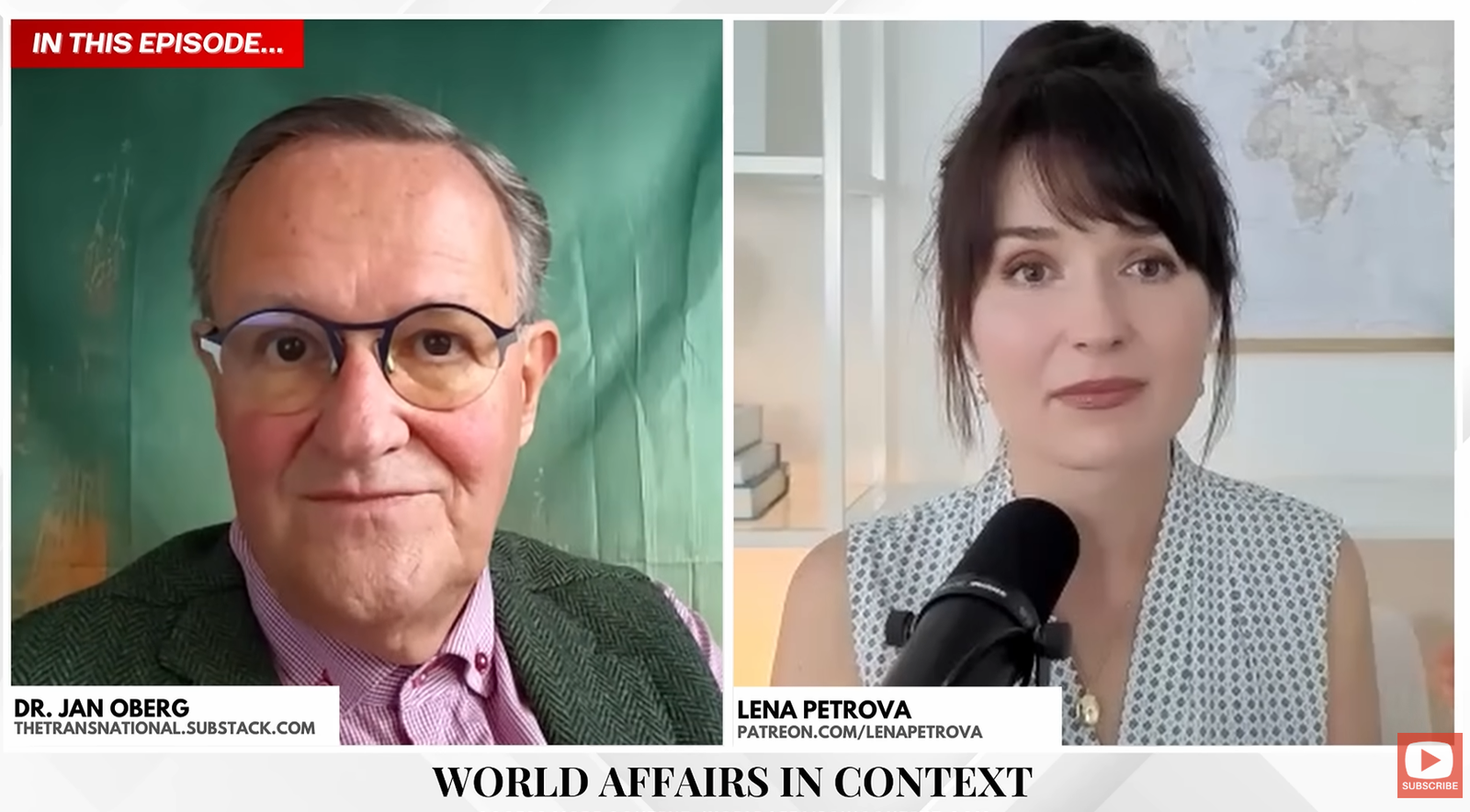
August 24, 2026 Lena Petrova & Jan Oberg I am truly happy and honoured to have been invited by Lena to her unique channel, World Affairs In Context where she has over 600,000 subscribers. She covers a very wide range of global themes, based not least on her own deep and broad knowledge of economics. I want […]

Recent Articles

Jan ObergTFF director ☮️ When this morning – August 19, 2026 – I saw the above new US Trump map, I came to think of Frank Zappa, The Mothers of Invention, who said that politics is the entertainment division of the Military-Industrial Complex. That formulation beats many academic analyses – as you will have understood […]
A Civilizational Interpretation of the West’s Body Politic Pascal Lottaz Associate professor at Ritsumeikan University in Kyoto and TFF Board member August 25, 2026 “How do we explain the self-defeating and self-harming policies of Western states? Europe seems to be happily deindustrializing, the US proxy war in Ukraine is killing hundreds of thousands (if not millions) […]
LONDON – Many of the great and the good have dismissed the utility of nuclear weapons as well as finding the idea of their use morally indefensible but still they exist in enormous numbers in the arsenals of the great powers. Secretary of Defence Robert McNamara and Secretary of State Dean Rusk both came to be convinced during their tenure in the Kennedy administration that their use was “unthinkable”. President George H.W. Bush has written that in private he ruled out a nuclear response during the 1991 Gulf War although in public his Administration did not. General Colin Powell, then the chairman of the Joint Chiefs of Staff, in his autobiography recalls chiding his boss, Dick Cheney, for even considering it. Paul Nitze, one of the principal architects of containing the Soviet Union by nuclear deterrence, went even further. He argued in a Washington Post article in 1994 that it...

TFF on Substack

Discover more from TFF Transnational Foundation & Jan Oberg.

Most Popular

Jan ObergTFF director ☮️ When this morning – August 19, 2026 – I saw the above new US Trump map, I came to think of Frank Zappa, The Mothers of Invention, who said that politics is the entertainment division of the Military-Industrial Complex. That formulation beats many academic analyses – as you will have understood […]
A Civilizational Interpretation of the West’s Body Politic Pascal Lottaz Associate professor at Ritsumeikan University in Kyoto and TFF Board member August 25, 2026 “How do we explain the self-defeating and self-harming policies of Western states? Europe seems to be happily deindustrializing, the US proxy war in Ukraine is killing hundreds of thousands (if not millions) […]
LONDON – Many of the great and the good have dismissed the utility of nuclear weapons as well as finding the idea of their use morally indefensible but still they exist in enormous numbers in the arsenals of the great powers. Secretary of Defence Robert McNamara and Secretary of State Dean Rusk both came to be convinced during their tenure in the Kennedy administration that their use was “unthinkable”. President George H.W. Bush has written that in private he ruled out a nuclear response during the 1991 Gulf War although in public his Administration did not. General Colin Powell, then the chairman of the Joint Chiefs of Staff, in his autobiography recalls chiding his boss, Dick Cheney, for even considering it. Paul Nitze, one of the principal architects of containing the Soviet Union by nuclear deterrence, went even further. He argued in a Washington Post article in 1994 that it...
Read More
HQAB7NMWUAA1gSk
Jan ObergTFF director ☮️ When this morning – August 19, 2026 – I saw the above new US Trump map, I came to think of Frank Zappa, The Mothers of Invention, who said that politics is the entertainment division of the Military-Industrial Complex. That formulation beats many academic analyses – as you will have understood […]
21b7244b-c83e-46c1-ba23-556b21b9a0a8_1536x1024
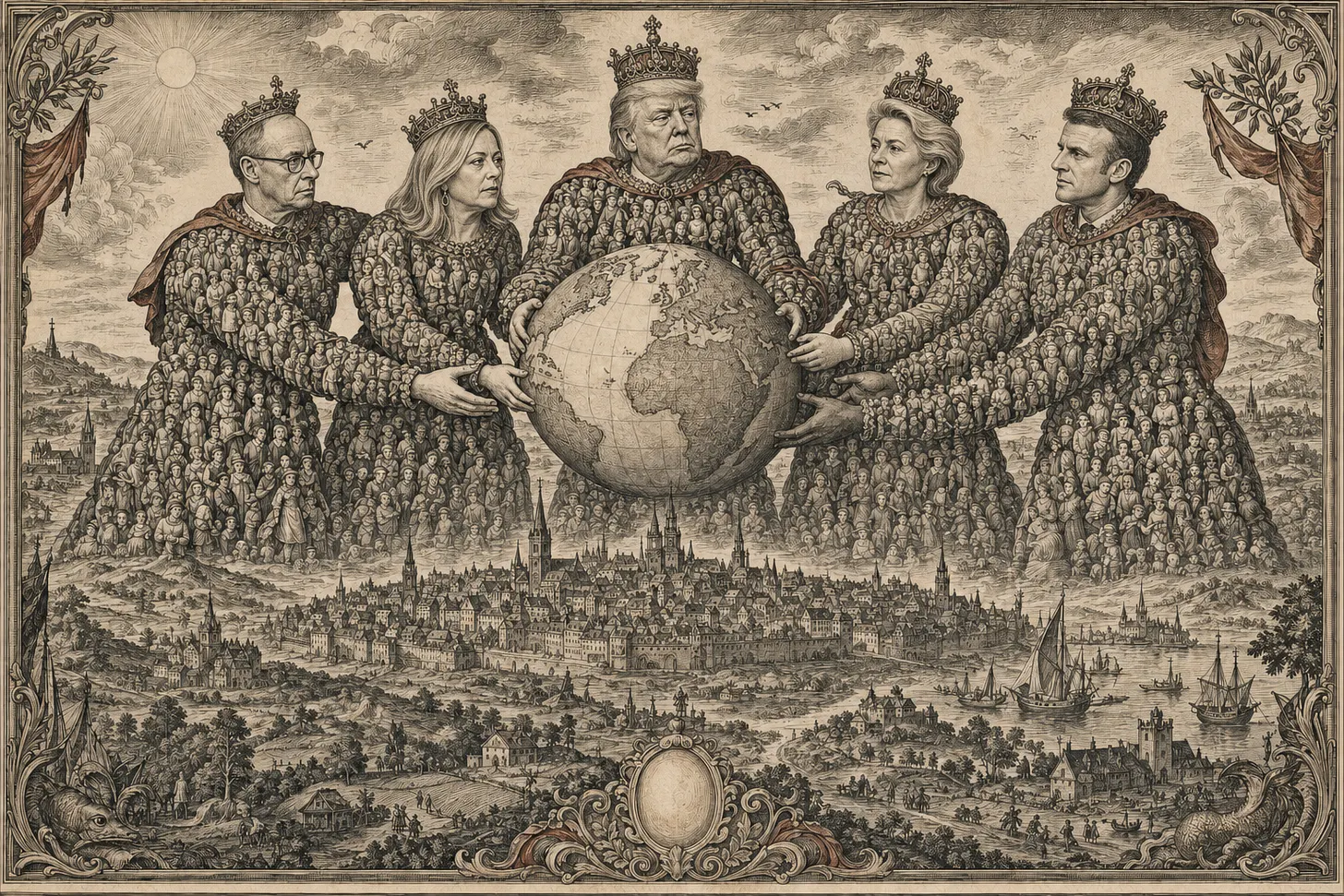
A Civilizational Interpretation of the West’s Body Politic Pascal Lottaz Associate professor at Ritsumeikan University in Kyoto and TFF Board member August 25, 2026 “How do we explain the self-defeating and self-harming policies of Western states? Europe seems to be happily deindustrializing, the US proxy war in Ukraine is killing hundreds of thousands (if not millions) […]
Imagen-thumbnail-The-Transnational-1
LONDON – Many of the great and the good have dismissed the utility of nuclear weapons as well as finding the idea of their use morally indefensible but still they exist in enormous numbers in the arsenals of the great powers. Secretary of Defence Robert McNamara and Secretary of State Dean Rusk both came to be convinced during their tenure in the Kennedy administration that their use was “unthinkable”. President George H.W. Bush has written that in private he ruled out a nuclear response during the 1991 Gulf War although in public his Administration did not. General Colin Powell, then the chairman of the Joint Chiefs of Staff, in his autobiography recalls chiding his boss, Dick Cheney, for even considering it. Paul Nitze, one of the principal architects of containing the Soviet Union by nuclear deterrence, went even further. He argued in a Washington Post article in 1994 that it...
Screenshot-2026-08-22-011310
August 24, 2026 Lena Petrova & Jan Oberg I am truly happy and honoured to have been invited by Lena to her unique channel, World Affairs In Context where she has over 600,000 subscribers. She covers a very wide range of global themes, based not least on her own deep and broad knowledge of economics. I want […]
Logo-Transnational
Greenland – the world’s largest island, a continent of its own with only 57.000 inhabitants. I visited it for the first time in May 2005. I flew across the inland ice to Nuuk, the tiny capital with some 14.000 inhabitants. I was overwhelmed by the pride and kindness of everyone I met as well as by the unique natural beauty. Unfortunately, due to weather conditions during my ten-day stay I could get nowhere else but Nuuk. Fortunately, however, among those I met was Gitte Arvegaard, a Danish lawyer and negotiator employed by the local government, Greenland Home Rule. She turned out to be an enthusiastic photographer with a lot of pictures taken during various trips around Greenland. So this Greeland series is the result of our cooperative effort. We both hope you enjoy it and are stimulated to visit Greenland – about which you may read more here. Finally, if you want to...
p_mccartney_poem
 Jan Oberg’s storyof how he met Sir Paul Liverpool – where else to meet Paul McCartney? Paul’s old class mate and TFF Associate, Jonathan Power introduced me to Paul McCartney in Liverpool at an informal reception. It was held at what used to be their school, now the Liverpool Institute for Performing Arts and we were there to celebrate that Jonathan had written Amnesty International’s 40th Anniversary book. This happy event for “righting wrongs and writing songs” gave me an opportunity to meet Paul and tell him about TFF and get straight to the matter: would he consider making a donation in support of our work for peace? While I was probably the only one with such a wish that day, I was certainly not the only one who wanted to shake hands and talk with him. In the last minutes before Paul was to leave, Jonathan brought us together and we got about three...