
Thomas De Waal: The Still-Topical Tagliavini Report on the 2008 War in Georgia

Thomas De Waal

February 3, 2022

Many people are trying to rewrite the history of the 2008 Georgia-Russia War in the light of the Ukraine crisis. The EU’s report on the war is still a useful baseline and a reminder of how different the two conflicts are.

Originally published at Carnegiemoscow

Six years ago, on September 30, 2009, the European Union made a bold and mostly successful attempt to deal with recent history. The report on the Georgia-Russia war of 2008—known informally as the “Tagliavini Report” after its team-leader, Swiss diplomat Heidi Tagliavini—came out little more than a year after the events themselves.

The idea of the “Report of the Independent International Fact-Finding Mission on the Conflict in Georgia,” was to separate truth from fiction in the information war which both sides had waged and in particular to explain how the conflict started.

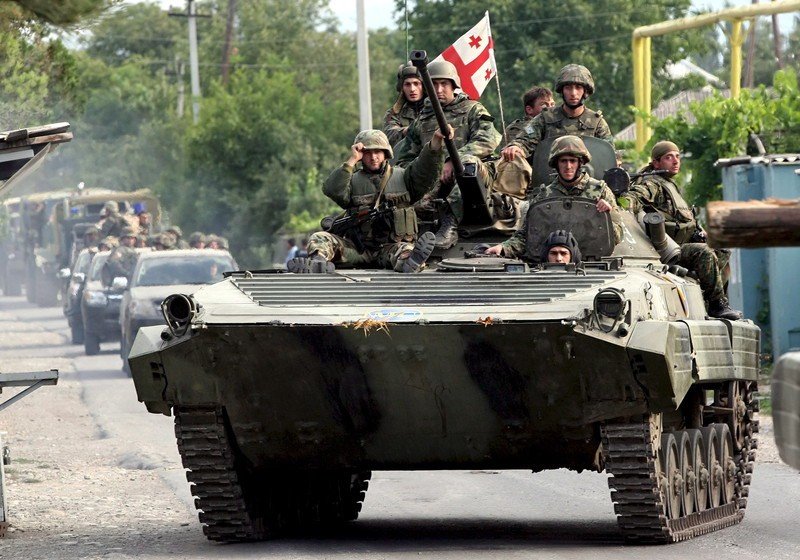
It would be wrong to simplify the report, but it did mostly achieve its goals. The report’s authors clarified an important point that anyone close to the event knew already—that the Georgian government of Mikheil Saakashvili government had indeed “fired the first shot” on the evening of August 7, 2008 when Georgian forces attacked the town of Tskhinvali and briefly captured much of South Ossetia.

That was the headline of the report, which of course the Russian government seized upon. But there was also the very damaging (for Russia) context of what happened before August 7 and what happened when Russian troops entered South Ossetia on August 8, threw out the Georgians and then marched on Gori. Dozens of pages set out in detail Russia’s multiple violations of international law before, during and after the conflict.

Of course the report had its flaws. Its multiple authorship made for some awkward reading. It would have benefited from more information about what was happening in South Ossetia prior to the conflict. The behind-the-scenes role of the United States was signally missing—Saakashvili’s decision to attack was shaped by a perception of how the George W. Bush administration in Washington would or would not react.

But the Tagliavini Report laid down an important baseline of facts about the war and set a precedent that recent controversial events could be examined in a short time-frame and not just left to historians.

Unfortunately, those lessons are now being buried under the rubble of the new conflict in Ukraine and many people are busy rewriting the history of 2008 in the light of Ukraine.

On the anniversary of the conflict in Georgia in August this year, the Russian newspaper Moskovsky Komsomolets published three commentaries drawing direct parallels between the war in South Ossetia and the fighting in Donbas.

Mikhail Alexandrov declared, in highly provocative fashion, that Russia’s “mistake” had been in not finishing the Saakashvili government off and this had emboldened the Ukrainians in 2014:

The Saakashvili regime survived, it was not punished. What is happening in Ukraine is a direct result of the fact that in 2008 we did not pursue things in Georgia to the end. The junta in Kiev feels that it has absolute impunity, it is confident that Russia will not overthrow and punish it. That is why it is so brazen. And the West, seeing that Russia did not stick it out to the end, decided that it can do what it wants in Ukraine.

At the other extreme, many people never wanted to accept that the former Georgian government bore any culpability for the 2008 tragedy.

After what was effectively Part 2 of the 2008 conflict—the brutal Russian military intervention in Georgia and Moscow’s recognition of Abkhazia and South Ossetia as independent states—the Georgian government began to re-write the whole post-Soviet history of its conflicts with its minorities.

Georgia’s 2012 National Security Concept was much more explicit than the 2005 document it replaced in blaming Russia for the conflicts in Abkhazia and South Ossetia of the early 1990s. It talks of “political and economic instability caused by the Russian Federation.”

A new narrative emerged which, either naively or cynically, seeks to ignore the grievances that Abkhaz and Ossetians felt against Tbilisi and argues that the only problem is “Russian occupation.”

Some Georgians have now used the Ukraine crisis to gild their own version of history. In the first place of course this applies to the new governor of Odessa, Saakashvili, who is trying to start again in Ukraine and rebuild his tarnished reputation.

Yulia Latynina, a neoconservative Russian commentator, who always idealized Saakashvili, has waged a furious campaign over the years against the Tagliavini Report. She even compared it to the 1938 “Munich Agreement.”

More recently, as Heidi Tagliavini herself took on the role of negotiating between Kiev and Moscow on behalf of the OSCE, she has come under attack again for allegedly selling out Ukraine, as she had allegedly sold out Georgia. Latynina called her a “Euro-bureaucrat,” who had somehow facilitated “an open betrayal of Ukraine and the capitulation of Europe before Russia.”

If you know Switzerland’s proud tradition of fierce independence and strict diplomatic neutrality, this is absurd.

As for Tagliavini herself, I should say on a personal note that I have always admired her courage and professionalism, having seen her operate for more than 20 years, first in the OSCE mission in Grozny and then in Tbilisi and Abkhazia.

During the first Chechen war of 1994-1996, she was one of a small group who at great risk helped facilitate negotiations between the Chechen rebels and the Yeltsin government. She then did a fine job as the head of the UN mission mediating between the Georgians and Abkhaz. Her report on the 2008 war was commissioned in that spirit of highly professional neutrality.

The conflicts over Crimea and Donbas, hidden by a cloud of misinformation, would greatly benefit from a new Tagliavini Report, which would highlight the many differences between Georgia of 2008 and Ukraine now. Sadly, political realities mean it is not going to be written any time soon.

Originally published at Carnegiemoscow

About the author

Thomas De Waal is a senior fellow with Carnegie Europe, specializing in Eastern Europe and the Caucasus region. Follow him on Twitter.

Please help TFF remain truly independent by contributing if you benefited from this article
[paypal-donation]

Share

Leave a Reply

Your email address will not be published. Required fields are marked *

Related Posts

Jan Oberg May 15, 2026 Go to this Fox News page and scroll the whole way down: President Donald Trump tells the world that his meeting with President Xi Jinping yielded a lot of very concrete political and economic results – of course, only where the Chinese side, according to him, agreed with him. He does not mention the Taiwan issue, but Secretary of State, Marco Rubio, says that it did not feature prominently in their talks and that the US policy on Taiwan has not changed. Then go to China Daily – or Global Times – and you will see that for the Chinese it is framework, principles, structure of cooperation etc. that matters – all embedded in the overall idea of “constructive bilateral relationship of strategic stability.” Nowhere is any concrete agreement or deal – all that Trump refers to – mentioned. At the general level, this gives you insights into the very different social...
Jan Oberg, TFF director April 9, 2026 I was recently invited to have a good, long talk about the world – and, of course, about peace too – with Boris Malagurski on his Weight of Chains Channel on YouTube. It was a real joy and seems to have been greatly appreciated by the viewers too. Mr Malagurski and I shall of course be grateful if you share this conversation in your circles – of course, only if you like what you see and hear  And remember that this one – like hundreds of others with TFF Associates – can be enjoyed at our TFF Video Collection.
The MSC’s closed groupthink militarism offers only one prescription — more weapons — even as record military expenditures, squeezed from taxpayers in economic crisis, destroy diplomacy and drive escalation to the highest war risks in decades. Jan Oberg TFF director February 13, 2026 From Dialogue Forum to Militarised Ritual For decades, the Munich Security Conference (MSC) – which opened today and runs till Sunday – was one of the few places where adversaries could meet without theatrics. Founded in 1963 as the Wehrkundetagung, it served as a discreet Cold War dialogue forum between NATO and the Warsaw Pact. Even at moments of high tension, Soviet and later Russian representatives were present, and Munich allowed uncomfortable messages to be delivered directly rather than through press releases or military manoeuvres. That era has vanished. The MSC has become something entirely different: a €13–20 million annual gathering of a closed Western security elite, a polished meeting...

Recent Articles

Jan Oberg May 15, 2026 Go to this Fox News page and scroll the whole way down: President Donald Trump tells the world that his meeting with President Xi Jinping yielded a lot of very concrete political and economic results – of course, only where the Chinese side, according to him, agreed with him. He does not mention the Taiwan issue, but Secretary of State, Marco Rubio, says that it did not feature prominently in their talks and that the US policy on Taiwan has not changed. Then go to China Daily – or Global Times – and you will see that for the Chinese it is framework, principles, structure of cooperation etc. that matters – all embedded in the overall idea of “constructive bilateral relationship of strategic stability.” Nowhere is any concrete agreement or deal – all that Trump refers to – mentioned. At the general level, this gives you insights into the very different social...
Lena Petrova of “World Affairs In Context” with more than half a million subscribers on YouTube wanted to explore what a peace researcher like me has to say about, among other things, the First and the Second Cold War and why eethics has disappeared from politics. I am particularly happy about this conversation that also yielded an amazing number of very appreciative comments on YouTube. No doubt, people are longing for alternatives, including peace perspectives.
The MIMAC – Military-Industrial-Media-Academic Complex – drives the world’s rampant militarism and wars without end. Here is a short reflection of how it works against all interests of humanity. #5 deals with why there is no real enemy or threat images/analysis. It’s all ex-post constructions. And, btw, theTFF Peace Pulse is now on Rumble.

TFF on Substack

Discover more from TFF Transnational Foundation & Jan Oberg.

Most Popular

Jan Oberg May 15, 2026 Go to this Fox News page and scroll the whole way down: President Donald Trump tells the world that his meeting with President Xi Jinping yielded a lot of very concrete political and economic results – of course, only where the Chinese side, according to him, agreed with him. He does not mention the Taiwan issue, but Secretary of State, Marco Rubio, says that it did not feature prominently in their talks and that the US policy on Taiwan has not changed. Then go to China Daily – or Global Times – and you will see that for the Chinese it is framework, principles, structure of cooperation etc. that matters – all embedded in the overall idea of “constructive bilateral relationship of strategic stability.” Nowhere is any concrete agreement or deal – all that Trump refers to – mentioned. At the general level, this gives you insights into the very different social...
Lena Petrova of “World Affairs In Context” with more than half a million subscribers on YouTube wanted to explore what a peace researcher like me has to say about, among other things, the First and the Second Cold War and why eethics has disappeared from politics. I am particularly happy about this conversation that also yielded an amazing number of very appreciative comments on YouTube. No doubt, people are longing for alternatives, including peace perspectives.
The MIMAC – Military-Industrial-Media-Academic Complex – drives the world’s rampant militarism and wars without end. Here is a short reflection of how it works against all interests of humanity. #5 deals with why there is no real enemy or threat images/analysis. It’s all ex-post constructions. And, btw, theTFF Peace Pulse is now on Rumble.
Read More
Screenshot-2026-05-15-103534
Jan Oberg May 15, 2026 Go to this Fox News page and scroll the whole way down: President Donald Trump tells the world that his meeting with President Xi Jinping yielded a lot of very concrete political and economic results – of course, only where the Chinese side, according to him, agreed with him. He does not mention the Taiwan issue, but Secretary of State, Marco Rubio, says that it did not feature prominently in their talks and that the US policy on Taiwan has not changed. Then go to China Daily – or Global Times – and you will see that for the Chinese it is framework, principles, structure of cooperation etc. that matters – all embedded in the overall idea of “constructive bilateral relationship of strategic stability.” Nowhere is any concrete agreement or deal – all that Trump refers to – mentioned. At the general level, this gives you insights into the very different social...
Screenshot-2026-05-12-104023
Lena Petrova of “World Affairs In Context” with more than half a million subscribers on YouTube wanted to explore what a peace researcher like me has to say about, among other things, the First and the Second Cold War and why eethics has disappeared from politics. I am particularly happy about this conversation that also yielded an amazing number of very appreciative comments on YouTube. No doubt, people are longing for alternatives, including peace perspectives.
Screenshot-2026-04-13-154551 (2)
The MIMAC – Military-Industrial-Media-Academic Complex – drives the world’s rampant militarism and wars without end. Here is a short reflection of how it works against all interests of humanity. #5 deals with why there is no real enemy or threat images/analysis. It’s all ex-post constructions. And, btw, theTFF Peace Pulse is now on Rumble.
Screenshot-2026-04-13-154551 (1)
Jan Oberg, TFF director April 28, 2026 In this third TFF Peace Pulse, I make the important distinction between the violence and the conflict that violence is a symptom of. If you want peace, focus on the underlying conflict because that is the key to resolution, peacemaking, and a better future for the parties. The West is obsessed with violence, just look around you – and 90+ per cent of the public debate is about military issues and other violence – totally wasted for peace. These Peace Pulses will only be published here a few times. You will also not find them on YouTube and Vimeo because both platforms have blocked TFF and me; you know, peace is dangerous these days. Most TFF’s videos since 2007 are now on Rumble.
Screenshot-2026-04-13-154551
In contrast to most, we’ll bring alternatives, solutions, hope and strategies for a better future. Times are dangerous, yes, but that only intensifies the need for constructive thinking and action! Jan Oberg, TFF director April 13, 2026 The new TFF Peace Pulse uses video messages in a new way: Max 3-5-minute-long comments, ideas or perhaps mini-lectures, all about peace – positive peace. We launch them today on April 13, 2026 with a carefully crafted visual aesthetic fitting the content. We hope to publish them regularly from now on. We launch Peace Pulse (PP) – for a number of reasons. The world is in chaos, and there are countless reasons to feel concerned, frustrated, even angry. The atmosphere is saturated with doom and gloom, with negative energy and rear‑mirror thinking, while vision, imagination, alternatives, strategies and genuine future‑mindedness remain in short supply. And without them, we simply can’t save the world. Looking at problems from a hundred angles will...
IMG_5165 (1)
PART II — Publishing Peace in a System That Prioritises Militarism Jan Oberg, TFF director April 10, 2026 How TFF Maintains a Daily Voice in a Digital World Built for Noise This article is part of the series “TFF at 40″ and it invites you to learn about Four Decades of Publishing Peace. It takes a look at how a small, people‑financed peace foundation has communicated across four generations of technology — from wax stencils and fax machines to mass email and Substack — and why TFF continues to publish every single day in a system that rewards noise, conflict, and militarism. ◆ What it means to publish peace every single day in a digital system built for 24/7 news and other noise, confrontation, and militarism. How TFF’s independence, continuity, and global readership defy algorithms, donor cycles, and Western media censorhip — and why the Majority World keeps listening. When the...