The NATO-Russia Conflict in Ukraine Prevents Progress at the China-EU Summit

The NATO-Russia Conflict in Ukraine Prevents Progress at the China-EU Summit

It’s amazing how the entire NATO/EU can watch the war in Ukraine and not reflect on issues -and learn lessons – like these:

• Prioritising weapons over all other security tools create neither security nor sustainable peace; they create hubris, anti-intellectualism and militarism.
• Alliances can only thrive if they appoint enemies.
• Military deterrence doesn’t work but stimulates escalation. With confrontational policies and offensive weapons, there can never be common security, stability and peace.
• Applying one set of rules for ”us” – e.g. the international rules-based order in contravention of the UN-based international law – and another for ”them” is moral fraud.
• Creating hard borders with polarisation is unwise compared to sharing soft borders with neutrality and cooperation. Lacking empathy and a sense of history makes for counterproductive, self-destructive decisions.
• And to make peace is about analysing the conflicts – or problems – that always stand between the parties. War happens when conflicts are neglected, treated wrongly and when fear enters.

Originally published in China’s Global Times, March 30, 2022

Since 1949, NATO has promised its taxpayers that they would live in peace. But today’s Europe is closer to catastrophe than ever before.

The world-domineering Western paradigm of security politics has come to its end. But more dollars and weapons are pumped into this defunct paradigm.

By and large, the EU sides with and submits to the US policies because, as a Union, it has failed to develop an independent comprehensive one-voice foreign and security policy.

So, immediately after the Russian military intervention in Ukraine, it decided by spinal cord tit-for-tat devoid of analyses of the longer-term consequences to basically cut off – cancel – everything Russia. It is blind punishment and hate mood as if Russia would not exist in the future.

Next, they argue that China should put pressure on Russia and ”help” the West to stop that war. And China should face negative consequences if it doesn’t.

Whether this is a genuine plea for help or another way of promoting the Western Cold War agenda vis-a-vis China remains to be seen. This attitude will prevent progress at the upcoming China-EU summit.

The West’s sanctions on Russia are extraordinarily ill-considered and will have self-destructive consequences. For a while, they will surely hurt the Russian innocent people – perhaps very hard – but they will, beyond a doubt, boomerang back on the West, deep socio-economic crisis following.

Russia will see no reason to work with the West in the future – and orient itself towards Iran, India, China and others. Contrary to the increasingly unreal and autistic perceptions of the West, the whole world does not support the West’s reactions to Russia’s war on Ukraine.

The European Union has displayed a politically and rhetorically rather anti-China stand – Xinjiang, Hongkong, Taiwan, Lithuania – but is now asking China to ”help” solve a problem which several Union members have contributed vitally to as NATO members.

NATO’s confrontation expansion was always unwise. NATO should have been closed down when the Warsaw Pact and the Soviet Union dissolved.

History is catching up. The EU has failed miserably in living up to its own Lisbon Treaty and speak with one voice in foreign policy matters and to work for peace inside the Union and the world.

If the EU/NATO members had distanced themselves strongly from the US-promoted coup in Kiev in 2014 and insisted on other security arrangements for Ukraine’s future than full NATO membership, the world would not have been in the present extremely dangerous situation.

It seems to me that the US/NATO wants to tie Russia militarily for as long as possible in Ukraine and simultaneously undermine Russia’s economy and society. And then turn to what it foolishly believe is its #1 adversary: China.

Russia, of course, has other options than the West and should negotiate a ceasefire and a new future relationship with Ukraine, preferably leading to a large UN-peacekeeping mission and a multi-year negotiation facility. The EU will have to become more independent of the US to contribute constructively to that and the emerging multi-polar world order.

Europe desperately needs an entirely new all-European security and peace system, a kind of European UN, based on common security with Russia, trans-armament toward defensive military structures, non-threatening postures, early warning and – above all – civilian, civilised negotiations instead of defunct and militarist escalatory deterrence.

In this sense, the NATO-Russia conflict in Ukraine could be used as a constructive turning point. It should mark the end of the outdated NATO paradigm and its peaceless policies.

It would be good for humanity if the East and West Europeans could now creatively recognise their common interests and thereby do good for the future of humanity and practise cooperation instead of confrontation with China.

NOTES

And here are a couple of links about what transpired on April 1, 2022

China Daily
Xi asks EU to adopt independent China policy

Global Times
Better for EU to manage unreasonable anticipation on China in talks, break from US’ coercion: expert

The EU Council
EU-China summit via video conference, 1 April 2022
Peace & future researcher + ‌Art Photographer

Share

Leave a Reply

Your email address will not be published. Required fields are marked *

Related Posts

The MIMAC – Military-Industrial-Media-Academic Complex – drives the world’s rampant militarism and wars without end. Here is a short reflection of how it works against all interests of humanity. #5 deals with why there is no real enemy or threat images/analysis. It’s all ex-post constructions. And, btw, theTFF Peace Pulse is now on Rumble.
Jan Oberg, TFF director April 28, 2026 In this third TFF Peace Pulse, I make the important distinction between the violence and the conflict that violence is a symptom of. If you want peace, focus on the underlying conflict because that is the key to resolution, peacemaking, and a better future for the parties. The West is obsessed with violence, just look around you – and 90+ per cent of the public debate is about military issues and other violence – totally wasted for peace. These Peace Pulses will only be published here a few times. You will also not find them on YouTube and Vimeo because both platforms have blocked TFF and me; you know, peace is dangerous these days. Most TFF’s videos since 2007 are now on Rumble.
In contrast to most, we’ll bring alternatives, solutions, hope and strategies for a better future. Times are dangerous, yes, but that only intensifies the need for constructive thinking and action! Jan Oberg, TFF director April 13, 2026 The new TFF Peace Pulse uses video messages in a new way: Max 3-5-minute-long comments, ideas or perhaps mini-lectures, all about peace – positive peace. We launch them today on April 13, 2026 with a carefully crafted visual aesthetic fitting the content. We hope to publish them regularly from now on. We launch Peace Pulse (PP) – for a number of reasons. The world is in chaos, and there are countless reasons to feel concerned, frustrated, even angry. The atmosphere is saturated with doom and gloom, with negative energy and rear‑mirror thinking, while vision, imagination, alternatives, strategies and genuine future‑mindedness remain in short supply. And without them, we simply can’t save the world. Looking at problems from a hundred angles will...

Recent Articles

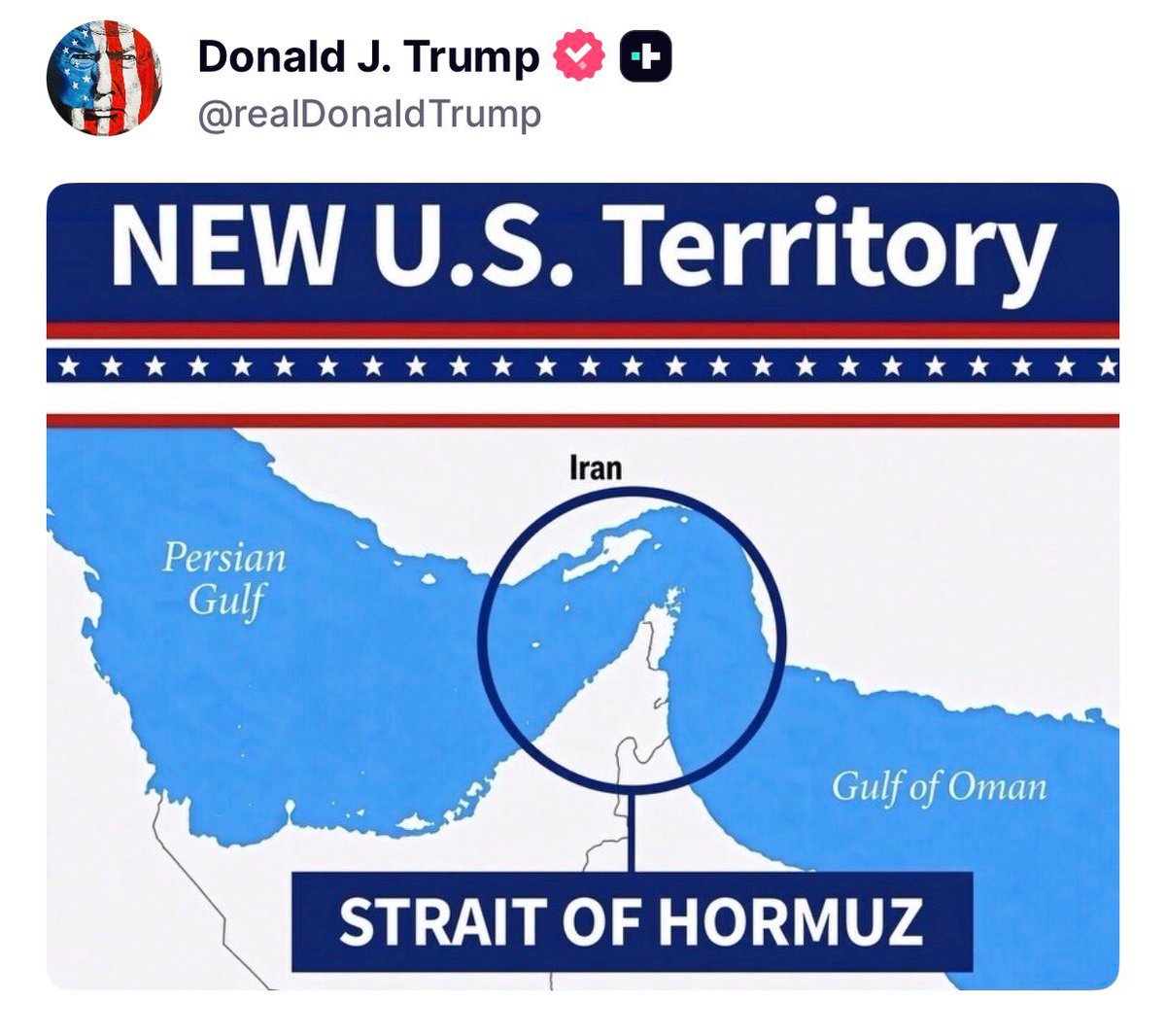
Jan ObergTFF director ☮️ When this morning – August 19, 2026 – I saw the above new US Trump map, I came to think of Frank Zappa, The Mothers of Invention, who said that politics is the entertainment division of the Military-Industrial Complex. That formulation beats many academic analyses – as you will have understood […]
A Civilizational Interpretation of the West’s Body Politic Pascal Lottaz Associate professor at Ritsumeikan University in Kyoto and TFF Board member August 25, 2026 “How do we explain the self-defeating and self-harming policies of Western states? Europe seems to be happily deindustrializing, the US proxy war in Ukraine is killing hundreds of thousands (if not millions) […]
LONDON – Many of the great and the good have dismissed the utility of nuclear weapons as well as finding the idea of their use morally indefensible but still they exist in enormous numbers in the arsenals of the great powers. Secretary of Defence Robert McNamara and Secretary of State Dean Rusk both came to be convinced during their tenure in the Kennedy administration that their use was “unthinkable”. President George H.W. Bush has written that in private he ruled out a nuclear response during the 1991 Gulf War although in public his Administration did not. General Colin Powell, then the chairman of the Joint Chiefs of Staff, in his autobiography recalls chiding his boss, Dick Cheney, for even considering it. Paul Nitze, one of the principal architects of containing the Soviet Union by nuclear deterrence, went even further. He argued in a Washington Post article in 1994 that it...

TFF on Substack

Discover more from TFF Transnational Foundation & Jan Oberg.

Most Popular

Jan ObergTFF director ☮️ When this morning – August 19, 2026 – I saw the above new US Trump map, I came to think of Frank Zappa, The Mothers of Invention, who said that politics is the entertainment division of the Military-Industrial Complex. That formulation beats many academic analyses – as you will have understood […]
A Civilizational Interpretation of the West’s Body Politic Pascal Lottaz Associate professor at Ritsumeikan University in Kyoto and TFF Board member August 25, 2026 “How do we explain the self-defeating and self-harming policies of Western states? Europe seems to be happily deindustrializing, the US proxy war in Ukraine is killing hundreds of thousands (if not millions) […]
LONDON – Many of the great and the good have dismissed the utility of nuclear weapons as well as finding the idea of their use morally indefensible but still they exist in enormous numbers in the arsenals of the great powers. Secretary of Defence Robert McNamara and Secretary of State Dean Rusk both came to be convinced during their tenure in the Kennedy administration that their use was “unthinkable”. President George H.W. Bush has written that in private he ruled out a nuclear response during the 1991 Gulf War although in public his Administration did not. General Colin Powell, then the chairman of the Joint Chiefs of Staff, in his autobiography recalls chiding his boss, Dick Cheney, for even considering it. Paul Nitze, one of the principal architects of containing the Soviet Union by nuclear deterrence, went even further. He argued in a Washington Post article in 1994 that it...
Read More
HQAB7NMWUAA1gSk
Jan ObergTFF director ☮️ When this morning – August 19, 2026 – I saw the above new US Trump map, I came to think of Frank Zappa, The Mothers of Invention, who said that politics is the entertainment division of the Military-Industrial Complex. That formulation beats many academic analyses – as you will have understood […]
21b7244b-c83e-46c1-ba23-556b21b9a0a8_1536x1024
A Civilizational Interpretation of the West’s Body Politic Pascal Lottaz Associate professor at Ritsumeikan University in Kyoto and TFF Board member August 25, 2026 “How do we explain the self-defeating and self-harming policies of Western states? Europe seems to be happily deindustrializing, the US proxy war in Ukraine is killing hundreds of thousands (if not millions) […]
Imagen-thumbnail-The-Transnational-1
LONDON – Many of the great and the good have dismissed the utility of nuclear weapons as well as finding the idea of their use morally indefensible but still they exist in enormous numbers in the arsenals of the great powers. Secretary of Defence Robert McNamara and Secretary of State Dean Rusk both came to be convinced during their tenure in the Kennedy administration that their use was “unthinkable”. President George H.W. Bush has written that in private he ruled out a nuclear response during the 1991 Gulf War although in public his Administration did not. General Colin Powell, then the chairman of the Joint Chiefs of Staff, in his autobiography recalls chiding his boss, Dick Cheney, for even considering it. Paul Nitze, one of the principal architects of containing the Soviet Union by nuclear deterrence, went even further. He argued in a Washington Post article in 1994 that it...
Screenshot-2026-08-22-011310
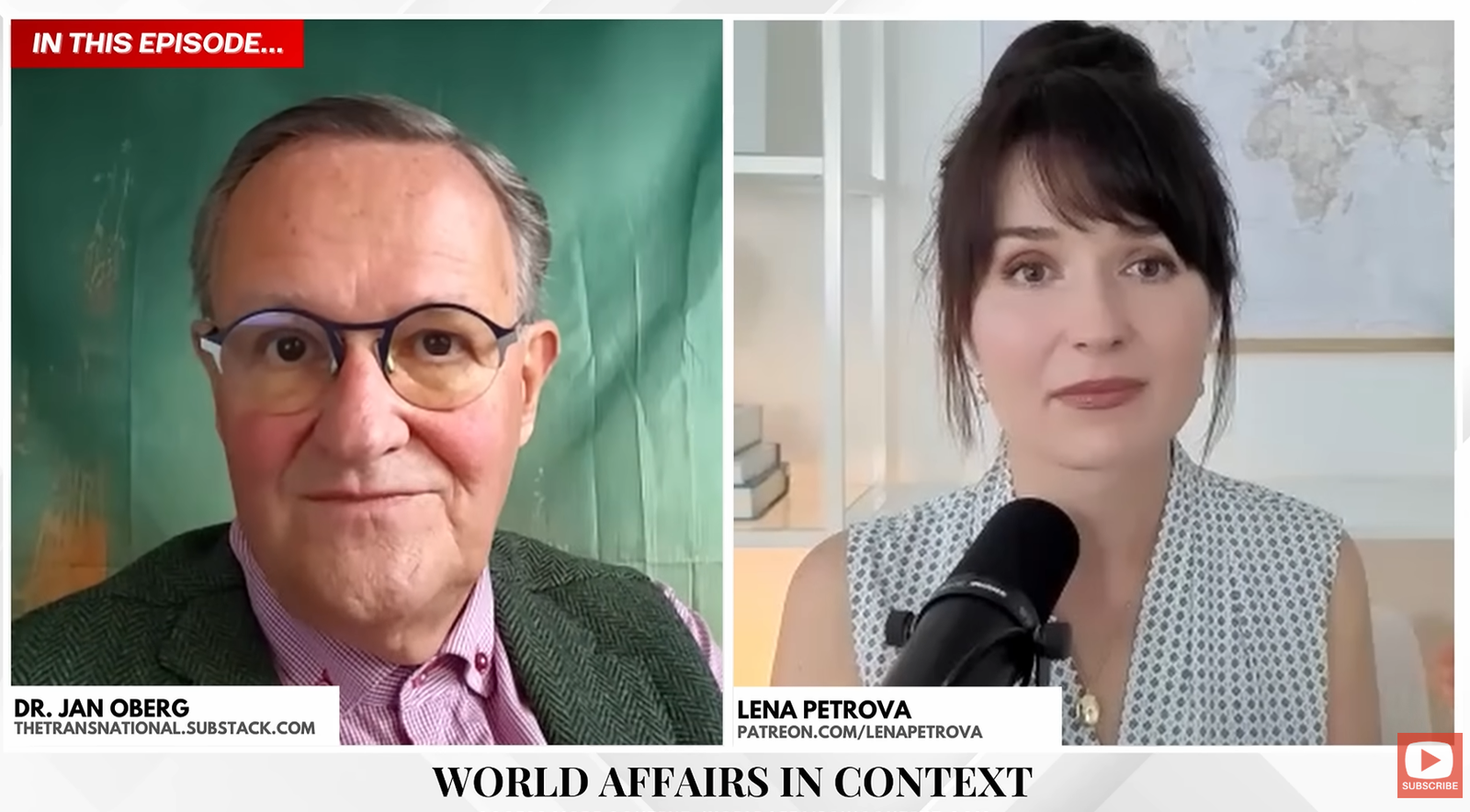
August 24, 2026 Lena Petrova & Jan Oberg I am truly happy and honoured to have been invited by Lena to her unique channel, World Affairs In Context where she has over 600,000 subscribers. She covers a very wide range of global themes, based not least on her own deep and broad knowledge of economics. I want […]
Logo-Transnational
Greenland – the world’s largest island, a continent of its own with only 57.000 inhabitants. I visited it for the first time in May 2005. I flew across the inland ice to Nuuk, the tiny capital with some 14.000 inhabitants. I was overwhelmed by the pride and kindness of everyone I met as well as by the unique natural beauty. Unfortunately, due to weather conditions during my ten-day stay I could get nowhere else but Nuuk. Fortunately, however, among those I met was Gitte Arvegaard, a Danish lawyer and negotiator employed by the local government, Greenland Home Rule. She turned out to be an enthusiastic photographer with a lot of pictures taken during various trips around Greenland. So this Greeland series is the result of our cooperative effort. We both hope you enjoy it and are stimulated to visit Greenland – about which you may read more here. Finally, if you want to...
p_mccartney_poem
 Jan Oberg’s storyof how he met Sir Paul Liverpool – where else to meet Paul McCartney? Paul’s old class mate and TFF Associate, Jonathan Power introduced me to Paul McCartney in Liverpool at an informal reception. It was held at what used to be their school, now the Liverpool Institute for Performing Arts and we were there to celebrate that Jonathan had written Amnesty International’s 40th Anniversary book. This happy event for “righting wrongs and writing songs” gave me an opportunity to meet Paul and tell him about TFF and get straight to the matter: would he consider making a donation in support of our work for peace? While I was probably the only one with such a wish that day, I was certainly not the only one who wanted to shake hands and talk with him. In the last minutes before Paul was to leave, Jonathan brought us together and we got about three...