The love of truth and the truth of love: Bertrand Russell on the two pillars of human flourishing

By Maria Popova

October 8, 2020

In the mid-1950s, as the icy terror of the Cold War was cloaking the embering rubble of two World Wars, the BBC producer and cartoonist Hugh Burnett envisioned an unexampled program to serve both as a cross-cultural bridge and a mirror beaming back to a dimmed and discomposed humanity the noblest and most beautiful ideas of its noblest and most beautiful minds.

Originally published at brainpickings

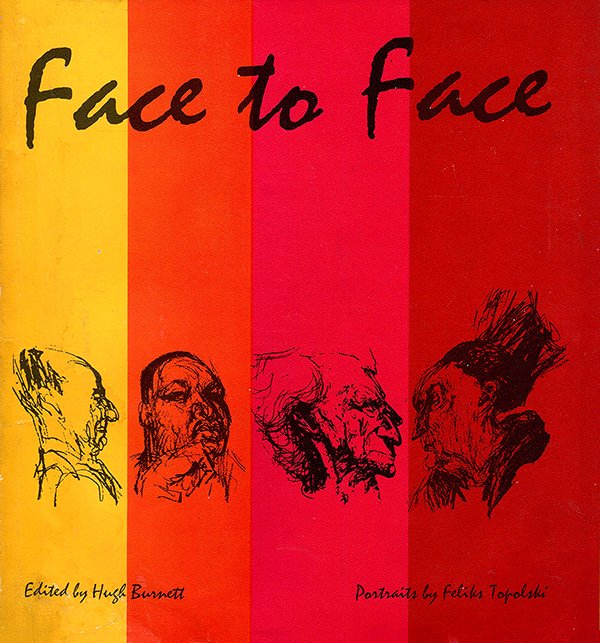
Face to Face — a series of intimate conversations with people of genius, influence, and exceptional largeness of spirit, interviewed by the British broadcaster and politician John Freeman — began as short-wave radio broadcasts to listeners in the Far East and soon became a BBC television program.

Television was then a young medium, aglow as any young medium with the promise of its potential and blind to its peril — something reflected with chilling clarity in Burnett’s own idealistic vision for it, so starkly contrasted by the echo chamber and manipulation laboratory television has become in the half-century since:

One of the most important functions of television is the honest display of human beings to one another. When this happens, it becomes possible to judge whether the standards and beliefs being held up for approval are really as valid and generally supported as we are led to believe. Social progress is slowed by isolation, and one of the great advantages of good television is that people are exposed to wide varieties of views and attitudes quite different form their own.

This is the vision that shaped Face to Face, which set the template for what became, half a century later, the most popular manifestation of a new medium: the podcast.

The best of these BBC conversations, accompanied by the great Polish expressionist painter Feliks Topolski’s live portraits of each subject, were later condensed and edited into what might best be described as first-person narratives fusing autobiography and existential reflection, and published as the out-of-print 1964 treasure Face to Face (public library).

Bertrand Russell by Feliks Topolski from Face to Face, 1964.

Among the thirty-five subjects included in the book, alongside Martin Luther King, Edith Sitwell, and Carl Jung, was the Nobel-winning English mathematician, logician, philosopher, and sanity steward Bertrand Russell (May 18, 1872–February 2, 1970), whom I continue to consider one of the most lucid and luminous minds our civilization has produced, and by far the philosopher whose ideas — ideas at the rare and necessary nexus of science and humanitarianism — I most admire in totality.

Having lost his mother when he was two and his father when he was three, Russell fell in love with Euclid amid the loneliness of his childhood. In the loveliness of mathematics and logic, he discovered an instrument of thought that could have, were it more widely adopted, prevented the inhumanity of the world wars.

Shortly before his remarkable response to a fascist’s provocation, he reflects on the greatest peril of and to our humanity:

Fanaticism is the danger of the world. It always has been and has done untold harm. I think fanaticism is the greatest danger there is. I might almost say that I was fanatical against fanaticism.

Bertrand Russell by Feliks Topolski from Face to Face, 1964.

When asked what, in nearly ninety years of living, he has learned about life that he considers most important to pass on to posterity, Russell offers two things — “one intellectual and one moral.” The first is a sentiment evocative of Carl Sagan’s “Baloney Detection Kit” for critical thinking:

When you are studying any matter or considering any philosophy ask yourself only what are the facts and what is the truth that the facts bear out. Never let yourself be diverted either by what you wish to believe or by what you think would have beneficent social effects if it were believed, but look only and surely at what are the facts. That is the intellectual thing that I should wish to say.

Two world wars after Tolstoy asserted in his little-known correspondence with Gandhi that “love is the only way to rescue humanity from all ills” and a decade after W.H. Auden made what remains the single most poignant one-word revision in the history of the English language — the idealistic “we must love one another or die” before the Second World War to the disillusioned “we must love one another and die” after it — Russell adds his second vital learning:

The moral thing I should wish to say… is very simple. I should say: love is wise, hatred is foolish. In this world, which is getting more and more closely interconnected, we have to learn to tolerate each other. We have to learn to put up with the fact that some people say things that we don’t like. We can only live together in that way and if we are to live together and not die together, we must learn the kind of charity and the kind of tolerance which is absolutely vital to the continuation of human life on this planet.

Complement with Russell’s kindred-spirited contemporary Albert Camus on the three antidotes to the absurdity of life — the third of which is an exquisite affirmation of Russell’s moral bequeathal — and a poetic counterpart in Maya Angelou’s “A Brave and Startling Truth,” and then revisit Russell on how to heal an ailing and divided world, our mightiest defense against political manipulation, what makes a fulfilling life, and his immensely insightful Nobel Prize acceptance speech about the four desires driving all human behavior.

Originally published at brainpickings

If you liked this article and want more of this kind on The Transnational, please let us know here. Thanks!

[paypal-donation]

Maria Popova

Her amazing homepage Brain Pickings was founded in 2006 as a weekly email to seven friends, eventually brought online and now included in the Library of Congress permanent web archive, it is a record of my own becoming as a person — intellectually, creatively, spiritually, poetically — drawn from my extended marginalia on the search for meaning across literature, science, art, philosophy, and the various other tentacles of human thought and feeling. More here.

Note
Read also Bertrand Russell “How to heal an ailing and divided world” on BrainPickings.
Share

Leave a Reply

Your email address will not be published. Required fields are marked *

Related Posts

Jan Oberg, TFF director April 28, 2026 In this third TFF Peace Pulse, I make the important distinction between the violence and the conflict that violence is a symptom of. If you want peace, focus on the underlying conflict because that is the key to resolution, peacemaking, and a better future for the parties. The West is obsessed with violence, just look around you – and 90+ per cent of the public debate is about military issues and other violence – totally wasted for peace. These Peace Pulses will only be published here a few times. You will also not find them on YouTube and Vimeo because both platforms have blocked TFF and me; you know, peace is dangerous these days. Most TFF’s videos since 2007 are now on Rumble.
In contrast to most, we’ll bring alternatives, solutions, hope and strategies for a better future. Times are dangerous, yes, but that only intensifies the need for constructive thinking and action! Jan Oberg, TFF director April 13, 2026 The new TFF Peace Pulse uses video messages in a new way: Max 3-5-minute-long comments, ideas or perhaps mini-lectures, all about peace – positive peace. We launch them today on April 13, 2026 with a carefully crafted visual aesthetic fitting the content. We hope to publish them regularly from now on. We launch Peace Pulse (PP) – for a number of reasons. The world is in chaos, and there are countless reasons to feel concerned, frustrated, even angry. The atmosphere is saturated with doom and gloom, with negative energy and rear‑mirror thinking, while vision, imagination, alternatives, strategies and genuine future‑mindedness remain in short supply. And without them, we simply can’t save the world. Looking at problems from a hundred angles will...
PART II — Publishing Peace in a System That Prioritises Militarism Jan Oberg, TFF director April 10, 2026 How TFF Maintains a Daily Voice in a Digital World Built for Noise This article is part of the series “TFF at 40″ and it invites you to learn about Four Decades of Publishing Peace. It takes a look at how a small, people‑financed peace foundation has communicated across four generations of technology — from wax stencils and fax machines to mass email and Substack — and why TFF continues to publish every single day in a system that rewards noise, conflict, and militarism. ◆ What it means to publish peace every single day in a digital system built for 24/7 news and other noise, confrontation, and militarism. How TFF’s independence, continuity, and global readership defy algorithms, donor cycles, and Western media censorhip — and why the Majority World keeps listening. When the...

Recent Articles

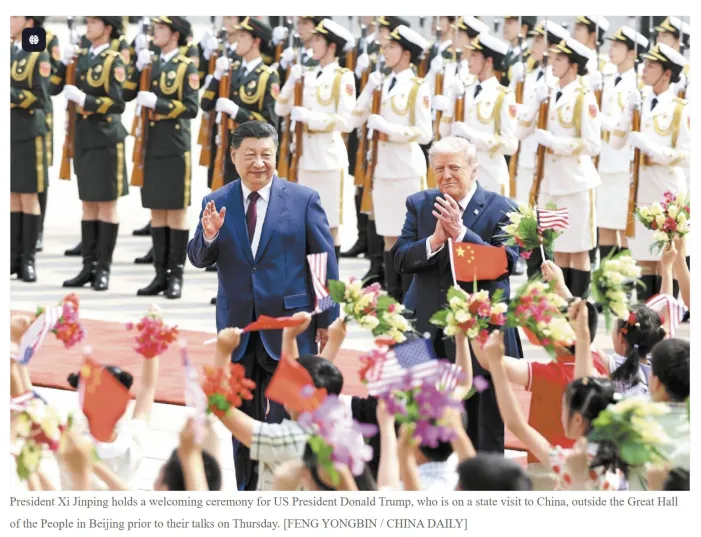
Jan Oberg May 15, 2026 Go to this Fox News page and scroll the whole way down: President Donald Trump tells the world that his meeting with President Xi Jinping yielded a lot of very concrete political and economic results – of course, only where the Chinese side, according to him, agreed with him. He does not mention the Taiwan issue, but Secretary of State, Marco Rubio, says that it did not feature prominently in their talks and that the US policy on Taiwan has not changed. Then go to China Daily – or Global Times – and you will see that for the Chinese it is framework, principles, structure of cooperation etc. that matters – all embedded in the overall idea of “constructive bilateral relationship of strategic stability.” Nowhere is any concrete agreement or deal – all that Trump refers to – mentioned. At the general level, this gives you insights into the very different social...
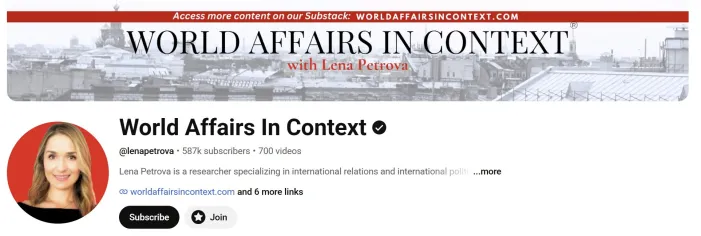
Lena Petrova of “World Affairs In Context” with more than half a million subscribers on YouTube wanted to explore what a peace researcher like me has to say about, among other things, the First and the Second Cold War and why eethics has disappeared from politics. I am particularly happy about this conversation that also yielded an amazing number of very appreciative comments on YouTube. No doubt, people are longing for alternatives, including peace perspectives.
The MIMAC – Military-Industrial-Media-Academic Complex – drives the world’s rampant militarism and wars without end. Here is a short reflection of how it works against all interests of humanity. #5 deals with why there is no real enemy or threat images/analysis. It’s all ex-post constructions. And, btw, theTFF Peace Pulse is now on Rumble.

TFF on Substack

Discover more from TFF Transnational Foundation & Jan Oberg.

Most Popular

Jan Oberg May 15, 2026 Go to this Fox News page and scroll the whole way down: President Donald Trump tells the world that his meeting with President Xi Jinping yielded a lot of very concrete political and economic results – of course, only where the Chinese side, according to him, agreed with him. He does not mention the Taiwan issue, but Secretary of State, Marco Rubio, says that it did not feature prominently in their talks and that the US policy on Taiwan has not changed. Then go to China Daily – or Global Times – and you will see that for the Chinese it is framework, principles, structure of cooperation etc. that matters – all embedded in the overall idea of “constructive bilateral relationship of strategic stability.” Nowhere is any concrete agreement or deal – all that Trump refers to – mentioned. At the general level, this gives you insights into the very different social...
Lena Petrova of “World Affairs In Context” with more than half a million subscribers on YouTube wanted to explore what a peace researcher like me has to say about, among other things, the First and the Second Cold War and why eethics has disappeared from politics. I am particularly happy about this conversation that also yielded an amazing number of very appreciative comments on YouTube. No doubt, people are longing for alternatives, including peace perspectives.
The MIMAC – Military-Industrial-Media-Academic Complex – drives the world’s rampant militarism and wars without end. Here is a short reflection of how it works against all interests of humanity. #5 deals with why there is no real enemy or threat images/analysis. It’s all ex-post constructions. And, btw, theTFF Peace Pulse is now on Rumble.
Read More
Screenshot-2026-05-15-103534
Jan Oberg May 15, 2026 Go to this Fox News page and scroll the whole way down: President Donald Trump tells the world that his meeting with President Xi Jinping yielded a lot of very concrete political and economic results – of course, only where the Chinese side, according to him, agreed with him. He does not mention the Taiwan issue, but Secretary of State, Marco Rubio, says that it did not feature prominently in their talks and that the US policy on Taiwan has not changed. Then go to China Daily – or Global Times – and you will see that for the Chinese it is framework, principles, structure of cooperation etc. that matters – all embedded in the overall idea of “constructive bilateral relationship of strategic stability.” Nowhere is any concrete agreement or deal – all that Trump refers to – mentioned. At the general level, this gives you insights into the very different social...
Screenshot-2026-05-12-104023
Lena Petrova of “World Affairs In Context” with more than half a million subscribers on YouTube wanted to explore what a peace researcher like me has to say about, among other things, the First and the Second Cold War and why eethics has disappeared from politics. I am particularly happy about this conversation that also yielded an amazing number of very appreciative comments on YouTube. No doubt, people are longing for alternatives, including peace perspectives.
Screenshot-2026-04-13-154551 (2)
The MIMAC – Military-Industrial-Media-Academic Complex – drives the world’s rampant militarism and wars without end. Here is a short reflection of how it works against all interests of humanity. #5 deals with why there is no real enemy or threat images/analysis. It’s all ex-post constructions. And, btw, theTFF Peace Pulse is now on Rumble.
Screenshot-2026-04-13-154551 (1)
Jan Oberg, TFF director April 28, 2026 In this third TFF Peace Pulse, I make the important distinction between the violence and the conflict that violence is a symptom of. If you want peace, focus on the underlying conflict because that is the key to resolution, peacemaking, and a better future for the parties. The West is obsessed with violence, just look around you – and 90+ per cent of the public debate is about military issues and other violence – totally wasted for peace. These Peace Pulses will only be published here a few times. You will also not find them on YouTube and Vimeo because both platforms have blocked TFF and me; you know, peace is dangerous these days. Most TFF’s videos since 2007 are now on Rumble.
Screenshot-2026-04-13-154551
In contrast to most, we’ll bring alternatives, solutions, hope and strategies for a better future. Times are dangerous, yes, but that only intensifies the need for constructive thinking and action! Jan Oberg, TFF director April 13, 2026 The new TFF Peace Pulse uses video messages in a new way: Max 3-5-minute-long comments, ideas or perhaps mini-lectures, all about peace – positive peace. We launch them today on April 13, 2026 with a carefully crafted visual aesthetic fitting the content. We hope to publish them regularly from now on. We launch Peace Pulse (PP) – for a number of reasons. The world is in chaos, and there are countless reasons to feel concerned, frustrated, even angry. The atmosphere is saturated with doom and gloom, with negative energy and rear‑mirror thinking, while vision, imagination, alternatives, strategies and genuine future‑mindedness remain in short supply. And without them, we simply can’t save the world. Looking at problems from a hundred angles will...
IMG_5165 (1)
PART II — Publishing Peace in a System That Prioritises Militarism Jan Oberg, TFF director April 10, 2026 How TFF Maintains a Daily Voice in a Digital World Built for Noise This article is part of the series “TFF at 40″ and it invites you to learn about Four Decades of Publishing Peace. It takes a look at how a small, people‑financed peace foundation has communicated across four generations of technology — from wax stencils and fax machines to mass email and Substack — and why TFF continues to publish every single day in a system that rewards noise, conflict, and militarism. ◆ What it means to publish peace every single day in a digital system built for 24/7 news and other noise, confrontation, and militarism. How TFF’s independence, continuity, and global readership defy algorithms, donor cycles, and Western media censorhip — and why the Majority World keeps listening. When the...