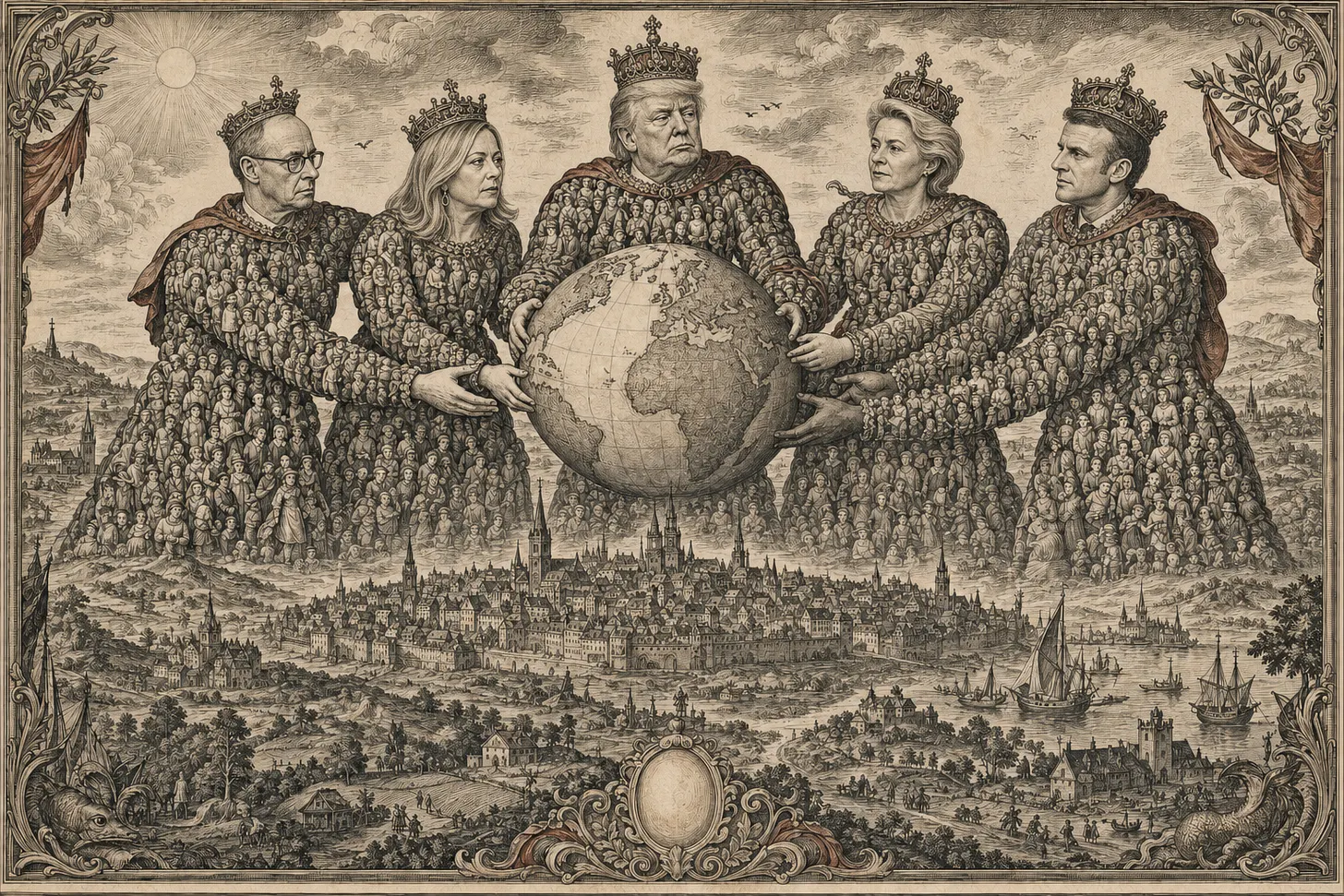
The end of the two-nation state for Israelis and Palestinians

It’s unbelievable that 102 years have passed since the Balfour Declaration when the British colonial government decided to give the Jews their own homeland- but also promised that “it be done without infringing on the civil and religious rights of the existing non-Jewish population”.

Now, this month, the Trump Administration has announced that the Jewish settlements on West Bank Palestinian land are no longer illegal. No matter the rest of the world is against this, the Palestinians face the possibility that 60% of the West Bank will be covered with Israeli settlements.

40% will be left as disconnected and isolated Palestinian cantons. There are now about 400,000 settlers.

The much-discussed two-state solution is dead. As the former Secretary of State, John Kerry, once said, there is a distinct possibility that Israel will now become “an apartheid state”.

In terms of population, Israelis are about the same as Palestinians but Israel’s military might is omnipotent. This is what Prime Minister Benjamin Netanyahu has long been pushing for – a Greater Israel.

Although Netanyahu is struggling to form a minority government a recent poll shows that 48% of Jewish Israelis are behind Netanyahu on this issue. 

The Palestinians, liberally minded Jews and much of the international community has strongly argued for a two-state solution for decades, even though, if enacted, that would have given the Palestinians much less land than the British originally countenanced.

Interestingly, a poll conducted last year by the University of Maryland found that Americans were roughly evenly split between supporting a two-state solution and supporting a one-state with equal rights for all inhabitants. When asked what they preferred if a two-state solution were not possible, the status quo or one state with equal rights, they chose the latter by a two-to-one margin.

This is the correct answer – and there are some signs that there is movement in that direction – not so much on the Israeli side but among the two million Arabs who live inside Israel, discriminated against in many ways but possessing the vote.

In this latest election in September Israeli-Arabs united together in the Arab Alliance and, instead of their vote being split as before, could become, once a new government is formed, Israel’s largest opposition party.

In the many years of trying to negotiate a two-state solution, the Palestinians have been compelled to concede too much. They have agreed that the return of refugees to their ancestral towns and villages would not be allowed and thus would remain for yet another generation in miserable refugee camps.

They’ve accepted that Israel would not offer full equality to Palestinian citizens of Israel.

What would happen if there were one state? In one scenario, since the populations of Jews and Arabs are equally balanced, elections would be breathless runs to the finishing post and the Arabs in coalition with liberal Jews would be the victor. Unlikely.

The South African analogy is telling or rather, its differences are telling. On the one hand there would not be an all-Arab government. The Palestinians would be only half of the population.

They could only rule effectively if they had a substantial number of liberal Jewish voters on their side. To woo enough Jewish parties into the government the Arabs would have to forsake claiming the role of prime minister and minister of defence.

The Palestinians would have to accept a massive birth control program to bring down the Arab population growth to that of Israeli Jews. (For their part conservative Jewish parties would have to learn how to attract conservative Arab voters, not an impossible task given the common puritanism of much Jewish and Muslim religious practice.)

Israel does not have a constitution. It would have to write one. This would commit Israel to democracy and full observance of human rights.

The new Israel would begin by repatriating Palestinian refugees. It would also accept Palestinians into its military forces although allowing for conscientious objection in return for doing important civilian jobs such as nursing, ambulance and fire services.

It would use bussing as a tool of integration. As European practice has shown, multiculturalism where the populations are free to live among their own kind does not work over the long run. It produces or reinforces the making of ghettos, and then later of crime. Integration is needed – of schools, jobs and housing in particular.

It would need a big program of higher education and technical training so that Arab citizens can upgrade their skills. There would need to be good credit and agricultural/industrial advice to help Arab businesses on their way.

The Jews would come out of this well.

They would have their homeland but they would have to share it as they have throughout history. They would also have the precious quality they don’t have yet – peace.

Foreign affairs columnist, film-maker and author

Share

Leave a Reply

Your email address will not be published. Required fields are marked *

Related Posts

The MIMAC – Military-Industrial-Media-Academic Complex – drives the world’s rampant militarism and wars without end. Here is a short reflection of how it works against all interests of humanity. #5 deals with why there is no real enemy or threat images/analysis. It’s all ex-post constructions. And, btw, theTFF Peace Pulse is now on Rumble.
Jan Oberg, TFF director April 28, 2026 In this third TFF Peace Pulse, I make the important distinction between the violence and the conflict that violence is a symptom of. If you want peace, focus on the underlying conflict because that is the key to resolution, peacemaking, and a better future for the parties. The West is obsessed with violence, just look around you – and 90+ per cent of the public debate is about military issues and other violence – totally wasted for peace. These Peace Pulses will only be published here a few times. You will also not find them on YouTube and Vimeo because both platforms have blocked TFF and me; you know, peace is dangerous these days. Most TFF’s videos since 2007 are now on Rumble.
In contrast to most, we’ll bring alternatives, solutions, hope and strategies for a better future. Times are dangerous, yes, but that only intensifies the need for constructive thinking and action! Jan Oberg, TFF director April 13, 2026 The new TFF Peace Pulse uses video messages in a new way: Max 3-5-minute-long comments, ideas or perhaps mini-lectures, all about peace – positive peace. We launch them today on April 13, 2026 with a carefully crafted visual aesthetic fitting the content. We hope to publish them regularly from now on. We launch Peace Pulse (PP) – for a number of reasons. The world is in chaos, and there are countless reasons to feel concerned, frustrated, even angry. The atmosphere is saturated with doom and gloom, with negative energy and rear‑mirror thinking, while vision, imagination, alternatives, strategies and genuine future‑mindedness remain in short supply. And without them, we simply can’t save the world. Looking at problems from a hundred angles will...

Recent Articles

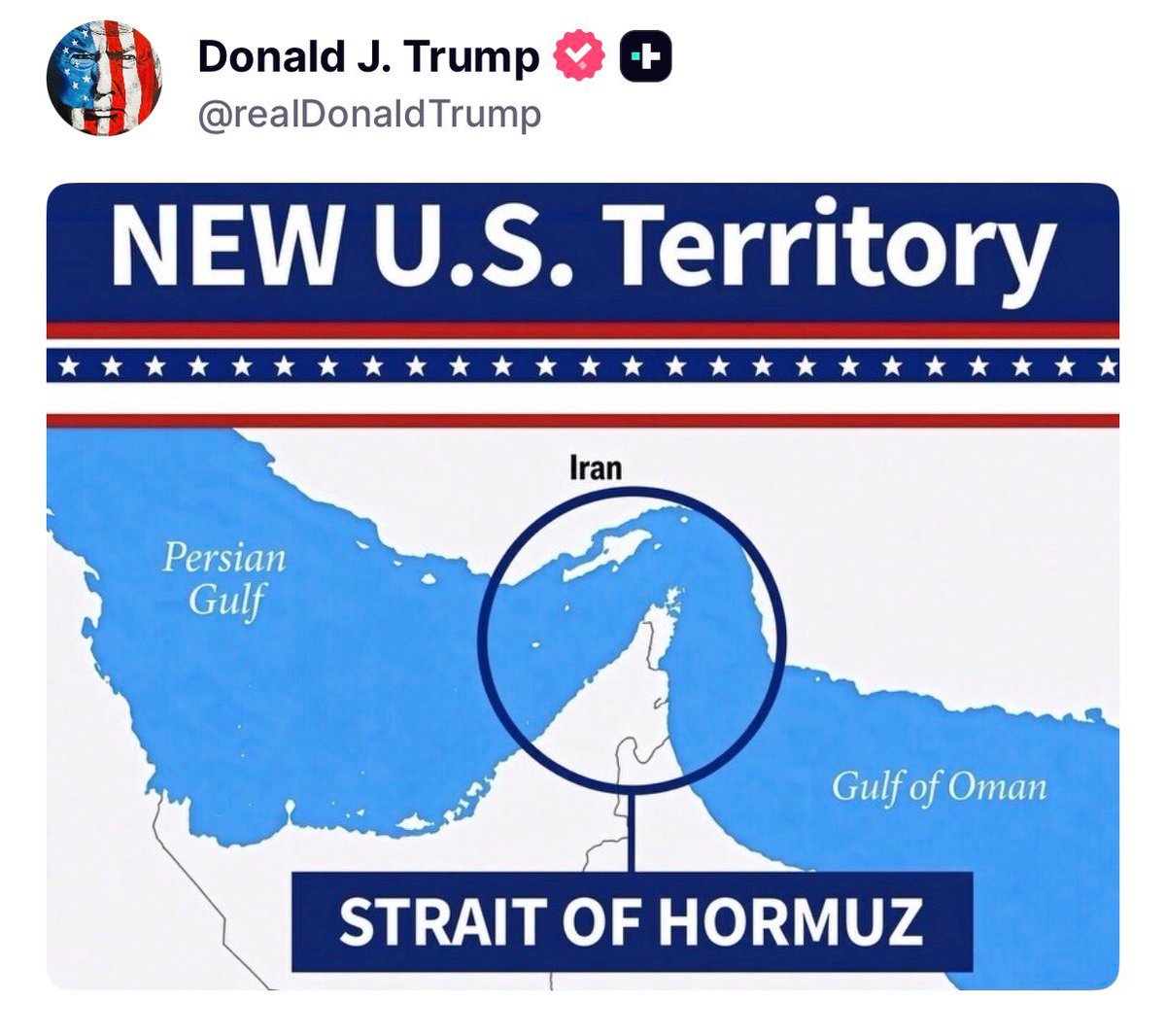
Jan ObergTFF director ☮️ When this morning – August 19, 2026 – I saw the above new US Trump map, I came to think of Frank Zappa, The Mothers of Invention, who said that politics is the entertainment division of the Military-Industrial Complex. That formulation beats many academic analyses – as you will have understood […]
A Civilizational Interpretation of the West’s Body Politic Pascal Lottaz Associate professor at Ritsumeikan University in Kyoto and TFF Board member August 25, 2026 “How do we explain the self-defeating and self-harming policies of Western states? Europe seems to be happily deindustrializing, the US proxy war in Ukraine is killing hundreds of thousands (if not millions) […]
LONDON – Many of the great and the good have dismissed the utility of nuclear weapons as well as finding the idea of their use morally indefensible but still they exist in enormous numbers in the arsenals of the great powers. Secretary of Defence Robert McNamara and Secretary of State Dean Rusk both came to be convinced during their tenure in the Kennedy administration that their use was “unthinkable”. President George H.W. Bush has written that in private he ruled out a nuclear response during the 1991 Gulf War although in public his Administration did not. General Colin Powell, then the chairman of the Joint Chiefs of Staff, in his autobiography recalls chiding his boss, Dick Cheney, for even considering it. Paul Nitze, one of the principal architects of containing the Soviet Union by nuclear deterrence, went even further. He argued in a Washington Post article in 1994 that it...

TFF on Substack

Discover more from TFF Transnational Foundation & Jan Oberg.

Most Popular

Jan ObergTFF director ☮️ When this morning – August 19, 2026 – I saw the above new US Trump map, I came to think of Frank Zappa, The Mothers of Invention, who said that politics is the entertainment division of the Military-Industrial Complex. That formulation beats many academic analyses – as you will have understood […]
A Civilizational Interpretation of the West’s Body Politic Pascal Lottaz Associate professor at Ritsumeikan University in Kyoto and TFF Board member August 25, 2026 “How do we explain the self-defeating and self-harming policies of Western states? Europe seems to be happily deindustrializing, the US proxy war in Ukraine is killing hundreds of thousands (if not millions) […]
LONDON – Many of the great and the good have dismissed the utility of nuclear weapons as well as finding the idea of their use morally indefensible but still they exist in enormous numbers in the arsenals of the great powers. Secretary of Defence Robert McNamara and Secretary of State Dean Rusk both came to be convinced during their tenure in the Kennedy administration that their use was “unthinkable”. President George H.W. Bush has written that in private he ruled out a nuclear response during the 1991 Gulf War although in public his Administration did not. General Colin Powell, then the chairman of the Joint Chiefs of Staff, in his autobiography recalls chiding his boss, Dick Cheney, for even considering it. Paul Nitze, one of the principal architects of containing the Soviet Union by nuclear deterrence, went even further. He argued in a Washington Post article in 1994 that it...
Read More
HQAB7NMWUAA1gSk
Jan ObergTFF director ☮️ When this morning – August 19, 2026 – I saw the above new US Trump map, I came to think of Frank Zappa, The Mothers of Invention, who said that politics is the entertainment division of the Military-Industrial Complex. That formulation beats many academic analyses – as you will have understood […]
21b7244b-c83e-46c1-ba23-556b21b9a0a8_1536x1024
A Civilizational Interpretation of the West’s Body Politic Pascal Lottaz Associate professor at Ritsumeikan University in Kyoto and TFF Board member August 25, 2026 “How do we explain the self-defeating and self-harming policies of Western states? Europe seems to be happily deindustrializing, the US proxy war in Ukraine is killing hundreds of thousands (if not millions) […]
Imagen-thumbnail-The-Transnational-1
LONDON – Many of the great and the good have dismissed the utility of nuclear weapons as well as finding the idea of their use morally indefensible but still they exist in enormous numbers in the arsenals of the great powers. Secretary of Defence Robert McNamara and Secretary of State Dean Rusk both came to be convinced during their tenure in the Kennedy administration that their use was “unthinkable”. President George H.W. Bush has written that in private he ruled out a nuclear response during the 1991 Gulf War although in public his Administration did not. General Colin Powell, then the chairman of the Joint Chiefs of Staff, in his autobiography recalls chiding his boss, Dick Cheney, for even considering it. Paul Nitze, one of the principal architects of containing the Soviet Union by nuclear deterrence, went even further. He argued in a Washington Post article in 1994 that it...
Screenshot-2026-08-22-011310
August 24, 2026 Lena Petrova & Jan Oberg I am truly happy and honoured to have been invited by Lena to her unique channel, World Affairs In Context where she has over 600,000 subscribers. She covers a very wide range of global themes, based not least on her own deep and broad knowledge of economics. I want […]
Logo-Transnational
Greenland – the world’s largest island, a continent of its own with only 57.000 inhabitants. I visited it for the first time in May 2005. I flew across the inland ice to Nuuk, the tiny capital with some 14.000 inhabitants. I was overwhelmed by the pride and kindness of everyone I met as well as by the unique natural beauty. Unfortunately, due to weather conditions during my ten-day stay I could get nowhere else but Nuuk. Fortunately, however, among those I met was Gitte Arvegaard, a Danish lawyer and negotiator employed by the local government, Greenland Home Rule. She turned out to be an enthusiastic photographer with a lot of pictures taken during various trips around Greenland. So this Greeland series is the result of our cooperative effort. We both hope you enjoy it and are stimulated to visit Greenland – about which you may read more here. Finally, if you want to...
p_mccartney_poem
 Jan Oberg’s storyof how he met Sir Paul Liverpool – where else to meet Paul McCartney? Paul’s old class mate and TFF Associate, Jonathan Power introduced me to Paul McCartney in Liverpool at an informal reception. It was held at what used to be their school, now the Liverpool Institute for Performing Arts and we were there to celebrate that Jonathan had written Amnesty International’s 40th Anniversary book. This happy event for “righting wrongs and writing songs” gave me an opportunity to meet Paul and tell him about TFF and get straight to the matter: would he consider making a donation in support of our work for peace? While I was probably the only one with such a wish that day, I was certainly not the only one who wanted to shake hands and talk with him. In the last minutes before Paul was to leave, Jonathan brought us together and we got about three...